TUSCADERO Hollywood Handsome (music video) - TUSCADERO Hollywood Handsome (music video)
JUL 01 1996 · 12:00
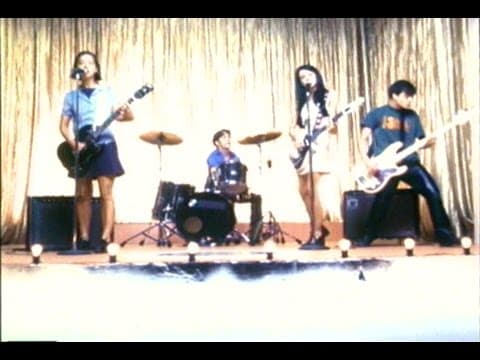
TUSCADERO Hollywood Handsome (music video) - TUSCADERO Hollywood Handsome (music video) (1996) Era: Mid-90s Indie Pop / Major Label Transition Era (1996) - DC underground act crossing over to Elektra Records, deploying retro-TV pastiche as music video strategy during peak MTV alternative rotation High curatorial value as a period-accurate, officially documented promotional artifact from Tuscadero's Elektra Records era. The video is a primary source for the convergence of DC indie underground aesthetics and major-label production logistics in 1996, and a rare instance of a low-budget indie-pop video deploying celebrity TV nostalgia with documented production context from the label's own catalog archive. Context: Tuscadero's 'Hollywood Handsome' video (1996) captures a precise cultural moment: a Washington DC indie band, formed in 1993 on the TeenBeat Records underground, transitioning to Elektra Records and producing a promotional clip that encapsulates their defining aesthetic, obsessive, affectionate pastiche of 1970s American pop culture. By staging the band's performance as a fictitious appearance on 'The Gong Show,' the video literalizes the band's founding mythology (their name drawn from Suzi Quatro's Happy Days character Leather Tuscadero) and their music's central preoccupation with the junk culture of their childhoods. The appearance of Jimmie 'J.J.' Walker anchors the nostalgia in lived cultural memory rather than mere ironic citation, aligning the video with a broader mid-90s indie tendency to reclaim and celebrate 70s ephemera as sincere rather than camp. Director notes: The video was filmed in New York City in 1996, during the period when Tuscadero was signed to Elektra Records. It presents the band in a fictitious appearance on the 1970s television program 'The Gong Show,' with an actor reprising the role of host Chuck Barris, and Jimmie 'J.J.' Walker appearing as himself. The concept directly references the band's deep investment in 1970s pop culture nostalgia, a defining characteristic of their songwriting and identity. The video was later unearthed and posted online by Teen-Beat label head Mark Robinson.
Source: radarchive.org
Part of RAD Archive · Watch in the documentary