Who Was Farming It
By 2008 roughly 400,000 people, overwhelmingly young men in China on twelve-hour shifts, were producing gold for Western players in a market worth around half a billion dollars. The largest broker was IGE, which took $60M from Goldman Sachs and was run as CEO from 2007 to 2011 by Steve Bannon. In 2015 Blizzard legitimised the trade itself with the Token. Meanwhile the American subscription has never moved from $14.99 since 2004, while everything around it, boosts, mounts, expansion tiers, early access, became separately purchasable.
Part of World of Warcraft
21 moments in this segment.
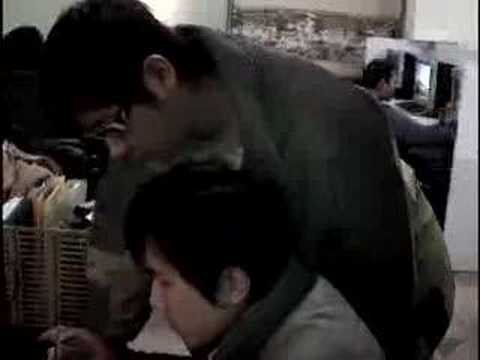
- - Chinese Gold Farmers. Ge Jin's documentary footage of gold farms in China, shot while he was a doctoral researcher at UC San Diego. A farm owner tells him that exporting virtual items is the same as transmitting Chinese labour to America.
- - The farms, filmed. Early documentary footage of gold farming operations. Richard Heeks later estimated roughly 400,000 people employed worldwide, earning about $145 a month, in a market worth around half a billion dollars.
- - A farmer at work. Footage of a gold farmer in-game. The work was piecework on twelve-hour shifts, and the people doing it were overwhelmingly men between eighteen and twenty-five.
- - Ni Hao (A Gold Farmer's Story). Nyhm's song, written from the perspective of a farmer. It is a player's attempt to think about the people on the other end of the transaction, from a period when most players' engagement with them was abuse in chat.
- - A farmer, interviewed. A long interview with someone who worked in the trade, describing the economics from the inside rather than from a newsroom.
- - Aligning Azeroth: The Gold Farmers. A machinima treatment of the gold-farming economy, made by players about the industry that grew around their game.
- - The Token is announced. Blizzard announces an item bought for real money and sold for gold, letting players pay a subscription with in-game currency. The stated purpose was to undercut the gold sellers whose supply, Blizzard said, came overwhelmingly from stolen accounts.
- - Arguing about the Token before it shipped. A player's discussion of the WoW Token in the weeks between Blizzard's announcement and the Token going live, working through what a first-party gold market would do to the game. It records the argument as it stood before anyone knew the answer, which the later coverage cannot. Dated to the upload, since the video is itself the contemporary reaction.
- - The Token goes live. The Token launched in the Americas at $20, opening at 30,000 gold. Within twenty-four hours the price had fallen to around 20,000.
- - A player buys a Token in its first week. A player talks through buying a WoW Token days after it went live in April 2015, weighing gold prices against real money and asking whether it was worth it. It is first-hand testimony from the week Blizzard made gold-for-money a first-party product, after a decade of banning the people who sold it.
- - The price collapses. Coverage of the Token losing a third of its value in a day. The price floats on supply and demand, which meant Blizzard had built a commodity market and handed it to several million people.
- - Subscribers, over time. The public subscriber figures charted: from launch, through the twelve-million peak in October 2010, to 5.5 million at the end of September 2015, after which Blizzard stopped reporting the number at all.
- - Farming from Venezuela. Gold farming as a survival wage during Venezuela's currency collapse, the same trade as the Chinese farms of 2006, relocated and re-framed by a different economic emergency.
- - A seller talks. Someone inside the gold-selling business describing how it works in the 2020s, when the supply chain runs on compromised accounts and automated farming.
- - The case for banning GDKP. Gold-bid loot runs let a player buy raid drops outright. The argument against them was that they created demand for gold that would not otherwise exist, and therefore fed real-money trading.
- - Inside a GDKP run, before the ban. A prominent Classic player walks through a gold-DKP run from the inside, the bidding, the payouts, and why organisers blacklist people who talk about it. Recorded months before Blizzard banned GDKP in Season of Discovery, it shows the practice as it actually ran rather than as it was later argued about.
- - The gold cartels. On the organised operations running boosting and gold services at scale, and the difficulty of policing an economy inside a game people pay to play.
- - How the $68.7bn deal was booked. An accountancy body's lecturer walks through the Activision Blizzard acquisition as a financial-reporting problem: purchase price allocation, goodwill, and what Microsoft actually bought when it bought Warcraft. It is the only view of the deal in the archive that treats the game as a line item rather than a headline. Dated to publication.
- - Developers on the GDKP ban, two years later. A short stream clip in which Classic developers discuss the gold-for-loot ban and whether it achieved anything. Blizzard banned GDKP on Season of Discovery in February 2024 and never published data to justify it; the ban was still in force in January 2026. The clip is a rare on-record developer remark, not a settled account, talk of a reversal is unverified.
- - Did the ban work?. Blizzard banned GDKP in Season of Discovery in February 2024 and extended it to the Anniversary realms that November. It has never been lifted. Two years on, players argue that real-money trading is worse, not better.
- - A developer answers, sort of. Blizzard restating in January 2026 that the GDKP policy has not changed. The company has never published the botting or trading figures that justified the ban.