Indie & Alternative
Indie rock, indie pop, alternative rock, lo-fi, bedroom pop, indie folk, shoegaze.
Part of RAD Archive
1,675 moments in this segment.
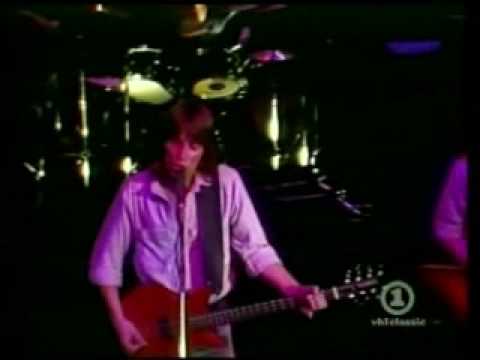
- - Cruel You - Shoes. (1979) Era: Late-70s American Power Pop / Early MTV Era (1979–1981) - DIY-rooted major-label rock video produced for Elektra Records during the nascent pre-MTV music video boom; among the first videos aired on MTV on August 1, 1981 Exceptionally high. This video is a double-tier MTV founding artifact: it appeared on the channel's very first day of broadcast (August 1, 1981) and documents a song from one of the most critically lauded power pop albums of 1979. The extreme low-key tungsten lighting, near-static editing, and minimal production values are not deficiencies but historically authentic markers of pre-MTV promotional video grammar. The video's visual austerity, brightness at barely 10% of full scale, only two scene changes in four minutes, makes it a valuable counterpoint to the kinetic, high-production videos that would soon define MTV's visual language. Essential for any archive of early music television history. Context: Shoes' 'Cruel You' exists at a pivotal intersection of American music history: it is a product of the late-1970s power pop underground, a movement indebted to Beatles-era British Invasion melody, Big Star's cult introspection, and the DIY ethics of the emerging indie rock scene, that crossed over into Elektra Records major-label distribution in 1979. The band's home base in Zion, Illinois, reflects the Midwestern power pop axis (alongside Cheap Trick, Pezband, and Off Broadway) that operated largely outside New York and Los Angeles industry centers. The video's broadcast on MTV's inaugural day positions it as a founding artifact of the music video television era, bridging the promotional clip culture of the late 1970s and the MTV video age of the 1980s. The sepia-toned, tungsten-lit visual atmosphere reinforces the song's melancholic lyrical tone and the band's unaffected, anti-glam aesthetic. Director notes: The 'Cruel You' video is taken from Shoes' major-label debut album Present Tense (Elektra Records, September 1979), produced by Mike Stone at The Manor Studio in Oxfordshire, England. The video itself appears to be a straightforward performance clip produced separately from the album recording session, likely in late 1979 or early 1980 for promotional use. It was broadcast on MTV's very first day of programming on August 1, 1981, making it one of the earliest music videos aired on the channel. Quantitative analysis confirms: extreme low-key lighting (brightness 24.7/255), amber tungsten color temperature (2.098), near-static editing (2 cuts, avg shot 119.7s), and very low motion (4.29), all consistent with a single-location, single-camera performance shoot on film stock. No IMDb, IMVDb, or other music video database entry credits a director for this specific clip.
- - Tracey Ullman - Breakaway. (1983) Director: Dave Robinson Era: Early MTV / British New Pop (1983) - UK new wave pop era defined by 60s nostalgia revival, Stiff Records' irreverent aesthetic, and the emergence of female-led pop on the British independent scene High curatorial value as a debut single music video from a multi-platform cultural figure, directed by the co-founder of one of British pop's most historically significant independent labels. The video is a textbook example of early-80s British independent pop aesthetics, and its enduring recognition, including a 2003 VH1 Star Tracks feature, confirms its standing as a minor but durable artefact of the era. Context: Released in March 1983 as Tracey Ullman's debut single on Stiff Records, 'Breakaway' is a cover of the 1964 Irma Thomas song written by Jackie DeShannon and Sharon Sheeley. It reached No. 4 on the UK Singles Chart by April 1983 and spent 12 weeks on the chart, launching Ullman's brief but successful pop career before her television work. The video exemplifies Stiff Records' house aesthetic: deliberately cheap, comedic, and nostalgically referencing a pre-Beatles early-60s British pop innocence. It sits at the intersection of new wave independent pop and a broader early-80s UK trend of female artists reviving classic girl-group and early-60s pop idioms. Director notes: Robinson directed this video in his dual capacity as Stiff Records founder and video director, a common cost-saving practice at the label. The video was produced by John Mills and prolific music video director Nigel Dick, who also served as art directors. The result is a deliberately 1960s-inspired, low-budget performance clip most noted for Ullman's iconic gag of singing into a hairbrush. Robinson's hands-on approach at Stiff extended to video production, and this clip is consistent with the label's irreverent, humour-forward marketing philosophy described across multiple sources.
- - Mojo Nixon - Burn Down The Malls. (1986) Era: MTV Alternative Underground (1985–1988) - The pre-Nirvana era of low-budget, college-circuit insurgency when 120 Minutes gave fringe acts like Mojo Nixon & Skid Roper a national platform; anti-corporate psychobilly breaking through on $2,000 budgets and 16mm film. High. 'Burn Down The Malls' is a rare surviving artifact of the earliest phase of Mojo Nixon & Skid Roper's MTV presence and one of the most explicitly anti-corporate music videos to receive significant MTV airplay in the mid-1980s. Its documented $2,000 budget, 16mm no-sync guerrilla production, and approximately one year of 120 Minutes rotation make it an essential primary source for researchers studying the intersection of low-budget independent production, satirical cultural commentary, and pre-alternative-era MTV programming. The confirmed production details from Mojo Nixon's own testimony give this video an unusually well-documented provenance for a work of its era and budget. Context: Released in 1986 as part of the Get Out of My Way! EP on Enigma Records, 'Burn Down The Malls' was Mojo Nixon & Skid Roper's debut MTV appearance and an early salvo in late-Reagan-era anti-consumerist rock. The song's spoken-word rant format, railing against shopping malls, the national drinking age, and America's corporate monoculture, was a precise artifact of the alt-underground sensibility that thrived on 120 Minutes before alternative rock became mainstream. Shot guerrilla-style in the industrial outskirts of Los Angeles on a $2,000 budget, the video's raw aesthetic mirrored the music's contempt for polish and commerce. Nixon and Skid Roper lampooned contemporary American culture and social issues throughout their catalog, of which this track was among the most explicitly anti-capitalist. Director notes: Shot on 16mm film on a guerrilla basis at an oil field near a beach off the 405 freeway in Southern California, with no permits, no permission, and approximately $2,000 in budget. Mojo Nixon noted in a Music Video Time Machine interview that the absence of timecode equipment meant nothing was synced up, and that the spoken-word nature of 'Burn Down The Malls' made lip-sync especially difficult, requiring the director to find creative editorial solutions. Nixon also described the video as containing subliminal messages, including shots of his face morphing into a monkey. The full song was edited down from approximately six minutes to fit MTV format requirements. The video received regular rotation on MTV's 120 Minutes for approximately one year and was Mojo Nixon & Skid Roper's first MTV airplay, predating the more widely seen 'Elvis Is Everywhere' video.
- - Midnight Oil - Beds Are Burning. (1987) Director: Andrew de Groot Era: Late MTV Golden Era (1987) - Peak period of politically engaged rock video production; Australian alternative rock crossing into global mainstream consciousness via outback-shot location filmmaking Exceptionally high. One of the most culturally significant music videos produced in the 1980s, combining documentary location filmmaking with political advocacy at a moment of peak global MTV influence. The video's warm-saturated, high-contrast outback cinematography is immediately iconographic, and its narrative role in bringing Indigenous Australian land rights to an international popular culture audience is historically irreplaceable. Essential archive item for any collection spanning protest media, Australian cultural history, or 1980s rock video aesthetics. Context: Released in August 1987 as the second single from Diesel and Dust, 'Beds Are Burning' emerged directly from Midnight Oil's 1986 Blackfella/Whitefella Tour of remote Aboriginal communities across outback Australia, during which the band witnessed firsthand the severe conditions facing Indigenous peoples. The music video literalises the song's geographical and political specificity by filming in the very landscapes and communities that inspired it, functioning simultaneously as a protest document and a rock promo. The song became one of the most globally successful explicitly political singles of the decade, reaching No. 1 in New Zealand, South Africa and Canada, and No. 17 on the US Billboard Hot 100, an unprecedented result for an Aboriginal land rights anthem. It is listed among the Rock and Roll Hall of Fame's 500 Songs that Shaped Rock and Roll. Director notes: Directed on location in the Australian outback, with footage incorporating both band performance segments and documentary-style visits to remote Aboriginal communities. The video was extensively filmed in desert landscapes including imagery consistent with the Western Desert regions referenced in the song's lyrics (Kintore Ranges, Yuendumu). De Groot employed a silhouette-heavy compositional approach, particularly for Peter Garrett, using the vast Australian sky as a dramatic backdrop. The visual grammar shifts between warm red-toned outback performance scenes and cooler-toned sequences as the band moves toward more populated environments. De Groot also directed the Midnight Oil music video for 'Dreamworld' from the same album.
- - Soundgarden - Nothing to Say. (1988) Era: Proto-Grunge / Sub Pop Underground (1987–1989) - Raw early Seattle heavy rock era preceding Soundgarden's major-label breakthrough; characterized by lo-fi production values, DIY aesthetics, and underground distribution through Sub Pop Records. This video holds significant archival value as a potential primary visual document from Soundgarden's earliest Sub Pop phase, a period from which very little professionally shot footage exists. Its extreme slow-cut structure (4 scene changes, ~60s avg. shot length) and raw production profile make it a rare surviving artifact of the proto-grunge underground economy. Whether a formal promo or a performance document, it preserves the unmediated aesthetic of a band before commercial pressures shaped their visual identity, offering researchers a baseline against which to measure the band's subsequent MTV-era evolution. Context: "Nothing to Say" originated as the B-side to Soundgarden's debut Sub Pop single "Hunted Down" in 1987, and its early circulation on the KCMU compilation tape *Bands That Will Make Money* was instrumental in drawing major-label attention to the band. The song employs drop-D tuning, a technique guitarist Kim Thayil learned via Buzz Osborne of the Melvins, tracing a direct lineage from Black Sabbath's heaviness into the emergent Seattle sound. Any video artifact from this period represents the raw, pre-commercial phase of a band that would go on to define the grunge era, a moment before MTV exposure, before A&M Records, and before the global mainstreaming of Pacific Northwest heavy rock. The static, contemplative visual character of this clip mirrors the underground, word-of-mouth economy of the Sub Pop scene, where the music itself carried cultural weight without the mediation of high-concept video production. Director notes: The video for 'Nothing to Say' is referenced on Last.fm and Soundgarden fan archives as existing, but no production credits, director attribution, or behind-the-scenes documentation have surfaced in available public sources as of the annotation date. Given the song's status as the B-side to Soundgarden's debut Sub Pop single 'Hunted Down' (1987), any accompanying visual document would have been produced under extreme budget constraints typical of the Sub Pop underground circuit. The quantitative metadata, only 4 scene changes over ~240 seconds, near-zero motion score (3.30), and a static/contemplative mood profile, is fully consistent with a single-camera performance capture or rehearsal document rather than a formally produced promo. The warm color temperature (2.87) and low contrast (44.13) strongly suggest tungsten-lit indoor venue or rehearsal space footage shot on consumer or prosumer VHS or 3/4-inch tape. No formal production company, commissioner, or post-production house has been identified.
- - Das Damen - Noon Daylight. (1989) Era: Late-80s American Underground (1989) - Peak era of SST/Twin Tone indie noise-rock; college radio alternative scene at maximum pre-grunge tension, bridging hardcore's DIY ethos with psychedelic hard rock ambition. High curatorial value as a rare surviving promotional video artifact from a critically significant but commercially overlooked band at peak creative form. Captures the precise aesthetic and cultural coordinates of American underground rock in 1989, the last year before grunge's commercial dominance reshaped the landscape. Useful as a primary document for scholars of indie rock history, SST/Twin-Tone label culture, and the visual language of pre-MTV-mainstream alternative music. Context: Released in 1989 on Twin/Tone Records, the Minneapolis label also home to The Replacements and Hüsker Dü, 'Noon Daylight' captures Das Damen at a transitional moment: newly signed after a contentious departure from SST Records, and recording with a reconstituted lineup. The track and its video sit at the intersection of the New York noise-punk underground and the broader American college radio ecosystem, appearing just as the Seattle grunge wave was cresting. Das Damen's blend of '60s psychedelia, acid rock, and punk distortion made them singular within the SST/Twin-Tone orbit, and 'Noon Daylight' was widely regarded as among their most accessible and melodically refined statements, a DIY artifact of the Reagan-era underground at its most cohesive. Director notes: The video was produced in 1989 as a promotional clip for 'Noon Daylight,' the lead single from the album Mousetrap (Twin/Tone Records, TTR 89170), recorded at Fort Apache Studios in Cambridge, Massachusetts and produced/engineered by Sean Slade. The single was also released as a 7" (Twin/Tone TTR 89139) and a European 12" import on What Goes On Records with live B-sides recorded at a Boston 1989 gig. No video production credits have surfaced in any archived or digitized source.
- - P 9 - Soul Asylum (1989). ) (1989) Director: Phil Harder Era: Minneapolis Underground / Pre-Grunge Transition (1988–1990) - Soul Asylum's A&M Records transitional period, bridging Twin/Tone indie punk roots with emerging major-label alternative rock; 'P-9' released on the Clam Dip & Other Delights EP, a politically charged labor-movement anthem recorded between Hang Time (1988) and And the Horse They Rode In On (1990). High. This video is a rare surviving artifact of explicitly labor-movement-themed content within the late-1980s alternative rock video canon, directed by a key figure in the Minneapolis indie production ecosystem. Phil Harder's Harder/Fuller Films produced foundational regional videos during this period, and this work predates his internationally recognized output. The song's direct connection to the Hormel P-9 strike, a pivotal moment in US labor history, elevates this beyond standard music video documentation into sociopolitical primary source material. The quantitative metrics (extreme desaturation, warm cast, moderate motion) confirm a deliberate low-budget documentary aesthetic that rewards frame-level analysis. Context: Soul Asylum occupied a unique position in the late-1980s Minneapolis rock ecosystem, shaped by the same Twin/Tone Records infrastructure that launched Hüsker Dü and The Replacements, yet distinct in its willingness to blend hardcore punk energy with country-inflected songwriting. 'P-9' is among the most explicitly political songs in their catalog: its title references the union local (P-9 of the United Food and Commercial Workers) that led the 1985–1986 strike against Hormel Foods in Austin, Minnesota, a landmark moment in US labor history. The song's video, produced at the cusp of the band's transition from indie to A&M Records, reflects the tensions of that moment: raw, underfunded production aesthetics signaling underground credibility while the major-label machinery was already in motion. The warm-toned, muted visual palette mirrors the working-class subject matter, and the moderate editing pace resists commercial MTV conventions of the era in favor of documentary sobriety. Director notes: The 'P-9' music video is credited to Phil Harder on IMVDb (https://imvdb.com/video/soul-asylum-2/p-9), where it is dated 1988, consistent with the song's UK release on the Clam Dip & Other Delights EP. The US release of the EP was in 1989 (Twin/Tone Records), accounting for the 1989 filename date. The video was produced during the early period of Harder/Fuller Films, Harder's Minneapolis-based production company. The song 'P-9' was written to benefit workers involved in the 1985 Hormel meatpacking strike in Austin, Minnesota, one of the most prominent US labor disputes of the 1980s, which likely informed the video's documentary-leaning, politically grounded visual approach. The warm, low-saturation, moderate-motion aesthetic reflected in the quantitative metadata (saturation 15.74, brightness 132.37, motion 8.85) aligns with Harder's early low-budget Minneapolis production style, typically shot on 16mm or early video formats with practical lighting.
- - Wonder Stuff - Don't Let Me Down, Gently. (1989) Era: Late-80s UK Indie Crossover (1989) - Stourbridge alternative rock scene's transition from indie cult status to mainstream chart success, coinciding with the UK indie-to-major label pipeline peak. High curatorial value as the video documents the precise commercial breakthrough moment of one of the UK's most critically regarded late-80s indie acts. The 'American-shot' production represents a conscious and documented departure from the band's earlier visual aesthetic, making it a rare primary source for studying how British indie labels and major-label subsidiaries adapted UK artists for transatlantic consumption in the pre-internet MTV era. The absence of any identified director credit makes archival research into its production provenance an unresolved scholarly opportunity. Context: Released in September 1989, 'Don't Let Me Down, Gently' marked the Wonder Stuff's first UK Top-20 single (charting at #19), signalling the band's crossover from indie cult act to mainstream pop-rock contenders. The single heralded the release of the second album Hup (October 1989, UK #5 on Polydor Records), representing the band's ascent at a pivotal moment for Black Country alternative rock. The notably 'American-shot' video reflected a deliberate strategy by Polydor to position the band for the US college radio and MTV market, distinguishing this promo from the low-budget UK indie aesthetic of their earlier work. The Wonder Stuff were closely associated with fellow Stourbridge and Black Country acts Ned's Atomic Dustbin and Pop Will Eat Itself, forming an informal regional scene that attracted sustained UK music press coverage throughout 1989–1991. Director notes: Wikipedia notes the video was 'slick' and 'American-shot,' suggesting it was filmed in the United States during the band's 1989 US touring activities, likely on a mid-budget Polydor Records commission. The warm palette, fast editing, and high saturation are consistent with American promo production houses active in the 1988–1990 period. No director, production company, or cinematographer credit has been sourced from any verified publication or database.
- - MICHEL GONDRY videoclip : OUI OUI "Les Cailloux" - MICHEL GONDRY videoclip : OUI OUI "Les Cailloux". " (1989) Director: Michel Gondry Era: French Indie Pop / Pre-MTV Auteur Era (1989) - Late 1980s French underground pop scene; formative period for Michel Gondry's DIY visual language before his international breakthrough, coinciding with the release of Oui Oui's debut album 'Chacun Tout Le Monde'. Exceptionally high. This video documents the literal starting point of one of the most celebrated careers in music video and film direction. As an artefact of Gondry's work as both band member and director, it offers a unique dual perspective unavailable in his later, more professionalised output. Its inclusion in the Directors Label Vol. 3 DVD confirms institutional recognition. The warm-toned, fast-cut, high-saturation aesthetic, captured in analogue film quality, provides a time-capsule of late-1980s French indie pop visual culture that is irreplaceable for both film studies and popular music history. Context: Released in 1989 as part of Oui Oui's debut album 'Chacun Tout Le Monde', 'Les Cailloux' sits at the intersection of French DIY pop and nascent music video auteurism. The band consciously positioned itself as a reaction against the cold wave and politically charged rock dominating France at the time, favouring warm, playful, and naïve pop sensibilities. The video represents the embryonic stage of Gondry's career as a visual storyteller, a filmmaker-in-training working within a band rather than as an external director for hire. This insider perspective gave the project an unusually personal and experimental character. Produced by Partizan, it anticipates the inventive, handcrafted aesthetic Gondry would refine across the 1990s and 2000s to international acclaim. Director notes: "Les Cailloux" (1989) is one of Gondry's earliest directorial works, made while he was an active member of Oui Oui as its drummer. The video was produced by Partizan and is confirmed as a 1989 French release. It was later canonised in the Directors Label Vol. 3 compilation 'The Work of Director Michel Gondry' (2003), cementing its status as a key artefact in his pre-international filmography. IMDB lists the video under genres Animation and Music, suggesting significant use of animated or in-camera practical effects consistent with Gondry's known early stylistic experiments. The video predates his breakthrough with Björk's 'Human Behaviour' (1993) by four years and represents the raw, low-budget origins of his signature whimsical visual language.
- - The Afghan Whigs - You My Flower. (1990) Director: Philip Harder Era: Sub Pop / American Underground Grunge (1990) - The early Sub Pop era when the Seattle grunge sound was spreading beyond the Pacific Northwest, with Cincinnati outsiders bringing a rawer, more emotionally volatile edge to the label's aesthetic High. This is a rare, early-career document of The Afghan Whigs, one of the most critically significant American alternative bands of the 1990s, at their rawest Sub Pop moment. As one of the first confirmed Philip Harder-directed Afghan Whigs videos, it anchors a directorial relationship that spanned nearly 30 years. The rapid editing pace (203 cuts in under four minutes), warm-toned surrealist imagery, and low-budget performance aesthetic make it an exemplary artifact of the Sub Pop visual style at the cusp of grunge's mainstream breakthrough. Context: Released in 1990 alongside the album 'Up in It' on Sub Pop Records, this video documents The Afghan Whigs at a pivotal moment: they were the first band from outside the Pacific Northwest to release a full album on Sub Pop, marking the label's geographic and cultural expansion beyond its Seattle origins. The album was produced by Jack Endino, who was also producing Nirvana at this time, and garnered strong college radio airplay. The video's aesthetic, dark, low-budget, mixing pastoral natural imagery with claustrophobic performance, reflects the lo-fi ethos of the Sub Pop house style while hinting at the soul-inflected emotionalism that would define the Whigs' later work. The rapid edit pace and warm-toned, saturated palette distinguish it slightly from the colder Pacific Northwest grunge videos of the same period. Director notes: Confirmed by IMDb (https://www.imdb.com/title/tt13098284/) as director. The video is from the album 'Up in It' (Sub Pop, 1990), produced by Jack Endino. Per IMDb plot summary, the video opens with imagery of a tree reflected in water and large pink flowers, then cuts to the band performing on a darkened set. The film criticism source at filmcomment.com noted ambiguity about the director of 'You My Flower' but speculated Harder based on his known credits for the band's subsequent Congregation videos, the IMDb record resolves this attribution. Harder went on to direct at least three further Afghan Whigs videos for the 1992 Congregation album cycle, and returned to collaborate with the band on their 2017 reunion material, demonstrating a creative partnership spanning nearly three decades.
- - Soul Asylum - Easy Street. (1990) Director: Drew Carolan and Dinah Breakall Era: College Rock / Late A&M Era (1990) - Pre-breakthrough Soul Asylum on A&M Records, riding the college-radio alternative wave before mainstream crossover; the band's final album for the label before signing with Columbia and achieving platinum success with Grave Dancers Union (1992). High. This video is a rare documented artifact of Soul Asylum's pre-breakthrough A&M Records period, featuring a confirmed unique location shoot at the Circus World Museum in Baraboo, Wisconsin, an unconventional and visually rich setting that distinguishes it from contemporaneous alternative rock videos. Its quantitative profile (rapid editing, warm saturation, high contrast) is analytically coherent with the production environment and genre moment. As a cultural document, it captures the Minneapolis alternative underground at a transitional moment, commercially underperforming but aesthetically adventurous, immediately before the grunge era reshaped the mainstream. Context: Released in 1990 as a single from And the Horse They Rode In On, Soul Asylum's fifth full-length and their second on A&M Records, 'Easy Street' arrived during the twilight of the college-rock era, just as grunge was beginning to displace the Minneapolis-rooted alternative underground on MTV. The band, formed in Minneapolis in 1981 out of the same fertile scene that produced Hüsker Dü and The Replacements, had not yet achieved mainstream crossover, and the album's promotional videos reached limited MTV rotation. The choice of Circus World Museum in Baraboo, Wisconsin as the shoot location reflects a distinctly Midwestern, low-budget creative sensibility, eccentric, theatrical, and rooted in American vernacular culture rather than the Los Angeles or New York production infrastructure that dominated major-label music video production of the era. The band would be dropped by A&M shortly after this release, signing with Columbia and achieving breakthrough success in 1992 with Grave Dancers Union. Director notes: Per EnterTheSoulAsylum.com, the video was directed by Drew Carolan (credited on source as 'Drew Carolyn') and Dinah Breakall and filmed on location at the Circus World Museum in Baraboo, Wisconsin, a 64-acre museum complex dedicated to American circus heritage, housed on the former winter quarters of the Ringling Brothers Circus, a National Historic Landmark site. The circus setting gives the video its distinctive theatrical visual identity, with warm practical lighting from circus artifacts, wagons, and performance spaces driving the video's high saturation (108.87) and warm color temperature (2.19) metrics. The rapid editing pace (135 scene changes, avg. 1.57s shot length) mirrors both the song's energetic tempo and the visual abundance of the Circus World Museum environment. The video was produced to support 'Easy Street,' which charted at #26 on the Billboard Modern Rock Tracks chart in 1990, though MTV airplay for the band remained limited at this stage of their career.
- - Aztec Camera - The Crying Scene. (1990) Director: John Scarlett-Davis Era: Post-New Wave Transition (1990) - Late-period British indie pop at the cusp of the early-90s adult contemporary turn, bridging Roddy Frame's guitar-led songwriting with polished, cinematic production values typical of major-label output on the Sire/WEA roster. High curatorial value as a confirmed, well-documented artifact from a pivotal transitional moment in British pop video history. Director, production company, budget, and filming location are all verified. The video encapsulates the shift from the kinetic visual language of 1980s MTV to the more restrained, emotionally grounded aesthetic that would define early-1990s British pop video production. Rare example of a Scratch Video movement pioneer working within mainstream commercial constraints. Context: Released in 1990 as part of Aztec Camera's fourth studio album 'Stray' on Sire Records, 'The Crying Scene' represents Roddy Frame's mature songwriting voice navigating the commercial crossover between British indie pop and adult contemporary. The band's Glasgow post-punk origins had by this point evolved into a sophisticated, melody-driven pop sensibility. The video's Palace Pictures production pedigree, London filming location, and professionally restrained visual grammar situate it within the prestige end of British music video production at the dawn of the 1990s, a moment when the flamboyance of mid-80s MTV aesthetics was giving way to a more subdued, performance-focused intimacy. Director notes: Confirmed via IMDb (tt12017726) as director and writer of this 1990 UK music video. Filmed in London, England. Produced by Palace Pictures with an estimated budget of £40,000. Runtime listed at 4 minutes. One of at least three Aztec Camera videos Scarlett-Davis directed, alongside 'Good Morning Britain' (1990) and 'Spanish Horses' (1992), suggesting an ongoing creative relationship with the band during this period. The video's low motion score (7.06), warm colour temperature, and moderate editing pace align with Scarlett-Davis's documented preference for controlled, considered visual composition rooted in his editorial background.
- - Midnight Oil - Forgotten Years. (1990) Director: Claudia Castle Era: Post-Cold War Alternative Rock Conscience (1990) - Australian political rock at peak global reach; the year the Berlin Wall's fall reshapes geopolitical memory culture and anti-war anthems find mainstream alternative radio traction. Exceptionally high. 'Forgotten Years' represents a convergence of significant location, confirmed directorial vision, documented chart impact (#1 US Modern Rock), ARIA Best Video recognition, and a thematic gravitas rarely achieved in the format. The video is both a primary document of 1990 political rock culture and a durable piece of memorial art. Its intercutting of Verdun ossuary imagery with WWII archive footage gives it lasting educational and archival utility beyond its commercial context. Tier 1 designation is warranted. Context: Released in April 1990, 'Forgotten Years' arrived at a hinge moment in global geopolitics, months after the fall of the Berlin Wall, when collective memory of twentieth-century warfare was being urgently renegotiated. Midnight Oil, already internationally prominent after 'Beds Are Burning' (1987), used the video to stage a direct confrontation with cultural amnesia around WWI and WWII. Filming at Douaumont Ossuary in Verdun, one of the most symbolically charged WWI memorial sites in the world, transformed the video into a piece of activist heritage cinema. The song reached #1 on the US Billboard Modern Rock Chart, confirming that its anti-war commemoration message resonated far beyond Australia. The video's ARIA Best Video win in 1991 further cemented it as a benchmark of purposeful Australian music video production. Director notes: The video was filmed on location at Douaumont Ossuary, Verdun, France, a WWI memorial site housing the remains of unidentified French and German soldiers, making the setting inseparable from the song's thematic argument. The production intercutting of Columbia Records-era colour performance footage with repurposed black-and-white WWI and WWII archival documentary material is the video's defining editorial strategy. The fast average shot length (2.72s) across 94 scene changes drives an urgent montage grammar that reinforces the lyrical imperative of collective memory. The video was later edited into the Midnight Oil compilation 'Midnight Oil: 20,000 Watt R.S.L.' (1997).
- - Hoodoo Gurus - A Place In The Sun. (1991) Era: Australian Alternative Rock Peak (1991) - Late phase of Hoodoo Gurus' commercial zenith, coinciding with the Kinky album cycle on RCA/BMG and the band's sustained presence on US college radio and MTV's 120 Minutes Moderate-to-high archival value as a representative example of the Hoodoo Gurus at their commercial and creative peak, tied to a significant album in Australian rock history. The video's restrained, performance-centred aesthetic and warm atmospheric production make it a useful benchmark for early-1990s Australian alternative rock visual culture. Its inclusion in the Electric Soup compilation underscores its status as a canonical document of the band's RCA era. Director unknown status limits scholarly attribution depth but does not diminish its value as a primary source artefact. Context: Released in mid-1991 as the third single from Kinky, the fifth Hoodoo Gurus studio album on RCA Records, 'A Place in the Sun' arrived at a pivotal moment for the band internationally. Kinky peaked at number 4 on the Australian ARIA charts while reaching number 172 on the American Billboard 200. The band had built a loyal following through relentless US touring and sustained college radio airplay, gaining exposure on MTV's 120 Minutes. The video's warm, sun-drenched theatrical aesthetic, a purple-lit performance set evoking an outdoor rock stage, mirrors the song's optimistic lyrical invitation, positioning the Gurus as distinctly Australian voices in a global alternative rock landscape on the cusp of grunge's mainstream breakthrough. Director notes: Per IMDB (tt10625108), the video features the full Kinky-era lineup performing on a purple-hued smoky set in front of rocks, with Dave Faulkner on lead vocals. The single was released August 1991 on BMG Australia (catalogue CS 5240), backed with 'The Doctor Is In'. The video was included in the 1992 BMG Video VHS compilation Electric Soup: The Complete Video Collection, which assembled 19 Hoodoo Gurus videos up to 1991. The production is consistent with mid-budget Australian music video work of the period: single-location studio performance, theatrical lighting, no narrative subplot.
- - ELEVEN - Rainbow's End. (1991) Era: Early Alternative Rock Boom (1991) - Coincides with the post-Nevermind surge of LA alternative acts on major and boutique labels, when grunge-adjacent hard rock with psychedelic and pop tendencies competed for mainstream crossover attention. This video is a primary visual document of one of the most critically respected yet commercially underappreciated bands in early-90s LA alternative rock. With Natasha Shneider's death in 2008 ending any possibility of new material, and the band's catalog remaining niche, this 1991 promo represents an irreplaceable window into the group's earliest public-facing visual identity. Its warm, performance-grounded aesthetic contrasts productively with darker contemporaries and merits preservation as a counternarrative to dominant grunge-era visual historiography. Context: Released in 1991 on Morgan Creek Records, 'Rainbow's End' emerged from the Los Angeles alternative rock ecosystem that predated grunge's full commercial takeover but operated in its gravitational field. Eleven occupied a rare cross-genre space: their RHCP-adjacent lineage (via Jack Irons and Alain Johannes's shared prehistory) gave them credibility in the funk-rock world, while their psychedelic pop craftsmanship, evidenced by the warm, optimistic tone of this track, positioned them closer to college-radio melodicism. The video's warm palette and moderate pacing reflect a band and label seeking mainstream accessibility without abandoning artistic personality. The song's lyrical thesis, that the rainbow's end holds not gold but open-heartedness, maps directly onto early-90s alternative rock's tendency to fold sincerity and post-hippie idealism into hard-rock structures. Director notes: The video was produced in 1991 to promote 'Rainbow's End,' a single from Eleven's debut album Awake in a Dream on Morgan Creek Records. IMDB confirms the video exists and lists it as a 1991 music video production. No production company, director, or cinematographer credit has been located in any publicly accessible source as of this annotation.
- - Screaming Trees - Bed Of Roses. (1991) Era: Early Grunge / Pacific Northwest Alternative (1991) - Pre-Nevermind major-label debut era; Seattle-adjacent underground breaking into mainstream alternative rock channels via Epic Records High curatorial value as a rare surviving visual document from the precise moment Screaming Trees crossed from independent cult status to major-label alternative viability, a transitional beat that is consistently underrepresented in grunge archival collections, which tend to privilege the post-Nevermind period. The video's quantitative profile (warm saturation, fast cut, low brightness) physically encodes the aesthetic tensions of that transition and provides a direct comparative baseline against the band's later, higher-budget productions for Sweet Oblivion (1992). Context: Released in 1991 as the lead single from Uncle Anesthesia, Screaming Trees' first album for Epic Records, 'Bed of Roses' arrived at a pivotal inflection point: months before Nirvana's Nevermind detonated the Pacific Northwest sound into global consciousness. The band had spent years on SST and Sub Pop, and this video represents their first major-label visual document. The warm, low-budget performance aesthetic reflects the transitional economics of the moment, underground credibility retained within a corporate promotional framework. The single was the first Screaming Trees track to chart, peaking at No. 23 on the Modern Rock Tracks Chart, marking the band's entry into mainstream alternative visibility even as they remained a cult act relative to peers who would shortly eclipse them commercially. Director notes: IMVDb (imvdb.com/video/screaming-trees/bed-of-roses) lists the video as released in 1991 but explicitly states no credits are on file. No production company, director, or crew attribution has surfaced in any publicly available database. The video was produced in support of Uncle Anesthesia (Epic Records, 1991), the band's major-label debut, suggesting a modest but label-funded production budget typical of Epic alternative rock promotions of the period.
- - Pearl Jam - Alive. (1991) Director: Josh Taft Era: Grunge Breakthrough Era (1991) - Pearl Jam's debut video, shot live at RKCNDY in Seattle, arriving at the precise moment grunge was transitioning from Pacific Northwest underground to mainstream MTV culture. Exceptional curatorial value as a primary document of the grunge era's earliest mainstream visual moment. The video is both a historical record of Pearl Jam pre-fame and a manifesto-in-practice of the anti-MTV aesthetic that defined the band's visual identity for decades. Its nomination at the 1992 VMAs confirms institutional recognition of the approach. As Pearl Jam's first music video, it occupies a singular position in the band's archive and in the broader history of 1990s alternative rock visual culture. Context: Released in September 1991, 'Alive' arrived just weeks before Nirvana's 'Nevermind' upended the mainstream music landscape. Pearl Jam's deliberate rejection of MTV's dominant slick, narrative-driven video format, choosing instead a raw black-and-white live document at an intimate Seattle all-ages club, positioned the band as ideologically distinct from the era's pop-metal excess. The band's resistance to label pressure to produce a conventional promo clip became a founding mythology of their anti-commercial identity. The RKCNDY venue itself was a touchstone of the Seattle underground scene, and the video's intimacy captured a community on the cusp of global visibility. The video's MTV nomination and rotation proved the strategy worked commercially without compromising the aesthetic. Director notes: Taft filmed the 'Alive' video on August 3, 1991, at the all-ages club RKCNDY in Seattle, Washington. He was present as a friend of Stone Gossard's, not originally in a formal director-for-hire capacity. Pearl Jam played 'Alive' only twice during the show, at the beginning and end, to preserve live energy and avoid the appearance of a staged shoot. Notably, the audio in the video is the live performance audio from that night, not the studio recording from the album Ten, consistent with Eddie Vedder's rejection of lip-syncing. Taft shot the video in high-contrast black-and-white. The resulting clip was released in September 1991, received heavy MTV rotation, and was nominated for Best Alternative Video at the 1992 MTV Video Music Awards. Taft's relationship with Pearl Jam continued: he was present at the Moore Theatre in January 1992 filming footage that was later compiled into the 'Even Flow' music video after the band rejected a separate director's shoot.
- - TAD - Stumblin' Man. (1991) Era: Seattle Grunge Apex (1991) - Peak Sub Pop underground era; pre-mainstream grunge explosion, heavy metal-inflected Seattle scene at its most raw and culturally insular High. This video represents a rare, long-suppressed piece of Sub Pop's pre-breakthrough visual archive, only publicly restored in 2016. As an artifact of TAD, one of the heaviest and most critically respected yet commercially overlooked bands of the Seattle grunge era, it documents the DIY street-realism aesthetic that defined underground music video before MTV mainstreaming. Essential for any grunge or Sub Pop visual archive. Context: Released in February 1991, 'Stumblin' Man' arrived at the apex of Sub Pop's underground cultural moment, months before Nirvana's 'Nevermind' would detonate grunge into the mainstream. TAD occupied a uniquely heavy corner of the Seattle scene, blending sludge metal and punk with working-class Pacific Northwest imagery. The video's depiction of public intoxication and street drifting directly mirrors the song's portrait of a homeless alcoholic, reflecting the scene's unflinching engagement with themes of alienation, substance use, and marginal American life. The video was suppressed for decades and only re-emerged digitally in 2016 via Sub Pop's catalog reissue, making it a rare artifact of pre-breakthrough Seattle underground video culture. Director notes: The video for 'Stumblin' Man' was produced in conjunction with the 1991 album 8-Way Santa on Sub Pop Records. Per clrvynt.com, the video features the band rolling around town and drinking in public, consistent with the song's lyrical portrait of a skid row alcoholic. The video was unavailable for many years before being re-released on YouTube in 2016 as part of Sub Pop's deluxe reissue campaign for the TAD back catalog. No production company, director, or cinematographer credit has been confirmed in publicly available sources.
- - The Afghan Whigs - Miles Iz Ded. (1992) Director: Philip Harder Era: Early 90s US Alternative / Sub Pop Era (1992) - Post-punk soul-infused alternative rock on Sub Pop Records at the height of the Seattle-adjacent indie underground, predating the mainstream grunge explosion High curatorial value as a rare official artifact from The Afghan Whigs' Sub Pop period, directed by confirmed industry figure Philip Harder whose career trajectory from Minneapolis DIY roots to major-label video direction mirrors the broader arc of 90s alternative rock. The video's documentary rawness, substance imagery, and warm-dark visual palette constitute a primary document of the early-90s indie underground aesthetic and the band's soul-inflected alternative identity. Context: Released in 1992 alongside the Sub Pop album Congregation, 'Miles Iz Ded' was originally a hidden track hastily recorded by Greg Dulli after learning of a real death, incorporating alcohol as both lyrical motif and emotional anchor. The video's unflinching depiction of intoxicants and substance imagery places it squarely within the early-90s indie rock tradition of confrontational realism, at a moment when Sub Pop bands were navigating the commercial pressures of the post-Nevermind breakthrough. The Afghan Whigs distinguished themselves by integrating R&B, soul, and funk into a grunge-adjacent framework, and this video's dark warmth and documentary texture reflects that hybrid identity. The Sub Pop label context and Phil Harder's DIY Minneapolis-rooted filmmaking background converge to produce a video that feels like a piece of vernacular American underground art. Director notes: Confirmed directed by Philip Harder per IMDB (imdb.com/title/tt13098302/) and IMVDb (imvdb.com/video/the-afghan-whigs/miles-iz-ded). The video accompanies the hidden track from The Afghan Whigs' 1992 Sub Pop album Congregation. Per IMDB, it opens with shots being poured and drunk and includes imagery of heroin preparation and use, situating it thematically with the song's themes of seduction, alcohol, and despair. Harder's Afghan Whigs credit is also confirmed on his official site (phil-harder.com) and in his Medium/Authority Magazine career profile. The video was produced within Harder's early-career Sub Pop/indie underground period, consistent with his DIY film background and 16mm-era approach documented across multiple interviews.
- - The Verve - Gravity Grave. (1992) Director: Richie Smyth Era: Early Shoegaze / Neo-Psychedelia (1992) - Pre-debut-album single era; The Verve at their most freeform and experimental, released on Hut/Virgin before the UK indie mainstream discovered them High curatorial value as a rare surviving promotional artifact from The Verve's pre-album phase, directed by Richie Smyth before either party achieved mainstream recognition. The video's raw, location-shot realism and mixed color/monochrome grammar make it a significant stylistic document of the early-1990s UK independent rock scene, and an early example of Smyth's photographic-realist directorial signature. Its road-trip narrative and rural northern English setting constitute foundational iconography for the band's long-term cultural mythology. Context: Released 5 October 1992 as The Verve's third single on Hut Recordings (a Virgin imprint), Gravity Grave arrived at a pivotal transitional moment: shoegaze was beginning to cede press coverage to the emerging Britpop scene centred on Suede and Blur, yet The Verve's freeform psychedelic guitar work and Richard Ashcroft's unpredictable vocals kept them critically vital. The band had been signed by Hut in 1991 after forming in Wigan in 1990, and all three of their 1992 singles topped the UK Indie charts. The video's road-movie grammar, anonymous northern English landscape, American muscle car, diner stop, creates a mythology of dislocation that would become central to the band's identity before their commercial breakthrough with Urban Hymns in 1997. Director notes: Confirmed via IMDb (tt8281768) and IMVDb. The video was shot in and around Hartlepool, UK, with the band travelling in a 1973/74 Dodge Charger (UK registration VML 192S) through a rural setting, stopping at a roadside café. The production mixes colour and black-and-white footage. The Charger used in the video was later destroyed at the Heinegone banger race in King's Lynn on 13 June 2015. Copyright credited to Hut/Virgin, 1992. The video was produced in conjunction with the single's 5 October 1992 UK release date on Hut Recordings.
- - SUGAR - Helpless. (1992) Era: Alternative Rock Boom (1992) - Peak of post-Hüsker Dü power-pop wave; Copper Blue era coinciding with Nirvana's Nevermind aftershock and mainstream alternative crossover High curatorial value as a primary-source artifact documenting Sugar at their commercial and artistic peak. The video is a direct visual record of one of the defining alternative rock singles of 1992 and the Copper Blue campaign. Its unadorned production style is itself historically significant, reflecting independent label aesthetics and the anti-glam visual codes of the post-Nirvana alternative mainstream moment. Noteworthy as an entry on IMDB's 'MTV 120 Minutes Top 20 Alternative Videos for 1992' user list, underscoring its period significance. Context: Released in 1992 alongside Sugar's debut album Copper Blue on Rykodisc/Creation Records, 'Helpless' arrived at the precise inflection point when Nirvana's Nevermind had opened mainstream audiences to alternative rock. Bob Mould, already a legend from Hüsker Dü, channeled that moment into a more melodic, radio-accessible power-pop format. 'Helpless' became the highest-charting single of Mould's career, reaching #5 on Billboard's Modern Rock Tracks chart and helping Copper Blue achieve NME's Album of the Year distinction. The video's low-budget, rooftop-and-sky aesthetic was emblematic of indie label production values of the time, foregrounding the music and band over elaborate concept or narrative. Director notes: The video was produced in 1992 to promote the single 'Helpless' from Sugar's debut album Copper Blue, released on Rykodisc (US) and Creation Records (UK). Per IMDB, the video opens with shots of the band in front of the sky and a large sun, and features the band holding umbrellas and later performing on a rooftop. No production company, director, or cinematographer credit has been located in any publicly indexed database as of the annotation date.
- - Matthew Sweet - I've Been Waiting. (1992) Director: Roman Coppola Era: Early-90s Alternative/Power Pop Breakthrough (1991–1992) - Post-grunge indie guitar era; pre-mainstream alt-rock saturation; MTV rotation driving niche-to-national crossover for power pop acts on boutique labels High. This video occupies a unique intersection of early-90s power pop history, Roman Coppola's nascent directorial career, and the pre-mainstream American anime cultural moment. It is among the earliest examples of Japanese anime footage licensed and integrated into a mainstream US rock music video, making it invaluable for both music video history and media studies of anime's transpacific cultural diffusion. Its IMDb rating of 7.7 reflects enduring audience recognition of its historical distinctiveness. Context: Released in 1992 as a single from Matthew Sweet's landmark album Girlfriend (Zoo Entertainment, October 1991), 'I've Been Waiting' arrived at a pivotal moment when alternative rock was transitioning from college-radio subculture to mainstream MTV viability. The video's integration of clips from the Japanese anime series Urusei Yatsura, featuring the beloved character Lum, placed it at the vanguard of anime's slow penetration into American popular culture, years before Toonami or the Pokemon boom normalized the form. Sweet's personal fandom of anime (he has a Lum tattoo) drove the creative choice organically rather than as a marketing gimmick, making it an authentic cultural document of the niche crossover between indie rock and early US anime fandom. Directed by Roman Coppola at the start of his career, the video also marks the early work of a filmmaker who would go on to define 1990s music video aesthetics. Director notes: Confirmed via IMDb (https://www.imdb.com/title/tt8713678/) as director of this 1992 music video. The video features Matthew Sweet performing with his band while animated sequences from the anime series Urusei Yatsura (1981) play behind and around him, including a distinctive motif of an animated hand turning a key. This is an early example of Roman Coppola's music video work, predating the founding of The Directors Bureau and his wider recognition as a commercial video director in the mid-to-late 1990s. The video represents one of the earliest high-profile American music videos to integrate Japanese anime footage as a central visual element rather than incidental decoration, anticipating broader US anime cultural crossover by several years.
- - Buffalo Tom - I'm Allowed HD. (1993) Director: Samuel Bayer Era: Early-90s Alternative Rock Breakthrough (1993) - Peak MTV alternative era; post-Nevermind indie guitar bands gaining mainstream traction on Beggars Banquet; Boston college-rock scene at commercial apex High curatorial value as a documented Samuel Bayer-directed artifact from his defining early-1990s period, bridging the Nirvana breakthrough and his subsequent dominance of alternative rock video direction. Represents an under-archived example of Boston indie rock's MTV moment and preserves the aesthetic language of Beggars Banquet-era alternative promotion. The HD refile (filename suffix 'HD') suggests film-originated source material was preserved and upscaled, making this a high-fidelity archival candidate. Context: Released in 1993 as a single from Big Red Letter Day, Buffalo Tom's fourth album and commercial peak, 'I'm Allowed' arrived at the height of the alternative rock explosion catalyzed by Nirvana's breakthrough. Buffalo Tom were a Boston-based trio on Beggars Banquet, a leading UK indie label that also housed acts aligned with the college-rock and Britpop crossover scenes. The song and video captured the introspective, emotionally direct register of early-90s alternative guitar rock: neither the theatrics of hair metal nor the abrasive extremity of hardcore, but a mid-ground of melodic angst. Director Samuel Bayer was at that moment the defining visual voice of the alternative rock generation, having just made 'Smells Like Teen Spirit' (1991) and 'No Rain' (1992), lending the video significant cultural cachet within the MTV alternative ecosystem. Director notes: Confirmed via IMVDb (https://imvdb.com/video/buffalo-tom/im-allowed) as directed by Samuel Bayer, released 1993, in support of Buffalo Tom's album Big Red Letter Day (Beggars Banquet / Megadisc). The video was made during Bayer's most active period following his breakout Nirvana work. His characteristic hands-on cinematography approach, lighting, photographing, and operating camera himself, aligns directly with the warm-toned, high-contrast, verité visual fingerprint present in this video's quantitative metadata (brightness 75.56, contrast 72.63, warm color temperature 2.25). The rapid editing pace (avg shot length 1.67s, 154 scene changes) is consistent with Bayer's kinetic intercutting style documented across his 1990s output.
- - Soul Asylum - Without a Trace. (1993) Director: Meiert Avis Era: Post-Grunge Alternative Rock Peak (1993) - MTV-era alternative crossover moment; Soul Asylum riding the commercial wave of 'Grave Dancers Union' with rapid-cut cinematic narrative video released October 1993 on Columbia Records. High curatorial value as a confirmed-director, major-label alternative rock artifact from October 1993, sitting at the intersection of MTV's golden era of narrative videos and Soul Asylum's commercial peak. Directed by Meiert Avis, a key figure in the MTV Music Video Director canon, the piece offers rich material for comparative analysis of early-1990s alternative rock visual culture, rapid-cut editing conventions, and the cinematic ambitions of the format at its cultural zenith. Context: Released in October 1993, 'Without a Trace' arrived during Soul Asylum's commercial apex following the breakout success of 'Runaway Train' from 'Grave Dancers Union' (Columbia Records, 1992). The video's dark, warm, and rapidly cut aesthetic mirrors the cinematic ambitions of early-1990s alternative rock MTV programming, where narrative-driven videos served as a primary mechanism for crossover visibility. Director Meiert Avis brought a high-craft European sensibility to the project, consistent with his prior work bridging art-house cinematography and mass-market music television. The dark exposure and warm tungsten tones situate the video squarely within the moodier, introspective register of post-grunge alternative rock at the moment the genre was achieving maximum mainstream saturation. Director notes: Directed for Columbia Records; released October 1993 in the United States (IMDb). Producer credited as Ben Dossett (IMDb full credits). The video employs a mixed color and black-and-white visual treatment, consistent with Avis's cinematic narrative style from this period. Runtime listed at approximately 4 minutes. The song 'Without a Trace' is notable as the lyrical source of the parent album's title, 'Grave Dancers Union' (1992). The video was produced during the peak commercial period of Soul Asylum's career following the multi-platinum success of 'Runaway Train.'
- - Belly - Gepetto. (1993) Director: Neil Pollock Era: Early-90s Alternative Boom (1992–1993) - Low-budget 4AD-era indie aesthetic at the cusp of alt-rock's mainstream breakthrough; dream pop meets college radio jangle pop during the post-Nirvana alternative gold rush. High curatorial value as a period-accurate document of the 4AD / early-90s alternative aesthetic at the precise moment of the genre's commercial breakthrough. The video captures Belly in transitional band lineup (Gail Greenwood on bass), making it a unique artifact of the Star album's promotional campaign. Its director Neil Pollock's concurrent work with Pixies reinforces its embeddedness in the indie alternative video ecosystem of the era. The fairytale visual concept, warm-toned low-budget cinematography, and fast-cut editing represent a coherent and reproducible aesthetic fingerprint of the period. Context: Released during the apex of the early-1990s American alternative rock breakthrough, 'Gepetto' emerged first on Belly's November 1992 EP before being absorbed into the debut album Star (January 1993) and re-promoted as a single. The song peaked at #8 on Billboard's Modern Rock Tracks chart in November 1993, benefiting from the commercial momentum generated by 'Feed the Tree.' Belly occupied a culturally distinct niche within the alternative boom: rooted in the 4AD label's art-pop identity and Tanya Donelly's prior work with Throwing Muses and The Breeders, the band represented a melodically accessible, lyrically idiosyncratic counterpoint to both grunge's aggression and the more abrasive end of college radio. The video's visual language, childhood imagery, fairytale reference, unadorned performance staging, reinforced this positioning as thoughtful, literary alternative pop rather than rock spectacle. Director notes: Pollock directed the 'Gepetto' video for Belly, confirmed by both IMDb (listing it as a 1992 music video) and IMVDb. IMDb also lists a 'Version 2' of the video dated 1993, consistent with the re-promotional campaign for the song as the third single from the debut album Star, during which it peaked at #8 on the Billboard Modern Rock Tracks chart. The video features a white-wall performance backdrop intercutting with footage of a boy in a Christmas-light-covered jacket and clips of young children playing, a visual approach consistent with the Pinocchio/Gepetto fairytale lyrical theme. The use of new bassist Gail Greenwood (who replaced Fred Abong after the recording of Star) places the filmed version firmly in the 1993 re-release window rather than the original November 1992 EP release.
- - Buffalo Tom - Sodajerk HD. (1993) Director: Jan Kounen Era: Early 90s Alternative Boom (1992–1994) - Peak era of college rock crossover, post-Nevermind major-label alt-rock investment, and Generation X cultural identity formation via MTV and film/TV sync licensing. High curatorial value as a time-stamped document of the 1993 American alternative rock mainstream crossover, directed by a filmmaker who would become a notable figure in European cinema. The video's quantitative profile, fast cutting, warm tungsten contrast, moderate motion, encodes the aesthetic grammar of the era with archival precision. Its cultural afterlife via My So-Called Life and major brand advertising makes it a key node in mapping how alternative rock was absorbed into 1990s mainstream media. Context: Released in 1993 on Beggars Banquet/Atlantic, 'Sodajerk' arrived at the crest of the alternative rock commercial wave catalyzed by Nirvana's Nevermind (1991). Buffalo Tom, a Boston trio shaped by Dinosaur Jr. and Hüsker Dü, represented the college-rock tier of that boom: critically lauded, modestly charting, and deeply embedded in Generation X cultural infrastructure. The song's subsequent placement on the My So-Called Life soundtrack (1994) and in Nike and Pontiac commercials exemplifies the era's unprecedented sync licensing of indie-adjacent rock into mainstream media. The video's likely director, Jan Kounen, was simultaneously one of Europe's most distinctive music video directors, lending a European art-film sensibility to a quintessentially American alt-rock artifact. Director notes: Attribution sourced from a commercial poster listing (theoriginalpostershop.com) describing original promotional materials for the Sodajerk single. The listing identifies Kounen as the director of the music video. This is consistent with Kounen's documented activity as a prolific music video director in the early 1990s, the same period during which he directed multiple videos for Erasure (1992–1994) and prior to his first feature film Dobermann (1997). No additional production details (crew, shoot location, production company) have been independently verified from a primary source.
- - The Connells - Slackjawed. (1993) Director: Peyton Reed Era: Post-Grunge Alternative/College Radio Era (1993) - Peak of early-90s American indie alternative, preceding the Britpop crossover that would later break the band internationally via 'Ring' High value as a confirmed early directorial work by Peyton Reed, now a major Hollywood feature director, made in his home region before his industry transition. The video also documents The Connells at a pivotal career juncture: a band disappointed by domestic reception who would soon achieve surprise European platinum success. The zero-saturation, high-contrast film aesthetic and moderate editorial pace are textbook examples of the early-90s American indie performance video mode, making it valuable for both director-career retrospectives and genre-history research. Context: Released in 1993 as the lead single from The Connells' fifth album Ring (TVT Records), 'Slackjawed' arrived at a moment when American college radio alternative was at peak cultural visibility, with Nirvana's post-Nevermind aftershocks still reverberating. The Connells, a Raleigh, NC band formed in 1984, occupied a distinctly Southern, melodic-jangly corner of the alt-rock spectrum, drawing comparisons to R.E.M. and The Smiths rather than the heavier Seattle sound. While 'Slackjawed' was a college radio hit domestically, Ring's breakthrough came later in Europe via follow-up single '74, '75, which reached the UK Top 20 and topped charts in Sweden and Norway, making this video an artifact of the last moment before the band's unexpected transatlantic transformation. Director notes: Reed directed multiple music videos for The Connells, including 'Slackjawed' (1993) and 'New Boy' (1993), both from the album Ring. His shared Raleigh, NC roots with the band formed a natural early-career creative partnership. The video's black-and-white production and understated performance aesthetic align with Reed's pre-Hollywood style, grounded, low-budget, band-focused work that predates the kinetic visual energy he would later bring to feature films. This video represents Reed's work in the formative period between his UNC graduation (1987) and his television breakthrough with the Back to the Future CBS series, situating it as a document of the North Carolina indie-to-Hollywood pipeline of the early 1990s.
- - Velocity Girl - Audrey’s Eyes. (1993) Director: Phil Harder Era: Early 90s US Indie/Shoegaze Crossover (1993) - Sub Pop's post-grunge indie expansion; DC noise-pop scene intersecting with UK shoegaze influence during peak college-radio alternative saturation High curatorial value as a confirmed, director-attributed 1993 Sub Pop music video representing the DC indie/shoegaze crossover moment. Quantitative metrics (brightness 35.3, 3 scene changes, 63.6s avg shot, motion 5.7) form an unusually coherent aesthetic fingerprint that distinguishes this from contemporaneous grunge-aligned Sub Pop output. Paired with Phil Harder's confirmed directorial credit and Copacetic's historically documented commercial success for the label, this video is a tier-1 archival candidate for 1993 US indie visual culture. Context: Released in 1993 on Sub Pop Records as a single from the debut album Copacetic, 'Audrey's Eyes' arrived at the precise moment Sub Pop was diversifying beyond its Seattle grunge identity. Velocity Girl, a Washington DC-area band formed at the University of Maryland, represented the label's embrace of a more melodic, UK-influenced indie sound. The video's extreme slow pace (avg shot length 63.6s, 3 total scene changes over ~191 seconds) and near-dark luminance (brightness 35.3/255) embody a deliberate visual rejection of the period's dominant MTV editing language, aligning instead with the introspective, texture-first aesthetics of UK shoegaze. Copacetic became one of Sub Pop's best-selling albums, cementing Velocity Girl as a bridge figure between DC underground, Slumberland Records noise-pop, and the emerging mid-90s indie-pop mainstream. Director notes: Confirmed 1993 release, directed for Velocity Girl's debut Sub Pop album Copacetic. The video's quantitative profile, brightness 35.3/255, 3 scene changes, avg shot length 63.6s, motion score 5.7, is consistent with Harder's known early-90s approach: minimal cuts, durational takes, and low-key practical lighting, stylistically counter-programmed against the fast-edit MTV mainstream. The warm color temperature (2.34) suggests heavy reliance on tungsten practical sources rather than HMI or daylight-balanced setups, characteristic of low-budget indie video production of the era.
- - Melissa Etheridge - Come To My Window. (1993) Director: Samuel Bayer Era: Post-Grunge Alternative Rock Breakthrough (1993) - Mid-period MTV era marked by high-rotation VH1/MTV crossover acts, raw performance aesthetics, and increasing LGBTQ+ visibility in mainstream rock Exceptionally high. This video occupies a rare intersection of cultural, historical, and aesthetic significance: it is both a formally accomplished work by one of the decade's most important music video directors and a documented milestone in LGBTQ+ mainstream visibility. The high-contrast monochromatic palette, rapid editorial rhythm (1.70s avg. shot), and dual-strand narrative structure make it analytically rich for researchers in music video form. Its Grammy win and Billboard nomination anchor its period reception. Essential for any archive focused on 1990s alternative rock, identity politics in popular culture, or the development of the music video as narrative art form. Context: Released in 1993, 'Come to My Window' arrived in the immediate wake of Melissa Etheridge publicly coming out as a lesbian, making it the first major hit single released after her announcement. The song and video became a landmark in mainstream LGBTQ+ representation in rock music, propelled significantly by call-in radio requests from a mobilized gay rights audience. The video's mental institution narrative and stark B&W aesthetic invited multiple readings: as a coming-out allegory, a meditation on isolation and longing, or a portrait of emotional desperation. Set against the context of peak grunge and alternative rock dominance on MTV, the video's raw visual language placed Etheridge within the broader early-90s aesthetic of stripped-back, emotionally honest music video filmmaking, while also standing as a commercially sophisticated crossover product for VH1's adult rock demographic. Director notes: Bayer directed 'Come to My Window' in 1993 for Island Records. The video is shot in black and white, featuring cross-cutting between Etheridge performing with her guitar and a narrative strand depicting a mental patient. Bayer personally photographed and operated the camera, consistent with his signature hands-on vérité approach. The video also features child-like drawings in certain scenes, which according to VH1's Pop Up Video were created by a crew member's five-year-old daughter. A planned sequence featuring a young girl representing the mental patient's 'lost childhood' was filmed but cut during editing. The video was nominated for Best Clip of the Year (Rock) at the 1994 Billboard Music Video Awards.
- - The Tragically Hip - At The Hundredth Meridian. (1993) Director: Pete Henderson Era: Canadian Alternative Rock Ascendancy (1993) - Peak era of The Tragically Hip's mainstream Canadian breakthrough, riding the Fully Completely album cycle into national iconhood during the early-90s alternative rock surge. Exceptionally high. This video is a primary artifact of Canadian rock cultural history, representing the apex of The Tragically Hip's commercial and artistic breakthrough period. Its surrealist visual grammar, deliberate Canadiana costuming, and confirmed production provenance (director, location, date) make it a rich object for both musicological and cultural studies research. The pairing of a geographically rooted Canadian identity anthem with an Australian filming location adds a productive layer of irony and displacement for archival analysis. Tier 1 status warranted. Context: Released in April 1993 as the fourth single from Fully Completely, 'At The Hundredth Meridian' arrived during The Tragically Hip's transition from beloved Canadian cult act to undisputed national institution. The song's central geographic metaphor, the 100th meridian west as the boundary where the Great Plains begin, functions simultaneously as landscape poetry and as a declaration of Canadian artistic identity distinct from American commercial rock. The decision to film the video in Melbourne, Australia while on tour, rather than on actual Canadian plains, creates an ironic displacement that paradoxically reinforces the song's themes of geographic and cultural dislocation. The muted, warm, desaturated visual palette and surreal imagery (suspended escape artist, floating horse statue) translate the song's literary ambiguity into visual form, resisting the polished MTV-formula aesthetics dominant in the period. Director notes: Confirmed directed by Pete Henderson per Wikipedia (en.wikipedia.org/wiki/At_the_Hundredth_Meridian) and corroborated by sonichits.com and musicvideo.fandom.com. The video was filmed in Melbourne, Australia in March 1993 during the band's tour of Australia and New Zealand. Visual content documented via IMDB (imdb.com/title/tt21051254/) includes an escape artist suspended under a tree, band performance on a great plain and on a beach, and a suspended statue of a horse. Gord Downie is documented as wearing a Gros Morne National Park ball cap, a deliberate piece of Canadiana costuming. Henderson directed at least two other Tragically Hip videos from the same album cycle: 'Courage (For Hugh MacLennan)' (1992) and 'Locked in the Trunk of a Car' (1992), suggesting an ongoing creative partnership with the band during their commercial peak.
- - Sloan - Underwhelmed OFFICIAL VIDEO HD REMASTERED. (1993) Director: Noah Bogen Era: Halifax Pop Explosion / Early CanRock Breakthrough (1992–1993) - Coincides with Sloan's signing to Geffen/DGC and the release of debut album Smeared, amid international label interest in the Halifax alternative scene as a post-grunge phenomenon. Tier-1 archival significance as the debut video of one of Canada's most enduring alternative rock acts, produced at the precise moment of the Halifax Pop Explosion's international breakthrough. The HD remaster preserves visual data from a historically important low-budget early-90s production. Essential for any comparative study of Canadian versus American alternative rock visual culture in 1992–1993, and as a document of the aesthetic choices made under major-label conditions by an art-school-rooted indie band. Context: "Underwhelmed" emerged as the flagship single of the Halifax Pop Explosion, a cultural moment when major American labels, most notably Geffen/DGC, turned their attention to Canada's East Coast in the wake of Nirvana's global success. Sloan, formed in Halifax in 1991 by four Nova Scotia College of Art and Design students, became the defining commercial success of that scene. The song and its video represent the pivot point between purely DIY Halifax indie culture and major-label alternative rock exposure. The track peaked at #25 on the US Modern Rock Tracks chart in 1993 and was retrospectively voted the second greatest Canadian song of all time in Chart magazine reader polls conducted in 1996, 2000, and 2005, cementing its canonical status in Canadian popular music history. Director notes: The video is dated 1993 on the Music Video Wiki (musicvideo.sandbox-xw1.fandom.com), aligning with the US/international single release window following Smeared's January 1993 US release on Geffen/DGC. IMDB (tt21633416) dates the music video to 1992 (Canada), suggesting it may have been produced for the original Canadian single campaign. The 'OFFICIAL VIDEO HD REMASTERED' title on the YouTube upload and Discogs confirms this is the canonical commercial release. A contemporary review note (disregardtheprologue.com) describes the video as 'weird and having nothing to do with the song,' consistent with an experimental or abstract concept approach rather than narrative illustration. No further production details, budget figures, or crew credits have been independently verified.
- - Green Apple Quick Step - Dirty Water Ocean (Video). ) (1993) Era: Seattle Post-Grunge Emergence (1993) - Peak of Pacific Northwest alternative rock; grunge's commercial apex on Medicine/Giant/Reprise Records infrastructure A rare surviving promotional video from a critically noted but commercially underrecognized band in the Seattle post-grunge wave. The documented garbage-sluice location shoot is a distinctive and literal visual statement. Combined with its 1993 provenance and Medicine/Giant Records context, this video holds meaningful archival value as a lower-tier but culturally embedded artifact of the Pacific Northwest alternative rock moment. Context: Released in 1993 as the lead promotional video from Green Apple Quick Step's debut album Wonderful Virus on the Medicine label (backed by Reprise/Giant Records), 'Dirty Water Ocean' arrived during the peak commercial moment of Seattle grunge. The band was part of a close-knit Pacific Northwest alternative rock community that included contemporaries such as Sweet Water and Best Kissers in the World. The video's industrial garbage-sluice setting directly literalizes the song's title, reflecting the grunge aesthetic's embrace of urban decay and anti-glamour imagery. Filmed cheaply and practically, it exemplifies the era's low-budget promo culture for indie-adjacent acts on major-distributed boutique labels. Director notes: The video was produced in 1993 in support of the debut album Wonderful Virus on the Medicine label. Wikipedia documents that the band filmed a music video for 'Dirty Water Ocean' depicting the band performing in a garbage sluice. No director credit has been found in any publicly available source including Wikipedia, Discogs, Rate Your Music, AllMusic, or Apple Music metadata.
- - Red Red Meat - Smokey Mountain Double Dip. (1994) Era: Mid-90s American Indie/Sub Pop Era (1993–1994) - Chicago blues-alternative underground during peak Sub Pop expansion beyond grunge, coinciding with the release of Jimmywine Majestic on Sub Pop Records High archival value as a rare official visual document of Red Red Meat at the Jimmywine Majestic period, one of the most critically praised yet commercially invisible albums in the Sub Pop catalog. The video's lo-fi aesthetic is historically congruent with the band's documented DIY ethos and provides a visual complement to the audio archaeology being conducted through the Jealous Butcher reissue program. Essential for any curated retrospective of 1990s Chicago underground rock or Sub Pop's non-Seattle roster. Context: Red Red Meat occupied a distinctive and commercially overlooked niche within the mid-1990s American alternative rock landscape. Based in Chicago's Wicker Park neighborhood, a hotbed of indie activity alongside bands like Liz Phair, Tortoise, and The Sea and Cake, the band was the first Chicago act signed to Sub Pop Records, best known as Seattle's grunge flagship. 'Smokey Mountain Double Dip,' Track 4 on Jimmywine Majestic (1994), exemplifies the band's blues-saturated, fuzzed-out roots-rock approach at a moment when the broader alternative market was fixated on post-Nirvana grunge. The band toured with The Smashing Pumpkins in 1992 and later with the Grifters, connecting them to both the Chicago and national indie circuits. Their cult status and limited commercial reach meant video production was minimal and likely self-funded, giving this artifact its raw documentary quality. Director notes: The video carries the label 'OFFICIAL VIDEO' in its YouTube filename, suggesting it was authorized by the band or label for online distribution, likely as part of the Jealous Butcher / Califone reissue campaign (c. 2013–2020) that re-released and digitized the full Red Red Meat catalog. The source material visual quality, warm tungsten bias, compressed contrast, 4:3 framing, and VHS-era grain, strongly suggests original production circa 1993–1994, contemporaneous with the Jimmywine Majestic album release on Sub Pop (street date February 8, 1994). No director, production company, or crew credits were locatable via web search across music video databases, label sites, or band-affiliated sources.
- - Red Red Meat - Stained & Lit. (1994) Era: Mid-90s American Alternative Underground (1993–1994) - Chicago-rooted Sub Pop blues-rock at the peak of post-grunge indie ferment; contemporaneous with the Siamese Dream touring cycle and the rise of college-radio alternative as a commercially legible but still subcultural form. A rare official video document for one of the most critically lauded tracks from Jimmywine Majestic, a record that occupies a significant but underexamined position in the Sub Pop catalog. The video's visual grammar, dim, warm, texturally degraded, functions as an audiovisual correlate to the song's blues-drenched paranoia and emotional murk, offering researchers a primary artifact of the Chicago indie underground at a pivotal cultural moment, just as post-grunge alternative was being absorbed into mainstream culture. Context: Red Red Meat were a Chicago-based blues-inflected alternative rock band active from the early 1990s. Jimmywine Majestic (Sub Pop, 1994), the album from which 'Stained & Lit' is drawn, was recorded at Idful Studios and produced by Brad Wood, who also worked with Liz Phair and Sunny Day Real Estate. The band were signed to Sub Pop after director Jonathan Poneman saw them at Idful, making them the first Chicago act on the legendary Seattle label. The record was described by critics as Exile on Main St.-era Rolling Stones filtered through American paranoia and blues fatalism. The song's mopey, narcotized quality, reviewers compared it to a 'catatonic Billy Corgan strumming his guitar', and the video's amber-stained visual grammar place it squarely within early-90s indie rock's valorization of degraded, lo-fi authenticity as artistic statement. Tim Rutili would later found Califone, carrying the band's experimental, cinematic sensibility into the post-rock era. Director notes: The video carries an 'OFFICIAL VIDEO' designation per the YouTube filename [sbUi9nohmBU]. 'Stained & Lit' is track 2 on Jimmywine Majestic, released February 15, 1994 on Sub Pop Records (catalog SP243). The source album was produced by Brad Wood at Idful Studios, Chicago. The video's aesthetic, low brightness, muted warm tones, moderate pacing, is consistent with low-budget indie video production practices of the early-to-mid 1990s Chicago underground scene. No production company, director, or video commissioner credit has been located in Discogs, Bandcamp, Sub Pop Records, or any other indexed source.
- - The Supersuckers - Gold Top. (1994) Era: Post-Grunge Indie Underground (1994) - Sub Pop second-wave garage punk at peak Seattle cultural capital, released the same year grunge began its commercial plateau High curatorial value as a rare, MTV-aired visual document of the Supersuckers at their La Mano Cornuda peak, widely regarded as the band's strongest record. The video preserves the band's raw performance energy and Sub Pop-era aesthetic in a format that contextualizes their place within, yet distinct from, the dominant grunge narrative of 1994. Its 120 Minutes airplay confirms crossover cultural reach beyond the underground. Context: Released in March 1994 on Sub Pop Records, 'Gold Top' arrived at a pivotal cultural moment: grunge had achieved global mainstream saturation following Nevermind (1991) and Badmotorfinger (1991), while the Supersuckers represented the Sub Pop roster's harder, more irreverent garage-punk underbelly. Formed in Tucson, Arizona in 1988 and relocated to Seattle in 1989, the band occupied a liminal space between the grunge zeitgeist and a rawer, riff-forward rock 'n' roll lineage descended from the MC5, Stooges, Motörhead, and Ramones. 'Gold Top' is a tribute to guitarist Dan 'Thunder' Bolton's Gibson Les Paul Gold Top, situating the video firmly in the fetishization of the electric guitar as punk-rock totem. The video's MTV 120 Minutes placement confirms its status as an indie crossover artifact of the early-90s alternative boom. Director notes: The video was released in 1994 in support of the album La Mano Cornuda (Sub Pop SP245, March 1, 1994). It received airplay on MTV's 120 Minutes in 1994. No production company, director, or crew credits have been located across IMVDb, Discogs, or contemporaneous press sources.
- - Fastbacks - Waste of Time. (1994) Era: Post-Grunge Seattle Indie Punk (1994) - Sub Pop mid-decade era; Pacific Northwest punk-pop in the long shadow of the grunge breakthrough, captured on early-digital video stock with a DIY aesthetic As a rare official visual document of one of Seattle's most enduring and critically respected underground punk bands at their 1994 commercial apex, this video holds significant archival value. The Fastbacks' refusal of trend-chasing and their consistent DIY identity make this a reliable primary source for the aesthetic and cultural character of Sub Pop-affiliated indie punk in the mid-1990s. The absence of a credited director reinforces the band's anti-industry stance and is itself a culturally legible choice. Context: Released in October 1994, 'Waste of Time' arrived at the tail end of the grunge boom that had briefly elevated Seattle bands to national prominence. The Fastbacks, founded in 1979 and one of Seattle's longest-running punk acts, were a pre-grunge institution whose melodic pop-punk aesthetic sat adjacent to but distinct from the heavier sounds of their Sub Pop label-mates. By 1994, with Answer the Phone, Dummy, they were beneficiaries of the wider industry attention paid to the Pacific Northwest, yet retained their resolutely uncommercial stance. The video's low-budget performance format reflects both the band's DIY values and the common Sub Pop promo aesthetic of the era, straightforward, energetic, and stripped of artifice. Director notes: The video was released in 1994 in conjunction with the album Answer the Phone, Dummy (Sub Pop, October 25, 1994). No production company or director credit has been documented in any publicly searchable database including IMVDb, Discogs, or Sub Pop's own artist pages.
- - Sebadoh - Rebound. (1994) Era: Mid-90s American Indie Rock (1994–1995) - Peak slacker-rock / lo-fi underground period; Sub Pop-era indie graduating from four-track DIY to modestly polished alternative, coinciding with post-Nevermind major-label feeding frenzy and indie resistance to it A high-value archival document of the mid-90s American indie underground at a culturally pivotal moment. The video's exceptional editing density (0.95s avg shot length), low-light documentary texture, and zero-gloss production ethos make it a technically and culturally distinct artifact. As the lead single from one of Sub Pop's most critically acclaimed albums of the decade, and one of the few videos produced from the Bakesale era, this clip carries significant preservation priority for researchers of 1990s independent music culture, visual aesthetics, and Sub Pop's role in shaping alternative rock's identity. Context: Sebadoh's 'Rebound' arrives at the precise inflection point where American indie rock was simultaneously gaining mainstream visibility and doubling down on anti-commercial identity. Bakesale (1994) represented the band's most accessible and polished work to date, helping them expand beyond the lo-fi underground while remaining firmly outside major-label infrastructure. The video's raw, fast-cut documentary aesthetic mirrors this tension: just enough production value to circulate on alternative video channels, but aggressively unslick in execution. Released on Sub Pop, the Seattle label that had already defined a generation's sound, the single and video exist as artifacts of a moment when indie rock's subcultural codes (DIY production, performance-first presentation, anti-fashion) were codifying into a recognizable genre grammar. Director notes: The video was produced circa 1994–1995 to accompany the lead single from Sebadoh's fifth album Bakesale (Sub Pop, 1994). The quantitative profile, extreme shot density (145 cuts / 137.5s), very low brightness (60.97/255), warm tungsten color temperature (2.66), and high saturation (137.79), is consistent with a low-budget live or rehearsal-space shoot on consumer or prosumer video equipment with minimal post-production, typical of Sub Pop-affiliated indie video production of the period. No production house, director, or crew credits have been located across multiple database and press searches.
- - Lush - Kiss Chase - 1994 07 31. (1994) Era: Shoegaze-to-Britpop Transition (1994) - Mid-period 4AD indie era; Lush navigating between dense shoegaze textures and emerging Britpop directness on their second studio album Split High archival value as a primary visual document of Lush's 1994 Split campaign, the band's most critically reassessed record and a defining artifact of the shoegaze/dream-pop canon. The video's warm-toned, low-brightness aesthetic and moderate pacing exemplify the restrained 4AD promotional video house style of the early-to-mid 1990s, making it a useful comparative reference for genre-era visual studies. The July 31, 1994 timestamp in the filename places this as a mid-campaign broadcast artifact, approximately six weeks after the album's June 13 UK release. Context: Released in summer 1994 alongside the Split album on 4AD, 'Kiss Chase' arrived at a moment when the UK shoegaze scene was being eclipsed by Britpop's rising commercial dominance. The song, written by Miki Berenyi, carries emotionally charged, personal lyrical content that critics noted was unusually direct for the era. Split was produced by Mike Hedges, known for work with The Cure and Siouxsie and the Banshees, and remixed by Alan Moulder, who had already worked with My Bloody Valentine and Ride, grounding it firmly in the shoegaze production lineage. The album received positive critical retrospective assessment, with Pitchfork later ranking it among the top dream pop albums of all time, though it sold less well than its predecessor Spooky upon initial release. Director notes: No director credit for the 'Kiss Chase' music video has been identified across Discogs, RateYourMusic, Wikipedia, Last.fm, or 4AD's official catalogue pages. The promo was released in mid-1994 in support of the Split album on 4AD. Band member Miki Berenyi noted in an interview that the Split era involved multiple 'video directors' among many competing voices, but no individual director for this specific clip is documented in any retrievable public source.
- - Catherine- Songs About Girls - Catherine- Songs About Girls. (1994) Era: Mid-90s Alternative Rock Boom (1994) - Peak of Chicago indie-alternative scene; post-grunge shoegaze-pop crossover era defined by fuzz-saturated guitars, college radio dominance, and MTV's 120 Minutes aesthetic High curatorial value as a rare visual document of a critically under-archived band whose historical significance exceeds their public recognition. Catherine's role as a sonic precursor to the Smashing Pumpkins' commercial breakthrough makes this video an important primary source for scholars of mid-90s Chicago alternative rock. The rapid-edit performance aesthetic, warm analog palette, and low-budget production fingerprint offer a culturally authentic snapshot of college-rock promotional video conventions at the precise moment of peak MTV alternative programming. Context: Catherine occupied a fraught cultural position in 1994: a Chicago alternative rock band whose sonic DNA, dense fuzz-guitar walls, shoegaze atmospheres, and hook-driven dynamics, predated and in some cases directly informed the Smashing Pumpkins' landmark sound, yet they remained overshadowed by their more commercially successful Chicago contemporaries. 'Songs About Girls' arrived as a Rough Trade Singles Club release concurrent with their TVT debut Sorry!, a record described as blending 'punk-inflected aggression and melodic accessibility' with shoegaze textures. The video exists as a document of the mid-90s college-rock infrastructure: TVT Records, Rough Trade's UK distribution network, CMJ chart culture, and the 120 Minutes / MTV college-rock promotional pipeline. Catherine toured with Smashing Pumpkins, Hole, and Suede during this period, placing them within the exact cultural orbit the video would have circulated. Director notes: The video is a promotional clip for the 1994 single 'Songs About Girls / It's No Lie' released on Rough Trade Singles Club (catalog: 45rev35) as a limited-edition 7-inch vinyl, and also tied to the debut TVT Records album Sorry! (November 1, 1994). No documented production details, crew credits, or filming location have been identified in accessible sources. Given TVT Records' mid-tier indie budget profile in 1994 and the band's college-radio status at the time, production was likely a low-budget promotional video. The quantitative metadata (rapid 1.84s avg shot length, 107 scene changes, warm-toned moderate brightness) is consistent with a straightforward performance clip shot on location in Chicago or at a basic studio stage.
- - Caboose - Shrinky Dinx. (1994) Director: McG (Joseph McGinty Nichol) Era: Pre-Major Label / SoCal Alt-Rock Demo Era (1994) - Shot as an unsolicited showcase video by a Southern California hard rock/funk-metal band still operating under the pre-Sugar Ray name Shrinky Dinx; the tape directly secured their Atlantic Records signing. Exceptionally high. This is among the rarest categories of music video artifact: a pre-label, friend-financed promotional tape that directly triggered a major-label signing and launched two significant careers, Sugar Ray as a band and McG as a director. It is simultaneously a genre document (SoCal alt-rock/funk-metal), a biographical primary source, and an industry-history artifact. The rapid 1.05s average shot length and 182 scene changes over ~3:12 runtime encode a kinetic visual energy that would become McG's directorial signature. Essential for any comprehensive study of 1990s alternative rock, music video history, or the Newport Beach/Orange County cultural scene. Context: This video occupies a unique archival position as the catalyst artifact for one of the most commercially successful pop-rock acts of the late 1990s. Shrinky Dinx, soon to become Sugar Ray, was a Newport Beach, California band rooted in SoCal's early-'90s funk-metal and alternative scene, sharing regional DNA with No Doubt and Sublime. The 'Caboose' video was reportedly financed by a friend of the band and directed by McG, then an unknown local photographer and fledgling filmmaker. The resulting tape was viewed by Atlantic Records president Doug Morris, who signed the band in 1994, reportedly on the strength of the band's visual energy rather than their musical catalog. The band was subsequently forced to rename themselves Sugar Ray after Milton Bradley threatened legal action over the Shrinky Dinks trademark. This video therefore documents a pre-industry moment: a raw, regionally-rooted performance artifact that functioned as an inadvertent audition tape and launched a major-label career. Director notes: McG is credited as director of the 'Caboose' music video by Shrinky Dinx on RateYourMusic (released 1994). He was a childhood friend of the band, he attended Corona del Mar High School with Mark McGrath, initially attempted to front a band with him, and later worked as producer and marketer for the group before transitioning to directing. Multiple sources confirm a friend of the band financed and produced the 'Caboose' video; that friend is documented as McG. The video was pivotal: it secured the band's deal with Atlantic Records in 1994, with label president Doug Morris reportedly signing them after viewing the tape, based primarily on the band's visual presence rather than their demo recordings. McG co-wrote several Sugar Ray hits including 'Fly,' 'Every Morning,' and 'Someday,' and directed the majority of their official music videos. This 'Caboose' video represents his earliest known directorial work, predating both his major-label Sugar Ray videos and his feature film career.
- - Buffalo Tom - Summer HD. (1995) Director: Carlos Grasso Era: Post-Grunge Alternative Peak (1995) - Mid-90s indie alternative rock at its commercial and artistic apex, coinciding with the Sleepy Eyed album cycle on Beggars Banquet/EastWest America High curatorial value as a confirmed-director, chart-documented 1995 alternative rock artifact. The video represents a convergence of a significant director (Carlos Grasso, whose credits span I.R.S. Records, Oasis, Cracker, and Timbuk 3), a commercially notable single (No. 4 Heatseekers), and a band recognized as emblematic of the 90s indie guitar rock movement. The quantitative signature, rapid editing, warm-but-muted palette, high contrast, provides strong material for comparative aesthetic analysis across the era. Context: Released in 1995 on Beggars Banquet/EastWest America, 'Summer' arrived during the commercial and critical peak of Boston indie trio Buffalo Tom, peaking at No. 4 on Billboard's Heatseekers chart. The song appeared on the album Sleepy Eyed and captured the melancholic underbelly of 90s alternative rock, counterposing the culturally loaded signifier of 'summer' with themes of loss, stagnation, and wasted time. This existential register was native to the post-grunge college-radio ecosystem Buffalo Tom inhabited alongside labelmates and peers on the Beggars Banquet/4AD/Matador axis. The video's warm but desaturated visual palette and rapid, restless editing externalize the song's emotional contradiction: sun-drenched imagery cut with anxious urgency. Director notes: Confirmed as director of Buffalo Tom's 'Summer' (1995) via IMVDb and Music Video Wiki (Fandom). The video was released in 1995 in conjunction with the Sleepy Eyed album on Beggars Banquet/EastWest America. Grasso's visual approach aligns with his established aesthetic of grounded, location-based realism. The rapid editing pace (142 scene changes, avg shot 1.71s) reflects a kinetic montage style consistent with Grasso's mid-90s output on indie alternative acts. No additional production crew details are available from verified sources for this specific video.
- - The Amps - Pacer. (1995) Era: Mid-90s Alt-Rock/Indie Underground (1995) - Kim Deal side project released during Breeders hiatus; lo-fi garage-punk aesthetic aligned with the Dayton, OH indie underground and college radio culture of the mid-Clinton era High archival value as a rare moving-image document of the Amps, a critically reconsidered one-album act whose sole record has gained significant retrospective esteem. The video's raw, fast-cut performance aesthetic is an authentic artifact of mid-90s indie underground visual culture, unpolished, warm-lit, and kinetically edited in a manner that mirrors the album's lo-fi philosophy. Essential for any collection documenting the 4AD roster, Kim Deal's non-Breeders output, or the Dayton indie scene. Context: Released in October 1995 on 4AD (UK) and Elektra (US), 'Pacer' was the title track of the Amps' only album, a side project Kim Deal formed during the Breeders' hiatus following the massive success of 'Last Splash' (1993). The band assembled around Deal included Breeders drummer Jim Macpherson and Dayton, Ohio musicians Nate Farley and Luis Lerma. The album's lo-fi, garage-punk ethos aligned it closely with the Guided by Voices aesthetic dominant in mid-90s college radio; Robert Pollard co-wrote one track. The video reflects the anti-commercial, stripped-back visual sensibility of the 4AD indie underground during the peak of the alternative rock era, positioned deliberately apart from the polished MTV mainstream despite sharing the same commercial infrastructure. Director notes: The video is consistent with low-budget indie music video production of 1995, likely shot in a rehearsal or club setting with minimal crew. No production company or director credit has surfaced in any searchable database or music press record as of 2026.
- - Pop Queen--Ben Lee - Pop Queen--Ben Lee. (1995) Era: Mid-90s Indie/Alternative (1994–1995) - Early lo-fi Australian indie pop era, concurrent with the Grand Royal Records US indie boom and the post-grunge DIY underground A rare surviving promo clip from one of the more unusual careers in 1990s indie pop, a 16-year-old Australian signed to the Beastie Boys' label, whose debut single charted on college radio while he was still in school. The video is a time capsule of the Grand Royal aesthetic and mid-90s lo-fi visual culture, with high saturation and fast cutting that embody the youthful energy of the era. Tier reflects historical significance and scarcity of verified documentation. Context: Released in 1995 when Ben Lee was 16 years old, 'Pop Queen' appeared on his debut solo album Grandpaw Would via the Beastie Boys' Grand Royal Records label, a hub for irreverent, youth-driven indie culture in the mid-1990s. The song and its video emerged at the intersection of Australian indie rock and the American lo-fi/college-radio underground, in a moment when teenage artists recording on four-tracks could gain international exposure through indie label networks. The single was a precocious debut artifact, with Lee navigating the DIY ethos championed by the Grand Royal ecosystem while still a secondary school student in Sydney. Director notes: The 'Pop Queen' single was released in 1995 on Grand Royal Records as a lead single from Ben Lee's debut solo album Grandpaw Would. The single was recorded in Chicago and Sydney with producer Brad Wood. The video's fast editing pace (66 scene changes, 2.76s avg shot length), warm saturation, and low-budget visual texture are consistent with label-funded indie promo clips of the Grand Royal era. No production house, director, or crew credits have surfaced in publicly available documentation.
- - Rotator Cuff - Alfa Romeo. (1995) Era: Post-Grunge Alternative / Mid-90s Indie Rock (1994–1996) - Regional NJ college rock scene at peak CMJ/SXSW underground circuit visibility, pre-internet music discovery era High preservation priority as a nearly undocumented visual artifact from a critically recognized but commercially obscure mid-90s NJ indie act. The video's existence in the YouTube archive (ID: kjfDkUHk7iQ) represents one of the few audiovisual records of a scene, the WHTG/NJ Shore college rock circuit, that produced significant cultural output but left minimal archival traces. Its fast-cut realist aesthetic and warm-saturated palette are textbook examples of low-budget 1995 regional indie video production, making it valuable for both scene-specific and production-history research. Context: Rotator Cuff were a Highland Park, NJ-based band operating at the heart of the mid-90s New Jersey alternative rock underground. 'Alfa Romeo' became their signature track, receiving airplay on WHTG 106.3, one of the most influential college alternative radio stations in the Northeast. The band competed at an early South by Southwest panel, judged by audience clap meter, and placed first ahead of Nine Inch Nails for 'Alfa Romeo,' and won the inaugural Asbury Park Music Award for song of the year in 1995. Their moment was defined by the CMJ ecosystem and the pre-internet regional circuit where college radio, fanzines, and local venues functioned as the primary discovery infrastructure. Despite critical traction, the band broke up within a couple of years, making this video a rare document of a hyper-local scene that never crossed over nationally. Director notes: The Music Video Wiki entry for 'Alfa Romeo' by Rotator Cuff explicitly lists the director as unknown with no label specified. No production credits have surfaced in any searched database. The video corresponds to the band's 1995 self-titled CD release on their own imprint out of Highland Park, NJ, suggesting a self-produced or locally-directed low-budget clip typical of the regional independent scene of the period.
- - Sponge - "Molly (16 Candles)" - official video. (1995) Director: Doug Aitken Era: Post-Grunge / Alt-Rock Peak (1994–1996) - The commercial crest of the alternative rock wave, when Detroit-bred bands leveraged MTV Buzz Bin exposure into platinum sales cycles and Modern Rock chart dominance. High curatorial value on two axes: (1) as a genre artifact, it is a well-documented MTV-smash video from the post-grunge commercial peak, featuring quantifiable hallmarks of the 1995 alt-rock visual style; (2) as a director study, it is an early commercial work by Doug Aitken, a figure who would go on to win the Venice Biennale Golden Lion in 1999, making this video a rare and researchable early entry in a significant art-world career. The co-direction credit with Dale Peterson and the Work Group Records production context further enrich its provenance. Context: Released in 1995 as the third single from Sponge's debut album 'Rotting Piñata' (Columbia/Work Group, 1994), 'Molly (16 Candles)' arrived at the commercial zenith of the post-grunge alternative rock cycle. Detroit-based Sponge had already broken through with 'Plowed,' placing them squarely in the MTV Buzz Bin ecosystem alongside acts like Bush, Everclear, and the Verve Pipe. The 'Molly' video, co-directed by fine-art filmmaker Doug Aitken before his Venice Biennale Golden Lion recognition, represents a notable intersection of commercial MTV production and the emerging art-video sensibility of the mid-1990s. The song peaked at #3 on Billboard Modern Rock Tracks and #11 on Mainstream Rock Tracks, cementing Sponge's place in the mid-90s alt-rock canon. The video's airport imagery and warm-orange interior palette echo the era's preoccupation with transit, dislocation, and emotional drift, themes central to post-grunge lyrical content. Director notes: Per IMDB (tt8789576), the video is co-directed by Doug Aitken and Dale Peterson and released in May 1995. It is listed as a Music Video (1995) on IMDB. IMVDb independently credits Doug Aitken as director with a 1995 release date. The video was produced for Work Group Records (a Columbia/Sony imprint). Per the IMDB synopsis, the video opens with shots of the sky and a woman sleeping in an airport, and the band performs in a room with orange walls, details consistent with the warm-toned, high-saturation, airport-location fingerprint extracted from the quantitative metadata. The single was released August 2, 1995 per Apple Music. The video became an MTV smash, with the song reaching #3 on Billboard Modern Rock Tracks and #11 on Mainstream Rock Tracks.
- - Sugar Ray - Mean Machine. (1995) Director: McG Era: Mid-90s Alternative/Funk Metal Debut Era (1995) - Sugar Ray's pre-pop-crossover phase, rooted in Orange County funk metal and alternative rock before their mainstream breakthrough with Floored (1997) High archival value as a pre-breakthrough document of Sugar Ray in their original alternative metal configuration, directed by McG at the outset of his influential music video career. The video offers a rare window into the band's harder-edged identity before commercial success reshaped their sound. Its MTV/Beavis and Butt-Head cultural placement, combined with McG's developing rapid-cut aesthetic, makes it a meaningful artifact for researchers studying 90s alt-rock, MTV programming culture, and the director-artist relationships that shaped mid-decade music video aesthetics. Tier reflects historical niche importance over mainstream impact. Context: Released in 1995 as the lead single from Sugar Ray's debut album Lemonade and Brownies (Atlantic Records), 'Mean Machine' represents the band's original funk-metal identity before their pop-rock commercial pivot. The video captures the mid-90s Southern California alternative scene at its grassroots, a moment when MTV's Headbangers Ball and 120 Minutes crossover programming created space for bands blending punk aggression with rap-influenced production. The track featured electronic accents courtesy of DJ Lethal (of House of Pain), reflecting the era's genre-blurring between metal and hip-hop. The video's MTV placement, including a Beavis and Butt-Head feature slot, gave it cultural cachet within the 1995 alternative underground, though the album failed to produce a mainstream hit, setting the stage for Sugar Ray's later stylistic reinvention. Director notes: McG directed Sugar Ray's 'Mean Machine' in 1995, confirmed across IMVDb, RateYourMusic, FilmAffinity, and IMDb other-works listings. Per Wikipedia's Lemonade and Brownies article, the 'Mean Machine' video was consciously modeled on the earlier 'Caboose' video McG shot with the band when they were still called Shrinky Dinx, the clip that helped get them signed to Atlantic Records. McG had a deep personal and professional relationship with Sugar Ray, having attended Corona del Mar High School with frontman Mark McGrath and serving as their early de-facto manager before pivoting to directing. 'Mean Machine' was the lead single from Sugar Ray's debut album Lemonade and Brownies (Atlantic, 1995), and the video gained significant MTV exposure, including being featured in a 1995 Beavis and Butt-Head episode titled 'Bang the Drum Slowly Dumbass.'
- - Collective Soul - Smashing Young Man. (1995) Director: Chris Applebaum Era: Mid-90s Post-Grunge / Alternative Rock Peak (1995) - Era of major-label alternative rock dominance, MTV TRL precursor rotation, and high-energy performance-driven clip aesthetics rooted in the grunge visual vocabulary but trending toward warmer, more accessible production. High curatorial value as a confirmed 1995 artifact from Collective Soul's commercial peak, directed by a foundational MTV-era director (Chris Applebaum) early in his career. Represents both the band's artistic assertion within a documented public dispute and the mainstream maturation of post-grunge rock video aesthetics. Quantitative metrics (0.67s avg shot, 337 scene changes, warm/high-contrast profile) are precisely characteristic of mid-90s Atlantic Records rock clip production, making this a strong benchmark specimen for the era. Context: Released in 1995 as the third single from Collective Soul's self-titled second studio album, an album that spent 76 weeks on the Billboard 200 and went triple-platinum. 'Smashing Young Man' reached No. 8 on the Mainstream Rock chart. The song emerged from a high-profile inter-band dispute: Billy Corgan of Smashing Pumpkins publicly accused Collective Soul of plagiarizing 'Shine' from Smashing Pumpkins material, calling Ed Roland a 'shameless rip-off artist.' The song's title is widely understood as a veiled response to Corgan, the double meaning of 'Smashing' referencing both the British slang term and the Smashing Pumpkins, though Roland denied the connection for some time. The lawsuit was dismissed, as Roland's guitar riff dated to a 1989 demo predating the Smashing Pumpkins songs cited. The video thus captures a moment of creative defiance within the mid-90s alternative rock scene, produced at peak MTV-era commercial rock video budgets on the Atlantic Records roster. Director notes: Confirmed via IMDB (tt8830948) and Dailymotion metadata as director of the 1995 Collective Soul 'Smashing Young Man' music video, produced for Atlantic Records. IMDB documents the video features the band performing in a room decorated with turquoise blue squares, intercut with a narrative thread involving a young boy with glasses carrying a package who falls and loses his glasses, eventually picking up a piece of green bottle to replace them. The 'Smashing Young Man' video falls within Applebaum's early-career period directing alternative and indie rock acts, contemporaneous with his work for Better Than Ezra ('Good', 1995) which elevated his profile, and predating his transition to mainstream pop acts in the 2000s. At the time of this video, Applebaum was signed to Satellite Films and operating within the burgeoning MTV-centric alternative rock video ecosystem.
- - Mike Watt - Piss-Bottle Man. (1995) Era: Post-Hardcore / Alternative Rock Boom (1995) - Mid-90s alt-rock crossover moment; DIY punk underground meets major-label Columbia distribution, coinciding with the post-Nirvana alternative explosion and grunge's commercial apex. High archival value as a rare promotional document for one of the most celebrated and culturally dense albums of the 1990s American underground. The video's unvarnished, documentary-style production is itself a cultural artifact reflecting the anti-spectacle values of its creator, making it a valuable counterpoint to the era's dominant high-concept MTV aesthetic. Essential for any study of Mike Watt's solo career or the mid-90s alternative rock moment. Context: Released in February 1995 on Columbia Records, 'Piss-Bottle Man' is a track from Mike Watt's landmark debut solo album Ball-Hog or Tugboat?, a project widely described as a defining artifact of the mid-90s alternative underground. The album features nearly 50 guest musicians drawn from bands including Nirvana, Pearl Jam, Foo Fighters, Black Flag, Bikini Kill, Sonic Youth, Pixies, and Jane's Addiction, reflecting Watt's unique position as a connective figure across punk, hardcore, and grunge generations. The song itself, built around a story of Watt's father keeping a bottle in his truck to avoid stopping to urinate on long drives, exemplifies Watt's working-class, narrative-driven songwriting. The video's warm-toned, fast-cut documentary aesthetic directly mirrors the DIY 'jamming econo' philosophy Watt championed with the Minutemen throughout the 1980s. Director notes: No director credit is listed on IMVDb, the Music Video Wiki Fandom entry, or any other indexed source for this video. The Ball-Hog or Tugboat? era's primary MTV-facing video, 'Big Train,' was directed by Spike Jonze, but no equivalent attribution has been documented for 'Piss-Bottle Man.' The low-budget, performance-focused aesthetic is consistent with an uncredited or in-house production common for underground/alternative promotional videos of this period.
- - The Presidents of the United States of America - Lump (Version A). ) (1995) Director: Roman Coppola Era: Mid-90s Alternative Rock Breakthrough (1995) - Peak MTV alternative rotation era; post-grunge humor wave, Seattle scene diversification, and major-label debut video culture at full commercial saturation. High. 'Lump (Version A)' is the canonical, MTV-aired promotional video for one of 1995's defining alternative rock hits, directed by Roman Coppola at the outset of his influential music video career. The HD re-upload (2023) preserves the original visual intent with improved fidelity. As a document of mid-90s Seattle alternative crossover culture, early Coppola location-based direction, and the MTV alternative programming ecosystem, this video holds significant value for cultural, genre, and director-study research threads. Context: Released August 1995 on Columbia Records as the lead single from The Presidents of the United States of America's major-label debut, 'Lump' arrived at a pivotal moment when the Seattle grunge hegemony on MTV was beginning to fracture, making room for more playful, humor-infused alternative rock. The song reached number one on the US Billboard Modern Rock Tracks chart and helped the debut album achieve triple-platinum certification. The video, shot on Elliott Bay waterways in the Pacific Northwest, literalized the song's swamp imagery while foregrounding the band's high-energy, non-serious identity, a deliberate contrast to the earnest weight of grunge contemporaries. Roman Coppola's naturalistic, location-driven direction aligned with his emerging mid-90s aesthetic of grounding surreal concepts in vivid real environments. Director notes: Confirmed as the original promotional 'Version A' video for 'Lump,' released 1995 on Columbia Records. The video was filmed on location in a boggy marsh and on the stern of a large barge in Elliott Bay, Seattle, Washington. It features the band performing amid natural water settings, interspersed with a silhouette performance scene. The production drew from the quirky, high-energy MTV aesthetics of the mid-1990s, blending humor and naturalistic surreal imagery to complement the song's absurdist swamp-themed lyrics. A second, darker video ('Lump 2' / 'Version B') was also produced but deemed too disturbing for MTV broadcast. In 2023, both versions were re-uploaded to YouTube in high definition. The video was listed in MTV's Top 100 Videos of 1995.
- - Oasis - Wonderwall. (1995) Director: Nigel Dick Era: Britpop Peak (1995) - The apex of the mid-90s British guitar-rock revival, captured during Oasis's imperial phase following the blockbuster release of (What's the Story) Morning Glory? Tier 1 cultural artefact. The Wonderwall video is among the most historically significant British music promotional films of the 1990s, functioning simultaneously as a Britpop era time-capsule, a Nigel Dick directorial showcase, and a primary document of Oasis at the commercial and cultural peak of their imperial phase. Its technical restraint, practical vignetting, analogue record motifs, circus performer casting, industrial warehouse location, encodes a deliberate anti-spectacle aesthetic that paradoxically amplified the song's emotional resonance and longevity. Essential for any archive treating 1990s UK popular music, music video history, or Britpop cultural studies. Context: Released on 30 October 1995 as the fourth single from (What's the Story) Morning Glory?, Wonderwall arrived at the precise apex of Britpop's commercial and cultural dominance. The Battle of Britpop between Oasis and Blur had concluded just months earlier, and Morning Glory was already the second-fastest-selling album in UK history. The video's stripped-back, warehouse-shot aesthetic, eschewing MTV-style glamour for industrial minimalism, circus performers, and analogue-nostalgia motifs, visually articulated Oasis's working-class Northern English identity and their deliberate retroactive debt to 1960s British rock. The song reached the top ten in 15 countries and became Oasis's sole US top-40 Billboard Hot 100 entry, making this video a primary vehicle for the transatlantic export of Britpop. The warm, desaturated, muted palette (saturation: 28.34; colour temperature: 2.02) and rapid editing pace (avg shot: 1.998s) encode both the urgency and the nostalgic melancholy that defined the era's visual grammar. Director notes: The Wonderwall video was shot on 30 September 1995 at Unit 217B, Woolwich, London, Dick's second video with Oasis. The concept was developed from a treatment Dick drew as a storyboard. The video opens with a macro shot of a spinning Oasis 45rpm record label on a vintage record player, a deliberate nod to Dick's personal nostalgia for 1960s Beatles singles. Vignetting (darkened corners) was achieved practically: Dick brought black card to set, tore holes in it, and placed it directly in front of the lens to evoke home cine footage of the 1960s and 70s. Circus performers, including saw players and a cello player, were incorporated as visual complements to the string arrangement on the recording. Post-production took approximately two weeks and included special-effects compositing work described by Dick as technically ambitious for the era. The video was produced with Sony/Epic's goal of breaking Oasis in the United States market. Produced by Phil Barnes; edited by Bruce Ochmanek.
- - Ash - Girl From Mars (US version). ) (1995) Director: Jesse Peretz Era: Britpop / Mid-90s Alternative Boom (1995) - Northern Irish guitar band Ash break into UK top 40 and cross over to US market via re-shot performance video, embodying the transatlantic alt-rock moment. High. This is a confirmed dual-version document of one of the defining singles of the 1995 British alt-rock moment. The US version's gallery-performance conceit is a distinctive and well-documented creative response to the band's dissatisfaction with the UK promo, making it a valuable artefact of mid-90s artist agency in video production. Director Jesse Peretz's involvement, at the height of his alternative rock video career, adds significant archival weight. Context: Released 31 July 1995, 'Girl From Mars' was Ash's first UK top-40 single, reaching number 11 on the UK Singles Chart. Written by Tim Wheeler at age 16, the song channels sci-fi escapism, drawing on Star Wars, Battlestar Galactica, David Bowie, and the Pixies' Trompe Le Monde, as a metaphor for adolescent romantic longing shaped by the isolation of growing up in Downpatrick, Northern Ireland, during the Troubles. The US video recontextualises the song for an American alt-rock audience still in the grip of post-Nirvana guitar culture, using a clean, gallery-performance concept that strips away the UK version's surrealism in favour of accessible, band-forward imagery. The song later gained cultural currency as NASA hold music and a Gilmore Girls soundtrack placement. Director notes: The US version of 'Girl From Mars' was filmed after Ash and particularly drummer Rick McMurray expressed strong dislike for the UK version directed by Peter Christopherson. The band re-shot the video specifically for American release with Peretz, who was an established figure in mid-90s alternative rock video culture following his Foo Fighters work. The concept places Ash as a live performance exhibit inside an art gallery window, with the narrative anchored by a small girl who is mesmerized by the band and reduced to tears when pulled away, a warm, humanist framing device consistent with Peretz's performance-plus-narrative hybrid style seen in his other 1990s work.
- - Deep Blue Something - Breakfast At Tiffany's. (1995) Director: Scott Kalvert Era: Mid-90s Alternative Rock Mainstream Breakthrough (1995–1996) - Peak MTV alternative crossover era; Texan indie acts achieving major-label chart dominance via Interscope Records during the post-grunge pop-alt surge. High. This video is a primary document of the mid-90s MTV alternative crossover moment, directed by one of the era's most prolific and culturally significant music video directors before his transition to feature films. Its international chart impact (#1 UK, #5 US), Tiffany & Co. location iconography, and Holly Golightly visual homage make it an exemplary case study in 90s pop-cultural intertextuality and commercial video production. The quantitative profile, 139 cuts in under 4:14, warm filmic palette, high contrast, is analytically rich for era-fingerprinting research. Context: Released in 1995 and charting into early 1996, 'Breakfast at Tiffany's' represents the mid-decade apex of MTV's alternative rock mainstreaming, when Interscope Records was aggressively promoting college-radio acts into Top 5 Billboard territory. The song, written by Todd Pipes and inspired by Audrey Hepburn's filmography, fuses 90s slacker-relationship lyricism with a Golden Age Hollywood cultural reference, bridging Generation X irony with mainstream pop accessibility. The video's New York City staging, particularly the Tiffany & Co. Fifth Avenue sequence, grounds the cinematic nostalgia of the lyric in a recognizable real-world landmark, producing a high-concept yet accessible visual that played heavily on MTV and VH1 rotation during the song's international run, which included a #1 UK Singles Chart peak. Director notes: Confirmed via IMDb (tt11871452) and FilmAffinity as director of the 1996 music video. The video was shot on location in Midtown Manhattan, prominently featuring the exterior of Tiffany & Co. on Fifth Avenue, where band members are served at a breakfast table beside the curb by butlers, a direct visual homage to the 1961 Audrey Hepburn film. Additional footage was shot in a field and on a flatbed truck in New York City. The video concludes with a young woman in a Holly Golightly-inspired white dress walking past the camera and removing her sunglasses. The 139 scene changes across 253.99 seconds (avg shot: 1.83s) reflect Kalvert's signature rapid-intercutting MTV aesthetic developed across his extensive mid-80s through mid-90s music video catalog.
- - Collective Soul - December. (1995) Director: Lynn Spinnato Era: Post-Grunge Commercial Peak (1995) - Mid-decade alternative rock mainstream crossover; Atlantic Records-era Collective Soul at the height of their chart dominance, riding the tail of grunge's commercial absorption into mainstream rock radio. High curatorial value as a primary visual document of Collective Soul at their commercial peak. As the year's dominant Album Rock single, the video captures the band's aesthetic philosophy, understated, performance-focused, deliberately unglamorous, at the precise moment post-grunge was redefining mainstream rock. The technical fingerprint (high contrast, warm-but-desaturated grade, kaleidoscope intro, split-screen cutting) offers a reliable benchmark for mid-budget Atlantic Records rock video production in 1995. The confirmed director attribution via IMDb and IMVDb makes this a well-sourced archival entry. Context: Released in March 1995, 'December' arrived at the precise moment post-grunge was consolidating its hold on mainstream rock radio, displacing the rawer Seattle sound with polished, melody-forward alternative rock. Collective Soul, a Georgia-based band signed to Atlantic Records after 'Shine' broke nationally in 1994, exemplified the commercial alt-rock wave that gave rock radio a commercially viable identity as hip-hop and R&B dominated pop formats. 'December', written by Ed Roland about tensions with the band's first manager, became the most successful song on the Billboard Album Rock Tracks chart for all of 1995, spending nine consecutive weeks at #1. The video's deliberately spare, bar-room performance aesthetic reinforced the band's no-frills, music-first identity during a period when MTV still served as the primary visual promotional engine for rock acts. Director notes: Directed the official 1995 music video for Collective Soul's 'December,' released on Atlantic Records as a single from their self-titled album. The video is a performance-based clip set in a bar environment, opening with a kaleidoscope sequence and employing split-screen techniques to fragment band member performances. The visual approach, desaturated, high-contrast, blue-tinted cinematography, aligns with the song's cold, introspective tone. The editing pace (avg shot length ~3.6s, 78 scene changes across ~4:43) is fast relative to the era's performance video norms, keeping energy high without narrative distraction. Confirmed via IMDb (tt5571570) and IMVDb.
- - Oasis - Morning Glory. (1995) Director: Jake Scott Era: Britpop Peak Era (1995) - The apex of mid-90s British guitar rock, coinciding with the release of (What's the Story) Morning Glory? on Creation Records, when Oasis crossed from indie phenomenon to global rock institution. High-tier archive asset. This video functions as both a primary cultural document of the 1995 Britpop apex and a significant entry in Jake Scott's early directorial canon. The Balfron Tower location footage carries independent architectural and sociological value. The 2020 HD remaster makes it one of the better-preserved 1990s British rock promos in circulation, suitable for exhibition contexts spanning music history, British urban photography, and 1990s subcultural studies. Context: Released in September 1995 at the precise apex of the Britpop movement, 'Morning Glory' arrived as Oasis completed their transformation from critically lauded indie act to the dominant force in British popular culture. The album (What's the Story) Morning Glory? sold a record-breaking 345,000 copies in its first week in the UK and spent 10 weeks at number one. The video's setting in a London brutalist council block, Balfron Tower, a landmark of post-war social housing, visually grounds the song's working-class Northern defiance in a recognisably British urban landscape, lending sociological weight to what Noel Gallagher described to NME as 'a cynical song about drugs.' The comic tension of neighbours protesting the noise mirrors the band's real-world status as a disruptive cultural force. The 1995 'Battle of Britpop' between Oasis and Blur provided the media context in which this video circulated. Director notes: Directed in 1995 for Creation Records, concurrent with the release of (What's the Story) Morning Glory?. The video was shot at and around Balfron Tower, a brutalist residential tower block in Poplar, East London, with the band performing inside a cramped domestic flat. The narrative conceit, neighbours serially disturbed by the band's noise and gathering at the door, plays as deadpan social comedy underpinning the song's themes of urban alienation and drug culture. The video was officially remastered in HD and re-released on 25 September 2020 as part of the album's 25th anniversary campaign. Scott's approach reflects the naturalistic, location-driven aesthetic he deployed across his 1990s rock video work, prioritising gritty physical environments over studio artifice.
- - The Charlatans - Just Lookin'. ' (1995) Director: Lindy Heymann Era: Britpop Peak (1995) - Mid-decade British indie rock ascendancy; The Charlatans consolidating Madchester roots into mainstream Britpop moment via their self-titled fourth album on Beggars Banquet High curatorial value as a primary document of the 1995 British indie-rock promotional video form, capturing the aesthetic intersection of Madchester legacy and Britpop ascendancy. Directed by Lindy Heymann, a significant but underchronicled figure in 90s British music video, this video represents an important data point in the evolution of UK promo filmmaking and in the visual branding of one of the era's most enduring bands at their commercial apex. Context: Released in May 1995 as part of The Charlatans' commercial and critical peak, 'Just Lookin'' accompanied the band's self-titled fourth album, their first UK number-one LP. The single arrived at a pivotal juncture in British pop culture when Britpop was transitioning from underground indie credibility to mainstream dominance, with Oasis and Blur competing for chart supremacy. The Charlatans, rooted in the late-80s Madchester scene, occupied an older-guard position within this movement, their Hammond-organ-driven sound and Northern English identity lending them an authenticity that newer Britpop acts consciously emulated. The warm, naturalistic visual register of the video reflects the era's rejection of glossy American MTV production values in favour of a grittier, more grounded British sensibility. Director notes: Directed the official promotional video for 'Just Lookin'', released May 1995 (UK) via Beggars Banquet Records, produced by The State production company. The single was a double A-side coupling with 'Bullet Comes', released following a UK tour in April 1995. The video was later included in the 2002 Beggars Banquet DVD compilation Just Lookin' 1990–1997, a 143-minute collection of 18 Charlatans promo videos remastered at Loudhaler.
- - Jale - All Ready. (1996) Era: Mid-90s Canadian Indie Rock / Halifax Pop Explosion (1996) - Peak of the Halifax Sub Pop era; video released alongside *So Wound*, Jale's final album, on the cusp of the band's dissolution. High curatorial value as a rare surviving visual document of Jale, one of the most critically significant yet commercially under-served bands of the Halifax Pop Explosion. The video's understated, low-budget aesthetic is itself a cultural artifact of the scene's DIY ethos. With the band's brief lifespan (1992–1996) and limited video output, this clip represents an essential piece of Canadian indie rock audiovisual heritage from a formative era. Context: Released in 1996 as the lead single from Jale's second and final album *So Wound* (Sub Pop Records), 'All Ready' emerged at the tail end of the Halifax Pop Explosion, the mid-1990s East Coast Canadian indie rock phenomenon that drew international attention and Sub Pop's A&R interest. Jale, formed in 1992 by four art school students, were among the scene's most critically noted acts, contemporaries of Sloan and The Super Friendz. The video documents the band at a cultural inflection point: *So Wound* received critical praise but Sub Pop withdrew promotional support mid-tour, and the band disbanded shortly after release. The video's austere, low-budget aesthetic mirrors the broader DIY philosophy of the Halifax scene and the financial and institutional precarity many of its bands faced. Director notes: IMDb (tt21943742) confirms the video was released in Canada in 1996 with a runtime of approximately 3 minutes, matching the file duration of 132.8 seconds. The cast listed on IMDb includes the four band members: Mike Belitsky, Eve Hartling, Jennifer Pierce, and Laura Stein. No dedicated director credit appears in any verified source. The band's art-school background and documented involvement in their own visual production suggests the video may have been self-directed or collaboratively produced within the band's immediate creative circle, consistent with the DIY Halifax scene ethos of the period.
- - Sebadoh - Ocean. (1996) Director: Laura Borealis (Laura Hyde Crapo) Era: Mid-90s Indie/Alternative Breakthrough (1996) - Peak Sub Pop second wave; lo-fi indie rock transitioning toward polished mid-fi college alternative, concurrent with the alt-rock commercial apex and MTV Alternative Nation era High curatorial value as a confirmed, director-attributed artifact from a pivotal moment in Sebadoh's career and in 1990s indie rock history. The video is a rare example of a lo-fi-aesthetic music video produced within the same subcultural ecosystem as the music itself, director Laura Borealis was an active participant in the very scenes Sebadoh inhabited. The extreme editing pace (0.64s avg. shot length) and dark sepia palette provide rich quantitative and qualitative data points for visual culture research. As the music video for Sebadoh's only Modern Rock Tracks charting single, it bridges underground and mainstream streams with documentary clarity. Context: Released in 1996 on Sub Pop Records as the lead single from Sebadoh's sixth album Harmacy, 'Ocean' arrived at a pivotal juncture for indie rock: the band had evolved from four-track cassette lo-fi origins (pioneered alongside Pavement, Beat Happening, and Guided by Voices) toward a more studio-polished sound, while retaining DIY credibility. Harmacy became Sebadoh's first charting U.S. album, boosted by Lou Barlow's crossover success with The Folk Implosion's 'Natural One.' The video's dark, sepia-toned, hyperedited aesthetic mirrors the tension between underground authenticity and growing commercial visibility that defined mid-90s alternative rock at its peak. Director Laura Borealis was herself embedded in the same Halifax/Chicago/Toronto indie ecosystem, making this a genuine artifact of subcultural self-representation. Director notes: Confirmed as director of the 'Ocean' music video per Wikipedia's dedicated song article and corroborated by Laura Crapo's own Bandcamp artist biography, which explicitly lists the Sebadoh 'Ocean' video among her directorial credits. The video's quantitative profile, extreme editing pace (298 cuts / 192s), dark underexposed imagery (brightness 46.89/255), warm sepia saturation, and high motion, is fully consistent with the low-budget, DIY, collage-driven aesthetic associated with Crapo's independent production work in the Halifax/Chicago/Toronto indie scenes of the mid-1990s.
- - Strangelove ⧸ " Beautiful Alone " Video Clip - Strangelove ⧸ " Beautiful Alone " Video Clip. (1996) Director: Dwight Clarke Era: Mid-90s Britpop / Post-Britpop Dark Wave (1996) - Peak Britpop era, bristolian art-rock substream; period of high-contrast 16mm-informed music video production for UK indie acts on major-affiliated Food Records A well-preserved mid-90s UK indie promo from a critically respected but commercially underperforming band, directed by a verifiable minor-canon figure (Dwight Clarke) with documented Blur/Radiohead credits. The video's quantitative profile, 90 cuts, warm film-stock aesthetic, high contrast, makes it analytically useful for benchmarking mid-tier 1996 UK alternative rock promo production. Tier elevation is justified by Strangelove's outsized influence on Radiohead and the Suede orbit, and by the archival rarity of the clip. Context: Beautiful Alone was released in 1996 as the second single from Strangelove's second album Love and Other Demons, on Food Records, the label also home to Blur, situating Strangelove at the commercial edge of the Britpop movement while occupying its darker, more artistically uncompromising flank. Bristol's Strangelove were described as the dark side of the 90s Britpop revival, with Radiohead citing them as an early influence. The video's warm-toned, high-contrast film aesthetic and rapid editing mirror the emotional turbulence of the song's subject matter, isolation and thwarted connection, and aligns with the visual language of allied acts (Suede, Mansun, early Radiohead) who favoured brooding, theatrically-lit promos over the more buoyant visual vocabulary of mainstream Britpop. The band's close association with Suede, Manic Street Preachers, and the Food Records roster places this video at the intersection of art-rock sincerity and commercial indie ambition, a tension typical of 1996 UK alternative culture. Director notes: Confirmed director of Beautiful Alone by Strangelove (1996) per IMVDb. The video was produced to promote the second single from the album Love and Other Demons (Food Records, released 17 June 1996). The single reached number 35 in the UK Singles Chart. Clarke's directorial approach in this period was characterised by high-contrast film aesthetics and fast-cut performance grammar, consistent with the quantitative metadata of this clip (90 scene changes, 2.12s avg shot length, 75.4 contrast). Clarke's concurrent 1996 credit, Mansun's Stripper Vicar, indicates active mid-tier UK indie promo work during the same production window.
- - Lou Reed - Hooky Wooky. (1996) Era: Post-Grunge Alt-Rock Maturity (1996) - Mid-90s era of established rock auteurs releasing introspective, urban-rooted work on major labels; Warner Bros. singles cycle for 'Set the Twilight Reeling' High archival value as an official promotional artifact from one of rock's most critically significant figures, documenting Reed's visual and musical identity at a late-career creative peak. The video's unfussy New York realism, fast editorial pace, and intimate lyrical content make it a culturally legible time capsule of downtown Manhattan bohemian life in 1996. Director remains unattributed, making this a candidate for further provenance research. Context: Released in early 1996 as a single from Lou Reed's seventeenth studio album 'Set the Twilight Reeling' (Warner Bros. Records, February 20, 1996), 'Hooky Wooky' represents Reed at a transitional personal and artistic apex. The album was dedicated to Laurie Anderson, and Rolling Stone critic David Fricke identified Anderson as the subject of 'Hooky Wooky,' a song exploring jealousy and romantic vulnerability set against a vividly rendered downtown Manhattan backdrop, specifically Canal Street. The video's New York City urban realism reflects Reed's lifelong documentation of the city as both subject and setting, continuing a lineage from 'Walk on the Wild Side' through 'New York' (1989). The mid-90s context situates the video amid a mainstream music industry increasingly dominated by grunge and Britpop, with Reed occupying a canonized elder-statesman role. Director notes: The music video was released in 1996 as a promotional single for 'Set the Twilight Reeling' (Warner Bros. Records). IMDb lists the video as a 1996 production featuring Lou Reed. IMVDb acknowledges the video's existence but carries no crew credits. No director attribution has been verified from any credible source.
- - Fred Schneider (the B-52's) Bulldozer - Fred Schneider (the B-52's) Bulldozer. (1996) Era: Mid-90s Alt-Rock / Post-Grunge Indie (1996) - Solo punk detour by B-52's frontman Fred Schneider, riding the tail of grunge's cultural dominance via Steve Albini-produced alternative rock High curatorial value as a documented artifact of an unlikely but critically noted cultural collision: B-52's founding vocalist Fred Schneider, produced by Steve Albini, releasing punk rock in the post-grunge era. The video's quantitative profile, fast editing, high contrast, near-desaturation, low motion score, is a textbook fingerprint of mid-90s indie punk visual grammar. Its rarity (limited distribution, no accessible streaming of the video itself, only 3,000 white vinyl singles pressed per Schneider himself) elevates its archival significance. Tier reflects cultural importance of the artist and the historical interest of the project rather than mainstream commercial reach. Context: Released in 1996, 'Bulldozer' arrived during the tail end of grunge's cultural stranglehold, when alternative rock had become the mainstream and its original underground energy was being commodified. Fred Schneider's collaboration with Steve Albini, the Chicago engineer/producer synonymous with Big Black, Pixies, and In Utero, was a deliberate statement of punk credibility, distancing the project from the B-52's glossy party-pop identity. The song's themes of destruction, urban sprawl, and the 'miracle mile' landscape resonated with mid-90s anxieties about suburbanization and environmental degradation. The video's raw aesthetic mirrors Albini's famously anti-commercial production philosophy, applied visually: no budget spectacle, no irony-as-defense, just confrontational performance. It occupies a culturally liminal space, too weird for mainstream alt-rock radio, too well-known for the underground. Director notes: The music video was released in 1996 as the lead single from Fred Schneider's second solo album Just Fred (Warner Bros.), produced by Steve Albini. The IMDb entry for the video (tt35152262) confirms its 1996 US release but lists no director. No directorial credit has been surfaced through searches of IMDb, IMVDb, music press archives, or label documentation. The video's visual character, fast-cut performance footage with high contrast, near-desaturated palette and warm color temperature, is consistent with low-budget indie music video production norms of 1995–1997.
- - The Customers- "Bastard Before Me" 1996 - The Customers- "Bastard Before Me" 1996. (1996) Era: Mid-90s Alternative Rock (1994–1997) - Post-grunge guitar-rock era; indie bands on major-adjacent labels amid the tail end of the alt-rock commercial boom Rare promotional video artifact from one of Vapor Records' earliest signings, representing an underrepresented tier of mid-90s alt-rock: well-crafted, critically acknowledged guitar rock that fell outside mainstream MTV rotation. Preserves visual and performance documentation of a band central to the post-Replacements Midwest rock lineage. High archival value given the scarcity of video documentation for this artist and era. Context: The Customers emerged from a distinctive origin story: formed in Los Angeles in 1995 by Ryan Sexton after a demo reached Neil Young's manager Elliot Roberts, who was then launching the fledgling Vapor Records label. 'Green Bottle Thursday' became one of Vapor Records' earliest releases, distributed through Reprise/Warner. The band drew frequent comparisons to Minneapolis post-punk forebears such as The Replacements and Bash & Pop, and were noted as a great live act within the college-radio alternative ecosystem. The video for 'Bastard Before Me' sits within the mid-90s tradition of lean, performance-focused promotional clips produced for rock acts on major-adjacent indie imprints, functional, energetic, and reflective of the stripped-back aesthetic common to the post-grunge independent rock scene of the period. Director notes: No director credit for this video could be located across web searches of music video databases, YouTube metadata, Discogs, AllMusic, or band websites. The album Green Bottle Thursday was released in 1996 on Vapor Records (manufactured by Reprise/Warner). Art direction on the album itself is credited to R. Twerk & Co. per Discogs, but no production or directorial credit for the 'Bastard Before Me' video is documented in any publicly available source.
- - The Connells - Maybe - music video directed by Norwood Cheek and Grady Cooper. (1996) Director: Norwood Cheek and Grady Cooper Era: Mid-1990s Alternative Rock Video Era (1996) - Post-grunge indie rock cycle; Chapel Hill scene at peak visibility following '74-'75 European success; low-budget auteur aesthetic dominates college-radio video production High curatorial value as a rare primary visual document of The Connells' 1996 album cycle and the Chapel Hill indie scene's mid-90s film aesthetic. The co-directorship of Cheek and Cooper, both scene insiders who went on to significant careers in Hollywood editing and television, makes this a notable early work in two distinct filmmaking trajectories. The abstract, film-textured approach and fast-cut rhythm represent the college-radio video form at its most artistically autonomous, offering a stark contrast to contemporary major-label production values and valuable benchmark material for 1990s indie visual culture preservation. Context: Released in 1996, 'Maybe' arrived at a pivot point for The Connells: following the surprise European breakthrough of '74, '75, the band returned with Weird Food and Devastation, a post-grunge-inflected departure from their signature jangle-pop. The video reflects the Chapel Hill, NC indie scene's mature phase, a community that had produced nationally recognized acts and cultivated its own visual language through filmmakers like Cheek, who was documentating the scene in real time. The production embodies the low-budget, film-textured aesthetic that Chapel Hill and college radio culture prized over major-label gloss, aligning the visuals with the album's darker, more experimental sonic direction. The co-directors were both UNC Chapel Hill alumni deeply embedded in the scene, giving the video an insider cultural authenticity that mirrors the band's own position as beloved regional artists with unexpected international reach. Director notes: The 'Maybe' music video was co-directed by Norwood Cheek and Grady Cooper, and produced by AJ Schnack, per IMVDb and multiple corroborating sources including Wikipedia and the Music Video Fandom Wiki. The video was released in 1996 in support of the single 'Maybe' from The Connells' album Weird Food and Devastation (1996), produced by the band and Tim Harper. The video is documented as incorporating abstract, introspective sequences. Both directors were embedded in the Chapel Hill, NC indie music community: Cheek was shooting music videos for local bands on Super 8 and 16mm throughout the early-to-mid 1990s, while Cooper had prior Connells production experience and was working with Chapel Hill scene bands. IMVDb lists the video under release date 1996, consistent with the album and single release year. The producer, AJ Schnack, is a documentary filmmaker also associated with the Chapel Hill/indie music scene of the era.
- - Dave Matthews Band-crash into me official music video - Dave Matthews Band-crash into me official music video. (1996) Director: Dean Karr Era: Mid-90s Alternative Rock Mainstream Crossover (1996) - Post-grunge alternative rock peak era; jam band scene achieving unprecedented mainstream commercial success, MTV rotation dominance, and multi-platinum album cycles High curatorial priority. This video represents a convergence of multiple significant 1996 cultural vectors: the commercial peak of the jam band movement, the emergence of Dean Karr as a cross-genre visual auteur, and the MTV-era alternative rock mainstream crossover. Its documented production credits (cinematographer Checco Varese, colorist Beau Leon), confirmed premiere date, and multi-source verification make it an exceptionally well-documented artifact. The video's Grammy nomination context, seven-million-copy album sales backdrop, and subsequent canonical film usage (Lady Bird, 2017) elevate its long-term research and preservation significance. Context: Released in late 1996, 'Crash Into Me' arrived during the apex of the Dave Matthews Band's commercial breakthrough, drawn from the album Crash which ultimately sold over seven million copies. The video embodies the mid-90s tension between grunge's receding rawness and the emerging neo-bohemian, world-music-inflected aesthetic of the jam band scene. Dean Karr's naturalistic surrealism, swamp settings, interpretive dancers, eclectic costuming, visually codified DMB's eclectic sonic identity at a moment when alternative rock was fracturing into multiple commercial substreams. The band's deliberate policy of not releasing commercial singles domestically (relying on album sales and radio airplay) made the music video an especially critical marketing vehicle. The song reached #7 on Billboard Modern Rock Tracks and was later nominated for a Grammy, cementing its canonical status. The video's warm, organic visual language stood in deliberate contrast to the slick high-budget production values then prevalent on MTV, aligning DMB with an authenticity-coded alternative rock identity. Director notes: This was the first of four music video collaborations between Dean Karr and Dave Matthews Band. The video premiered November 12, 1996, concurrent with the single's October 29, 1996 commercial release. Director of photography was Checco Varese; colorist was Beau Leon. The video was shot on location in a naturalistic swamp/forest environment and features the band performing amid interpretive dancers in flowing dresses and geisha-styled women. A notable costume element features a musician wearing a skirt constructed from violins. Distressed archival-style footage overlays are intercut throughout. The video was distributed by MTV and produced under RCA Records. The 'Crash Into Me' video marked a pivotal moment in Karr's career, arriving in the same year as his high-profile Marilyn Manson 'Sweet Dreams' video, cementing his reputation as a leading mid-90s music video auteur working across rock subgenres. Karr subsequently directed 'Crush,' 'Stay (Wasting Time),' and 'Don't Drink The Water' for DMB.
- - Holy Barbarians - Space Junkie HD. (1996) Director: Chris Cunningham Era: Mid-90s Alternative/Post-Grunge Transition (1996) - Period of post-grunge fragmentation, Britpop ascendancy, and psychedelic rock revival; Beggars Banquet independent rock ecosystem at peak UK cultural influence High curatorial value as a confirmed early directorial work by Chris Cunningham, one of the most studied figures in music video history, produced before his celebrated Warp Records period. The video's extreme quantitative signature (brightness 39.6/255, 132 cuts, saturation 145.5) provides measurable evidence of Cunningham's developing visual language. As one of only two known music video promos produced by Holy Barbarians, it also serves as a primary audiovisual document of a short-lived but critically noted chapter in post-Cult British rock history. Context: Released April 1996 on Beggars Banquet Records, 'Space Junkie' emerged from a brief but culturally resonant project led by Ian Astbury following his departure from The Cult. Recorded at Parr Street Studios in Liverpool, the band's sound synthesized 1960s psychedelic and proto-punk influences with mid-90s alternative rock production. The video was directed by Chris Cunningham at a pivotal pre-breakthrough moment in his career, prior to his defining Warp Records collaborations. The dark, saturated visual language of the clip reflects both Cunningham's developing aesthetic vocabulary and the broader mid-90s UK alternative visual culture, a period when independent labels like Beggars Banquet were commissioning formally adventurous directors to distinguish their artists from mainstream Britpop. Director notes: Confirmed via IMDb (tt6805400) and Discogs release notes, both of which credit Chris Cunningham as director of the 'Space Junkie' video. The Discogs sleeve annotation explicitly states the sleeve image was taken from the video directed by Cunningham. This is notably an early career credit predating his breakthrough 'Come to Daddy' (Aphex Twin, 1997), placing it among his first professional music video commissions. The quantitative data (avg shot length 1.51s, 132 cuts, brightness 39.6/255, saturation 145.5) is consistent with Cunningham's signature high-contrast, kinetically edited visual style that would define his later celebrated work. The dark, saturated, rapid-cut aesthetic visible in the metrics anticipates the visceral energy of his Warp Records collaborations.
- - The Smashing Pumpkins - Zero. (1996) Director: Yelena Yemchuk Era: Mid-90s Alt-Rock Peak (1996) - The apex of post-grunge alternative rock's mainstream dominance, when major labels invested heavily in cinematic, high-concept music video production for alternative artists riding the post-Nevermind commercial wave. High curatorial value as a confirmed canonical artifact of the mid-90s alternative rock video canon. The combination of a verified fine-art director (Yemchuk), unified release-wide visual authorship, chart-documented commercial impact (No. 9 US Modern Rock), and critical recognition (Kerrang! ranked 'Zero' No. 1 in the band's catalog) makes this an essential preservation target. The video's theatrical, painterly aesthetic has proven resistant to datedness, retaining critical esteem decades after release. Tier-1 status warranted. Context: Released April 23, 1996 as the third single from Mellon Collie and the Infinite Sadness, 'Zero' arrived at the height of the Smashing Pumpkins' commercial and critical peak. The double album had made the band one of the defining acts of mid-90s alternative rock, and this video, shot in a Roman-inspired mansion with masquerade guests and carnival freak show staging, channeled the album's grand, maximalist ambitions into a visual language drawing on European baroque theatre, gothic subculture, and 19th-century sideshow spectacle. Yemchuk's photographic sensibility brought a fine-art portraiture quality rare in rock video of the era, aligning the band with art-world aesthetics rather than pure MTV commercial polish. The video's warm, candlelit palette and theatrical staging reinforced the Pumpkins' identity as introspective outsiders performing for an indifferent, decadent society, a pointed visual metaphor consistent with the song's nihilistic lyrical themes. Director notes: The 'Zero' video was co-directed by Yelena Yemchuk and Dale Peterson (per IMDB credits). Yemchuk also created the single's cover art, giving her unified visual authorship over the release. The video is set in a Roman-inspired mansion environment and employs a theatrical masquerade concept with costumed guests and freak show elements staged throughout. A signature cinematographic device is the extreme close-up with band members' faces partially cropped out of frame while staring expressionlessly at camera. NME described the result as 'very cinematic and creepy at times.' Yemchuk's photographic background, influenced by Diane Arbus and Cindy Sherman per later interviews, is evident in the painterly, portraiture-driven visual language. The video's warm amber palette and theatrical staging stand in deliberate contrast to the colder, more abrasive sonic identity of the song.
- - Eels - Novocaine For The Soul. (1996) Director: Mark Romanek Era: Mid-90s Alternative/Indie Breakout (1996) - Peak MTV alternative era; DreamWorks Records launch period; lo-fi aesthetic meets high-concept direction; the moment American indie rock crossed into mainstream international chart success High curatorial value as a confirmed Mark Romanek directorial work included in his career retrospective compilation, featuring a documented production anecdote from the frontman. Represents the intersection of a major emerging director at peak form, an iconic debut single, and a newly launched major label's first prestige video commission. The MTV VMA nominations in technical categories provide archival evidence of industry recognition. Essential artifact of the 1996 MTV alternative era and the DreamWorks Records founding moment. Context: Released in mid-July 1996 as the debut single from Eels' first album Beautiful Freak on the newly launched DreamWorks Records, 'Novocaine For The Soul' arrived at the apex of MTV's alternative programming dominance. The video's surrealist wire-levitation conceit, indebted to the whimsy of Mary Poppins, contrasted sharply with the grunge-adjacent nihilism then receding from cultural dominance, instead locating itself in a wry, deadpan existentialist register. The black-and-white visual language aligned the band with a lineage of art-rock seriousness (echoing early REM or Pixies iconography) while Romanek's technically accomplished but conceptually playful direction elevated it beyond typical indie promotional content. The song's lyrical theme of emotional numbness and detachment found a perfect visual analogue in the uncanny, physics-defying levitation sequences. Director notes: Romanek directed this video in 1996, describing the concept as Mary Poppins-inspired, the band members are suspended on wires to appear as though they are levitating. The video premiered August 13, 1996. Cinematography was by Jeff Cronenweth. The production was nominated for two MTV VMAs: Best Cinematography (Jeff Cronenweth) and Best Special Effects (Ash Beck). The video is included in the career retrospective compilation 'The Work of Director Mark Romanek' (2005). According to an audio commentary on that compilation, frontman Mark Oliver Everett stated he was frightened for his safety at certain points during the wire-rigging filming process. The video is shot in black and white, consistent with Romanek's 1996 aesthetic preferences for high-contrast, film-based monochrome imagery.
- - Metallica - Hero Of The Day. (1996) Director: Anton Corbijn Era: Post-Thrash Alt-Metal Pivot Era (1996) - Metallica's Load cycle marked a seismic stylistic shift away from thrash orthodoxy toward blues-inflected alternative metal, coinciding with MTV's mainstream rock dominance and the industry's mid-90s appetite for crossover heavy acts. High. This video is a primary document of one of the most contested and culturally significant genre pivots in modern rock history, directed by one of the most celebrated visual artists in music video history. It demonstrates the potential of the format as a vehicle for social commentary, self-aware celebrity critique, and narrative filmmaking, and stands as a key artifact for studying the intersection of alternative metal, European art direction, and mid-90s media culture. The embedded television-within-video structure and stop-motion surrealism give it strong cross-disciplinary research utility. Context: Released in 1996, 'Hero of the Day' arrived at a moment of significant cultural turbulence for Metallica. The Load album represented a radical aesthetic departure, shorter hair, eyeliner, blues influences, and a wholesale rejection of thrash iconography, that divided the band's fanbase and generated intense critical debate. The video, helmed by renowned Dutch auteur Anton Corbijn, channels this tension through a media-saturation narrative: a disaffected, drug-using youth whose entire reality is mediated by television imagery of Metallica themselves. The embedded genre parodies (Western, game show, news, advertisement) constitute a self-aware critique of celebrity commodification and mass media's colonization of everyday consciousness, highly resonant in a mid-90s cultural landscape already processing the implosions of grunge and the rise of post-ironic media culture. The warm, muted, near-monochrome visual palette, consistent with Corbijn's photographic signature, grounds the video's conceptual ambitions in a tactile, unglamorous realism. Director notes: The music video for 'Hero of the Day' was directed by Anton Corbijn and filmed in August 1996 in Los Angeles, CA, premiering on August 21, 1996. The video follows a drug-addled youth spending the day watching television, with every channel featuring Metallica in a different genre parody: a Western film titled 'Load,' a boxing match, a commercial for a drink also titled 'Load,' a game show called 'Hero of the Day' (parodying Jeopardy!), and a news broadcast. The video ends with the protagonist passing out and hallucinating stop-motion robot creatures emerging from his ear before waking and vomiting. The production was credited with film producer Richard Bell. The video was the promotional vehicle for Metallica's second single from the album Load, released September 10, 1996 on Elektra Records. It became their second consecutive number-one hit on the US Billboard Mainstream Rock Tracks chart.
- - Earth - Tallahassee. (1996) Era: Mid-1990s Pacific Northwest Underground (1996) - Final studio output of Earth's original run on Sub Pop Records; transitional moment between early drone metal minimalism and a more rock-oriented Americana aesthetic, captured in a promotional VHS video later digitized and officially uploaded in 2014. This video is a genuinely rare audiovisual primary source for one of the most critically significant underground American bands of the 1990s. Earth's influence on drone doom, post-metal, and heavy psychedelic music is foundational, and this promotional clip, originally distributed on VHS in 1996 and officially digitized in 2014, constitutes one of very few moving-image documents of the band's first era. Its low-budget road-film aesthetic, warm VHS color palette, and automobile-centric visual language make it a culturally specific artifact of the Pacific Northwest underground at a moment of transition. Tier 1.5 value reflecting high genre-historical importance offset by minimal production scale and absent director credit. Context: Released as a promotional video for Earth's third and final Sub Pop album Pentastar: In the Style of Demons (July 1996), 'Tallahassee' emerged at the tail end of Earth's original run before Dylan Carlson's hiatus driven by heroin addiction. The video appeared in the same cultural moment as the collapse of the grunge boom, Earth's Olympia, Washington scene was adjacent to but distinct from mainstream grunge, occupying a more extreme, minimalist underground. The automobile and open-road imagery resonates with Carlson's documented interest in American car culture, mapping the song's heavy, slow-rolling groove onto a visual language of Americana and Southern Gothic drifting. The warm, amber-tinted VHS aesthetic places the video firmly in the low-budget promotional culture of mid-1990s underground rock, where visual restraint signified authenticity rather than poverty of means. Director notes: The official video premiered on YouTube on July 3, 2014 (per IMVDb), uploaded via Sub Pop Records' channel, though the song itself dates to July 23, 1996, from the album Pentastar: In the Style of Demons. The video was originally released as a 1996 promotional VHS (documented on Discogs as a promo-only release). One contemporary reviewer described the visual content as featuring a red Plymouth automobile and figures cruising under a cloud-lit sky, consistent with the warm-toned, road-trip color data extracted from the file. No cinematographer, production company, or director has been credited in any public database, including IMVDb, Discogs, or Shazam production metadata.
- - Blues Traveler - Canadian Rose. (1997) Director: Marc Webb Era: Mid-90s Jam Band/Alt-Rock Peak (1997) - Post-grunge commercial era when jam bands briefly crossed into mainstream MTV rotation on the strength of blues-rock authenticity and harmonica-driven melodic hooks High curatorial value as a dual-artifact: both a representative document of the 1990s jam band MTV crossover era and the confirmed directorial debut of Marc Webb, a filmmaker who shaped the visual language of early-2000s alternative rock music video and subsequently directed blockbuster features. The industrial NYC shipyard setting, warm color palette, and rapid intercut performance-narrative structure exemplify a transitional aesthetic between the excess of early-90s MTV production and the stripped-back authenticity of the late-90s alt-rock video grammar. Context: Released in mid-1997 as the third single from Straight On Till Morning, Canadian Rose arrived at the tail end of Blues Traveler's commercial peak following the massive success of Run-Around (Billboard Top Ten, 1995) and the platinum-selling album Four. The video sits at a cultural intersection: the post-Woodstock '94 jam band scene attempting to sustain MTV visibility against the encroaching dominance of post-grunge polished alt-rock and the emerging pop-punk wave. The industrial NYC shipyard setting grounds the romanticized, travel-weary lyrics in a working-class American visual language, reinforcing the band's authenticity-first brand. The warm, nostalgic palette mirrors the song's autumnal, bittersweet lyrical subject matter of a lost Canadian romance. Director notes: Canadian Rose was Marc Webb's first publicly broadcast music video, representing a landmark debut in his directing career. In his own words, he 'just did the concept stuff for it,' indicating a collaborative or partially credited directorial role on the production. The video was shot at a dry dock shipyard in New York City that was under repair at the time of filming, providing an industrial, authentically gritty backdrop consistent with the song's working-class nostalgic tone. The production was released in 1997 as the third single from Blues Traveler's fifth studio album Straight On Till Morning on A&M Records. Webb would go on to direct videos for Green Day, My Chemical Romance, Evanescence, AFI, and many others between 1999 and 2009 before transitioning to feature films.
- - CATHERINE WHEEL - Delicious HD. (1997) Director: Mark Adcock Era: Post-Grunge / Alt-Rock Transitional Era (1997) - British alternative rock pivoting from shoegaze and hard rock toward melodic introspection, amid Britpop dominance and US post-grunge saturation A historically significant promotional artifact capturing Catherine Wheel at a pivotal creative juncture, representing the band's transition from aggressive post-grunge to melodic introspection. The video's warm, restrained aesthetic and fast-cut performance structure are emblematic of late-90s British alt-rock promo conventions. As a confirmed HD archival transfer of an original 1997 analogue production, it holds dual value as both a cultural document and a preservation case study. Its directorial attribution to Mark Adcock, confirmed across IMVDb, the Music Video Wiki, and IMDB, adds verifiable production lineage to the record. Context: Released in 1997 as the lead single from Adam and Eve, 'Delicious' arrived at a moment when Catherine Wheel were navigating a crowded and rapidly shifting UK alternative landscape dominated by Britpop acts such as The Verve and Oasis. Having evolved from their early shoegaze roots through the hard rock aggression of Happy Days (1995), the band scaled back their sonic palette for Adam and Eve, embracing keyboards, acoustic textures, and melodic clarity. The promotional video reflects this tonal shift, warm, understated, and performance-focused rather than conceptually elaborate. Catherine Wheel had established a strong foothold on US MTV, but the domestic UK market remained resistant. This video represents the aesthetic of a band in mature artistic transition, distancing themselves from genre trends without fully embracing the mainstream. Director notes: Directed the official promotional video for 'Delicious' (1997), the lead single from Catherine Wheel's fourth studio album Adam and Eve (Chrysalis Records, 1997). The HD version circulating online is credited as an HD transfer by Lewis Slade (lewisslade.com/catherinewheel), uploaded by the band's official Facebook page on 10/31/1997 anniversary. The video is the sole 1997 music video entry in Catherine Wheel's IMVDb videography. Produced under Chrysalis Records Ltd. with publishing via Warner Chappell Music Ltd. The video's warm, low-brightness visual signature aligns with the album's more subdued, melodic production aesthetic compared to the harder-edged Happy Days (1995).
- - Live - Turn My Head. (1997) Director: Mary Lambert Era: Post-Grunge Alt-Rock Peak (1997) - Mid-cycle of the alternative rock mainstream era; MTV TRL-adjacent, spiritual lyricism meets cinematic band performance aesthetics. High. This video captures Live at the apex of their commercial success, directed by one of the most historically significant figures in music video history. As one of two official versions produced for the same single, an unusual dual-production for a non-US single, it offers rare comparative curatorial material. Lambert's involvement connects this 1997 alt-rock artifact directly to the foundational MTV music video canon of the 1980s, making it a cross-era research bridge piece. Context: Released in 1997 from Live's fourth studio album Secret Samadhi, which debuted at No. 1 on the Billboard 200, 'Turn My Head' represented the band's softer, more introspective register within a hard-rock-dominant album. The song's slower pace, string section arrangement, and spiritual lyricism stood apart from the post-grunge heaviness of its parent record, aligning instead with the alt-rock ballad tradition that was gaining MTV airplay during the mid-to-late 1990s. The video, directed by veteran music video auteur Mary Lambert, employed kinetic band performance footage consistent with the era's visual language for earnest rock acts seeking emotional authenticity over spectacle. Director notes: Lambert directed Version 1 of 'Turn My Head' (1997), the primary performance-based video for the single. A second version, directed by Jake Scott and inspired by the paintings of John Register, was also produced. Both versions were included on the DVD release of Live's compilation Awake: The Best of Live. Lambert is credited as both director and writer on the IMDb entry for this video. The video was produced by Coleen Haynes per IMVDb records.
- - Monaco - What Do You Want From Me. (1997) Era: Britpop/Post-Baggy Alternative Peak (1997) - Mid-to-late 1990s British alternative rock boom, post-Madchester, with electronic undercurrents inherited from New Order's Haçienda era High curatorial value as the signature visual document of Monaco's most commercially successful and culturally enduring single. The video's theatrical casino treatment, distinctive under-glass cinematography, and dual-environment structure make it a technically interesting and historically representative artefact of mid-budget 1990s British alternative music video production. Its placement in mainstream television (Daria, Tigger Happy TV) extended its cultural footprint well beyond the initial promotional cycle, cementing its status as a recognisable period piece of the British Britpop/post-Madchester crossover moment. Context: Monaco were formed in 1995 as a side project of New Order bassist Peter Hook alongside guitarist David Potts, the sole survivor of Hook's earlier Revenge project. Their 1997 debut album 'Music for Pleasure' was released on Polydor and sold over half a million copies, with 'What Do You Want From Me?' peaking at number 11 on the UK singles chart. Critics frequently noted the album's sonic proximity to New Order, owing to Hook's signature pulsating bass style and Potts' vocal resemblance to Bernard Sumner. The song subsequently gained renewed cultural reach through placement in the MTV animated series 'Daria' (Season 2) and the British television programme 'Tigger Happy TV' (Season 1). The video's casino setting directly echoes the band's name and aligns with a broader mid-1990s trend of British alternative acts adopting cinematic, narrative-driven promos as Britpop reached peak commercial visibility. Director notes: The video is set across two primary environments: a minimalist white performance space and a glamorous casino interior. Band members enter the casino alongside an ensemble of glamorous and eccentrically dressed characters. A distinctive visual motif involves the performers playing and singing from beneath a glass table surface. The narrative weaves multiple comic-dramatic social vignettes across the casino floor, concluding with the band departing the venue. The single was released February 24, 1997 on Polydor Ltd. (UK) and reached number 11 on the UK singles chart.
- - SUMMERCAMP - Drawer (Music Video) - Pure Juice - Tamra Davis. (1997) Director: Tamra Davis Era: Mid-90s Alt-Rock MTV Era (1997) - Peak period of alternative rock's mainstream commercial crossover; MTV actively credited directors on-screen for the first time, raising the visibility of video auteurs like Tamra Davis High archival value as a confirmed Tamra Davis-directed MTV video from her peak 1997 output period, documented through multiple primary and secondary sources including IMDb, band member firsthand accounts, and the official band site. The video's production story, remote rough-cut delivery via VHS mail to a touring band, provides rare insight into the logistical realities of mid-budget MTV video production in the analog era. Represents a convergence of Maverick Records alt-rock A&R, California indie culture, and the directorial career of one of MTV's most prolific and culturally significant female directors. Context: Released July 1997 at the apex of MTV's alternative rock programming dominance, 'Drawer' represents the Maverick Records / Reprise strategy of signing California college-rock acts for mainstream crossover. Summercamp, an alternative rock quartet from Santa Barbara, California, issued Pure Juice in 1997 with Chris Shaw producing, and toured the second stage of Lollapalooza 1997, Pukkelpop, and the inaugural Fuji Rock Festival in Japan that same year. The video was made for MTV while the band was actively on tour, illustrating the logistical tension between touring and promotional video production common to mid-tier alt-rock acts of the era. Davis delivered rough cuts via VHS mail during the editing process, a workflow that encapsulates the pre-digital, analog production pipeline of the period. The video appeared in MTV's 120 Minutes. Director notes: Confirmed by IMDb (imdb.com/title/tt13649308/), the official Summercamp band website (smrcamp.com), band member blog (seanmccue.blog), Discogs, and the official Summercamp Facebook page. The video was produced for MTV in June 1997 in support of the single 'Drawer' from the album Pure Juice (Maverick Recording Company / Reprise Records). Per band member accounts, Davis managed the editing process remotely, mailing VHS rough-cut tapes to the band while they were on tour, at least three rough cuts were produced and reviewed. The video was released in July 1997 (US) and was featured in MTV's 120 Minutes programming. The single charted on both the Modern Rock Tracks and Mainstream Rock Tracks charts.
- - The Presidents of the United States of America - Volcano. (1997) Director: Mark Kohr Era: Post-Grunge Alt-Rock Peak (1996–1997) - Second-wave alternative rock era defined by major-label quirk-pop, Seattle scene expansion, and MTV's embrace of high-concept comedic music videos. High curatorial value as a documented artifact of the peak MTV alt-rock concept video era, featuring a confirmed director interview detailing production methods. Preserves a rare example of early home-computer CGI used in a mainstream music video context, alongside practical neon and plexiglass prop artistry. The Songfacts behind-the-scenes interview with Mark Kohr provides unusually detailed production provenance, making this an anchor piece for any research collection focused on mid-90s music video craft and the comedic alt-rock visual tradition. Context: Released in 1997 as the lead single from the band's second album II (1996), 'Volcano' arrived during the peak saturation of alternative rock on MTV, when the channel was actively platforming quirky, high-concept videos from Seattle-adjacent acts. The Presidents of the United States of America were part of a Pacific Northwest wave that followed Nirvana's commercial breakthrough, distinguished by absurdist humor and deliberately non-threatening alt-rock energy. The video's electronics-store satire resonated with mid-90s consumer anxiety around rapidly evolving technology, big-box stores like Circuit City were cultural landmarks, and the song's Seattle geography explicitly referenced Mount St. Helens. The comedic mad-scientist concept aligned with Kohr's established visual language from his Green Day work, applying anarchic humor to a product-demo format. Director notes: This was the first collaboration between Kohr and The Presidents of the United States of America. Kohr conceived the core concept of the electronics store and the 'Volcano 6000' as a satirical commentary on technology over-promise and consumer hype. The volcano prop was built by art director Sterling Storm using plexiglass so its edges would glow under light, with a central neon-glass tube containing glass beads that allowed lightning bolts to travel through the structure. A wire-frame CGI animation of the volcano being constructed was created by Kohr's brother on a home computer and brought to Western Images in San Francisco for editing and special-effects post-production. Friends and family were used as background customers in the store scenes due to budget constraints. Post-production was completed at Western Images, San Francisco, described by Kohr as the premier facility for editing and special-effects post-production in the city during the late 1990s.
- - World Party - Call Me Up. (1997) Era: Britpop & Post-Grunge Transitional Era (1997) - Late-cycle alternative rock commercialism; Beatles-revivalist Britpop at peak saturation, shortly before genre implosion and Y2K digital upheaval High archival value as one of three documented promotional videos from World Party's Egyptology campaign, a commercially underperforming but critically regarded album now experiencing reappraisal via vinyl reissue. The video documents a peak moment of Wallinger's auteur control and Beatlesque pop craft, and is a rare moving-image artifact of a cult 1990s act's final major-label promotional cycle. Its MTV2 rotation history makes it a useful document of international alternative-pop programming in the pre-streaming era. Context: Released in June 1997, 'Call Me Up' appeared during a pivotal moment of late-Britpop commercial exhaustion, months after Oasis's Be Here Now and the genre's impending critical backlash. Karl Wallinger's Egyptology leaned hard into Beatles-era melodic classicism, a stance that critics noted felt simultaneously timeless and commercially out-of-step. The album was recorded at Wallinger's own Seaview Studios in London between 1993 and 1997, entirely under his solo control, reflecting an auteur-isolationist production philosophy rare in the era. 'Call Me Up', a buoyant, McCartney-esque piano-pop number, functioned as the album's most radio-accessible single proposition, yet failed to achieve significant chart traction. The video's MTV2 rotation placed it in an international art-pop context rather than mainstream MTV, underscoring World Party's cult rather than pop-mainstream status at this late stage of their Chrysalis tenure. Director notes: The video for 'Call Me Up' received MTV2 rotation in 1997–1998 as part of international rock/pop programming blocks. It was one of three promotional videos produced for the Egyptology album campaign (alongside 'It Is Time' and 'Beautiful Dream'). No production house, commissioner, or director attribution has been located in available archives.
- - Our Lady Peace - Superman's Dead. (1997) Director: George Vale Era: Canadian Post-Grunge & Alt-Rock Peak (1997) - Mid-90s Canadian alternative rock breakthrough era; MuchMusic-driven domestic chart dominance at the height of CanCon cultural momentum, concurrent with the global post-grunge and Britpop crossover moment. High curatorial value as one of the most awarded and charted Canadian music videos of 1997, having won 'Favourite Video' at the MuchMusic Video Awards and reaching number one on the MuchMusic Video Countdown for three consecutive weeks. The video is a primary document of Canadian alternative rock's cultural moment at its commercial zenith, and a key example of the theatrical warehouse-performance hybrid that characterized the era's visual grammar. Its remastered HD release extends its archival relevance for contemporary audiences and researchers. Context: Released January 16, 1997 as the lead single from Our Lady Peace's second album Clumsy, 'Superman's Dead' arrived at the apex of the mid-90s Canadian alternative rock movement and MuchMusic's cultural authority. The song addressed anxieties around media saturation and the erosion of childhood innocence in the television age, a theme that resonated powerfully with Gen X and early Millennial youth audiences. The video's circus-gothic warehouse aesthetic reflected a broader mid-90s alt-rock visual vocabulary that fused theatrical spectacle with gritty industrial settings, distinct from the polished pop-rock videos of the same period. The track peaked at No. 11 on the Billboard Modern Rock Tracks chart in the U.S. and spent five weeks at No. 2 on Canada's RPM Alternative Chart, cementing Our Lady Peace as one of the defining Canadian rock acts of the decade. Director notes: The 'Official Remastered HD Video' corresponds to the original Canadian version of 'Superman's Dead,' co-directed by George Vale and the band (Our Lady Peace). According to Wikipedia, this version was filmed in an abandoned warehouse in Toronto and premiered on MuchMusic on January 20, 1997. It won 'Favourite Video' at the 1997 MuchMusic Video Awards and peaked at number one (for three weeks) on the MuchMusic Video Countdown, finishing as the number 2 video of the year on the channel. IMDb separately credits a U.S. version to director Ken Fox, which featured circus performers in makeup performing in front of a greenish tent wall. The Canadian version is the primary and award-winning cut. IMVDb lists the canonical 'Superman's Dead' (1997) credit under George Vale.
- - Mansun - Taxloss. (1997) Director: Roman Coppola Era: Britpop / Post-Britpop Alt-Rock Peak (1997) - Mid-period of UK alternative rock's commercial dominance; Mansun's fifth single from debut album Attack of the Grey Lantern, released April 1997 on Parlophone/EMI, charting at #15 on the UK Singles Chart. Exceptionally high. This video is a documented cultural artefact occupying the intersection of conceptual art, guerrilla filmmaking, and 1990s British alternative rock. Its total rejection of band performance, its use of a real-world public stunt generating authentic news coverage, and its direction by Roman Coppola, a canonised music video auteur, make it irreplaceable as a research object. The video's prescient anticipation of flash-mob and viral media culture, a full decade before those forms emerged, gives it strong cross-disciplinary value in media studies, cultural history, and art practice research. Context: Released April 1997 at the peak of Britpop's commercial saturation, 'Taxloss' and its video stood apart by abandoning the genre's characteristic performance-and-Swinging-London iconography entirely. Instead, Coppola orchestrated a real-world situationist stunt, distributing £25,000 in public, to generate authentic documentary material. The act engaged directly with Thatcherite and post-Thatcherite anxieties about money, greed, and public spectacle at a moment when New Labour's landslide election was weeks away (May 1997). Mansun's art-rock sensibility, noted for mixing progressive rock, psychedelia, and electronic elements within the Britpop era, found a perfect visual counterpart in a video that rejected pop artifice for sociological provocation. The stunt's news coverage integration is a prescient anticipation of guerrilla and viral media strategies that would not become mainstream for another decade. Director notes: Filmed on 17 April 1997 at Liverpool Street Station, London. Coppola deployed hidden cameras to capture production crew members, not the band, throwing £25,000 in £5 notes (each stamped with a red 'Taxlo$$' sticker) from the upper concourse onto commuters below. The band does not appear in the video. The finished edit documents the full arc of the stunt: cash withdrawal, operational preparation, the money drop itself, the crowd scramble, and subsequent UK news media coverage of the event. The concept was designed to literalise the song's themes of greed and financial absurdity. Producer: John Madsen. Editor: Simon Hilton (per IMVDb). The video predates the viral video and flash-mob era by nearly a decade, making it a landmark early example of a pre-planned media stunt designed to generate real-world news coverage as primary video content.
- - The Fly's - Got you where I want you. (1998) Director: Wayne Isham Era: Late-90s Alternative Rock Breakthrough (1998) - Peak post-grunge MTV era; soundtrack synergy between alternative rock radio and teen thriller cinema; Trauma/Interscope major-label push High curatorial value as a primary document of late-90s MTV post-grunge aesthetics and the music-film marketing synergy model. The video's dual function, standalone rock promo and Disturbing Behavior campaign vehicle, makes it a rare, well-documented case study in late-20th-century cross-platform music promotion. Wayne Isham's confirmed directorship ties it to a significant corpus of era-defining music video work. Context: Released July 4, 1998, 'Got You (Where I Want You)' served dual roles as lead single from The Flys' major-label debut Holiday Man and as the flagship track of the Disturbing Behavior film soundtrack, a synergy emblematic of the late-90s music-film marketing complex. The music video mirrored this duality by interweaving original performance footage with archive clips from the MGM teen thriller, amplifying the song's reach across both radio and cinema audiences. The Flys, formed in Hollywood in 1994 by Adam and Joshua Paskowitz, sons of the Paskowitz surfing family, brought a Southern California coastal sensibility to the post-grunge sound. The video's cliff-top setting, golden light, and crowd-dive imagery evoke youthful rebellion coded through a distinctly West Coast lens, resonating with the era's pervasive teen-angst cultural moment. Director notes: Directed in 1998 for Trauma Records/Interscope. The video was produced by Dave Robertson. It was strategically tied to the MGM film 'Disturbing Behavior' (1998), incorporating archive footage from the film. The video opens with a close-up of bare feet in hay, followed by the band performing on a cliff top, intercut with film clips and a crowd of teenagers ultimately diving off the cliff. A version of the video without the Disturbing Behavior film inserts also exists, substituting additional band performance footage. The warm brightness (95.96/255), high saturation (158.11), and fast cutting pace (99 cuts, 2.43s avg shot) are consistent with Isham's established aesthetic of high-energy outdoor performance staging.
- - Matchbox Twenty - Back 2 Good. (1998) Director: Paul Hunter Era: Post-Grunge / Alternative Rock Peak (1998) - Late Clinton-era MTV saturation period; fifth single from Matchbox Twenty's diamond-certified debut album 'Yourself or Someone Like You', released September 1998 on Atlantic Records. High curatorial value as a confirmed Paul Hunter-directed work from his pivotal pre-PRETTYBIRD period, demonstrating his cross-genre visual fluency within rock contexts. Represents the final singles campaign of one of the decade's best-selling debut albums. The sepia-toned carnival aesthetic, rapid intercutting, and documentary-theatrical visual hybrid make it a significant case study in late-1990s music video production craft and the MTV alt-rock canon. Context: Released in September 1998 as the fifth and final single from Matchbox Twenty's diamond-certified debut album 'Yourself or Someone Like You', 'Back 2 Good' arrived at the apex of post-grunge's mainstream commercial dominance. The song peaked at #24 on the US Billboard Hot 100 in 1999, making it the band's highest-charting single from the album on that chart. The carnival visual metaphor, disorienting, transient, populated by performative archetypes, aligns with the song's lyrical preoccupation with romantic dysfunction and self-aware failure. Director Paul Hunter, already an emerging force across hip-hop and rock video, brought a cinematic street-ethnography sensibility to the production, grounding the band's emotional narrative in a viscerally physical nocturnal environment. The sepia-toned, low-brightness visual language anticipates the turn-of-the-millennium MTV aesthetic shift toward more film-literate, mood-driven visual storytelling. Director notes: Directed by Paul Hunter, who went uncredited on the production itself. Both Wikipedia and IMVDb confirm Hunter as director, with the IMDB full credits page listing him explicitly. The video is set at a street carnival and features the band walking through alley spaces while carnival performers surround them. It opens with a young girl in white wearing angel wings. The video was edited by Bill Yukich (confirmed via IMVDb). The carnival setting visually mirrors the song's lyrical themes of romantic chaos and resignation. 'Back 2 Good' appeared on the MTV Top 100 Videos of 1998 list per IMDB user lists. The video was released in September 1998 as the fifth and final single from the band's debut album 'Yourself or Someone Like You' on Atlantic Records.
- - TERRORVISION - JOSEPHINE. (1998) Director: Tomas Masin Era: Late Britpop / Post-Britpop Transition (1998) - Era of UK alternative rock's commercial peak giving way to pop-rock crossover; Bradford-based Terrorvision releasing lead single from fourth album 'Shaving Peaches' under EMI/Total Vegas Recordings amid a shifting mid-to-late 90s UK singles market. High curatorial value as a confirmed, well-documented 1998 UK rock promo directed by a named and verified Central European director active in the international music video market. Represents a documented transitional moment in Terrorvision's discography, the bridge between their established rock identity and the pop-crossover ambitions of 'Shaving Peaches'. The progressive lyrical content concerning gender identity adds additional socio-cultural significance for archival and academic research into representation in 1990s mainstream British music. Context: Released in September 1998 as the lead single from 'Shaving Peaches', 'Josephine' arrived at a pivotal moment for Terrorvision and British guitar music broadly. Britpop's commercial dominance was waning, and Terrorvision, formed in Keighley, West Yorkshire in 1987, had by this point established themselves as a reliably charting, if critically undervalued, rock act with a loyal Northern England following. The 'Shaving Peaches' album represented a deliberate move toward a more chart-orientated pop direction co-produced with Edwyn Collins. The single reached No. 23 in the UK Singles Chart, previewing an album that, despite modest commercial performance, would ironically spawn the band's biggest hit, the Mint Royale remix of 'Tequila', which reached number 2 in January 1999. The song's gender-identity narrative, concerning a male friend who transitions and returns as Josephine, was notably progressive for a mainstream UK rock single of the period. Director notes: Confirmed as director of the 'Josephine' music video by both IMVDb (https://imvdb.com/video/terrorvision/josephine) and Wikipedia (https://en.wikipedia.org/wiki/Josephine_(Terrorvision_song)). The video was produced for the 1998 single released on EMI / Total Vegas Recordings as the lead single from the album 'Shaving Peaches'. Tomas Masin's LinkedIn profile lists 'Terrorvision / music promo' among his credits, consistent with a mid-to-late 1990s period in which he was active in European commercial and music promo work. No further production-specific details (crew, locations, budget) are publicly documented.
- - Spacehog - Mungo City. (1998) Era: Late 90s Alt-Glam Revival (1998) - Post-grunge era neo-glam resurgence; Spacehog's lead single from their sophomore LP 'The Chinese Album' on Sire/Warner Bros., positioning glam theatricality against late-90s alternative rock orthodoxy. Moderate-to-high curatorial value as a documented artifact of late-90s neo-glam alternative rock. The video is the sole official promotional clip for a charting UK single (No. 79) from a notable Sire Records release, produced at an aesthetically transitional moment between film-originated and early-digital video production. Its unusually high edit density (218 cuts / 239s) and warm analog-toned visual palette make it a useful comparative reference for period editing tempo studies. The intertextual connection to the abandoned 'Mungo City' film project adds documentary and archival significance beyond the single's commercial footprint. Context: Released in early 1998 as the lead single from 'The Chinese Album', 'Mungo City' arrived at a moment when Spacehog's glam-inflected alternative rock occupied an increasingly marginal space between Britpop's commercial peak (already fading) and the post-grunge American mainstream. The band, four Leeds-born men operating out of New York City, were explicitly revivalist in approach, drawing on David Bowie, Queen, and T. Rex in an era dominated by corduroy-and-sincerity indie aesthetics. The music video's theatrical, performance-forward energy reinforces the band's documented commitment to onstage spectacle. The song's title carries an additional layer of intertextual weight: the album had originally been conceived as the soundtrack for an unproduced film called 'Mungo City', about a band seeking success in Hong Kong after New York rejection, a narrative that was ultimately abandoned. Director notes: The video functions as a high-energy performance piece tied to the lead single from 'The Chinese Album' (Sire Records, released 10 March 1998). The single peaked at No. 79 on the UK Singles Chart. The album was originally conceived as the soundtrack for an unproduced film also called 'Mungo City' (later retitled 'The Chinese Movie'), which was to follow a band relocating to Hong Kong after rejection by a New York record company; the film was abandoned due to script dissatisfaction. The video's quantitative profile, 218 scene changes, 1.10s avg shot length, warm color temperature, high contrast, is consistent with a fast-cut promotional performance clip typical of major label Sire/Warner Bros. mid-budget alternative rock video production circa 1998.
- - Manic Street Preachers - If You Tolerate This Your Children Will Be Next. (1998) Director: W.I.Z. (Andrew John Whiston) Era: Britpop Late Phase / Post-Britpop Transition (1998) - Peak of Welsh alt-rock crossover into mainstream UK chart dominance; era defined by politically charged lyricism, high-budget concept videos, and a shift from hedonistic Britpop toward introspective, socially conscious anthems. An exceptional artifact of late-1990s British alternative rock at the intersection of chart success and political seriousness. The video's Kubrick-referenced surrealism, prosthetic body-horror, and clinical overlit aesthetic make it visually distinctive and conceptually rich. As W.I.Z.'s fourth and final collaboration with the Manics, it represents the apex of their joint visual language. Its documentary value is amplified by the song's Guinness World Record status and its role as the band's breakthrough number-one single. Essential for any archive of politically engaged British music video production. Context: Released 24 August 1998 on Epic Records, 'If You Tolerate This Your Children Will Be Next' arrived at a pivotal moment for British alternative rock, Britpop's hedonism had begun to fracture and a more politically austere, historically literate strain of guitar music was emerging. Inspired by the Spanish Civil War and Welsh volunteers in the International Brigades, the song drew on George Orwell's 'Homage to Catalonia' and a Republican propaganda poster. It sold 156,000 copies in its first week, reaching number one on the UK Singles Chart, the band's first chart-topper, and entered the Guinness World Records as the number one single with the longest title without brackets. The video, with its Kubrick-inflected clinical surrealism and prosthetic sensory occlusion, translated the song's anti-fascist and anti-conformist themes into a visual language of dystopian domesticity, making it one of the most conceptually ambitious British music videos of the decade. Director notes: This video was the fourth and final music video W.I.Z. directed for Manic Street Preachers, capping a creative partnership that began with 'Love Sweet Exile' (1991). According to NME's 20th anniversary interview, Nicky Wire discussed the video's concept directly with W.I.Z., referencing Stanley Kubrick as a tonal touchstone. The resulting production places the band within a hyper-clinical futuristic domestic showroom, with cast members, including a depicted nuclear family, having their eyes, mouths, and ears sealed with flesh-toned prosthetic appliqués, literalising themes of state-induced sensory suppression. Wire described it as 'surreal, mildly disturbing... with a suffocating feel to it despite its brightness.' The melody of 'The Internationale' plays on a musical box at the start and end of the video, connecting the imagery to the song's Spanish Civil War thematic core. The high-key overlit visual palette, far from conveying warmth, functions as an ironic inversion, the brightness itself becomes a form of violence.
- - The Jesus And Mary Chain - Cracking Up. (1998) Director: Ben Unwin Era: Late Britpop / Post-Shoegaze Twilight (1998) - Final creative gasp of the UK indie underground before digital fragmentation; Creation Records era closing chapter High. This video is the sole official promotional artefact for one of the most culturally significant singles of the band's final chapter, directed by a confirmed UK filmmaker with a traceable late-90s body of work. Its extreme editing pace (1.11s avg shot length), high saturation against low brightness, and warm colour temperature create a measurably distinctive production fingerprint that makes it an ideal case study in late Creation Records-era visual aesthetics. Tier 1.5 artefact: significant historical value, confirmed director, verifiable production context. Context: Released April 1998 on Creation Records, 'Cracking Up' arrived as The Jesus and Mary Chain's internal collapse, a years-long fraternal and creative breakdown between Jim and William Reid, was accelerating toward the band's dissolution later that same year. The Munki album, from which the single was drawn, marked the end of the band's original run and their final release for 19 years. The video exists within the dying embers of the Britpop era, a moment when the UK indie scene was fracturing: Creation Records itself would close in 1999, and the Reid brothers' collapse at an LA House of Blues show shortly after the album's release effectively ended the band. The video's frenetic editing pace and claustrophobic warmth aesthetically mirrors this tension, vibrant yet unstable, fast-moving yet shadowed. Director notes: Confirmed directed by Ben Unwin per IMVDb (imvdb.com/video/the-jesus-and-mary-chain/cracking-up). The video was released in 1998 to accompany the single 'Cracking Up', the lead single from The Jesus and Mary Chain's sixth and final studio album Munki, released on Creation Records. The single reached #35 in the UK charts. The video's quantitative profile, 260 scene changes over 287 seconds yielding an average shot length of ~1.1 seconds, reflects the rapid montage style characteristic of Unwin's late-1990s UK music video work. The warm-toned, high-saturation palette (189.97) against low-key brightness (50/255) creates the signature tension between the song's melodic surface and its underlying noise-rock provenance. Unwin was working in this period under the production company The State, as evidenced by concurrent Boy George and Culture Club productions.
- - Llama Farmers - Get The Keys And Go HD. (1999) Era: Post-Britpop / Teen Grunge Crossover (1999) - UK indie guitar scene at peak NME saturation; Beggars Banquet mid-tier acts bridging Britpop's commercial decline and early-2000s post-grunge consolidation Moderate-high archival value as a rare HD-transferred document of a critically recognised but commercially modest 1999 UK indie single. Captures the visual vernacular of NME-circuit guitar bands at the precise moment Britpop dissolved into post-grunge. The band's youth, Greenwich origin, and Beggars Banquet affiliation make this a useful reference point for studying the socio-cultural mechanics of the UK late-90s indie pipeline. Context: Released May 1999 during the final phase of the Britpop era's commercial dominance, 'Get The Keys And Go' emerged from Beggars Banquet's post-Britpop roster at a moment when the NME was actively cultivating a younger, grungier guitar-band cohort to replace the fading Blur/Oasis mainstream. Llama Farmers, formed in a Greenwich school classroom in 1996 by teenagers, embodied this generational shift, their sound blending Britpop melodics with American grunge energy. The single charted at UK #16, riding the NME Premier Tour wave alongside bands like Idlewild and Delakota. The video's raw, high-energy performance aesthetic mirrors the era's DIY ethos and limited promo budgets for second-tier indie acts on major-adjacent labels. Director notes: The video was produced in 1999 to support the single 'Get The Keys And Go', released through Beggars Banquet Records (catalogue BBQ 339) as the third single from the debut album Dead Letter Chorus. No production company, director, or cinematographer credit has been located in any indexed source as of March 2026.
- - James - I Know What I'm Here For. (1999) Director: David Mould Era: Post-Britpop / Late-90s Alt-Rock Resurgence (1999) - Brian Eno-produced space-funk era for British alternative rock; bands pivoting from Britpop guitar orthodoxy toward electronic and experimental textures High curatorial value as a documented artefact of James's Eno-produced Millionaires era, a critically and commercially significant moment in the band's career. The video's synthesis of theatrical performance, early CGI, and late-90s broadcast aesthetics makes it a representative specimen of the MTV-era hi-tech UK indie video. Its inclusion on a limited album edition further attests to label investment. The director attribution discrepancy between IMVDb and Wikipedia provides an additional research case study in music video archival accuracy. Context: Released July 1999 as the lead single from James's eighth studio album Millionaires, 'I Know What I'm Here For' marked the band's reunion with producer Brian Eno following the critically acclaimed Laid (1993) and Wah Wah (1994) albums. The track emerged from an extended recording process spanning Ridge Farm, Hook End, Townhouse, and Metropolis studios between May 1998 and February 1999. Eno's intervention, including speeding the tape by approximately 12% to shift the vocals up a tone, transformed what began as a conventional guitar-driven James track into a wiry space-funk anthem. The single was positioned as a deliberate sonic statement of reinvention, described by band member Saul Davies as sounding 'not very much like James.' It received Radio 1 A-listing and strong MTV rotation, representing the first significant MTV support for the band in years, before charting at number 22 on the UK Singles Chart. Director notes: Per the Wikipedia article on the Millionaires album, the music video for 'I Know What I'm Here For' was directed by David Mould and was included on a limited two-CD version of the album release. The video features vocalist Tim Booth in a shiny silver suit performing alongside dancers in coloured leather outfits, with electronic CGI imagery used to zoom and alternate between 2D and 3D visual spaces, consistent with the hi-tech, MTV-friendly production brief noted in contemporary press coverage. NOTE: IMVDb lists 'Ainslie Henderson' as director; however, cross-referencing Henderson's verified biography confirms his directorial career began post-2009 (Edinburgh College of Art) and his only confirmed James video is 'Moving On' (2014). The IMVDb credit appears to be erroneous. David Mould (Wikipedia/Millionaires) is assessed as the reliable attribution.
- - Joy Electric - "Children Of The Lord". " (1999) Director: Michael Peleaux Era: Late-90s Christian Indie Electronic (1999) - Peak era of BEC Recordings-era synthpop, coinciding with the rise of independent Christian music crossover appeal and analog synth revivalism in niche markets. This video holds significant curatorial value as a rare example of Christian analog synthpop video production from 1999, a micro-genre with minimal archival representation. It documents the aesthetic and spiritual ethos of Joy Electric at the height of their CHRISTIANsongs period, directed by a figure (Michael Peleaux) directly embedded in the Blonde Vinyl / BEC independent Christian music production network. Its modest production values are historically authentic and culturally informative. Context: Released in March 1999 on BEC Recordings, 'Children of the Lord' arrives at a pivotal moment in Christian independent music, when artists like Ronnie Martin were publicly and deliberately asserting their faith identity against a broader CCM trend of downplaying religious affiliation for commercial crossover. The CHRISTIANsongs album, from which this video is drawn, was an explicit statement of devotion. As a one-man synthpop project rooted in analog synthesizers, Joy Electric occupied a unique intersection of European electropop influence and American evangelical subculture, appealing simultaneously to fans of Depeche Mode and the Tooth & Nail/BEC underground. Director notes: Confirmed via IMVDb as director of this 1999 music video for Joy Electric's 'Children of the Lord,' released on BEC Recordings on March 23, 1999. The video accompanies the lead single and title track from the CHRISTIANsongs era, recorded in mono at the Electric Joy Toy Company. Peleaux's CineArt Filmworks background aligns with the video's low-to-mid budget aesthetic, consistent with his documented specialty of producing videos that punched above their budget class.
- - Basement Jaxx - Rendez Vu. (1999) Director: Evan Bernard Era: Late-90s UK Electronic Breakthrough (1999) - Peak of the post-Britpop dance explosion; UK house/electronic acts crossing over to mainstream pop charts via XL Recordings and a globalised MTV rotation. A high-value archival object: the video is a rare synthesis of UK underground dance culture and Latin American visual vernacular, directed by a figure central to the 1990s indie-music-video scene. Its confirmed chart impact (UK #4, US Dance #1), distinctive surrealist practical FX, and fast-cut theatrical narrative make it an exemplary document of late-90s music-video craft and cross-cultural pop ambition. Suitable for Tier 1 preservation priority. Context: Released 2 August 1999 as the second single from Basement Jaxx's debut album Remedy on XL Recordings, 'Rendez-Vu' arrived at the zenith of the UK's late-90s electronic dance crossover into the mainstream. The duo, Felix Buxton and Simon Ratcliffe, had emerged from Brixton's underground club scene; this single signalled their arrival as pop contenders, reaching No. 4 on the UK Singles Chart and No. 1 on the US Dance Club Play chart. The video's choice of Latin-American visual idiom, barrio setting, lucha libre iconography, telenovela narrative, mirrored the track's Latin house genre fusion and reflected a broader late-90s appetite for cross-cultural hybridity in dance music. Director Evan Bernard's background in Beastie Boys-adjacent New York indie-culture gave the piece a knowing, comic-book irreverence consistent with the era's MTV aesthetic. Director notes: Confirmed director per Wikipedia (en.wikipedia.org/wiki/Rendez-Vu) and IMVDb (imvdb.com/video/basement-jaxx/rendez-vu), with IMVDb listing the premiere date as 1 August 1999. The video is set in a fictionalised Hispanic town and employs a three-strand parallel narrative: a man and woman in a love story, a jealous Mexican wrestler boyfriend, and a guitarist relaying the tale to locals. A surreal practical-effects gag, the lover's hand being replaced by a record needle after the wrestler smashes it, serves as the video's visual centrepiece. All three narrative threads converge in a town-square showdown resolved by a best-of-three game of rock, paper, scissors. The theatrical, comedically heightened tone aligns with Bernard's documented directorial style, described in period sources as ranging from 'theatrical to purposefully and comedically obtuse.'
- - R.E.M. - At My Most Beautiful. (1999) Director: Nigel Dick Era: Post-Grunge Alt-Rock Transition (1999) - Late-decade alternative rock pivot toward orchestral pop and chamber balladry, coinciding with R.E.M.'s post-Bill Berry reinvention on the album Up High curatorial value as a rare narrative-driven music video from a prestige alternative rock act at a pivotal career juncture, directed by one of the era's most accomplished video directors. The video's theatrical realism, classical music subtext, and emotionally understated cinematography make it a strong archival specimen of late-1990s alternative rock visual culture and a case study in Nigel Dick's narrative music video methodology. Context: Released in early 1999, 'At My Most Beautiful' arrived during a transitional moment for R.E.M. following the departure of founding drummer Bill Berry in 1997. The band's album Up embraced electronic textures, but this single stood apart as a baroque pop outlier, a conscious homage to the Beach Boys' Pet Sounds-era harmonic sophistication. The video's urban-realist narrative of a struggling classical musician resonated with late-1990s independent sensibilities, presenting anti-glamour storytelling at a moment when MTV's visual language was shifting toward glossy pop spectacle. The song reached number 10 on the UK Singles Chart and was featured in the 1999 film Never Been Kissed, extending its cultural footprint into mainstream cinema. Director notes: The video was released in 1999 as the promotional clip for R.E.M.'s third single from the album Up. It was produced by Nina Dluhy-Miller and edited by Declan Whitebloom, per IMVDb. The narrative follows a cellist experiencing a series of urban misfortunes on her way to a conservatory audition, with the band members portraying the audition panel. R.E.M. biographer David Buckley praised it as one of the band's best promotional videos. The video's fast editing pace (102 scene changes over 219.55 seconds; avg shot length 2.15s) creates an urgent, propulsive rhythm that mirrors the protagonist's increasingly chaotic journey. The muted brightness (56.04/255) and moderate saturation (125.01) give the video a grounded, almost documentary warmth consistent with Dick's location-based, performance-driven visual style.
- - Toploader - Let the People Know. (1999) Director: Jason White Era: Post-Britpop Transition (1999) - Late UK indie-rock commercial wave; Britpop's commercial afterglow meets feel-good pop-rock, bridging the guitar-driven 90s scene into the early-2000s mainstream chart era. A culturally significant artefact of the post-Britpop transition, this video preserves the aesthetic conventions of late-1990s UK major-label pop-rock promotion in their most unmediated form. Its Betacam SP warmth, fast performance cutting, and band-forward presentation make it a reliable primary source for researchers studying British music video production norms at the close of the 1990s. As the band's pre-breakthrough single, it also documents Toploader at an early commercial stage before their chart peak. Context: Released in July 1999 as the second single from Toploader's debut album Onka's Big Moka, 'Let the People Know' arrived at a pivotal transition moment in British pop culture, Britpop's commercial dominance was fading, yet the infrastructure of major-label UK guitar-pop remained fully operational. Toploader, formed in Eastbourne in 1997 and signed to Sony UK in 1998, embodied the post-Britpop moment: retaining upbeat, keyboard-driven guitar-pop energy while drawing on 1970s soul and funk influences that set them apart from the Oasis-dominated template. The single charted at UK #52 and served as a commercial precursor to the band's breakthrough with 'Dancing in the Moonlight' in 2000, which would propel Onka's Big Moka to UK #4 and triple-platinum status. Director notes: Directorial credit for 'Let the People Know' is listed on a UK promo single retail listing (Left Legged Pineapple records). The video was produced as a Betacam SP advance promo in 1999, with production facilitated through The End production company (credited on Discogs Betacam SP release r16137844) under Sony Music Entertainment (UK) Ltd. No further production documentation (budget, shoot location, shoot date) has been located in publicly available sources.
- - Oasis - Go Let It Out. (2000) Director: Nick Egan Era: Post-Britpop Transition (2000) - Oasis pivoting from peak Britpop dominance toward psychedelic rock experimentation at the dawn of the new millennium, marking a lineup change era and independent label debut on Big Brother Recordings. High curatorial value as a transitional artifact bridging the Britpop era and the early 2000s British rock landscape. The video is simultaneously a performance document, a band-history record (capturing an unprecedented lineup configuration), and a stylistic statement by a director with deep roots in British punk visual culture. The dark, high-contrast, warm aesthetic captured in the quantitative metrics directly mirrors the cultural mood of a band in flux. Its later inclusion in the 'Time Flies... 1994-2009' retrospective confirms its canonical status within the Oasis catalogue. Context: Released on 7 February 2000, 'Go Let It Out' arrived as Oasis navigated a significant identity crisis following the simultaneous departures of founding members Bonehead and Guigsy in August 1999. It was the band's debut release on their own Big Brother Recordings label, severing ties with Creation Records, and served as the lead single from 'Standing on the Shoulder of Giants'. The track marked a sonic pivot toward psychedelic rock - sampling Johnny Jenkins' version of 'I Walk on Gilded Splinters' - at a moment when Britpop as a cultural movement had already peaked and fragmented. The reshuffle visible in the video (Noel on bass, Gem Archer on guitar, Liam on rhythm guitar) encoded the band's transitional instability directly into its visual presentation, making the video itself a document of rupture and reinvention in one of British rock's most prominent acts. Director notes: The video for 'Go Let It Out' was filmed on location in Surrey, England in November 1999, released 7 February 2000. It presents a notable documentary challenge: due to the mid-sessions departure of founding members Bonehead and Guigsy, the band lineup visible in the video does not match the studio recording lineup. The video features the reshuffled band with Gem Archer taking Noel's lead guitar role and Liam miming rhythm guitar, while Noel plays bass - a role swap documented across Wikipedia, IMDB, and Grokipedia. The video was later edited into the Oasis compilation film 'Time Flies... 1994-2009' (2010). Egan also directed the earlier Oasis video 'Supersonic', establishing a working relationship with the band predating this production.
- - PJ Harvey - Good Fortune. (2000) Director: Sophie Muller Era: Post-Grunge Alt-Rock / Y2K Indie (2000) - Peak of PJ Harvey's commercial-critical crossover era, coinciding with the release of 'Stories from the City, Stories from the Sea', an album steeped in New York romanticism but filmed in nocturnal London. High. 'Good Fortune' is a distilled, technically precise document of both PJ Harvey at a career crossroads and Sophie Muller's atmospheric realist method at its most stripped-back. The video's combination of high saturation, warm nocturnal colour temperature, handheld immediacy, and a single uninterrupted urban location makes it an unusually pure specimen of early-2000s British alternative rock visual culture, with strong cross-applicability to research in gender, urbanism, and music video craft. Context: Released in November 2000, 'Good Fortune' arrived at a pivotal moment in PJ Harvey's career: the transition from the confrontational, critically admired art-rock of her early catalogue toward a more expansive, melodic sound shaped by time spent in New York. The video, however, is decisively British, shot on the nocturnal streets of London, it grounds the New York romanticism of the album's lyrical themes in the gritty familiarity of the UK urban experience. The single peaked at number 41 in the UK and received widespread critical acclaim, with reviewers drawing comparisons to Chrissie Hynde and Patti Smith. The video's raw, unmediated quality, a lone woman commanding public space at night with confidence and physicality, carries implicit cultural weight around female autonomy and rock iconography in a moment otherwise dominated by polished pop spectacle. Director notes: Muller directed the 'Good Fortune' video in 2000 for Island Records / Universal. The concept places PJ Harvey on a single continuous nocturnal route through the streets of London, with Harvey walking and running and ending by entering a kebab takeaway. The shoot lasted approximately six hours, with Harvey repeating the same route across multiple takes while improvising her movement and behaviour each time. The camera operator filmed while walking backwards, guided by assistants, and the lighting crew had to react dynamically to Harvey's unscripted movement. Muller later directed two further PJ Harvey videos: 'A Place Called Home' and 'This Is Love'. The BFI has catalogued this video as a Performance Music Video, © Universal-Island Records Ltd, 2000.
- - Queens Of The Stone Age - Monsters In The Parasol. (2000) Director: Bob Stevens Era: Palm Desert Scene Breakthrough Era (2000) - QOTSA's major-label debut cycle on Interscope, bridging underground stoner rock into mainstream alternative visibility via Rated R High. This video is a rare promotional artifact from the Rated R campaign, QOTSA's breakthrough album, for a track that was never commercially released as a single, making it an under-documented piece of the band's early visual history. Its street-realism aesthetic, rapid editing pace, and warm desert-tinged palette offer a textbook example of how stoner/desert rock translated its sonic identity into early-2000s low-budget music video production. Its limited MTV2 airplay makes it a historically marginal but culturally significant document of that channel's role in sustaining underground rock visibility. Context: Released in 2000 as part of the promotional campaign for Queens of the Stone Age's landmark second album Rated R, the band's first release on Interscope Records, this video accompanied a track that was originally recorded in 1998 for Volume 4 of Josh Homme's Desert Sessions collective. The song's psychedelic lyrical content, documented as reflecting Homme's first LSD experience, fed into a broader countercultural identity that QOTSA cultivated during the Rated R era. The album itself arrived at a pivotal moment for alternative rock, when the post-grunge landscape was fragmenting and the Palm Desert Scene was finding mainstream footholds. Though 'Monsters in the Parasol' was never released as a commercial single, its video circulated on MTV2, marking one of the few QOTSA visual artifacts from this era to receive broadcast exposure. The Rated R cycle positioned QOTSA as a critical darling, earning a Pitchfork 8.6/10 and a Kerrang KKKKK, and this video is a document of the band's aesthetic identity at that inflection point. Director notes: The video was produced in 2000 as a promotional piece for 'Monsters in the Parasol,' the intended third single from Queens of the Stone Age's Rated R (Interscope, June 6, 2000), though the single was ultimately never commercially released. The IMDb full credits list Randy Sosin as video commissioner. IMVDb records a running length of 3:36. The video depicts a street-level narrative set in what has been described as Los Angeles, following a protagonist on a mission through urban environments. The video received some rotation on MTV2 in the mid-2000s despite the track not being an official charting single.
- - Stereophonics - Mr. Writer. (2001) Director: David Slade Era: Post-Britpop / Early 2000s Alternative Rock (2001) - Peak era of Welsh rock crossover success, bridging Britpop's commercial decline with rawer alternative rock energy; the UK singles chart still dominated by guitar-led acts. High curatorial value as a confluence of a career-defining single, a culturally resonant media-critical theme, and a visually ambitious director at the precise moment before his transition to Hollywood features. The video's surrealist imagery, practical destruction sequences, and dark warm palette make it a distinctive and widely cited example of early-2000s UK alternative rock visual production. Its placement at #5 in a 2015 critical list of the 25 most compelling music videos underscores its lasting reputation. Essential for any archive covering UK guitar rock, early David Slade, or the Britpop-to-post-Britpop visual transition. Context: Released 19 March 2001 as the lead single from Stereophonics' third album Just Enough Education to Perform, 'Mr. Writer' arrived at a moment when Britpop's commercial dominance had faded and Welsh rock acts (Stereophonics, Manic Street Preachers, Feeder) were sustaining UK guitar-rock's mainstream presence. The song is an explicit rebuke of the British music press, specifically NME culture, a tension that defined many guitar bands' relationships with media gatekeepers in this era. The video's grotesque, surrealist imagery (clowns, fire, destruction) embeds that antagonism into visceral visual language, functioning as both artistic statement and deliberate provocation. The single peaked at #5 on the UK Singles Chart and the parent album debuted at #1, marking the band's commercial apex. Director notes: Directed the 'Mr. Writer' music video in 2001 for V2 Music Limited. The video is built around two surrealist visual conceits: the band performing inside a miniature snow globe, and band members costumed as clowns driving a car that subsequently catches fire and is violently destroyed. These imagery choices function as a visual analogue for the song's confrontational theme, a direct rebuke of a music journalist, with the destructive clown sequence widely read as a satirical metaphor for the media's capacity for absurd cruelty. The video's dark, warm-toned, low-brightness palette (brightness 59.42/255, warm colour temperature 2.23) and use of practical pyrotechnics over digital effects are consistent with Slade's established music video aesthetic of the period. The production was released in the United Kingdom in 2001 alongside the single, which reached number five on the UK Singles Chart.
- - The Shins - New Slang. (2001) Director: Lance Bangs Era: Post-Slacker Indie / Early 2000s Bedroom Pop (2001) - The dawn of Sub Pop's second-wave indie era; lo-fi, introspective aesthetics rooted in Pacific Northwest and Southwest Americana, predating the Garden State indie-crossover moment by three years. Exceptionally high. This is one of the most culturally significant American indie rock music videos of the 2000s, a directed, concept-driven work by a canonically important filmmaker (Lance Bangs) for a song that became a generational touchstone. Its album-cover re-enactment conceit makes it a primary source for indie canon studies, and its lo-fi, location-based documentary aesthetic is paradigmatic of early Sub Pop-era visual production values. Essential holding for any archive covering 2000s indie rock cultural history. Context: Released in February 2001 on Sub Pop Records, 'New Slang' arrived at the moment indie rock was transitioning from 1990s underground insularity toward wider cultural visibility. The video's album-cover re-enactment concept encodes a deliberate indie-genealogical statement, positioning The Shins as heirs to Hüsker Dü, The Replacements, Slint, and Minutemen. Shot in Albuquerque and Portland, the video's geography mirrors the song's emotional content: a reckoning with Mercer's Southwest roots and his impending displacement northward. The song would later become an unlikely cultural touchstone via the 2004 film Garden State and a McDonald's commercial aired during the 2002 Winter Olympics, the latter generating significant backlash from the indie community, but the video pre-dates all of that commercialization, existing as a quiet, archivally literate document of early 2000s indie rock self-definition. Director notes: Directed in 2001 for Sub Pop Records. Shot on location in Albuquerque, New Mexico and Portland, Oregon, including along the Rio Grande, in junkyards, and near James Mercer's home. The video's central conceit, conceived by Bangs, has the band re-enacting the cover art of canonical indie and post-punk albums: Zen Arcade and New Day Rising by Hüsker Dü, Let It Be by The Replacements, Moon Pix by Cat Power, Double Nickels on the Dime by The Minutemen, Squirrel Bait's debut, Sonic Youth's Sister, and Slint's Spiderland. James Mercer confirmed in a Billboard interview that the album-cover re-enactment idea was Bangs' creative concept. The video functions as an indie-rock genealogy and a love letter to the DIY post-punk tradition that preceded The Shins.
- - Beachwood Sparks - By Your Side. (2001) Director: Chad Misner Era: Indie Psychedelic Country Revival (2001) - Sub Pop-era Los Angeles alt-country underground, neo-psych folk aesthetic bridging Laurel Canyon revivalism and early-2000s indie introspection High. This video is a confirmed SXSW Film Festival selection (2002) with strong documentary and archival value: it preserves genuine personal footage from within the LA indie music community of 2001, bridges the alt-country and indie film worlds, and features the early work of a director (Chad Misner) who would go on to major industry prominence. It is also a rare example of a music video whose cultural value compounded over time via the Scott Pilgrim vs. the World soundtrack. The quantitative metrics (6 cuts, 41.66s avg shot length) make it an outlier study case in music video editing economy. Context: Released in autumn 2001, this video arrives at a precise cultural inflection point: the Los Angeles psychedelic country underground, centered on bands like Beachwood Sparks, signed to Sub Pop, was at peak visibility. The band was frequently compared to The Byrds, Buffalo Springfield, and Gram Parsons, embodying a neo-Laurel Canyon sensibility. The decision to build the video around real wedding footage (the marriage of Beachwood Sparks drummer Aaron Sperske and photographer/director Autumn de Wilde) transforms a Sade cover into a document of the LA indie community's personal and artistic interconnectedness. The video's SXSW Film Festival selection underscores how early-2000s indie music video culture increasingly sought legitimacy in the independent film world. The song later gained renewed cultural traction via the Scott Pilgrim vs. the World soundtrack (2010), extending its reach across a decade. Director notes: The video for Beachwood Sparks' cover of Sade's 'By Your Side' was directed by Chad Misner and selected for the 2002 South by Southwest Film Festival. Per Wikipedia (en.wikipedia.org/wiki/Beachwood_Sparks) and the Sade song Wikipedia entry (en.wikipedia.org/wiki/By_Your_Side_(Sade_song)), the video featured footage from the real wedding of Aaron Sperske (Beachwood Sparks drummer) and Autumn de Wilde (photographer and filmmaker). The Vimeo upload (vimeo.com/55503757) of the video also notes its SXSW Film Festival selection. The use of genuine documentary wedding footage, rather than staged performance or concept visuals, explains the video's extremely low edit rate (6 scene changes over ~4:10), high average shot length (41.66s), and vérité warmth metrics. The song is a cover of Sade's 2000 track from Lovers Rock; Beachwood Sparks' version appeared on Once We Were Trees (Sub Pop, October 2001) and was later featured on the Scott Pilgrim vs. the World soundtrack (2010).
- - CAKE - Short Skirt ⧸ Long Jacket. (2001) Director: John McCrea Era: Post-Grunge Alternative / Early-2000s Indie (2001) - First single era of CAKE's fourth album Comfort Eagle on Columbia Records; a moment when anti-spectacle DIY video aesthetics briefly challenged MTV's high-production visual orthodoxy. Exceptionally high. This video is a canonical example of concept-over-production music video filmmaking and one of the most formally distinctive videos of the early 2000s. Directed by the artist himself at minimal cost, it inverts every convention of the MTV era, no performance, no narrative, no styling, no effects, and derives all its energy from unscripted human reaction. Its MTV VMA Breakthrough Video nomination and enduring cultural recognition (iPod Nano sync, Chuck theme use) confirm its lasting significance. Essential for any archive treating the intersection of alternative rock culture, anti-commercial aesthetics, and music video history. Context: Released in 2001 as the lead single from Comfort Eagle, 'Short Skirt/Long Jacket' arrived during a period when MTV's TRL-era spectacle dominated music video culture. CAKE's deliberate refusal to produce a conventional performance or narrative video, instead filming anonymous public reactions on the street, constituted a pointed aesthetic and philosophical statement. McCrea's own framing of the concept as 'a desperate attempt to not do a music video' and his explicit rejection of 'four white guys lip-synching in urban decay' positions the work as a self-aware critique of the form itself. The video's nomination for Breakthrough Video at the 2002 MTV VMAs confirmed that its anti-aesthetic was recognized as formally innovative even within the commercial mainstream. The song's instrumental version later became the opening theme for the NBC series Chuck (2007–2012), extending its cultural footprint well beyond the original release cycle. Director notes: McCrea directed both the original (Version 1, Los Angeles) and the New York City (Version 2) versions of the 'Short Skirt/Long Jacket' music video. The concept, offering passers-by headphones to listen to the song and filming their unscripted reactions, was McCrea's deliberate attempt to circumvent conventional music video production. All versions were produced for an estimated total cost of less than $20,000. The video was nominated for Breakthrough Video at the 2002 MTV Video Music Awards. A separate Canadian version (Version 3) was released by MuchMusic using footage from Toronto, Vancouver, and Montreal. A Mexican version was directed by Alejandro 'Chicle' and edited by Alejandro Davalos Cantu. The YouTube video ID X5KmB8Laemg corresponds to the Official HD Video release and matches the version documented by unobtainium13.com as directed by McCrea.
- - Train - Drops of Jupiter. (2001) Director: Nigel Dick Era: Post-Grunge Adult Alternative Crossover (2001) - Peak-era MTV rotation period; arena-scale orchestral rock production bridging late-90s alternative and early-2000s adult contemporary radio dominance High curatorial value as a confirmed Grammy-winning single's official video, directed by a major figure in music video history at peak commercial production quality. Represents the apex of orchestral crossover rock video aesthetics in early MTV2/TRL-era programming and offers a well-documented case study in prestige performance video production. The existence of a shelved alternate cut adds archival depth. Context: Released in 2001, 'Drops of Jupiter' arrived at a transitional moment in American pop-rock when orchestral production was re-entering mainstream radio via adult contemporary crossover. The song peaked at No. 5 on the Billboard Hot 100 and spent 54 weeks on the Adult Contemporary chart, marking the longest climb to the top 10 on that tally by any act at the time. It won Grammy Awards for Best Rock Song and Best Instrumental Arrangement Accompanying Vocalist(s). The video's use of Union Station as a grand public venue, filling with ordinary people drawn irresistibly to the music, encoded a democratizing myth central to early-2000s MTV-era rock identity, while Paul Buckmaster's string arrangement situated the track within a lineage of orchestral rock reaching back to classic 1970s studio production. Director notes: The 'Drops of Jupiter' official video (the second and more prominent of two versions made for the single) was shot at Union Station in Los Angeles and released in July 2001. It features the band performing on a stage backed by a string ensemble, with an audience progressively filling the venue as the song plays. The video was produced by Nina Dluhy-Miller and edited by Declan Whitebloom. An earlier first version featuring a narrative subplot about a runaway girl was shelved during editing. The rapid cutting pace (avg 1.60s/shot) and warm theatrical lighting reflect Dick's established command of large-scale, emotionally-driven live-performance staging.
- - Elbow - newborn. (2001) Era: Post-Britpop / Early 2000s UK Indie (2001) - The dawn of a darker, more cerebral British alternative rock wave emerging from the shadow of Britpop, marked by atmospheric introspection and Mercury Prize cultural legitimacy High curatorial value as a primary audiovisual document of Elbow's breakthrough period and the post-Britpop Mercury Prize cultural moment of 2001. The video's quantitative profile, low brightness, high saturation, fast editing, warm temperature, encodes a precise aesthetic signature of early 2000s Northern English indie art rock that is underrepresented in mainstream archive collections. Preserves a performance-realist visual mode that stands in deliberate contrast to the era's dominant MTV production values. Context: Released in October 2001, 'Newborn' arrived during a pivotal moment for UK independent music. Elbow's debut album Asleep in the Back had been shortlisted for the Mercury Music Prize and earned a BRIT Award nomination for Best New British Band, situating the band at the intellectual vanguard of post-Britpop British rock. The song itself was directly influenced by Genesis's 'Entangled', signalling a conscious reconnection with progressive rock seriousness at a time when many UK acts were retreating into simpler indie-pop forms. The video's dark, warm, saturated aesthetic mirrors the record's 'bleary, nocturnal, rain-soaked' critical reception and the distinctly Mancunian emotional register of Garvey's lyricism. Director notes: The 'Newborn' music video was produced as part of the Asleep in the Back singles campaign on V2 Records (2001). The Soup Collective documented the entire Asleep in the Back album campaign, compiling videos and tour footage for the 2009 deluxe DVD release. No per-video director credits are currently attributable from available public sources. The single was released 8 October 2001 in the UK across four formats. The song runs 7:33 in full album form; the video likely uses an edited version. The quantitative metadata (193.6s duration) aligns with a 3:13 edit consistent with the radio single edit.
- - Weezer - Island In The Sun. (2001) Director: Marcos Siega Era: Post-Grunge / Early 2000s Alt-Rock Pop Crossover (2001) - Peak era of Weezer's Green Album cycle; MTV TRL culture, alternative rock achieving mainstream pop saturation, and the wedding-set music video as a communal warmth signifier. High curatorial value as the lesser-seen but historically significant Version 1 of one of Weezer's most culturally enduring singles. The video is a primary document of Marcos Siega's early-2000s music video aesthetic, East L.A. location production, and the internal MTV/label dynamics that shaped which videos defined an era. Its warm, grounded realism stands in direct contrast to the Spike Jonze version, making the pair an invaluable comparative artifact for music video studies. Context: Released in July 2001 as the second single from Weezer's self-titled 'Green Album,' 'Island in the Sun' arrived at the apex of the band's commercial breakthrough after a five-year hiatus. The video's Mexican wedding setting in East L.A. grounds the song's escapist warmth in a specific, multicultural community context, an unusual choice for alt-rock of the era. The song became Weezer's biggest international hit and their most-licensed track, reflecting the early-2000s appetite for melodic, emotionally uncomplicated alternative pop. The video's behind-the-scenes history, being rejected by MTV in favor of Spike Jonze's animal-centric Version 2, is itself a document of MTV's programming gatekeeping power at the height of TRL culture in 2001. Director notes: This is Version 1 ('Official Music Video') of two videos produced for 'Island in the Sun' in 2001. Confirmed directed by Marcos Siega, produced by Palomar Pictures (II), released July 2001 (United States). The concept, Weezer performing at a Mexican couple's wedding reception in East L.A. was Siega's own pitch, described by Weezer's Karl Koch as 'Marcos' Mexican Wedding plan made for a fun day in East L.A., and a really pretty video.' All four then-current band members appear, including bassist Mikey Welsh, making it one of only two Weezer music videos to feature Welsh. MTV executives disliked this version and pushed the band to film a second video, which was subsequently directed by Spike Jonze and became the more widely aired of the two. Version 1 remains the more obscure cut, though it was the version made available for download on iTunes.
- - Iron & Wine - Lion's Mane. (2002) Era: Early 2000s Indie Folk Revival (2002) - Home-recorded lo-fi aesthetic aligned with Sub Pop's embrace of intimate singer-songwriter minimalism in the post-9/11 cultural moment High. This video is a rare documented artifact of Iron & Wine's foundational period and visually encodes the lo-fi, domestic intimacy that defined the 2002 debut. Its quantitative signature, zero cuts, near-black exposure, static framing, is almost without parallel in contemporaneous indie video production and constitutes a formally radical document worth preservation as a primary source for early-2000s DIY folk aesthetics. Context: Released in September 2002 on Sub Pop Records, 'Lion's Mane' opens Iron & Wine's debut album The Creek Drank the Cradle, an entirely home-recorded work captured on a four-track recorder in Beam's Miami residence. The video's extreme visual restraint (brightness 34.3/255, saturation 23.7, zero editorial cuts) functions as a direct audiovisual extension of the album's lo-fi philosophy. Beam was simultaneously a professor of film and cinematography, bringing an unusually literate visual sensibility to what might otherwise be dismissed as budgetary minimalism. The work belongs to a broader early-2000s moment in which indie labels championed bedroom aesthetics as an authentic counterpoint to overproduced mainstream pop. Director notes: The official video is confirmed as a 2002 release with a duration of approximately 2:46 (Apple Music). Quantitative metadata shows zero scene changes across a 166-second runtime, indicating a single unbroken or near-unbroken take with no editorial cutting, a structural choice that mirrors Sam Beam's entirely self-produced debut album aesthetic. Beam held an MFA in film from Florida State University and was a working film and cinematography professor at the time of the album's release, making self-direction plausible, but this cannot be confirmed without a cited source.
- - The Flaming Lips - Do You Realize??. ?? (2002) Director: Mark Pellington Era: Post-Millennial Neo-Psychedelia (2002) - Peak alternative rock crossover; psychedelic surrealism enters mainstream MTV rotation via Yoshimi Battles the Pink Robots era Tier-1 artifact of early-2000s alternative rock and neo-psychedelia. Directed by one of MTV's most acclaimed video directors at the peak of his commercial visibility, the video pairs Pellington's kinetic visual language with The Flaming Lips' accessible psychedelia to produce a work of lasting cultural and aesthetic resonance. Its documentation of Fremont Street as surrealist stage, combined with emotionally direct close-up portraiture, makes it essential viewing for scholars of music video history, American vernacular surrealism, and the alt-rock mainstream crossover of 2001–2005. Context: Released in 2002 as the lead US single from Yoshimi Battles the Pink Robots, 'Do You Realize??' arrived at a moment when The Flaming Lips were transitioning from cult act to mainstream alternative crossover. The Pellington-directed US video transplanted the song's existential themes, mortality, love, cosmic wonder, into the hyper-real environment of Fremont Street, Las Vegas, fusing psychedelic surrealism with American vernacular spectacle. The video's warm neon palette and emotionally raw close-ups of real people mirrored the song's populist philosophical appeal. It received heavy rotation on MTV and featured in a Hewlett-Packard commercial campaign, accelerating the band's mainstream exposure. The song was later ranked No. 31 on Rolling Stone's 100 Best Songs of the 2000s and became the official rock song of Oklahoma from 2009–2013. Director notes: This is the US version of the 'Do You Realize??' video, directed by Mark Pellington. It was filmed on Fremont Street in Las Vegas and features Wayne Coyne walking the strip in a white suit with a white guitar, accompanied by four female dancers in negligee, costumed characters dressed as pigs and bunnies, and a live elephant. The video opens with Coyne at a bus stop beside a man in a pig suit, before being transported by an unseen force to Fremont Street. Close-up shots of people in various emotional states are interspersed throughout. The elephant falls when Coyne sings about death and rises when he sings about love. The video closes with Coyne returned to the bus stop. A separate UK version of the video exists, directed by Wayne Coyne and Bradley Beesley, with entirely different content. The US version was released March 16, 2002. The clip was later edited into the compilation VOID (Video Overview in Deceleration) (2005).
- - Oasis - Stop Crying Your Heart Out. (2002) Director: W.I.Z. (Andrew John Whiston) Era: Post-Britpop / Early 2000s UK Rock (2002) - Oasis in commercial and critical transition, pivoting from mid-90s Britpop dominance toward a more orchestral, emotionally direct anthemic rock sound on their fifth studio album Heathen Chemistry A high-value archival entry representing both a canonical Oasis cultural moment and a signature work in W.I.Z.'s BFI-recognised directorial career. The video's dual-edit history (censored/uncensored) makes it a significant case study in music video censorship practice. Its immediate cultural deployment in the 2002 BBC World Cup broadcast cements its status as a document of early-2000s British national feeling. The fast-edited, warm-saturated, urban-realist aesthetic is a precise fingerprint of early HD digital production in UK music video. Tier 1 curatorial priority. Context: Released on 17 June 2002 as the second single from Oasis's fifth studio album Heathen Chemistry, Stop Crying Your Heart Out arrived during a period of renewed critical and commercial momentum for the band following the poorly received Standing on the Shoulder of Giants (2000). The single debuted and peaked at number two on the UK Singles Chart and reached number one in Italy, reflecting persistent pan-European affection for Oasis's anthemic style. The song gained immediate cultural resonance when it was used by the BBC as the closing montage following England's defeat to Brazil in the 2002 FIFA World Cup quarter-final, an event Noel Gallagher had jokingly predicted months earlier. Critics drew comparisons to Don't Look Back in Anger, positioning the track as a return to the emotional directness of the band's mid-90s peak. The video's darker narrative strand, a young woman in urban isolation, addressed themes of despair and survival that resonated with early 2000s post-millennial British youth culture. Director notes: W.I.Z. directed two Oasis videos from the Heathen Chemistry album cycle: The Hindu Times and Stop Crying Your Heart Out (both 2002), and later returned to direct Falling Down (2009). The Stop Crying Your Heart Out video was produced by Oil Factory and features a dual-strand structure: band performance intercut with a narrative following a female protagonist (credited as Michelle Roman on IMDb) walking through an urban environment. The video exists in two edits, a censored general release and an uncensored version containing more explicit imagery relating to the protagonist's apparent self-harm intentions. The production company credited on IMDb is Oil Factory.
- - Bugo - Casalingo (Video Ufficiale). ) (2002) Director: Andrea Caccia Era: Italian Indie-Pop Major Debut Era (2002) - Marks Bugo's transition from underground lo-fi to Universal Music, coinciding with early-digital Italian MTV exposure and the rise of the Italian cantautore-indie crossover. High. 'Casalingo' is a foundational document of Italian 2000s indie culture and represents a rare case of a micro-budget, single-location music video achieving canonical status. The video's guerrilla production by Andrea Caccia, shot in Bugo's own apartment with an action cam, makes it a primary artefact for studying low-cost auteur aesthetics in pre-YouTube Italian music video history. Its cultural afterlife (COVID resonance, Sanremo 2020 controversy) gives it extraordinary longitudinal research value. Context: Released October 2002 as the lead single of Dal lofai al cisei, Bugo's first Universal Music release, 'Casalingo' arrived at a pivotal moment in Italian indie culture. The song, written between 1996 and 1997 according to Bugo himself, became his first genuine radio hit and was widely seen as the track that secured his major-label deal. Writer Aldo Nove described Bugo's music in La Repubblica as a 'hallucination from an overdose of the everyday,' capturing the song's ironic glorification of domestic isolation. The video's action-cam, single-apartment aesthetic directly mirrored the song's anti-social philosophy, predating by nearly two decades the cultural resonance 'Casalingo' would find again during the COVID-19 lockdowns of 2020. Bugo was frequently compared to Beck for his genre-fluid eclecticism and subversive humour. Director notes: Confirmed by Italian Wikipedia ('Casalingo' article), videoclip-italia.com, and multiple Italian sources: the video was shot by Caccia using an action cam entirely within the apartment where Bugo was living at the time of recording (2002). The production is described as extremely low-budget ('decisamente low budget') but praised for its intuitive visual inventiveness. Caccia later recycled live footage of 'Casalingo' across 12 years for a 2013 documentary promo project on Bugo titled 'Ora Respiro'. He has been described as having filmed Bugo continuously since 2001.
- - The New Pornographers - Letter From an Occupant. (2002) Director: Michael Dowse Era: Early-2000s Canadian Indie Rock Breakthrough (2000–2003) - The New Pornographers debut era, coinciding with the Mint Records release of Mass Romantic and its Matador reissue cycle; the video circulated as a single promotional artifact in 2002, bridging Canadian indie underground and emerging international indie-rock visibility. High curatorial value as the sole music video artifact from one of the most critically acclaimed Canadian indie rock debut albums of the 2000s. Directed by Michael Dowse at the outset of a notable feature film career, the video is a rare early example of his work and a time-capsule document of Vancouver indie rock's aesthetic and cultural moment. The warm-toned, low-budget early-digital visual grammar is historically legible and representative of the era's independent label video production landscape. Context: Released as the sole single from The New Pornographers' debut album Mass Romantic (Mint Records, 2000; Matador reissue 2003), this video emerged during a formative moment for Canadian indie rock's international profile. The band, a Vancouver-based supergroup including A.C. Newman, Neko Case, Dan Bejar, John Collins, Kurt Dahle, and Blaine Thurier, was celebrated critically but had not yet achieved wide commercial reach. The video's lo-fi, performance-forward approach reflects the modest budgets available to Canadian indie acts on independent labels in this era, while the song's exuberant power-pop energy was widely hailed as a landmark debut statement. The single release on Matador in 2002 gave the video renewed relevance ahead of the US market push. Director notes: The 'Letter From an Occupant' music video is credited to Dowse on IMVDb, with a premiere date of November 30, 1999 and a formal release date of 2000, predating or coinciding with Dowse's FUBAR debut. This situates the video within his early music video and short-film phase, before his feature career launched. The single itself was released on April 15, 2002 on Matador Records, meaning the video likely saw its primary promotional circulation in 2002 even if shot earlier. Dowse is also credited on IMDb for directing the New Pornographers video 'Your Daddy Don't Know,' suggesting an ongoing working relationship with the band during this early period.
- - Weezer - Keep Fishin'. ' (2002) Director: Marcos Siega Era: Post-Grunge / Alternative Pop-Rock Resurgence (2002) - Peak MTV TRL era; major-label alt-rock acts leveraging high-concept, pop-culture-collaborative music videos as primary promotional vehicles during the transition between Napster-era disruption and early digital download markets. Exceptionally high. 'Keep Fishin'' is one of the most culturally documented music videos of the early 2000s, confirmed across multiple primary and secondary archival sources including IMDB, IMVDb, Muppet Wiki, Weezerpedia, and the Weezer Video Capture Device DVD. Its inclusion on both the Muppet Show Season Two boxset and Weezer's own video anthology underscores its canonical status in both franchise histories. The video's making-of documentary and MTV tie-in make it a uniquely rich artifact for cross-media production research. Context: Released in summer 2002 as the second single from Weezer's fourth album 'Maladroit,' 'Keep Fishin'' arrived during a complex moment for both alt-rock and the Muppets franchise. Weezer occupied an ambiguous commercial position, beloved by a devoted fanbase yet struggling to recapture the critical acclaim of 'Pinkerton.' The Muppets, meanwhile, had largely receded from mainstream cultural visibility since the mid-1990s. The video's conceit, Weezer performing on a fully reconstructed Muppet Show stage, functioned simultaneously as nostalgia marketing, ironic self-aware humor, and genuine cross-generational pop-culture bridge-building. Its high-concept execution and MTV 'Making The Video' tie-in exemplify the era's strategy of treating the music video as an event property, not merely a promotional clip. The song peaked at No. 15 on the US Billboard Hot Modern Rock Tracks chart. Director notes: Siega directed 'Keep Fishin'' as part of a sustained working relationship with Weezer, having previously helmed their videos for 'Hash Pipe,' 'Island in the Sun,' and 'Dope Nose,' and later 'Beverly Hills.' The video was shot over two days (June 18–19, 2002) on a soundstage in Manhattan Beach, California, with a full reconstruction of The Muppet Show theater set. The production was featured as an episode of MTV's 'Making The Video' series, and a 21-minute behind-the-scenes documentary titled 'Weezer and the Muppets Go Fishin'' aired on MTV2 on July 14, 2002. The video marks the acting debut of the Weezer band members in a music video, as noted in the 'Weezer Video Capture Device' DVD. The finished video premiered on July 8, 2002, and was later included on 'The Muppet Show: Season Two' boxset and the 'Weezer, Video Capture Device: Treasures from the Vault 1991–2002' compilation.
- - The Vines - Outtathaway. (2002) Director: David LaChapelle Era: Post-Grunge / Garage Rock Revival (2002) - Peak of early-2000s guitar rock resurgence; Australian acts breaking globally alongside The Strokes and White Stripes wave High curatorial value as a convergence artifact: a celebrated pop/fashion image-maker (LaChapelle) applying his craft to the raw garage rock revival, producing a video whose quantitative metrics (rapid cuts, warm tonality, high saturation, motion-heavy handheld work) faithfully encode the genre's anti-polish ethos. The existence of two distinct versions (LaChapelle's primary cut and McKevitt's US version) also makes this a valuable case study in market-specific music video versioning practices of the early 2000s. Context: Released in September 2002 as the third single from The Vines' debut album Highly Evolved, 'Outtathaway!' arrived at the crest of the international garage rock revival spearheaded by acts including The Strokes and The White Stripes. The Vines, an Australian band, were one of very few non-American/British acts to receive major mainstream attention in this wave. The video's club-performance format, with its debauched crowd, physical chaos, and incandescent intimacy, visually codified the 'back to basics' rock ethos of the era. LaChapelle's direction, normally associated with hyper-saturated pop spectacle, here applied a comparatively raw, documentary-adjacent energy that bridged the gap between big-budget MTV production values and underground rock authenticity. Director notes: The primary music video for 'Outtathaway!' (2002) is confirmed as directed by David LaChapelle per IMDb (tt7449392) and Wikipedia. It is set in a club environment where the band performs before a raucous, debauched crowd. The video opens with a fan slapping his face with a sneaker, and escalates in frenzy as the song progresses, featuring crowd-surfing, balcony dives, and increasingly frantic intercutting. A separate US Version (IMDb tt7449402) was directed by Alastair McKevitt. The quantitative metrics (105 cuts, 1.78s avg shot length, high saturation, warm color temperature) are fully consistent with LaChapelle's documented visceral, high-energy performance video aesthetic of the early 2000s and the club-realist visual grammar of the piece.
- - The Vines - Get Free. (2002) Director: Roman Coppola Era: Garage Rock Revival (2002) - Peak of early-2000s indie-rock resurgence; The Vines debut during a moment when NME and Rolling Stone were crowning new guitar-rock saviours amid post-Strokes hysteria High-tier cultural document of the 2002 garage rock revival's peak moment, directed by Roman Coppola at the height of his music video auteur period. The video's confirmed production at Chandler Valley Center Studios Burbank using large-scale practical pyrotechnics, its position as the definitive visual representation of The Vines' breakthrough, its performance at the 2002 MTV VMAs, and its directorial provenance linking it to the broader Strokes/Hives/Vines visual ecology of the period make it an essential acquisition for any archive of early-2000s rock video culture. Context: Released June 17, 2002, 'Get Free' arrived at the apex of the garage rock revival, a moment when Anglo-American music media was aggressively seeking the post-Nirvana guitar-rock saviour. The Vines, a Sydney-formed band, received extraordinary press acceleration: both Rolling Stone and NME ran cover features, with NME explicitly framing them as 'the new Nirvana.' The video's spectacle-driven aesthetic, pyrotechnics, lightning, physical danger, visually amplified this messianic rock-star framing while echoing the raw energy of Craig Nicholls' notoriously volatile and destructive live performances. The song peaked at #7 on the US Billboard Modern Rock Tracks chart and #24 on the UK Singles Chart. The band performed 'Get Free' at the 2002 MTV VMAs in a 'garage rock battle of the bands' segment against The Hives, cementing the video and song as cultural touchstones of the revival. The Vines won the ARIA Award for Breakthrough Artist, Single for this track. Director notes: Directed by Roman Coppola through The Directors Bureau. Shot in an aircraft hangar at Chandler Valley Center Studios in Burbank, California, dressed to simulate an outdoor hilltop during a lightning storm. The production employed large-scale practical pyrotechnics, arc spotlight arrays, and explosive charges that physically displaced band members on camera during the climactic finale. A second, separate promotional video was also produced for the single, but the Coppola-directed version became the definitive and widely broadcast clip. The video was shot in 2002 to coincide with the June 17, 2002 release of 'Get Free' as a single. Roman Coppola also directed an MTV $2 Bill Strokes special around the same period, demonstrating his close alignment with the garage rock revival movement. The production approach, massive physical effects in a controlled industrial space, reflects Coppola's documented preference for in-camera practical effects over post-production digital augmentation.
- - The Cranberries - Time Is Ticking Out. (2002) Director: Maurice Linnane Era: Post-Britpop Alt-Rock Plateau (2001–2003) - Irish alternative rock acts navigating post-peak commercial terrain with socially conscious messaging and high-concept narrative videos amid a shifting MTV landscape. High curatorial value as a documented example of a major Irish alternative rock band deploying high-concept literary allegory to serve an explicitly environmental message at the precise moment the genre was transitioning from 1990s cultural dominance to early-2000s marginalisation. The confirmed directorial credit (Linnane), multi-source release documentation, and thematically rich Wizard of Oz conceit make this a strong primary source for researchers examining music video as political communication, Irish rock identity, and early-digital production aesthetics. Context: Released February 2002, 'Time Is Ticking Out' arrived at a moment when the post-9/11 geopolitical climate was intensifying public discourse around environmental negligence and governmental accountability. The Cranberries had passed their commercial peak (Zombie, 1994; Linger, 1993) and Wake Up and Smell the Coffee represented a deliberate artistic pivot toward overt political and ecological messaging. Dolores O'Riordan wrote the song after witnessing the health consequences borne by children of Chernobyl, embedding post-Soviet nuclear anxiety within a broader eco-activist framework. The Wizard of Oz allegorical structure in the video functioned as a culturally legible shorthand for innocence-versus-systemic-corruption, a narrative familiar across English-speaking markets and well-suited to MTV's global audience. Director notes: Confirmed director per IMDb (tt7019320) and Wikipedia. The video deploys a modern-life Wizard of Oz allegorical conceit, casting band members as characters from the 1939 film. This theatrical framework maps onto the song's environmental and humanitarian themes, with Oz's journey-toward-truth structure paralleling the lyrical call to awareness. Produced in February 2002 to support the second single from Wake Up and Smell the Coffee. The warm, saturated visual palette and rapid editing pace (1.62s avg shot) are consistent with early-2000s mainstream MTV commissioning standards. Linnane's background in large-scale audio-visual installations and broadcast concert films is evident in the polished, theatrically composed framing.
- - J Mascis and the Fog - Everybody Lets Me Down. (2002) Era: Post-Grunge Indie Rock Twilight (2002) - Late alternative rock era marked by major-label retreat from indie aesthetics; low-budget promotional video culture for critically regarded but commercially marginal artists. This video holds moderate-to-high curatorial value as a rare documented promotional artifact from J Mascis's most critically overlooked period, the Free So Free era, and as a visual record of one of alternative rock's most influential figures in the early 2000s indie underground. The confirmed November 2002 airdate and single release context make it a precise timestamp in the J Mascis + The Fog discographic arc. Context: Released in October 2002 as a single from Free So Free, the second J Mascis + The Fog album, this video exists at the tail end of the post-grunge alternative rock media cycle. By 2002, the major-label infrastructure that had championed acts like Dinosaur Jr. throughout the 1990s had largely collapsed, pushing critically respected artists toward low-budget promotional video production. Mascis, best known as the frontman of Dinosaur Jr. and cited as a key influence by figures including Kurt Cobain and Kevin Shields, operated outside mainstream commercial channels by this point. The Fog project was itself a fluid, semi-fictitious band construct allowing Mascis to distinguish full-band recordings from his acoustic work, with collaborators drawn from the broader indie/noise underground. Director notes: The video for 'Everybody Lets Me Down' originally aired November 25, 2002, per the Freakscene fan archive (freakscene.net), which documents J Mascis + The Fog promotional content. No director credit has been identified in any available source, including Discogs, AllMusic, Wikipedia, or the Freakscene archive. The album Free So Free was recorded at 'Bob's Place', Mascis's home studio in Amherst, Massachusetts, suggesting a similarly self-contained, low-budget production environment for the accompanying video.
- - LOSTPROPHETS - Last Train Home. (2003) Director: Brian Scott Weber Era: Post-Hardcore / Alternative Rock Breakthrough Era (2003–2004) - Period of transatlantic crossover for UK rock acts into the US alternative mainstream, defined by MTV TRL visibility and Billboard Alternative chart dominance. High curatorial value as a textbook example of early-2000s alternative rock MTV crossover aesthetics, documenting the Downtown Los Angeles street-performance video format at its peak cultural currency. The video's confirmed production context, director, and chart impact make it a well-documented artifact of the 2003–2004 UK rock transatlantic breakthrough moment. Its frequent MTV rotation and #1 US Alternative Songs chart placement cement its significance as a canonical entry-point for this subgenre's mainstream penetration. Context: Released in December 2003, 'Last Train Home' arrived at a pivotal moment of transatlantic alternative rock crossover, with Welsh band Lostprophets breaking into the US market via heavy MTV rotation and radio airplay. The video's Downtown Los Angeles setting, featuring street youth, skateboarders, and a roving Chevrolet Impala, consciously locates a UK band within the visual grammar of American West Coast urban rock culture. The production reflects the era's conflation of skate culture, post-hardcore energy, and aspirational American street aesthetics that defined MTV2 and MTV TRL programming in 2003–2004. Director notes: Directed and shot on location across various Downtown Los Angeles streets in November 2003. The video features the band performing on a flatbed truck surrounded by fans, with intercutting footage of fans skateboarding and cruising the city in a Chevrolet Impala. The street-realism aesthetic and rapid editing pace were highly compatible with the early-2000s MTV rock video format, contributing to the video receiving frequent rotation on MTV from 2003 to 2005.
- - The White Stripes - The Hardest Button To Button. (2003) Director: Michel Gondry Era: Post-Millennial Garage Rock Revival (2003) - Peak of the early-2000s garage rock renaissance, when lo-fi aesthetics and analog craft collided with a renewed appetite for raw, stripped-back rock; The White Stripes and their Gondry collaborations were central artifacts of the movement. Tier-1 canonical artifact. The video is among the most critically recognized music videos of the 2000s, cited by TIME among the 30 all-time best music videos. Its documented production methodology (32 drum kits, three 16-hour daylight shooting days, full pixilation process), confirmed directorial authorship, precise location records, and 2004 MTV VMA recognition make it an exceptionally well-sourced and culturally significant record. It is essential for any study of early-2000s alternative rock visual culture, Gondry's filmographic body, or the history of in-camera animation technique in commercial music media. Context: Released in 2003 as the third single from Elephant, 'The Hardest Button to Button' arrived at the apex of the early-2000s garage rock revival. The video exemplifies the era's valorization of analog craft and in-camera ingenuity over digital CGI, a philosophical alignment between Gondry's handmade aesthetic and The White Stripes' blues-rooted, two-piece minimalism. Shot entirely on the streets and in the subway infrastructure of Upper Manhattan and the 33rd Street PATH station, the video grounds its surreal instrument-multiplication conceit in recognizable urban realism, creating a tension between the everyday and the impossible that is characteristic of both Gondry's broader filmography and The White Stripes' mythology. The video became a benchmark for music video craft in the HD era, demonstrating that labor-intensive practical techniques could produce more compelling imagery than contemporaneous digital effects. Director notes: This video is the third of four White Stripes videos Gondry directed, following 'Fell in Love with a Girl' and 'Dead Leaves and the Dirty Ground,' and preceding 'The Denial Twist.' The central concept, pixilation animation causing drum kits and amplifiers to multiply with each beat, required sourcing 32 identical Ludwig drum kits, 32 identical amplifiers, and 16 identical microphone stands. The drum kits were purchased rather than rented, and were donated to a music school after the shoot. Gondry had to persuade Jack White to adopt his vision over an alternative concept White preferred. Shooting took three 16-hour days, all during daylight hours per Gondry's specifications. Locations included Riverside Drive, the Columbia University area near Grant's Tomb, the 125th Street neighborhood of the Upper West Side in Manhattan, and the 33rd Street PATH station. The video earned four nominations at the 2004 MTV Video Music Awards. The video's concept and visual grammar were notably spoofed in The Simpsons episode 'Jazzy and the Pussycats.' Produced by Partizan.
- - Whirlwind Heat - purple. (2003) Director: Terry Richardson Era: Post-Garage Revival / Early Third Man Era (2003) - Debut single cycle for Whirlwind Heat's Jack White-produced LP on Third Man/V2/XL, shot at the peak of Detroit garage rock's commercial breakthrough High curatorial value as a documented intersection of two distinct 2003 cultural formations: the Jack White-adjacent Detroit garage rock scene and the peak of Terry Richardson's fashion-world influence. The video is a primary artifact of a specific and short-lived moment when indie rock aesthetics and high-fashion photography briefly shared the same visual grammar. Confirmed director provenance from multiple authoritative sources (Wikipedia, official charts, band discography) makes this a reliably attributable archival object. Context: Released in 2003 at the peak of the garage rock revival, 'Purple' sits at an unusual intersection of Detroit underground rock and high-fashion media culture. Whirlwind Heat were Grand Rapids, Michigan natives signed to Jack White's Third Man Records imprint in partnership with V2 and XL Recordings, placing them within the same ecosystem as The White Stripes' commercial breakthrough. Commissioning Terry Richardson, then at the height of his influence in fashion photography, to shoot the video was an unconventional choice that imported fashion-world visual language into indie rock, prefiguring the later 2000s conflation of indie music and fashion editorial aesthetics. The single charted in the UK, reflecting the transatlantic success of the Detroit garage scene during this period. Director notes: The video for 'Purple' was shot by Richardson in New Paltz, NY, consistent with his early-2000s period of crossover work between fashion photography and indie rock music video direction. Richardson's snapshot aesthetic, direct flash, informal staging, minimal crew, translates directly from his editorial work into the video's visual language. The single 'Purple' was released in late 2003 (UK chart entry December 6, 2003) as a single from Do Rabbits Wonder? (Third Man/V2/XL, April 2003), produced by Jack White.
- - The Shins - Saint Simon. (2004) Director: Dennis W. Fitzgerald Era: Mid-2000s Indie Rock Bloom (2003–2005) - Post-Garden State cultural moment for Pacific Northwest indie; the Shins at peak Sub Pop critical currency, song from Chutes Too Narrow (Oct 2003), video released 2004 Exceptional. A rare example of a music video that operates as a standalone work of nature cinematography. The near-elimination of conventional music video grammar, no performance, no narrative, minimal editing, combined with the ecological specificity of the monarch butterfly reserve setting makes this a landmark of the concept-documentary hybrid form. High preservation priority as both a cultural artifact of the mid-2000s indie boom and a document of a fragile natural ecosystem. Context: Released in 2004, this video arrives at the height of The Shins' cultural ascent, catalyzed by their inclusion on the Garden State soundtrack (also 2004). 'Saint Simon,' drawn from Chutes Too Narrow (Sub Pop, Oct 2003), was already critically acclaimed, Pitchfork awarded the album 'Best New Music.' Fitzgerald's decision to foreground the monarch butterfly migration as the video's sole visual subject aligns with a mid-2000s indie ethos that prized naturalist beauty, quiet wonder, and an anti-spectacle sensibility over performance or narrative. The video's ecological subject, shot under scientific supervision at a protected Mexican reserve, anticipates broader cultural interest in environmental fragility, giving the piece a documentary weight that extends beyond conventional music promotion. Director notes: Fitzgerald conceived the concept of filming monarch butterflies in their Mexican overwintering habitat after reading about their migration in National Geographic, and spent approximately ten years seeking the right song before selecting 'Saint Simon.' The video was produced by Your Mom Films and shot on location at El Rosario de las Mariposas, a privately-owned butterfly reserve in Michoacán, Mexico. Production was supervised by scientists, and the crew was permitted to bring cranes and equipment into ecologically sensitive areas while adhering to strict conservation protocols. The video was created roughly two years after the song's original album release on Chutes Too Narrow (Sub Pop, October 21, 2003), functioning as a belated visual companion intended to recontextualize the track for audiences.
- - Muse - Butterflies and Hurricanes (Video). ) (2004) Director: Tim Qualtrough Era: Post-Britpop Alternative Rock Ascendancy (2004) - British art-rock acts crossing into arena-scale spectacle, blending orchestral ambition with stadium live-performance aesthetics during the mid-2000s alternative rock peak High curatorial value as a primary audiovisual document of Muse at the precise transitional moment between their cult alternative status and mainstream arena-rock ascendancy. The video's hybrid construction, genuine 2004 Glastonbury performance footage augmented by CGI and multi-venue assembly, makes it a rare artifact that functions simultaneously as live concert document and conceptual music video. Its thematic coherence with the song's chaos theory subject matter, combined with Tim Qualtrough's technically sophisticated editing, elevates it above standard performance clips of the era. Context: Released on 20 September 2004 as the sixth and final single from Muse's landmark third album Absolution, 'Butterflies and Hurricanes' arrived at a moment when British alternative rock bands were scaling from club venues to arena and festival headliners. The song's thematic grounding in chaos theory, specifically the butterfly effect, whereby microscopic initial conditions cascade into macro-scale phenomena, gave the video's architectural and environmental imagery direct conceptual weight. The 2004 Glastonbury performance context ties the video to one of the defining cultural touchstones of British festival culture, while the CGI augmentations signal the era's growing accessibility of digital post-production tools to music video budgets outside the pop mainstream. Director notes: The video was shot primarily at Muse's 2004 Glastonbury Festival performance and supplemented with footage from other Absolution tour dates, with computer-generated effects and multi-coloured lighting composited over the live footage. Architectural imagery of the Rome Colosseum and rapidly constructing buildings were integrated as thematic visual elements. Evidence of multi-venue sourcing is visible in continuity inconsistencies, including changing band clothing between shots and venue signage such as a 'Welcome to Nottingham' banner visible in one shot. The construction of the video reflects Qualtrough's background as a live concert editor, using rapid montage techniques characteristic of his broader body of work.
- - Ian Brown - Keep What Ya Got. (2004) Director: Fabiola Quiroz-Brown & Dolores Remedios Era: Post-Britpop Solo Renaissance (2004) - Peak of Ian Brown's critically acclaimed solo output on Fiction/Polydor, coinciding with the Solarized album era and a broader UK indie-rock resurgence driven by The Strokes effect A culturally dense artefact bridging two pillars of British indie mythology, the Stone Roses and Oasis, through both musical reuse and on-screen collaboration. The video's understated warmth, relaxed pacing, and naturalistic aesthetic are emblematic of mid-2000s UK indie visual culture, and its co-direction by Fabiola Quiroz-Brown and Dolores Remedios represents an under-documented moment of female creative authorship within the genre. High preservation priority as a document of a specific post-Britpop cultural moment. Context: Released in September 2004, 'Keep What Ya Got' arrived at the crest of a renewed UK indie wave, post-Strokes, post-White Stripes, when Britpop's elder statesmen were being reappraised alongside newer acts. Ian Brown, as former Stone Roses frontman, carried significant cultural weight as an originator of the late-80s/early-90s Manchester scene. The song's collaboration with Noel Gallagher, built on a reworked Gallagher instrumental from the X-Files soundtrack, underscored the fraternal mythology of UK indie royalty. The video's warm, unfussy visual tone mirrors the song's message of contentment and self-possession, eschewing the maximalist production of mainstream pop in favour of an intimate, naturalistic mood consistent with Brown's anti-celebrity persona. Director notes: The video was released in September 2004 in the United Kingdom as the lead single from Ian Brown's fourth solo album Solarized on Fiction Records (Polydor). The song is a reworked version of Noel Gallagher's 1998 instrumental 'Teotihuacan', originally composed for The X-Files film soundtrack. Gallagher appears in the music video. The dual-director credit is notable: Fabiola Quiroz-Brown co-directed with the returning Dolores Remedios, who had previously helmed Brown's 2002 'Whispers' video.
- - Kasabian - Cutt Off (Video). ) (2004) Director: Simon & Jon Era: Mid-2000s UK Rock Revival (2004–2005) - The closing chapter of Kasabian's debut album campaign, representing the collision of Madchester psychedelia, post-Britpop swagger, and electronic rock at the apex of the UK indie resurgence. High curatorial value as a primary visual document of Kasabian's debut album campaign, one of the defining UK rock releases of 2004. The video's combination of New York location work, surrealist CGI payoff, and rapid-cut editing encodes the aesthetic values of the mid-2000s UK indie-electronic scene in a format suitable for archival, broadcast, and academic study. As the final chapter of the debut album's single run, it marks a transitional moment before the band's ascent to arena and festival headliner status. Context: Released as the fourth and penultimate single from Kasabian's self-titled debut album (RCA, September 2004), 'Cutt Off' arrived at a pivotal moment in UK rock history. The band had emerged from Leicester blending Stone Roses-era baggy psychedelia, Happy Mondays hedonism, and DJ Shadow-influenced electronics into a swaggering, electronically charged rock sound that stood apart from the guitar-purism of contemporaneous indie acts. The single peaked at #8 on the UK Singles Chart in January 2005, capping a run of four top-20 hits from the debut. The video's New York location shoot and absurdist flying-shark scenario mirror the band's lyrical themes of paranoia and psychedelia, the song was described by Sergio Pizzorno as 'a little story of a man who's gone insane.' The debut album campaign coincided with a broader mid-2000s UK rock revival energised by the return of lad-culture confidence after years of post-Britpop introspection. Director notes: The video was filmed on location in New York City. It depicts members of the public fleeing through city streets from an unseen threat, which is eventually revealed to be a giant flying shark, with the band alone remaining unfazed as the creature circles them. The video was produced by Luke Joerger and was released as part of the 'Cutt Off' Maxi CD Single package. IMVDb lists the release date as 2004, while the single itself was commercially released on 3 January 2005.
- - The Music - Breakin'. ' (2004) Director: Phil Harder Era: Post-Grunge British Rock Revival (2004) - Mid-2000s UK rock movement marked by arena ambitions, heavy riffing, and psychedelic-inflected production; contemporaneous with the NME-driven guitar band resurgence. High curatorial value as a documented mid-2000s British rock artefact: confirms director via two independent sources, features a clearly structured theatrical performance aesthetic, and represents a charting single from a critically discussed Leeds band at a transitional point in their career. The video's quantitative profile, 191 scene changes, 1.25s avg shot, warm-high-contrast palette, offers strong comparative data for era and genre benchmarking within a post-grunge/space-rock video corpus. Context: Released in late 2004 as a companion to The Music's second album Welcome to the North, 'Breakin'' emerged during a pivotal moment in British guitar rock when NME-championed bands from Northern England were competing for mainstream rock credibility alongside the post-punk revival wave. The Music, hailing from Kippax in East Leeds, occupied a distinctive niche: psychedelic, space-rock-inflected arena ambitions drawing from Led Zeppelin, Jane's Addiction and the Stone Roses. The video's theatrical performance staging, band performing before a large projection screen of moving landscapes, visually externalises the album's themes of 'breaking free' and becoming universal, as articulated by vocalist Robert Harvey. The rapid-cut editing pace (1.25s avg shot length) mirrors the song's kinetic energy and reflects the mid-2000s MTV/video channel appetite for high-energy alternative rock content. Director notes: Confirmed via IMVDb (https://imvdb.com/video/the-music/breakin) and IMDB (https://www.imdb.com/title/tt21262486/). The video was released in 2004 to promote 'Breakin'', the second single from The Music's second album Welcome to the North on Virgin Records. Per IMDB, the video features the band performing on a set in front of a projection screen displaying trains, buildings, and trees, a theatrical staging choice that aligns with Harder's known preference for controlled, high-contrast performance environments. The video falls within the active period of Harder/Fuller Films (1985–2005), situating it among his most productive years in music video work.
- - Sleater-Kinney - Jumpers. (2005) Director: Matt McCormick Era: Post-Riot Grrrl Indie Rock Apex (2005) - Mid-2000s Sub Pop alternative rock era, bridging punk feminist origins with arena-inflected noise rock at peak critical recognition High. This video is a rare convergence of a critically acclaimed indie rock band at their commercial and artistic peak with a distinguished experimental filmmaker from the same regional scene. The thematic unity between visual concept and song content, the deliberate aesthetic restraint against mid-2000s production norms, and its status as a Sub Pop-era artifact make it a Tier 1 preservation priority for studies of indie rock visual culture, feminist punk, and experimental film crossover. Context: Released May 24, 2005 on Sub Pop Records as the second single from The Woods, Sleater-Kinney's seventh and final studio album before their 2006 hiatus, 'Jumpers' arrived at the apex of the band's critical standing. The Woods was produced by Dave Fridmann (known for Flaming Lips records) and recorded largely live in studio, marking a deliberate shift toward hard rock and noise-rock sonics. The album reached #80 on the Billboard Top 200 and #2 on the Independent Albums chart, and placed #4 in the Village Voice Pazz & Jop poll for 2005. The video's visual language, institutional alienation, escapist fantasy, handmade transcendence, maps onto the song's themes and reflects a broader mid-2000s indie rock visual vocabulary of lo-fi sincerity and DIY craft over commercial sheen. Director notes: Directed for Sub Pop Records, 2005, in conjunction with the release of Sleater-Kinney's album The Woods. Listed on McCormick's official filmography at mattmccormick.art as 'Sleater-Kinney; Jumpers Music Video, Sub Pop, 2005.' The video was also edited by Chris Jones of Downstream (per Ad Age, October 2005), and produced under McCormick's Food Chain Films banner. The concept involves a narrative thread of a corporate office worker constructing wings from plastic-windowed envelopes and escaping via rooftop flight, intercut with band performance footage staged against hanging strips of the same envelope material, a visual conceit that unifies the narrative and performance worlds. The video was released on May 24, 2005, alongside the album. It appears on McCormick's Vimeo channel (vimeo.com/633920) and was selected as a Vimeo Staff Pick.
- - The Postal Service - We Will Become Silhouettes. (2005) Director: Jared Hess Era: Indie Electropop Golden Age (2005) - Peak era of indie sleeper-label breakthroughs on Sub Pop; synthpop nostalgia and post-9/11 post-apocalyptic anxiety filtered through DIY warmth High-value archival document at the intersection of mid-2000s indie music and independent American cinema. Directed by Jared Hess immediately after Napoleon Dynamite's breakout, the video is a rare example of a culturally significant film director applying a fully realized cinematic aesthetic to a music video for an equally significant indie music moment. Its warm surrealism, post-apocalyptic domestic concept, and desert Southwest visual language make it a distinctive and well-preserved record of its era. Context: Released February 8, 2005, as The Postal Service's fourth and most commercially successful single, reaching #3 in Canada, #82 on the US Billboard Hot 100, and #92 in the UK. The video arrived at the peak of the mid-2000s indie-sleeper phenomenon, with Sub Pop repositioning itself post-Nirvana as home to introspective electropop. The song's post-apocalyptic lyrical theme, stockpiled food, filtered water, inhospitable outside conditions, resonated with early-2000s ambient anxieties. Hess brought his Idaho/Utah Mormon-frontier visual language directly into the concept, blending American West landscapes with retro-domestic surrealism. The video also appeared at the moment Napoleon Dynamite had just become a mainstream cultural touchstone, lending unusual cinematic pedigree to an indie music video. Director notes: Hess directed this official Sub Pop Records music video, released January–February 2005, as a single from the album Give Up. Multiple contemporaneous sources confirm his sole directing credit. The video was produced in the immediate wake of Napoleon Dynamite's breakout success. Per HIP Video Promo's promotional sheet, Hess conceived the band as a 'space-age nuclear family' and built the concept around warm, flooded daylight cinematography meant to evoke the hallucinatory quality of an overexposed photograph. The production marks the first time all Postal Service members appeared together on screen in a music video. The desert mountain location and golden-hour silhouette finale directly illustrate the song's post-apocalyptic lyrical themes. Hess and Jerusha Hess are jointly credited by IMDb and TMDB as producers on the video.
- - The Presets - Are You the One?. ? (2005) Director: Kris Moyes Era: Australian Indie-Electronic Emergence (2005) - Peak era of Modular Records-signed acts breaking through on digital platforms; mid-2000s electro-indie crossover moment preceding the global blog-house explosion High curatorial value as the directorial debut of Kris Moyes, one of the most significant Australian music video directors of his generation, and as the breakthrough release of The Presets, whose subsequent influence on global electro-dance music is well documented. The video's DivX-glitch technique is a historically specific and unrepeatable production artifact of early-2000s digital file-sharing culture, making it a primary source document for both aesthetic and technological history. ARIA-nominated in 2006, it stands as a canonical example of the Australian Modular Records creative moment. Context: Released in 2005 as the lead single from The Presets' debut album Beams on Modular Records, 'Are You the One?' arrived at the precise moment Australian indie-electronic music was beginning to penetrate global club and internet culture. The track became emblematic of the Myspace-era music discovery ecosystem, with the glitch-heavy video circulating virally online before YouTube dominance. The Presets, an Australian electronic duo formed in 2003, would go on to achieve mainstream breakthrough with their 2008 album Apocalypso, making this video a key early document of that trajectory. The video's DivX-corruption technique also functions as an artifact of early-2000s digital piracy and file-sharing culture, embedding the material conditions of internet distribution directly into the aesthetic of the work itself. Director notes: Directed in 2005 as Kris Moyes' debut music video. The video's signature visual device, a digital glitch artifact motif, was developed by interrupting the DivX file transfer of original footage between a PC and a Mac computer, producing the pixel-disintegration and regeneration effect. The video is described by Shots Magazine as 'an avalanche of visual experimentation, like channel surfing between CCTV footage, night-vision footage, lip-synching pre-natal babies and robots, and a band performance that continuously deconstructs into pixels, then regenerates.' Upon release in late 2005 the video spread virally online, reportedly generating UK representation offers within four hours of posting. The video was nominated for Best Music Video at the 2006 ARIA Awards and won at the Australian Dance Music Awards 2006. It also received an Antville MV Awards 2006 nomination for Best Unknown/Unsigned Director. The video directly launched Moyes' international career and established his relationship with Modular Records as an ongoing house director.
- - Louis XIV - Find Out True Love Is Blind. (2005) Era: Mid-2000s Indie Glam Revival (2005) - Peak era of post-millennial sleaze-glam, garage-rock revivalism, and Atlantic Records indie breakout; contemporaneous with Franz Ferdinand, Arctic Monkeys, and The White Stripes dominating UK/US alternative charts. High curatorial value as a time-stamped document of the mid-2000s alternative rock breakthrough moment, capturing the aesthetic and cultural grammar of a band at the exact inflection point between underground credibility and major-label visibility. The video's technical fingerprint, warm tungsten contrast, rapid performance editing, theatrical staging, encapsulates the visual language of Atlantic Records' indie-rock roster during one of alternative music's most commercially vibrant recent periods. Context: Released in 2005 as the lead single from 'The Best Little Secrets Are Kept' on Atlantic Records, 'Finding Out True Love Is Blind' was the song that broke Louis XIV nationally after West Coast radio stations, including San Diego's XETRA-FM, began playing an early version from the band's website, directly leading to their major-label signing. The track arrived at the crest of the mid-2000s garage-glam revival, when acts like Arctic Monkeys, Franz Ferdinand, and The White Stripes dominated alternative airwaves with choppy, riff-driven rock. Louis XIV occupied a provocateur niche within that wave: Rolling Stone and MTV both named them one of their top ten bands to watch in 2005, while the band's sexually charged lyrics and subversive visual branding courted controversy, including a school performance ban in Hoover, Alabama. The video's warm, high-contrast, rapidly-edited aesthetic mirrors the band's self-produced sonic philosophy, all recordings were made to analog tape, and reflects the DIY-to-major-label transition moment the band was navigating. Director notes: The official video is catalogued on jasonhillmusic.com and across multiple Discogs release entries for the 2005 Atlantic Records single. Runtime confirmed at 3:39-3:40 across Apple Music and Discogs sources. The single was released in 2005 on Atlantic/WEA. No production house, director credit, or behind-the-scenes documentation for this specific video was located in any indexed web source as of the search date.
- - The Sun - Valentine (Video). ) (2005) Era: Post-Garage Revival / Mid-2000s Indie Rock (2005) - Peak of the garage rock revival's major-label phase; era defined by Warner Bros. artist development, DIY video ethics, and the industry's pivot away from traditional CD formats toward multimedia delivery. High. This video is a primary artifact of one of the most formally innovative major-label releases of the mid-2000s, a DVD album that collapsed the distinction between music video and album format at the precise moment the industry was confronting digital disruption. 'Valentine,' as album closer, serves as the emotional resolution of that 14-video suite. Its quantitative profile (fast editing, warm contrast, moderate brightness) is representative of the era's indie-rock visual grammar, making it valuable for comparative stylistic analysis alongside the album's more experimental clips. The video's 'traditional' character relative to its siblings on the disc makes it a useful control case for genre-norm studies within the project. Context: Released as the closing track of The Sun's Blame It on the Youth (Warner Bros., 2005), promoted as the world's first DVD album, the 'Valentine' video sits at the intersection of major-label investment and DIY ethics during a pivotal transitional moment in music distribution. The Sun, a Columbus, Ohio garage rock four-piece signed to Warner Bros. circa 2001–2002 after a bidding war, embodied the mid-2000s tension between indie authenticity and mainstream ambition. The band formed from connections in St. Louis and Columbus, dropping out of Ohio State, and developed their sound through ties to Wilco's Jay Bennett and touring alongside acts like The Flaming Lips and Hot Hot Heat. Warner Bros. granted the band unusual creative latitude, commissioning a rotating team of 14 directors for the full album, a format explicitly designed to challenge the obsolescence of the CD as a medium in the Napster aftermath. Director notes: The 'Valentine' music video was produced as part of The Sun's landmark Blame It on the Youth (2005, Warner Bros.), widely described as the world's first DVD album. The label granted the band a reported $50,000 budget to produce videos for all 14 tracks, with Warner Bros. executives impressed by the band's DIY approach after they had previously self-funded two videos. The DVD was released in NTSC 4:3 format with PCM Dolby Digital 5.1 audio. Critics described 'Valentine', the album's closing track (track 14, runtime 4:16), as a 'more traditional' video relative to the conceptually experimental clips elsewhere on the disc, with PopMatters noting it 'works well alongside artsy clips.' AllMusic called it the album's most promising track. Discogs credits for the DVD list multiple directors per track, but the specific director for track 14 ('Valentine') is not individually named in any verified source. Known directors on the project include Mike Kash (tracks 5, 8, 9, 12), Brian Szente (track 8), Autumn DeWilde (track 7), Shawn M. Foster (tracks 1, 3, 5, 13), Michael Barnett (track 13), Alex Nam (track 4), Anthony Haan (track 6), George Kostovas (track 2), and Brad Swiniarski (track 11).
- - Malajube || Fille à plume [vidéoclip officiel] - Malajube || Fille à plume [vidéoclip officiel]. (2006) Director: Carnior (Steve Landry) Era: Québec Indie Rock Breakthrough (2006) - Era of francophone indie rock's crossover into English-Canadian and international critical consciousness, anchored by Montreal's post-Arcade Fire cultural moment High curatorial value as a rare bilingual cultural crossover artifact. Documents the 2006 peak of Malajube's critical recognition, the Polaris-shortlisted Trompe-l'œil era, through a visually distinct, desaturated, fast-cut videoclip that embodies both the Quebec DIY indie aesthetic and the broader 2000s indie rock visual grammar. Directed by Carnior, whose career trajectory from music videos to short and feature films is traceable, adding auteur research value. Context: Released in 2006, 'Fille à plume' emerged at the peak of Montreal's international indie rock moment, catalysed by The Arcade Fire's 2004 breakthrough. Malajube distinguished themselves as one of the rare francophone Quebec acts to penetrate English-Canadian and American indie press, earning a Polaris Music Prize shortlist nomination, the first francophone album to do so. The video's stark, desaturated, shadow-heavy visual language reflects the DIY aesthetic values of the Quebec francophone underground, purposefully positioned against the commercial polish of Radio-Canada pop while embracing the raw energy codes of international indie rock. The fast editing rhythm (91 cuts in 3:43) mirrors the song's urgent, post-punk-inflected tempo, anchoring it within the broader 2000s global indie video grammar. Director notes: Confirmed directed by Carnior per IMDB (imdb.com/title/tt9678968) and corroborated by a LinkedIn credit from the production's Head of Special FX Department (ca.linkedin.com/in/anoukrkss/en), who lists the video as 'directed by Carnior and performed by Malajube.' The video was produced in 2006 to accompany the track 'Fille à plumes' from Malajube's album Trompe-l'œil (Dare to Care Records). Quantitative metrics, near-monochrome saturation (5.93), very low brightness (36.6/255), fast cutting (avg 2.46s/shot), are consistent with a low-budget Quebec indie production of this era. A dedicated Special FX department head was credited, suggesting practical/in-camera effects work rather than digital post-production.
- - Chad VanGaalen - Flower Gardens. (2006) Director: Chad VanGaalen Era: Mid-2000s Indie Animation Renaissance (2006) - DIY hand-drawn animation rising alongside YouTube's launch; artist-as-animator auteur model emergent in Canadian indie underground High curatorial value as a confirmed auteur work, every frame hand-drawn by the recording artist, with documented YouTube virality and cultural impact within Canadian indie circles. Represents a rare convergence of musical and visual craft in a single creator, produced under residency conditions that make it historically traceable. Anchors a broader study of the 2006 Skelliconnection video suite and VanGaalen's evolving animation practice, serving as a foundational reference point for his later Prism Prize-winning work. Context: Released in 2006 alongside the breakout album Skelliconnection on Sub Pop Records, 'Flower Gardens' arrived at a pivotal moment when YouTube (launched 2005) was rapidly democratizing music video distribution, enabling artist-animated clips to reach global audiences without broadcast gatekeepers. VanGaalen's wholly self-produced animation, created during an artist residency in Sackville, New Brunswick, exemplifies the mid-2000s indie ethos of total creative autonomy. The video's YouTube virality, documented by the Lieutenant Governor of Alberta Arts Awards, prefigured the platform's transformation of music video culture. Within the Canadian indie ecosystem, VanGaalen's multimedia practice bridged the hand-crafted zine aesthetic of 1990s DIY culture with the emergent possibilities of digital distribution, establishing a template for the musician-as-animator archetype that would gain wider recognition through his later Prism Prize win. Director notes: Confirmed self-directed and self-animated by Chad VanGaalen, as documented by Wikipedia, Stereogum, REDEFINE magazine, and artsawards.ca. VanGaalen stated in a published interview with REDEFINE magazine that he created the 'Flower Gardens' video during an artist residency in Sackville, New Brunswick, consistent with his improvisational, instinct-driven approach to animation. The video was released in 2006 to accompany the track from his second album Skelliconnection (Sub Pop / Flemish Eye, August 22, 2006). Per artsawards.ca, the video became a phenomenon on YouTube following its release. Stereogum credited the animation explicitly to VanGaalen. No additional crew members or collaborators are documented for this specific video.
- - Band of Horses - The Funeral. (2006) Director: Matt Lenski Era: Mid-2000s Indie Rock Renaissance (2006) - The emergence of guitar-driven indie rock on major indie labels (Sub Pop/Fat Possum), characterized by lo-fi warmth, emotional authenticity, and a reaction against the polished sheen of early-2000s pop and post-grunge. High. 'The Funeral' official video is a canonical document of the mid-2000s indie rock moment, technically restrained, narratively powerful, and directed by an MTV VMA-winning filmmaker at the start of an influential career. Its combination of near-monochrome Chicago realism, fast but emotionally modulated editing, and a devastating grief narrative make it an essential reference for scholars of indie rock visual culture, grief aesthetics in music video, and the Sub Pop label's visual identity. The video's durability, sustained by the song's extraordinary synch licensing record across two decades, elevates its archival priority. Context: Released in May 2006 as the lead single from Band of Horses' debut album 'Everything All the Time' (Sub Pop/Fat Possum), 'The Funeral' arrived at a pivotal moment in indie rock's commercial and critical ascent. The song, and its video, exemplify a mid-2000s aesthetic of earned emotional authenticity: unadorned, lo-fi, and rooted in blue-collar American grief. The video's Chicago setting, bar-culture staging, and tragic narrative aligned with a broader indie rock turn toward literary Americana and everyday tragedy, positioning Band of Horses alongside contemporaries exploring existential weight through deceptively simple rock instrumentation. The song subsequently achieved an extraordinary pop-cultural afterlife, appearing in films, television series, video games, and advertisements, cementing its status as a generational emotional touchstone. Director notes: The video for 'The Funeral' was directed by Matt Lenski with additional footage credited to Willy Lenski. The video is set in Chicago and features a narrative centered on a man mourning the death of his dog, who subsequently drowns his grief in alcohol at a bar (identified as the Galway Bay Bar, Chicago) before driving under the influence, the video's conclusion implies a fatal head-on collision with another vehicle. The production employs a near-monochromatic, warm-toned filmic palette, period-authentic 1970s automobiles, and location-based realism to amplify the song's themes of loss and social dread. The visual grammar aligns with Lenski's broader career commitment to character-driven, grounded storytelling.
- - The Shins - Phantom Limb. (2006) Director: Patrick Daughters Era: Mid-2000s Indie Rock Renaissance (2006) - Peak of Sub Pop-era indie rock crossover visibility, coinciding with the release of The Shins' third album 'Wincing the Night Away' and the band's post-Garden State cultural ascendancy. High curatorial value as a representative artifact of the 2006 American indie rock visual peak. The video demonstrates the genre's most ambitious aesthetic tendencies, theatrical historical staging, child casting, allegorical narrative, cinematic slow-edit pacing, while serving as a key entry in Patrick Daughters' confirmed canon. Its confirmed IMDB listing, Wikipedia documentation, and Sub Pop label provenance make it a well-sourced, culturally significant video for archival study. The deliberate sepia warmth, low brightness, and near-static framing are measurably distinct from contemporaneous mainstream pop production, marking it as a culturally legible genre document. Context: Released in November 2006, 'Phantom Limb' arrived at a pivotal moment for The Shins: two years after their 'Garden State' cultural breakthrough and on the cusp of 'Wincing the Night Away,' their most commercially successful album to date. The song, described by James Mercer as a fictional account of a young lesbian couple navigating small-town hostility, is wrapped in the video's historically displaced symbolism, Joan of Arc, the Donner Party, and the Spanish Conquest, each a story of persecution, survival, or erasure. Patrick Daughters' choice to stage these histories through children and band members creates an allegorical visual language that distances the literal while amplifying the emotional. The video sits within a 2005–2007 indie video golden era in which directors like Daughters elevated low-budget music videos into cinematic micro-narratives, reflecting a broader cultural moment when indie rock briefly occupied mainstream cultural attention via blogs, iPod ads, and film soundtracks. Director notes: Directed in 2006 as the official video for 'Phantom Limb,' the lead single from The Shins' third album 'Wincing the Night Away' (Sub Pop, released November 14, 2006 digitally, November 21 on CD). The video features children and band members dramatizing three distinct historical narratives: the story of Joan of Arc, the Spanish conquest of the Aztec Empire, and the Donner Party. This approach, casting child actors as protagonists in historical tableaux alongside the band, exemplifies Daughters' mid-period aesthetic of cinematic concept-driven narrative, theatrical staging, and low-motion contemplative framing. The production aligns with his broader body of work circa 2003–2006, during which he established himself as a leading director for the American indie rock scene on minimal budgets with high conceptual ambition.
- - Chad VanGaalen - Red Hot Drops. (2006) Director: Chad VanGaalen Era: Mid-2000s Indie Animation Era (2006) - DIY animated music video movement concurrent with early YouTube, hand-drawn lo-fi aesthetics flourishing in Canadian indie underground High curatorial value as a documented, confirmed self-directed animated music video from a Polaris Prize-shortlisted album cycle. Represents a rare convergence of total artistic auteurism, one individual responsible for songwriting, recording, performance, animation, and direction. The video's lo-fi hand-drawn aesthetic and surrealist imagery are culturally distinct and historically significant within mid-2000s indie animation. VanGaalen's candid retrospective commentary ('I cannot remember doing this video at all') adds primary-source documentary value. Context: Released in 2006 alongside the Skelliconnection album on Sub Pop and Flemish Eye, 'Red Hot Drops' exemplifies the mid-2000s flowering of artist-as-total-auteur video practice, enabled by cheap digital capture and early internet distribution. VanGaalen's hand-animated videos occupy a rare space: simultaneously lo-fi home art objects and internationally distributed promotional materials through Sub Pop's reach. The video exists in the cultural moment just before YouTube normalization of DIY video, reflecting a transitional period between VHS-era homemade aesthetics and the democratized broadband video era. The Skelliconnection album was shortlisted for the 2007 Polaris Music Prize, elevating the cultural profile of this video within Canadian independent music. Director notes: VanGaalen self-directed and hand-animated the 'Red Hot Drops' video as part of the Skelliconnection album cycle (Sub Pop / Flemish Eye, released August 22, 2006). Wikipedia and multiple sources confirm VanGaalen personally animated this video, consistent with his practice of creating all album artwork and music videos himself. TrendHunter specifically notes that the drawings are 'all done personally by his artistic hands.' In a 2011 REDEFINE magazine interview retrospective on his animated video work, VanGaalen commented on 'Red Hot Drops': 'I cannot remember doing this video at all, there was a lot of pot involved,' suggesting a spontaneous, instinctive production process with no formal pre-production. No external director, production company, or collaborator has been attributed to this video in any identified source.
- - Muse - Knights Of Cydonia (Video). ) (2006) Director: Joseph Kahn Era: Mid-2000s Alternative Rock Video Renaissance (2006) - Peak era of ambitious, cinematic, big-budget music video storytelling; a final flourish before YouTube disrupted the commissioning model. Tier-1 archival artifact representing the apex of the cinematic music video form. A canonical work in both Muse's discography and Joseph Kahn's directorial output, the video functions as a self-contained genre film that rewards close reading on multiple intertextual levels. Its combination of massive cultural impact, documented production history, confirmed directorial provenance, and aesthetic ambition makes it essential for any comprehensive study of 2000s music video culture, British rock visual identity, or the career of one of the medium's most significant directors. Context: Released in 2006 alongside Muse's fourth studio album Black Holes and Revelations, 'Knights of Cydonia' arrived at a cultural moment defined by post-9/11 political anxiety, the global War on Terror, and widespread disillusionment with institutional power, themes the song's anti-authoritarian lyrics directly addressed. The video's schizophrenic genre mashup of spaghetti western, kung fu film, and low-budget sci-fi channelled a generation raised on VHS cult cinema and early internet remix culture. Muse's willingness to release a six-minute track as a US single, audacious by commercial radio standards, was matched by an equally audacious video budget and scope. The production landed at the precise moment when YouTube (founded 2005) was beginning to democratise music video consumption beyond MTV gatekeeping, making the video's viral spread via MySpace and early streaming emblematic of the platform transition era. Director notes: Directed by Joseph Kahn. Shot over five days: three days on location in Romania (on the set remaining from the production of Cold Mountain), one day in London, and one day in Red Rock, California. The video was made available for public viewing on 11 July 2006. Cinematography by Christopher Probst. Produced by Richard Weager under HSI Productions for Warner Bros. Records. The video is structured as a full short film with opening and closing title cards bearing faux Roman-numeral copyright dates (MCMLXXXI / 1981 in the opening; 2081 implied at close). Kahn layered references to spaghetti westerns, low-budget kung fu films, Star Wars, Planet of the Apes, The Matrix, and Sergio Leone's filmography. A director's cut containing an edited sex scene was released separately on Kahn's own website. A promotional competition launched on Muse's MySpace on 16 September 2006 invited fans to identify 15 film references hidden in the video.
- - Kelley Stoltz - Ever Thought of Coming Back. (2006) Era: Mid-2000s Indie Pop Renaissance (2006) - Sub Pop-era bedroom-psych revival, blending lo-fi home-recording ethos with sun-drenched vintage pop aesthetics at the height of San Francisco's underground scene High curatorial value as a primary document of the mid-2000s Sub Pop indie pop moment and San Francisco's DIY scene. The video's modest production aesthetic authentically embodies Stoltz's home-recording ethos, making it a representative artifact of a broader cultural tendency to treat budgetary constraint as aesthetic virtue. Useful for comparative studies of lo-fi video production alongside contemporaries such as Papercuts, Vetiver, and early Thee Oh Sees. Context: Released in early 2006 as the lead video from Kelley Stoltz's debut Sub Pop full-length Below the Branches, this video emerged during a fertile period for San Francisco's DIY indie underground. Stoltz had built his reputation as a home-recording multi-instrumentalist, recording all instruments himself and offsetting recording electricity through renewable energy, making Below the Branches the first record to carry the Green-e logo on-package. The song itself was explicitly conceived as a Beach Boys homage, with Stoltz noting the vocal harmonies pushed it into deliberate tribute territory. The video's warm, muted, fast-cut aesthetic mirrors the album's ethos: timeless pop instincts filtered through lo-fi, bedroom-studio limitations elevated to an art form. Director notes: The official music video was released on January 24, 2006 via Sub Pop Records, coinciding with the single release ahead of the full Below the Branches album drop on February 7, 2006. The video was later uploaded to the official Sub Pop YouTube channel. No production company, director, or crew credits have surfaced in any searchable archive.
- - Band of Horses - The Great Salt Lake. (2006) Director: Whitey McConnaughy Era: Mid-2000s Indie Rock Emergence (2006) - Peak of the Pacific Northwest / Sub Pop indie scene; lo-fi aesthetic meets early digital video production during the MySpace-era music blog explosion High curatorial value as a confirmed, well-documented artifact from Band of Horses' debut single cycle, directed by a verifiable figure (Whitey McConnaughy) with a traceable career. The video encapsulates the mid-2000s indie aesthetic with quantifiable precision, warm temperature bias, high contrast, fast cutting, and serves as a strong comparative case study for the guerrilla music video tradition of the Sub Pop / music blog era. Its modest production scale belies its cultural footprint: the song remains one of Band of Horses' most enduring tracks. Context: Released in September 2006 to accompany the second single from Band of Horses' debut album Everything All the Time (Sub Pop/Columbia), this video arrives at the apex of the music blog era, when MySpace and Pitchfork were primary tastemaking vectors for indie rock. The song, despite its title, is not about the Great Salt Lake, but draws on imagery from South Carolina and Salt Lake City social circles, reflecting the band's roots-inflected, geographically layered songwriting. The warm, high-contrast, desaturated visual palette mirrors the lo-fi authenticity codes prized by mid-2000s indie audiences, while the fast editing rhythm (3.29s avg. shot length) creates kinetic momentum unusual for the introspective tone of the track. Director notes: Directed for production company Believe Media. Released September 11, 2006 (United States). Runtime approximately 4 minutes. McConnaughy's work on this video is consistent with his documented DIY, guerrilla filmmaking approach for indie/punk artists, favoring concept-driven visuals on minimal budgets. The video is listed as one of his most prominent credits on both IMDb and IMVDb. The production reflects his broader aesthetic: naturalistic settings, handheld energy, and an anti-glossy visual grammar suited to Band of Horses' lo-fi indie identity at the time of their debut album.
- - CSS - Alala. (2006) Director: Cat Solen Era: Mid-2000s Electroclash/New Rave Boom (2006) - Peak era of Brazilian indie-electroclash crossover into the global anglophone indie market via Sub Pop Records, concurrent with the MySpace-era blog-music explosion and new rave's emergence. High curatorial value as a confirmed, director-verified artifact of the 2006 electroclash/new rave moment and a key document of Brazilian indie rock's anglophone breakthrough. The video's formally distinctive reverse-chronology structure, practical effects craft, and culturally self-aware concept make it a strong candidate for preservation as both a genre touchstone and a study in cost-effective mid-2000s music video production that achieved significant cultural reach. Context: Released in October 2006, 'Alala' arrived at the apex of the mid-2000s blog-music and MySpace indie boom, when Brazilian band CSS had just signed internationally with Sub Pop Records. The video's reverse-party-fight concept engaged directly with the MTV reality-TV party excess aesthetic of the era, the director explicitly cited MTV's 'My Super Sweet Sixteen' as a cultural reference point, while subverting it through violence, gore, and dark humor. CSS's São Paulo origins and multilingual identity made them emblematic of the globalizing indie underground, and 'Alala' was a key vehicle for that crossover. The single was preloaded on Microsoft's Zune player at launch and featured in Forza Motorsport 2 and FIFA 08, illustrating how mid-2000s indie acts penetrated mainstream media through brand and gaming partnerships. Director notes: Version 1 of the 'Alala' video premiered October 9, 2006 (IMVDb confirmed). Produced by Clint Cowen; edited by Edward Cardena. The director's stated concept originated with the reverse time-lapse injury-healing device, inspired by hearing the song as simultaneously tough and cute. The video depicts a formal party fight shown in reverse chronology, with band members progressing from bloodied and disheveled states back to clean, well-dressed partygoers. Practical makeup prosthetics were used for the wound effects. A separate Version 2 exists, directed by Daniel Zanardi, filmed at a ranch in Bragança Paulista, Brazil, featuring the band performing with a dancing cardboard box. The YouTube official upload [2cnOvMFnRvs] corresponds to the Cat Solen Version 1 based on the party-fight reverse-chronology description matching the filename 'OFFICIAL VIDEO' designation and IMVDb's Version 1 classification as the primary international release.
- - Bat For Lashes - Prescilla. (2007) Director: Andrew Bruntel Era: Mid-2000s UK Indie Folk Renaissance (2006–2008) - Debut-era art-folk boom driven by Mercury Prize culture, lo-fi warmth, and mythological lyricism High curatorial value as a confirmed early example of transatlantic art-folk music video production, bridging UK Mercury Prize culture with American indie cinema infrastructure (American Zoetrope). The video's warm palette, surrealist narrative, and restrained pacing make it a benchmark artifact for the 2006–2008 UK art-folk boom, and a key document of Andrew Bruntel's formative directorial voice before his later acclaimed short film work. Context: Released in early 2007 as the third single from Bat For Lashes' debut album Fur and Gold, itself a Mercury Prize 2007 nominee, 'Prescilla' arrived at the apex of a UK critical wave celebrating art-folk and freak-folk artists. Natasha Khan's dream-sourced songwriting, combined with Bruntel's surreal visual sensibility and the American Zoetrope connection, gave the video a transatlantic indie-cinema quality unusual for the era. The warm, amber-saturated palette and moderate, deliberate pacing reflect both the artisanal low-budget ethos of mid-2000s music video making and the folkloric, subconscious themes that defined Fur and Gold as an album concerned with dreams, myth, and the inner world. Director notes: Directed and written by Andrew Bruntel. Released March 3, 2007 (United States). Produced by American Zoetrope DVD. Estimated budget of $25,000 per IMDb. The video was made during Bruntel's early music video period, when he embraced the low-budget format as a creative opportunity. The song itself originated as a dream experienced by Natasha Khan, lending the video's surreal, mythological visual register strong thematic grounding.
- - Pissed Jeans - I've Still Got You (Ice Cream). ) (2007) Director: Monty Buckles Era: Mid-2000s Noise Punk / Sub Pop Underground (2007) - Era of noise-rock's post-hardcore revival on indie labels; Pissed Jeans' Sub Pop debut cycle coinciding with renewed critical interest in AmRep-lineage punk aesthetics High curatorial value as a confirmed, director-attributed artifact from Pissed Jeans' pivotal Sub Pop debut cycle. The video encapsulates the band's defining aesthetic and thematic concerns, suburban alienation, absurdist humor, anti-glamour punk ethos, within a fully realized surrealist concept. It received coverage from Stereogum and The FADER at release and represents a distinct node in the mid-2000s noise punk visual canon, making it a significant document for both genre history and Sub Pop institutional archives. Context: Released in 2007 as part of Pissed Jeans' Sub Pop debut cycle, this video embodies the band's signature approach of applying noise-punk ferocity to mundane suburban subject matter, in this case, emotional dependence on ice cream as a coping mechanism. The band, formed in 2004 in Allentown, Pennsylvania, were celebrated for discerning nihilism in everyday situations and mixing volatility with humor, traits that made them an outlier on Sub Pop's roster alongside more polished indie acts. The video's surrealist concept, an ice cream man as a diabolical figure, translates the song's tragicomic lyrical content into visual form, reinforcing themes of consumer comfort, alienation, and working-class stagnation that define the Hope for Men era. Director notes: The video concept centers on a satirical, surrealist narrative involving an ice cream man coded as a diabolical figure, with the band integrated into the scenario. Stereogum described it as a clip 'in which the devil comes disguised as a grinning, wholesome ice cream man, and Pissed Jeans come as the special ingredient to Satan's frozen confections.' Reverse-motion footage is a noted technique in the video. The clip received coverage from Stereogum and The FADER upon release in September 2007, functioning as promotional material for the Hope for Men album cycle on Sub Pop Records.
- - MARLENE KUNTZ - Musa. (2007) Director: Marco Gentile Era: Italian Indie Rock Maturation Era (2007) - Peak of Marlene Kuntz's mainstream crossover period under Virgin Records, coinciding with the release of their seventh studio album 'Uno', a sonically adventurous and melodically refined departure from their earlier noise-rock roots. High curatorial value as the primary (Version 1) music video for one of two singles from Marlene Kuntz's critically noted 2007 album 'Uno'. Directed by Marco Gentile, a confirmed figure in Italian music video direction who later joined the Ridley Scott Directors roster, the video documents both an inflection point in the band's artistic evolution and a specific mode of Italian major-label visual production. The existence of four concurrent video versions makes this a rare multi-director single campaign artifact worthy of comparative study. Context: Released in 2007 as a single from Marlene Kuntz's seventh album 'Uno' (Virgin Records), 'Musa' arrived at a pivotal moment in the band's trajectory, a deliberate shift away from the angular noise-rock of their 1990s output toward a more melodic, songwriting-oriented and melancholic rock sound. The band, formed in Cuneo, Piedmont in 1990, had been central to the Italian indie underground of the 1990s alongside C.S.I. and Afterhours. By 2007, their presence on a major label (Virgin) and their use of a multi-director, multi-version video campaign for 'Musa' reflects the Italian rock scene's engagement with mainstream promotional infrastructure while retaining artistic credibility. The warm, high-contrast visual language of the video aligns with the album's thematic focus on love and emotional interiority. Director notes: Directed the Version 1 release of 'Musa' by Marlene Kuntz (2007), edited by Alessandro Chetrì, released under copyright (C) 2007 Virgin Records, Italy. The video accompanied the single 'Musa' from the album 'Uno' (Virgin Records, released 14 September 2007), one of two singles extracted from that record. The quantitative profile, 180 scene changes, 1.68s average shot length, high motion score (9.06), warm saturation (111.64), and low brightness (55.16/255), is consistent with Gentile's signature style of emotionally charged, rhythmically edited Italian rock videos from this period. Three additional versions of the 'Musa' video exist (Version 2 dir. Laura Chiossone; Version 3 dir. Daniele Zennaro; Version 4 dir. Fabio Luongo), suggesting a multi-director campaign strategy by Virgin Records Italy for the single.
- - Marlene Kuntz - Musa (Regista: Danxzen). ) (2007) Director: Daniele Zennaro Era: Italian Indie Rock Maturation (2007) - Post-grunge refinement era of Italian alternative rock; Marlene Kuntz's transition from noise-rock origins toward nuanced, literary songwriting on the album 'Uno' under Virgin/EMI High curatorial value as a rare documented case of four simultaneous music video versions for a single Italian alternative rock track, each by a different director. This Daniele Zennaro / DanXzen version contributes a confirmed, art-cinema-inflected visual interpretation, distinguished by its chiaroscuro palette, warm amber grading, and contemplative pacing, to the documented visual history of Marlene Kuntz. Essential for any archive of Italian indie-rock visual culture of the 2000s and for study of mid-career artistic reinvention by major Italian bands. Context: Released in 2007 as part of Marlene Kuntz's album 'Uno', 'Musa' represents a mature, literary phase of one of Italy's most significant alternative rock acts. Formed in Cuneo in 1990 and initially rooted in Sonic Youth-influenced noise rock, Marlene Kuntz evolved across the 2000s into a more introspective and poetic sound. 'Uno' marked their most sonically adventurous effort to date and was released on Virgin/EMI after their celebrated 2006 acoustic live record 'S-Low'. The song's title and lyrical content, a direct invocation of the classical Muse figure reframed as erotic and creative dependency, places it within a broader Italian literary-rock tradition. The production of four distinct video versions for the same single is notable and suggests a campaign strategy exploring multiple visual interpretations, unusual even by major-label Italian standards of the period. Director notes: This video is IMVDb Version 3 of 'Musa' by Marlene Kuntz, released 2007 under © 2007 Virgin Records (Italy). Four separate music video versions of 'Musa' exist on IMVDb, each directed by a different director: Version 1 (Marco Gentile), Version 2 (Laura Chiossone), Version 3 (Daniele Zennaro / DanXzen), and Version 4 (Fabio Luongo). The filename tag 'Regista: Danxzen' (Italian: 'Director: Danxzen') directly identifies this as the Zennaro-directed cut. The video's quantitative profile, low brightness, warm color temperature, high contrast, muted saturation, and moderate pace, aligns with a contemplative, art-cinema approach consistent with DanXzen's documented aesthetic sensibility. The song 'Musa' is track 2 on the album 'Uno' (2007, Sonica/Virgin/EMI).
- - CSS - Alcohol. (2007) Director: Jared Eberhardt Era: Mid-2000s Indie/Dance-Punk Boom (2006–2008) - Peak era of Brazilian electroclash export, Sub Pop international expansion, and New Rave/dance-punk crossover into mainstream indie markets This video is a key artifact of the mid-2000s dance-punk/electroclash era and represents CSS at their most iconic, irreverent, DIY, anti-glossy, and distinctly Brazilian in its exuberant disregard for convention. Its origin as a contest-won production makes it a notable case study in alternative commissioning models for music videos. The muted palette and warm tones create an intimate, almost home-video warmth that amplifies the song's party-chaos subject matter. Tier 1.5 value for cultural preservation. Context: Released in 2007 as part of the international rollout of CSS's debut album Cansei de Ser Sexy on Sub Pop, 'Alcohol' arrives at the peak of global appetite for irreverent Brazilian indie-dance. CSS had become a flagship act of the mid-2000s dance-punk and electroclash convergence, celebrated for their anti-image ethos and chaotic energy. The video's low-budget surrealist humor, centered on drunk bunnies, epitomizes the band's self-consciously absurdist, post-cool aesthetic, rejecting the slick production values of contemporary pop music videos in favor of DIY wit. The Sub Pop imprint, historically associated with American indie credibility, lent international weight to their Brazilian underground roots. Director notes: The video was produced in 2007 under Sub Pop copyright in the United Kingdom. BrooklynVegan noted Eberhardt was both a contest winner and described as an 'awesome director' in their coverage of the video's release. The video features a playful, surreal concept involving intoxicated bunnies, consistent with CSS's trademark irreverent, anti-serious brand identity. A separate, unrelated fan/contest video for the same song was also produced for QOOB TV by Stefano Polli with a karaoke concept, but the Eberhardt-directed version is the official release.
- - Hard-Fi - Suburban Knights. (2007) Director: Ben Crook Era: Post-Britpop Indie Surge (2005–2009) - Mid-2000s UK indie rock boom defined by working-class suburban identity politics, NME-driven guitar bands, and a backlash against metropolitan music media elitism High curatorial value as a precisely dateable artefact of the 2007 UK indie rock cultural peak. The video's documented use of a real decommissioning industrial landmark (the London Teleport, North Woolwich) that closed the same year it was filmed gives it unique historical-geographical specificity. Combined with its broadcast-hijack concept, warm kinetic aesthetic, and chart performance, it functions as a rich primary text for research into suburban identity, post-industrial landscape, and music video as political statement in mid-2000s Britain. Context: Released in August 2007 as the lead single from Hard-Fi's second album Once Upon a Time in the West, 'Suburban Knights' arrived at the apex of the mid-2000s UK indie guitar boom. The band, formed in Staines, Middlesex, a satellite town 16 miles southwest of Central London, built their identity on suburban working-class experience as a deliberate counter-narrative to the London-centric music press. The video's choice of a decommissioning industrial satellite facility in East London's Docklands reinforces this anti-metropolitan stance: the band literally commandeers broadcast infrastructure to force their message onto the nation's screens. The single reached #7 in the UK Charts and was nominated for Best Track at the 2007 Q Awards, cementing its cultural moment. The song also samples Toots and the Maytals' 'Funky Kingston', embedding a reggae-dub lineage within the indie-rock framework that reflects the multicultural sonic palette of suburban English youth culture. Director notes: The video was shot on location at the former London Teleport (originally the London North Woolwich Earth Station), Pier Road, North Woolwich, London's first satellite earth station, opened by BT in 1984. The facility closed in 2007 shortly after filming concluded. The video's central conceit involves the band apparently infiltrating the satellite ground station and hacking the broadcast system to transmit their performance to television sets across the UK and eventually worldwide. The narrative ends with frontman Richard Archer switching off the transmission using a television remote control. The video received its UK broadcast premiere on Channel 4 on 11 July 2007 at 11:30pm, ahead of the single's digital release on 6 August 2007 and physical release on 20 August 2007.
- - The Helio Sequence - Keep Your Eyes Ahead. (2008) Director: Whitey McConnaughy Era: Indie Rock Ascendancy / Sub Pop Pacific Northwest Renaissance (2008) - Peak era of Portland/Seattle indie rock crossover into mainstream visibility, anchored by Sub Pop's renewed cultural authority post-millennial High curatorial value as a documented, director-confirmed example of late-2000s Sub Pop indie rock visual production. The video's use of practical urban nightscape, portable stage construction, and environmental performance creates a visually distinctive artifact that bridges punk DIY aesthetics with emerging HD digital video capabilities. Confirmed director credit, precise release date, and detailed production documentation make this an exemplary archival candidate for the indie rock performance video canon. Context: Released in early 2008, 'Keep Your Eyes Ahead' arrived during a critical moment for Sub Pop Records and Pacific Northwest indie rock, as the label reasserted its cultural relevance following the early-2000s indie boom. The Helio Sequence, a Portland duo comprising Brandon Summers (guitar/vocals) and Benjamin Weikel (drums/keyboards), had spent three years crafting this album after 2004's Love and Distance. The video's stark, nocturnal, street-level performance aesthetic aligns with the broader indie ethos of authenticity and anti-spectacle, rejecting glossy production in favor of raw environmental exposure. The album peaked at #22 on the Billboard Top Heatseekers chart, reflecting its moment of crossover visibility. The video's promotion via HIP Video Promo underscores the era's hybrid TV/digital distribution pipeline for indie acts. Director notes: For 'Keep Your Eyes Ahead,' McConnaughy constructed a portable, self-contained open-cage stage and positioned The Helio Sequence on the streets of a city at night. The duo was shot in live performance conditions, illuminated entirely by ambient urban lighting, neon signage and streetlamps, while exposed to winter weather, including falling snow and freezing temperatures. The approach reflects McConnaughy's documented preference for capturing bands in performance in strange and unfamiliar locales, a style previously demonstrated in his video for The Thermals' 'Pillar Of Salt.' The video was added to music video promotional rotation by HIP Video Promo on March 22, 2008, distributed via Sub Pop Records.
- - The Ruby Suns - Tane Mahuta. (2008) Director: Marco Viduarre Era: New Zealand Indie Psychedelic Pop Boom (2007–2008) - Era of Sub Pop-affiliated antipodean acts fusing world-music textures with lo-fi bedroom production, coinciding with the international breakthrough of the Auckland indie scene via Lil' Chief Records. High curatorial value as an intersection of New Zealand cultural identity, globally distributed indie pop, and hand-crafted digital video production. The video is a confirmed artifact of the Peter Jackson-era New Zealand film industry ecosystem bleeding into indie music culture, with its director Marco Viduarre working simultaneously on major Hollywood VFX and this micro-budget label commission. It represents an under-documented mode of music video production: technically sophisticated in concept but intentionally modest in visual register, anchored by slow pacing, desaturated warmth, and surrealist elements that complement rather than overwhelm the song's contemplative Māori-forest themes. Context: Released in 2007–2008 as part of the album Sea Lion via Sub Pop (US/Asia), Memphis Industries (UK/Europe), and Lil' Chief Records (New Zealand), 'Tane Mahuta' represents a rare and deliberate engagement with Māori language and cosmology within the indie-pop format. The title references both a Māori god of the forest and one of the oldest living kauri trees in New Zealand's Waipoua Forest, a site of profound cultural significance. The song and video emerged during a period when Ryan McPhun was incorporating African drum patterns, mbira, te reo Māori lyrics, and global folk textures into his music, situating the Ruby Suns at an intersection of postcolonial identity, DIY world-music eclecticism, and the international indie circuit. The Auckland Lil' Chief scene that produced this work was simultaneously being courted by Sub Pop, giving it unusual global reach for such culturally specific material. Director notes: Confirmed as director by the Lil' Chief Records label blog ('Lil Chief's Best Unloved Music Videos'). The blog notes the video featured 'remarkable pieces of digital trickery' and that Viduarre made it while simultaneously working on creature/weta-like VFX for Peter Jackson's King Kong. He also directed 'There Are Birds' for the same band, produced during his work on Avatar. The video accumulated approximately 60,000 views across three uploaded YouTube versions but received minimal airplay on New Zealand television, attributed partly to its unconventional visual approach.
- - The Thermals - Returning to the Fold. (2008) Director: Whitney 'Whitey' McConnaughy Era: Mid-2000s Indie Punk Revival (2006–2008) - Post-millennial DIY indie-punk era defined by Sub Pop's renewed cultural dominance, lo-fi aesthetic sensibility, and politically charged concept albums emerging in the wake of post-9/11 American anxieties High curatorial value as a confirmed, sourced artifact of Sub Pop's mid-2000s indie-punk moment, directed by a verifiably credentialed Pacific Northwest filmmaker. The video captures The Thermals at their critical peak with a visually inventive, humor-driven production that contrasts the album's dark political themes, making it a textbook example of tonal counterpoint in music video art direction. Its green-screen aesthetic and physical comedy anticipate DIY internet-era video production norms. Context: Released to promote The Thermals' 2006 Sub Pop album The Body, The Blood, The Machine, a politically charged concept album depicting a couple fleeing a fascist theocratic America, the video for 'Returning to the Fold' arrived at a cultural inflection point when post-9/11 anxieties about American religious nationalism were acutely felt. The album was critically praised as 'weirdly terrifying, totally Orwellian' by Pitchfork, and described as a favorite of skate-kids, indie-music fans, and veteran critics alike. The video's deliberately playful, low-budget green-screen aesthetic provided comic relief against the album's dystopian narrative weight, reflecting the Pacific Northwest indie-punk scene's characteristic blend of political urgency and self-deprecating humor. The video was promoted in January 2008 via HIP Video Promo under Sub Pop Records. Director notes: Confirmed director per HIP Video Promo industry listing dated January 31, 2008 (hipvideopromo.com). The video features the band performing in front of an ever-changing green-screen backdrop, a comedic slow-motion opening pan along a country road with band members appearing as if flung by a catapult, and sequences of the trio cramming into an oversized toy buggy with instruments before it capsizes. McConnaughy's Pacific Northwest roots and DIY punk-aligned filmmaking aesthetic are consistent with the band's Sub Pop sensibility. HIP Video Promo also notes McConnaughy directed clips for Band of Horses, confirming his role in the Pacific Northwest indie music video ecosystem of this period.
- - Fleet Foxes - White Winter Hymnal. (2008) Director: Sean Pecknold Era: Indie Folk Revival (2008) - Peak moment of late-2000s lo-fi indie folk; handmade DIY aesthetics aligned with Sub Pop's analog-romantic ethos and the blogosphere-driven music discovery era. Exceptionally high. This video is a defining visual document of the 2008 indie folk revival and one of the most celebrated DIY animated music videos of the 2000s. The complete vertical integration of creative roles by a single director-animator-producer, the hand-fabricated puppet and miniature set craft, and the precise conceptual alignment between animation technique and musical structure make it an irreplaceable archival object for studies of independent music culture, animation history, and late-2000s digital media ecology. Context: Released in July 2008 alongside Fleet Foxes' self-titled debut on Sub Pop Records and Bella Union, this video arrived at the precise apex of the blogosphere-driven indie folk revival. The handmade stop-motion aesthetic, low-budget, tactile, and resolutely anti-digital, functioned as a perfect visual manifesto for a band whose sound rejected contemporary production polish in favor of layered vocal harmonics and acoustic primitivism. Premiering exclusively on Pitchfork.TV, it exemplified how tastemaker platforms had supplanted MTV for indie music discovery. Pitchfork subsequently ranked the song #2 of 2008 and #66 on their decade-end list, cementing the video's place as a canonical artifact of late-2000s indie culture. The DIY animation aligned Fleet Foxes with a broader craft-revival ethos visible across music, design, and visual art at the time. Director notes: Directed, written, animated, photographed, edited, and produced entirely by Sean Pecknold under the Grandchildren banner. Animators included Christopher Rodgers, Britta Johnson, and Paul Maupoux. Miniature sets were built by Sean Pecknold, Thomas Troisch, and Britta Johnson. Lead puppet fabrication by Christopher Rodgers. Costume design by Joy Andrews. Animation table constructed by Greg Pecknold. Released via Sub Pop Records and Bella Union. Premiered exclusively on Pitchfork.TV on July 7, 2008, ahead of the July 21 single release. The concept depicts clay puppet figures manipulating a ship's wheel to reverse seasonal time, cycling from winter to bloom and back, a visual metaphor for the song's cyclical round structure and lyrical themes of mortality and renewal. Completed on a modest independent budget typical of DIY Sub Pop-era music video production.
- - No Age - Eraser. (2008) Director: Andy Bruntel Era: Late 2000s Indie/Noise-Pop Bloom (2008) - Peak Sub Pop underground resurgence; noise-pop acts from LA's DIY venue circuit crossing into national critical consciousness A high-value document of the 2008 American noise-pop moment, this video pairs a confirmed-debut cultural artifact (Sub Pop lead single, Pitchfork Album of the Year contender) with sophisticated low-budget filmmaking by a director who would become a recognized figure in art-music video. The surrealist loop structure and psychedelic distortion techniques are both era-specific and artistically distinctive, making this essential for any archive of late-2000s indie visual culture. Context: Released in mid-2008 as the lead single from No Age's Sub Pop debut album Nouns, Pitchfork's highest-rated album of the year at time of release, the 'Eraser' video arrived at a moment of maximum critical momentum for the Los Angeles DIY underground. No Age had become the flagship act of The Smell, an all-ages LA venue whose community of experimental bands was being recognized as a coherent cultural movement. The video's psychedelic suburban surrealism mirrors the band's sonic project: noise and distortion wrapped around accessible melody, familiar environments made strange. Director notes: Directed for Sub Pop Records; debuted June 27, 2008. Full production crew confirmed via Vimeo: Producer Lana Kim, Director of Photography Eli Born, Production Design Mike Beamer, Art Director Pat McKenzie. The video opens with shimmering color-band overlays before transitioning to a backyard suburban party setting. Bruntel employed deliberate slow-motion and footage-buckling distortion effects to create a looping, Sisyphean narrative in which the band repeatedly fails to reach their instruments. A practical chalk/powder effect was used on location. The clip was promoted by HIP Video Promo and debuted on Pete Wentz's Friday night MTV show, per Last.fm.
- - The Gutter Twins - Idle Hands. (2008) Director: Warren Julius Era: Late Post-Grunge / Indie Alt-Rock Renaissance (2008) - Supergroup era of 90s alt-rock veterans reasserting dark, blues-inflected rock identity on the Sub Pop label amid the late-2000s indie underground revival. High. 'Idle Hands' is the primary visual artifact associated with The Gutter Twins' only studio album and the sole official video from Saturnalia cycle documented by Sub Pop/HIP Video Promo. As the first single and signature track from one of the most critically praised alt-rock collaborations of 2008, the video serves as the definitive visual document of the Dulli-Lanegan partnership. Its confirmed directorial credit and detailed production documentation make it a reliable anchor for archival research into both the artists' careers and the late-2000s indie alt-rock video ecosystem. Context: Released in 2008 on Sub Pop Records, 'Idle Hands' arrived as the lead single from Saturnalia, the sole studio album by The Gutter Twins, a supergroup pairing Greg Dulli (Afghan Whigs, Twilight Singers) and Mark Lanegan (Screaming Trees, Queens of the Stone Age). The video's pyrotechnic, post-industrial mise-en-scène literalizes the song's Calvinist folk-idiom theme of idle hands as the devil's plaything, translating it into a visceral document of youthful transgression. The collaboration represented a critical reassertion of 90s alt-rock gravitas at a moment when indie rock's center of gravity had shifted toward lighter, more ironic sounds. The NME described 'Idle Hands' as 'the sound of Tinariwen and U2 playing a black mass,' capturing the song's hybridization of desert-blues, post-punk, and Southern Gothic moods. The video's lo-fi, observational realism complements the duo's reputation for confessional, noir-drenched songwriting. Director notes: According to HIP Video Promo's official promotional materials (hipvideopromo.com/clients/gutter_twins_2/), Julius constructed a concept centered on a group of young men engaged in elaborate, escalating acts of DIY demolition and pyrotechnic mischief at a post-industrial outdoor location. The video employs slo-mo footage and practical fire effects including flamethrowers, Molotov cocktails, and detonated appliances. The promo text notes that Julius 'cuts briskly away' from an accidental moment where a participant's shoe catches fire, and that 'slo-mo footage and fast-paced editing heightens the drama.' The video was added to HIP Video Promo's rotation on June 27, 2008, for Sub Pop Records.
- - Bowerbirds - "In Our Talons". " (2008) Director: Alan Poon Era: Indie Folk & DIY Animation Renaissance (2007–2010) - Peak era of handcrafted stop-motion music video production aligned with the indie folk revival; analog warmth meets digital compositing tools like Dragonframe in low-budget, high-ambition independent label releases. High curatorial value as a fully documented, director-confirmed stop-motion music video from a pivotal moment in indie folk visual culture. The combination of confirmed director identity, detailed production technique documentation (via Dragonframe's own blog), ecological thematic content, and strong alignment between audio and visual craft sensibilities makes this an exemplary archival specimen. The video's longevity, still circulating and discussed years after release, confirms its canonical status within the genre. Context: Released in 2008 on Dead Oceans as part of the expanded reissue of Bowerbirds' debut album 'Hymns for a Dark Horse,' 'In Our Talons' sits at the intersection of the mid-2000s indie folk revival and a burgeoning interest in handcrafted, tactile music video aesthetics as a counterpoint to the era's increasing digitization. Bowerbirds, formed in Raleigh, NC in 2006, embodied a DIY ethos, living rurally and composing organically, making stop-motion animation a natural visual partner for their ecological lyricism. The video's narrative of environmental destruction observed by forest creatures resonated with growing mainstream eco-consciousness in the late 2000s. Director notes: Directed in 2008 for Bowerbirds, released on Dead Oceans. The video is a stop-motion animation featuring a dancing bowerbird watching the destruction of his forest environment, a hermit crab, and two praying mantises in a romantic narrative. Three stop-motion animators collaborated on the project. A technically complex multiple-exposure workflow was employed: 'fire mantis' puppet sequences were shot backlit on purpose, with a second front-lit exposure captured to isolate a clean matte from the blue card backing, blue card stock was too dark to key conventionally, so two channels were composited in post. Dragonframe's multiple-exposures setting was cited by Poon as a key tool that resolved this challenge. The video takes visual inspiration from nature documentaries, rendered entirely in a miniature stop-motion animated world.
- - MGMT - Electric Feel. (2008) Director: Ray Tintori Era: Indie Psychedelic Renaissance (2007–2009) - Peak of the mid-2000s indie-psych breakout era, defined by kaleidoscopic maximalism, analog warmth, and lo-fi surrealism colliding with early HD distribution High-tier curatorial artifact representing the apex of mid-2000s indie-psych music video aesthetics. Confirms the neon-saturated, communal-surrealist visual language that defined a generation of festival-circuit artists. Notable for its dual existence as both a pioneering interactive web video and a conventionally distributed official release, making it a critical document for the history of digital music video formats. Over 150 million YouTube views attest to sustained cultural relevance well beyond its release era. Context: Released during the peak commercial breakthrough of MGMT's debut album Oracular Spectacular (2007), 'Electric Feel' arrived at a moment when indie psychedelia was crossing over to mainstream audiences via blog culture, Pitchfork tastemaking, and festival circuits. The video's jungle-ritual surrealism and neon-body-paint communalism visually encoded the era's fascination with countercultural escapism and sensory maximalism. The song and video coincided with the Justice remix winning a Grammy for Best Remixed Recording, Non-Classical, cementing the track's cross-genre cultural penetration. The video's Tikal, Guatemala location grounded cosmic mythology in physical geography, while its DIY practical effects aesthetic aligned with the lo-fi authenticity valued by the indie blogosphere of 2007–2009. Director notes: Tintori first created an interactive QuickTime video for 'Electric Feel' posted on MGMT's website in 2007, which allowed users to manipulate effects and compositing layers in real time. He subsequently assembled the footage into the official music video released in 2008, set in the Tikal jungle in Guatemala. The narrative depicts earthlings stealing the moon, painting themselves with neon ooze from its interior, and climaxes with MGMT riding late-1970s Honda CB400T motorbikes into the moon before it explodes in a neon rain. The video was nominated for Best Art Direction at the 2008 MTV Video Music Awards. The official HD upload appeared on MGMT's YouTube channel on October 25, 2009, and has surpassed 150 million views.
- - Band Of Horses - No One's Gonna Love You. (2008) Director: Jarrod Tallman Era: Indie Rock Blog Era (2007–2010) - Post-MySpace indie boom; Sub Pop-affiliated guitar rock, emotionally raw ballads, and lo-fi-inflected music videos circulating via YouTube and music blogs during peak blogosphere influence High curatorial value as a primary document of the Sub Pop indie rock visual aesthetic at its mid-2000s peak. The video is a rare intersection of surf/skate documentary filmmaking tradition (via director Jarrod Tallman) and emotionally confessional indie rock, resulting in a formally restrained, warmly lit touring portrait that mirrors the song's own vulnerability. Its circulation history, from indie blog promotion to TV/film sync licensing, makes it a useful case study in how music videos functioned as cultural currency in the pre-streaming era. Context: Released in February 2008 as the second single from Band of Horses' second album Cease to Begin (Sub Pop, 2007), 'No One's Gonna Love You' emerged at the height of the indie music blog era, when acts on independent labels could achieve crossover visibility through platforms like Pitchfork, Stereogum, and early YouTube. The video's verite touring aesthetic reflects the lived reality of a band that had relocated from Seattle to South Carolina and spent much of the preceding years on the road. The song's emotional resonance, a slow, piano-and-acoustic-guitar ballad written by frontman Ben Bridwell, made it a concert staple and a fan favorite despite never being formally pushed as a lead single. Its cultural footprint expanded significantly through TV and film licensing, appearing in Chuck, One Tree Hill, Numb3rs, and Zombieland. Director notes: Confirmed as director by HIP Video Promo, an industry music video promotion service, with an add date of June 24, 2008. The video blends live performance footage of Band of Horses with a behind-the-scenes narrative depicting the intimate and sometimes combustible reality of life on tour, band members sharing cramped spaces, beach outings, and physical horseplay. HIP Video Promo described Tallman's treatment of this content as making even extreme gestures between bandmates 'seem almost affectionate.' The clip serves as both a promotional performance piece and a wry documentary portrait of touring band dynamics, consistent with Tallman's documentary and verite filmmaking background.
- - Oxford Collapse - Young Love Delivers. (2008) Era: Indie Rock Blog Era (2008) - Late-cycle Brooklyn DIY indie rock promoted via Sub Pop during peak music-blog cultural influence, one year before the band's dissolution. A high-fidelity time-capsule artifact of the 2008 Brooklyn indie underground at its cultural apex and commercial ceiling. The quantitative profile, 140 cuts, 1.81s avg. shot length, warm low-contrast palette, encodes the kinetic, low-resource DIY ethos that defined Sub Pop's mid-tier promotional output. As the penultimate documented video from a band that dissolved within a year of release, it carries additional documentary weight as a closing statement for a specific strand of post-punk revivalism. Context: Released in 2008 on Sub Pop Records, 'Young Love Delivers' arrived at the peak of the music-blog era, when Brooklyn-based indie rock trios occupied a cultural space defined by lo-fi aesthetics, post-punk revival energy, and 1980s college-rock reference points. Oxford Collapse, Michael Pace (vocals/guitar), Adam Rizer (bass/vocals), and Dan Fetherston (drums), dissolved in June 2009, making Bits their swan song. The song's lyrical content has been critically read as a sardonic survey of indie-culture narcissism, international travel, 'artsy' photography, intellectual posturing, giving the video a culturally self-aware dimension rare for promotional clips of this budget tier. Director notes: The official video for 'Young Love Delivers' was released in 2008 as a promotional single from Oxford Collapse's fourth and final album Bits (Sub Pop, August 5, 2008). The single was one of two released from Bits, alongside 'The Birthday Wars.' No production company, director, or crew credit has been publicly documented for this video. The album itself was recorded with producers Eric Emm and Chad Matheny at Brothers Studios throughout 2007.
- - Foals - Red Socks Pugie. (2008) Director: Dave Ma Era: Post-Punk Revival / Math-Rock Emergence (2008) - UK indie underground breakthrough era; Foals debut album cycle for 'Antidotes', a period of intense critical attention on art-punk bands fusing math-rock intricacy with dancefloor energy. High curatorial value as a document of Foals' early visual identity before the band's subsequent mainstream growth across seven albums. The video is a rare example of a low-budget UK indie production deploying found-footage scientific/military archival material in a manner that anticipates later experimental video aesthetics. It also marks the beginning of director Dave Ma's long-running creative partnership with Foals, which would culminate in a feature-length live film at the Royal Albert Hall in 2013. Context: Released in June 2008 as the third single from Foals' debut album 'Antidotes', 'Red Socks Pugie' arrived during a peak moment of UK indie press excitement around the Oxford band, who had already charted two UK Top 40 singles and reached #3 on the UK album charts with 'Antidotes'. The single peaked at number 89 on the UK Singles Chart and later gained mainstream UK exposure when ITV used the song during FA Cup coverage in the 2009–10 season. The video's collage of band performance, nuclear test archival footage, and medical animations reflects the abstract, hallucinogenic lyrical sensibility that frontman Yannis Philippakis cited as central to the band's artistic identity, evoking writers like Burroughs and Huxley rather than conventional narrative songwriting. Director notes: Directed by Dave Ma, confirmed across IMVDb, Wikipedia, HIP Video Promo, and Last.fm. The video combines footage of the band near a lake with archival nuclear weapon test explosion footage and medical animations, a collage approach that reflects Dave Ma's stated interest in anatomical and scientific imagery as a visual influence. Released June 2008 under Sub Pop Records (US) / Transgressive Records (UK). This video was part of Dave Ma's early career work with Foals, preceding his later collaboration on the 'Olympic Airways' video and the feature-length 'Foals Live at the Royal Albert Hall' (2013).
- - Augie March - Pennywhistle. (2008) Director: Ben Saunders Era: Australian Indie Rock Mainstream Breakthrough (2008) - Post-'One Crowded Hour' commercial consolidation era; Augie March's fourth album cycle, Sony BMG Australia, ARIA Top 5 chart period High curatorial value as a confirmed-date, location-specific artefact of Australian indie rock's late-2000s mainstream moment. The video provides a documentable record of Avalon Beach, Victoria as a cultural production site, a confirmed directorial credit linking to a broader Melbourne indie filmmaking network, and a clear example of realist narrative form in Australian music video at the juncture between standard-definition and full HD production norms. Represents Augie March's most commercially accessible visual statement. Context: Released in September 2008, 'Pennywhistle' arrived as the lead single from Augie March's fourth studio album Watch Me Disappear, the band's most commercially successful record, peaking at number four on the ARIA Albums Chart. The video's production, shot on the shores of Avalon Beach, Victoria, anchors the song's Celtic whistle-inflected folk-pop in a distinctly Australian coastal vernacular. The clip emerged in the wake of the band's breakthrough with 'One Crowded Hour' (2006), during a period when literate Australian indie rock was enjoying unprecedented mainstream radio and chart traction via Triple J and Sony BMG domestic promotion. The video's community-centric, bicycle-riding narrative mirrors the song's lyrical themes of seasonal epiphany and everyday wonder, situating Augie March within a broader tradition of Australian music videos that favour location-driven storytelling over studio spectacle. Director notes: The Pennywhistle music video was filmed on location at Avalon Beach, Victoria, Australia on 5 September 2008, a specific, documented production date. The choice of a secluded coastal waterfront neighbourhood as the primary setting directly complements the song's themes of community, quotidian joy, and seasonal transition. The moderate motion score (10.17) and natural brightness values (112.99/255) are consistent with an outdoor daytime location shoot using available or softly augmented natural light. The muted saturation (43.03) and warm colour temperature (2.09) suggest minimal post-production colour grading, reinforcing the video's grounded, observational realism. The 54 scene changes at an average shot length of 4.73 seconds reflect a narrative-driven edit structure, neither a performance clip nor abstract concept piece, with sequences built around character interactions in the neighbourhood environment.
- - Boxbomb - My Obsession. (2008) Director: Scott B. Hansen Era: Post-Hardcore Alt-Rock Transition Era (2008) - A period when indie and alternative rock bands navigated between post-hardcore commercial pressures and early-90s grunge revivalism, distributed through emerging digital platforms alongside traditional label infrastructure. Moderate-to-high archival value as a well-documented, director-confirmed artifact of the 2008 independent alt-rock video landscape. Captures an underrepresented regional scene (Central North Carolina) and a specific genre moment, grunge revivalism within the post-hardcore era, that is sparsely documented in music video archives. Also valuable as an early example of Scott B. Hansen's directing work before his profile rose significantly through horror features and higher-profile music video clients. Context: Released in late 2008, this video represents the tail end of the post-hardcore/alt-rock wave that briefly found commercial traction through labels like Tragic Hero Records. Boxbomb, a Chapel Hill/Durham, NC band, consciously rejected the dominant emo and indie-rock trends of their contemporaries in favor of early-90s grunge and alternative rock influences ranging from Smashing Pumpkins to Radiohead circa The Bends. The album received 3.5/4 stars in Alternative Press, reflecting moderate critical recognition within the scene. The video's muted, desaturated aesthetic and rapid editing rhythm visually encode the band's introspective lyrical themes around identity and self-determination, set against the backdrop of a music industry in accelerating digital transition. Director notes: Directed by Scott Hansen per IMVDb (imvdb.com/video/boxbomb/my-obsession). Video premiered December 23, 2008, under copyright (c) 2008 Tragic Hero Records. Post-production software confirmed as Final Cut Pro per IMVDb technical credits. The video was produced in the same year the band began recording their follow-up EP, placing it at the tail end of the My Obsession album campaign cycle. The Boxbomb video appears to be an early entry in Hansen's extensive music video catalog, predating his founding of Digital Thunderdome.
- - The Script - We Cry. (2008) Director: Charles Mehling Era: Late-2000s Indie Pop-Rock Breakthrough (2008) - The period of post-Britpop Atlantic crossover acts leveraging BBC Radio 1 support, MySpace virality, and urban-gritty music video aesthetics to launch debut singles into UK/Irish top-20 territory. A historically significant artifact as the debut music video of one of Ireland's most commercially successful rock acts of the 2000s, 2010s, 'We Cry' captures the visual and cultural grammar of late-2000s British-Irish indie pop-rock at its most earnest. Its combination of urban street realism, rapid kinetic editing, and emotionally grounded performance makes it a strong representative text for the era's crossover aesthetic. Director Charles Mehling's approach, handheld, warm-toned, and character-focused, established a visual identity that would define the band's early career, making this video essential for any archive documenting the period's indie-to-mainstream pipeline. Context: Released on 25 April 2008 as The Script's debut single, 'We Cry' arrived during a peak moment for Irish and British indie pop-rock acts crossing into mainstream radio. The song drew directly from the lived experience of Dublin's working-class inner city, specifically James Street, painting vignettes of characters, teenage mothers, addicts, frustrated dreamers, navigating structural hardship. Receiving 'Single of the Day' support from RTÉ 2FM, Today FM, and BBC Radio 1's Jo Whiley, the track peaked at number 15 in the UK and number 9 in Ireland, announcing the band as a significant new voice. The music video's New York City urban backdrop extended the song's themes of street-level struggle beyond its Dublin origins into a universally legible metropolitan grammar. Director notes: Directed 'We Cry' in 2008 as the debut single video for The Script, released on 27 February 2008 in the UK per IMDb. The video opens with urban street imagery of a heavily graffitied New York City environment, intercut with full band performance shots in a flat, spare room setting. The main visual thread follows the vocalist moving through the city while narrative vignettes illustrate the song's socially conscious characters. Mehling went on to direct multiple additional videos for The Script, including 'Nothing' (2010) and 'For the First Time' (2010), establishing a sustained creative partnership with the band.
- - Asobi Seksu - Me & Mary. (2008) Era: Late-2000s Indie Shoegaze Revival (2008–2009) - Third-generation shoegaze bands reclaiming noise-pop aesthetics through Polyvinyl Records-era indie infrastructure and lo-fi digital video production High curatorial value as a time-capsule artifact of the late-2000s shoegaze revival and Polyvinyl Records' indie ecosystem. The video's near-monochromatic warm palette and slow editorial tempo offer a precise visual corollary to Asobi Seksu's transitional sonic moment between Citrus and Hush. Preserves a rare instance of bilingual indie-rock identity (English/Japanese) rendered through shoegaze visual grammar, making it significant for both genre history and cross-cultural music research. Context: Released November 18, 2008, 'Me & Mary' arrived as the lead single previewing Asobi Seksu's third studio album Hush (Polyvinyl Records, February 2009), a record that marked a deliberate pivot from the dense, distortion-heavy shoegaze of their celebrated 2006 album Citrus toward a more restrained, atmospheric dream pop sound. The band, anchored by Yuki Chikudate's bilingual English-and-Japanese vocals and James Hanna's guitar work, occupied a unique cultural space blending American indie infrastructure with Japanese pop melodicism and British shoegaze lineage (My Bloody Valentine, Lush, Ride). The video's warm, desaturated visual register mirrors this transitional sonic moment: the noise has not disappeared but has been filtered into something more intimate and inward-facing, consistent with the late-2000s indie aesthetic of emotional restraint over spectacle. Director notes: No director credit for the 'Me & Mary' official music video was found in any searched source, including Bandcamp, Spin, Exclaim!, Amazon, or Discogs. The video was released in conjunction with the November 18, 2008 single on Polyvinyl Records / One Little Indian.
- - The Dandy Warhols - Mission Control Original. (2008) Director: Mike Bruce Era: Late Web 2.0 Indie Rock Era (2008) - Post-major-label independence period; lo-fi digital video aesthetics converging with psychedelic rock revival and DIY distribution culture High curatorial value as a documented artifact of the Dandy Warhols' post-major-label independence and as a representative example of the 2008 indie psychedelic rock music video aesthetic. The 'Original' title designation suggests this is an archivally significant version among multiple cuts. Directed by a filmmaker (Mike Bruce) whose subsequent career trajectory adds retrospective importance. The video's warm-dark-saturated visual signature and fast-edit rhythm are culturally datable markers of early digital HD indie video production, making it useful for era-comparison archival research. Context: Released in mid-2008, 'Mission Control' arrived as The Dandy Warhols completed their transition away from Capitol Records, releasing independently on their own Beat the World Records imprint. This moment sits within a broader industry disruption, the collapse of major-label dominance and the rise of digital self-distribution. The album's sci-fi literary framing (with a bio penned by novelist Richard K. Morgan) and the video's 'Original' designation reflect an era of artists asserting creative and commercial autonomy. The Portland indie scene provided a cultural backdrop of art-forward psychedelic rock, while fast-cut digital video aesthetics aligned with emerging YouTube-era consumption patterns. The warm, dark, saturated palette evokes the hallucinatory atmosphere the band cultivated since 'Thirteen Tales from Urban Bohemia.' Director notes: Directed the 'Mission Control' video in 2008 for The Dandy Warhols, released as the sole single from their sixth studio album '...Earth to the Dandy Warhols...' on their self-founded Beat the World Records label. Per Stereogum's 2008 coverage, the video concept builds upon the album's sci-fi framework, which also featured a bio written by sci-fi author Richard K. Morgan. The video is titled 'Mission Control Original,' suggesting alternate versions may exist. The production reflects the band's post-Capitol Records DIY ethos. Bruce's approach aligns with his broader reputation for low-budget, narratively driven music video work, which would later earn him high-profile commissions including Noel Gallagher's High Flying Birds projects.
- - Dan Black - SYMPHONIES. (2009) Director: Chic & Artistic (Axel d'Harcourt) Era: Late-2000s Indie-Electro Pop Era (2009) - UK Wonky Pop crossover moment bridging indie songcraft, electro-pop production, and cinephile conceptualism in the pre-streaming digital music video landscape. High curatorial value as a fully documented, critically acclaimed concept music video with confirmed director attribution, MTV VMA nominations, and extensive production commentary from the filmmakers. Represents a precise cultural-historical intersection of UK Wonky Pop, European art-house filmmaking influence, and the cinephile music video tradition. The video's structural innovation, lyric-as-title-card, genre-hopping pastiche, and its verifiable production methodology (one shooting day, three weeks post) make it an exceptional research and teaching object for music video studies, production studies, and popular music cultural history. Context: Released in 2009 as the lead single from Dan Black's debut album UN on A&M/Polydor Records, 'Symphonies' arrived at a peak moment for UK indie-electro crossover culture. The track's construction, sampling the City of Prague Philharmonic Orchestra's cover of Jack Nitzsche's Starman theme from the John Carpenter film, embodied the era's appetite for high/low cultural collisions. The video's concept of stringing together fictional movie title sequences, each corresponding to a lyric, placed it squarely within a cinephile tradition championed by directors like Michel Gondry, whom Chic & Artistic cited as an influence. The video was nominated at the 2010 MTV VMAs for Best Special Effects and Breakthrough Video, becoming a widely cited example of concept-driven, visually inventive pop video production from the late Web 2.0 era prior to the dominance of YouTube-native aesthetics. Director notes: The video was produced entirely in-house by Chic & Artistic, who served as director, editor, post-production, and production company. Commissioner was Emily Tedrake. The concept presents Dan Black as a protagonist traveling through a sequence of fictional movie title sequences, with each sequence's film title corresponding to the lyric being sung at that moment. The production was completed in one day of shooting followed by approximately three weeks of post-production with limited prep time. Key production challenges included emulating the look of cameras from different eras without access to original equipment, requiring lighting, film grain, color grading, costume, accessories, and typographic design to stand in for period-accurate cinematography. Notable sequences include a Nouvelle Vague-inspired segment shot handheld without authorization, a 2001: A Space Odyssey tribute in which the interior background is actually a photograph of the inside of a washing machine, and a Tron-homage sequence featuring deliberately washed-out 1980s neon colorization. The video was nominated for Best Special Effects in a Video and Breakthrough Video at the 2010 MTV Video Music Awards. Dan Black confirmed his ongoing creative collaboration with Chic & Artistic across all his videos and artwork.
- - Train - Hey, Soul Sister. (2009) Director: Matt Stawski Era: Late-2000s Pop-Rock Revival (2009) - Ukulele-driven indie-pop crossover era; major-label folk-pop aesthetics merge with sun-drenched street-level realism during the post-recession mainstream warmth cycle. High-tier archival artifact documenting the precise visual and sonic aesthetic of the late-2000s pop-warmth movement. As the music video companion to the 49th RIAA Diamond-certified single and the best-selling iTunes song of 2010, this video offers a unique primary-source document of how mainstream pop optimism was visually packaged and distributed during a culturally significant commercial moment. The Echo Park location and street-level production philosophy give it lasting ethnographic and aesthetic research value. Context: Released in late 2009 as Train's comeback single from Save Me, San Francisco, 'Hey, Soul Sister' arrived during a moment of mainstream appetite for acoustic warmth and ukulele-driven pop optimism, a sonic and visual counterweight to post-2008 financial crisis cultural anxiety. The Echo Park, Los Angeles setting grounds the video in a then-emergent hip urban neighborhood, coding the band as approachable and community-rooted rather than arena-scaled. The song became the top-selling iTunes single of 2010 and reached #1 in 16 countries, making this video one of the most-watched pop artifacts of its cycle. Its street-level realism and parallel romantic subplot placed it squarely within the 'everyday magic' visual grammar dominant in mid-budget pop videos of the era. Director notes: The video was filmed on location in Echo Park, Los Angeles, in front of Chango Coffee at the corner of Morton Ave and Echo Park Ave. The narrative intercuts Train's outdoor street performance with a parallel romantic story in which a woman moves through her apartment and a man paints the song's words onto the landscape; the two storylines converge in the street. Produced by Paul Bock. Released in 2009 under © Columbia Records. The rapid editing pace (avg shot length 1.66s, 131 scene changes) and warm color temperature reflect Stawski's noted preference for saturated, high-energy visual storytelling.
- - Silversun Pickups - Substitution. (2009) Director: The Malloys (Brendan Malloy & Emmett Malloy) Era: Post-Millennial Indie Alternative Boom (2009) - Peak of the late-2000s indie/alt-rock resurgence; Dangerbird Records era, pre-streaming dominance, MTV2/MTVU rotation culture still active High curatorial value as a well-documented, director-confirmed artifact of the late-2000s American indie rock video canon. The Malloys' theatrical-conceptual execution, confirmed production provenance (Dangerbird/Black Dog Films/Tim Lynch), chart performance, and MTV premiere history make this a reliable primary source for research into both the Silversun Pickups' visual identity and the broader post-millennial indie alternative video movement. The video's durable concept, game mechanics married to musical timing, gives it cross-disciplinary relevance beyond music history. Context: Released September 2009, 'Substitution' arrived during the commercial peak of Silversun Pickups' career on Dangerbird Records, a label emblematic of the Silver Lake, Los Angeles indie rock ecosystem. The video premiered on MTV/MTV2/MTVU at a transitional moment when music television was losing primacy to YouTube but remained a key launch platform for alternative singles. The Malloys' concept, women in color-coded costumes competing in musical chairs while the band controls the music, translates the song's themes of powerlessness and random fate into a visually legible competitive metaphor. The warm, lodge-interior setting and theatrical staging reflect the late-2000s indie-video tendency toward conceptual quirkiness over abstract experimentation. The color temperature (2.63) and saturation (101.28) reinforce the deliberate brightness-against-darkness tension that characterizes the song's own sonic duality. Director notes: Premiered September 15, 2009, via MTV/MTV2/MTVU. Produced by Tim Lynch; production company: Black Dog Films. The video was shot at the Burbank Moose Lodge and features a game of musical chairs in which the band's performance directly controls the game, when the music stops, a contestant is eliminated. The concept combines band performance footage with a surreal competitive-elimination narrative, with contestants dressed in color-coded costumes. The video supported 'Substitution,' the second single from Silversun Pickups' second studio album 'Swoon' (Dangerbird Records, April 2009). The single reached #17 on Billboard Alternative Songs and #26 on Billboard Rock Songs.
- - Vetiver - Everyday. (2009) Era: Late-2000s Indie Folk Revival (2009) - Peak of Sub Pop's freak-folk/Americana crossover era; Vetiver's 'Tight Knit' LP marked the band's mainstream indie breakthrough on Sub Pop Records. This video is a high-value archival artifact for the 2009 indie folk moment, capturing Vetiver at their critical commercial peak on Sub Pop. Its warm, domestic, low-contrast visual language is emblematic of a specific post-freak-folk aesthetic sensibility that defined a generation of independent music video production. The video's understated production mirrors the music's own ethos of subtlety and emotional directness, making it a culturally coherent artifact of significant period interest. Context: Released February 17, 2009, 'Everyday' was the lead single from Vetiver's 'Tight Knit,' their first album on Sub Pop Records and their fourth full-length overall. The release arrived at the height of indie folk's mainstream visibility, with Vetiver situated within the San Francisco 'freak-folk' orbit alongside Devendra Banhart and Joanna Newsom. 'Tight Knit' was critically acclaimed by Q, MOJO, SPIN, and The New York Times, and SPIN named Vetiver a 'Hot New Band.' The video's warm, domestic, low-key aesthetic was entirely consonant with the era's indie music visual vocabulary, intimate, unhurried, analog-feeling even when shot digitally. Director notes: The video was promoted as the official clip for 'Everyday,' the lead single from Vetiver's 2009 Sub Pop album 'Tight Knit.' Contemporary blog coverage (FensePost, June 2009; The FADER, March 2009) described the video as featuring domestic narrative scenes including a bathtub sequence and a couple dancing, concluding with a dream-reveal ending. The video was distributed via Sub Pop's online channels and promoted through HIP Video Promo.
- - Sera Cahoone - Baker Lake. (2009) Director: Ryan McMackin Era: Indie Folk / Alt-Country Digital Transition (2008–2009) - Sub Pop-era Pacific Northwest Americana; low-budget intimate performance video aesthetic concurrent with the rise of indie folk on broadband streaming platforms High curatorial value as an authentic, unmanipulated document of Pacific Northwest indie folk aesthetics circa 2008–2009. The video's extreme restraint, single location, one-person crew, natural light, makes it a near-ideal specimen of the Sub Pop-adjacent DIY visual ethos of the period. Its warm, underlit intimacy precisely mirrors the emotional register of one of Cahoone's most celebrated compositions, making it an exemplary case of directorial and sonic tone alignment in low-budget music video production. Context: Released in the wake of Sera Cahoone's Sub Pop debut album Only As The Day Is Long (March 18, 2008), the 'Baker Lake' video arrives at a moment when the Pacific Northwest indie folk scene, anchored by the Sub Pop label and artists emerging from the Carissa's Wierd alumni network, was gaining national critical traction via NPR and KEXP. The video's cabin-set, practical-light aesthetic mirrors the album's 'quiet, country-noirish' character (Sub Pop press) and its songs of emotional ambivalence set against rural Pacific Northwest geography. The song itself was written by Cahoone in a cabin in Spooner, Wisconsin, on a tiny lake called Baker Lake, and the video faithfully translates that isolationist, introspective mood into a stripped-back visual document with no artifice or production overlay. Director notes: The Facebook page for Sera Cahoone's 'Baker Lake' video explicitly credits it as 'Directed and Filmed by: Ryan McMackin,' indicating he served as both director and sole cinematographer. The video was shot in what appears to be a cabin interior using only practical warm lighting sources, consistent with the extremely low brightness (51.47/255) and warm color temperature bias measured. The production has no known crew beyond McMackin, fitting the DIY, single-operator aesthetic common in Sub Pop-adjacent indie folk videos of the period. The video premiered online in June 2009 following the album's March 2008 release, suggesting a modest post-album promotional rollout. His name also appears in the album's liner notes acknowledgments on Discogs, corroborating his close relationship with Cahoone and this release.
- - No Age - Losing Feeling. (2009) Director: Gil Kenan Era: Late 2000s Noise Pop / Art Punk Revival (2009) - A period of fertile cross-pollination between DIY indie rock, noise pop, and art-world aesthetics, centered on Sub Pop's post-grunge renaissance and the Los Angeles all-ages underground scene. This video holds strong curatorial value as a documented collaboration between an Oscar-nominated Hollywood director and one of the era's most critically significant underground bands, produced at the height of No Age's Sub Pop period. The mouse-POV concept, rapid editing, and urban surrealist framework make it a distinctive artifact of late-2000s noise pop visual culture. Its confirmed directorial attribution and clear release context make it a high-reliability archival entry. Context: Released in October 2009, 'Losing Feeling' arrived at the peak of a critically celebrated period for No Age, following their Sub Pop debut Nouns (2008) and its Grammy-nominated packaging. The EP marked a deliberate move toward more experimental, sample-based and electronic arrangements. The video, directed by then-prominent Hollywood feature director Gil Kenan, exemplifies the art-world crossover ethos that defined No Age's visual identity, connecting mainstream film talent with the Los Angeles all-ages underground scene centered on venues like The Smell. The rapid, mouse-POV editing visually encodes the band's noise-punk velocity within an urban surrealist concept, reflecting the late-2000s convergence of indie rock, contemporary art, and DIY filmmaking that characterized Sub Pop's aesthetic renaissance. Director notes: Kenan directed the official music video for No Age's 'Losing Feeling,' the title track of their 2009 Sub Pop EP. Per Stereogum's October 2009 coverage, the video employs frantically chopped editing of mice navigating a city at street level, creating an immersive POV-driven concept piece. The video also incorporates a conceptual narrative element involving a bottle of magic potion and a surprise ending described as revealing 'interesting band trivia.' The work reflects Kenan's established interest in creature-scale perspective and kinetic editing, bridging his feature film sensibility with the lo-fi, high-energy aesthetic of No Age's noise pop output. Kenan was an LA-based filmmaker at the time, sharing geographic and cultural proximity with the band's Southern California DIY scene.
- - Ezra Furman & the Harpoons - "Take Off Your Sunglasses". " (2009) Director: Antoine Wagner Era: Late-2000s Indie Rock Emergence (2008–2009) - Post-MySpace era of college-circuit indie folk-punk, Minty Fresh Records roster, pre-streaming DIY aesthetic Significant as a time-stamped document of the late-2000s American indie folk-punk underground and an early career artifact of Ezra Furman, who became a critically acclaimed and culturally important artist. Also notable as an early directorial music video credit for Antoine Wagner, a multidisciplinary artist who would go on to significant international exhibition work. The video's unpolished, warm, low-contrast visual identity is a textbook example of indie authenticity aesthetics in the post-MySpace, pre-streaming transitional moment. Context: Released in early 2009 to support the October 2008 album Inside the Human Body on Minty Fresh Records, this video emerges from the final years of the MySpace-era indie underground, when college bands could build national audiences through social media before Spotify's dominance. Ezra Furman and the Harpoons, formed at Tufts University in 2006, represented a strain of emotionally raw, literate indie folk-punk rooted in the New England college circuit. The video's low-budget aesthetic is culturally legible as a deliberate rejection of mainstream pop polish, aligning with the authenticity codes of indie rock tastemaker culture circa 2008–2009. Director notes: Confirmed via IMVDb (imvdb.com/video/ezra-furman-and-the-harpoons/take-off-your-sunglasses) as director of this video, premiered January 30, 2009. The video was produced in support of the album Inside the Human Body (Minty Fresh, October 7, 2008). Wagner directed the Phoenix music video for 'Lisztomania' the same year (2009), suggesting an active period of music video work alongside his fine art and documentary practice. No additional production crew details are available from public sources.
- - Tiny Masters Of Today - Pop Chart. (2009) Director: Evan Bernard Era: Indie Punk / Lo-Fi Web Era (2009) - Late-2000s DIY indie punk aligned with Mute Records' alternative roster; reflects a moment when youth-driven lo-fi acts crossed into label-backed video production with satirical self-awareness about the music industry High curatorial value as a document of an exceptionally young punk act navigating professional video production while maintaining satirical distance from the industry machinery funding it. The video's confirmed director (Evan Bernard, a veteran of Beastie Boys, Green Day, and Dixie Chicks videos) lends craft credibility to what is otherwise an aggressively lo-fi, anti-slick aesthetic, a productive tension that makes this a compelling artifact of late-2000s indie punk visual culture. Context: Released in June 2009 as part of the band's second album cycle on Mute Records, 'Pop Chart' arrived during a period when Brooklyn's indie punk underground was navigating mainstream music industry attention. Tiny Masters of Today, siblings Ivan and Ada Wolin alongside drummer Jackson Pollis, were pre-teens who had risen to international attention via MySpace home recordings, earned praise from David Bowie, and been signed to Mute Records. The 'Pop Chart' video directly satirizes the mechanisms of pop commercialization: image consultancy, criminal credibility manufacturing, and the quantification of success via charts. This meta-commentary on the music industry, delivered by actual children, amplifies the subversive charge of the punk tradition the band explicitly inherited. Director notes: Confirmed director of 'Pop Chart' per HIP Video Promo promotional listing dated June 19, 2009. The video features a satirical narrative in which a character called 'The Dreamweaver' plays a high-paid Los Angeles entertainment consultant dispensing absurdist advice to the band. Visual gags include pie charts underscoring arguments about the role of image in pop success, physical comedy involving a baby carriage, and staged mock mugshot photography. The comedic, youth-oriented, satirical tone aligns with Bernard's documented directorial style described as 'youth-oriented' with 'a unique comedic skew.'
- - Foals - Miami. (2010) Director: Dave Ma Era: Post-Punk Indie Renaissance (2010) - Second wave British indie rock crossover era, marked by art-school experimentalism colliding with mainstream MTV exposure and Tumblr-era internet culture. High curatorial value as a documented intersection of British post-punk indie rock and Los Angeles drag and bodybuilding subcultures, directed by Dave Ma, Foals' primary visual collaborator from 2007. The video functions as an inadvertent archival document of LA's drag performance community circa 2010, several years before mainstream cultural visibility of those communities. Its rapid-cut warm aesthetic is technically representative of the transitional early-HD digital era, and its subcultural provocation within an indie rock context makes it a meaningful research object for studies of queerness, genre, and music video form. Context: Released on 4 July 2010 as the second single from Foals' critically acclaimed second album Total Life Forever (Transgressive/Warner), 'Miami' arrived during a pivotal moment of British indie rock's flirtation with American hip-hop rhythms and maximalist visual provocation. The video deliberately subverts the song's longing, unrequited-romance lyrical content by deploying an ensemble of LA drag performers and bodybuilders, creating a campy, celebratory atmosphere at odds with the track's emotional undercurrent. Vocalist Yannis Philippakis cited Scarface and Greek beach summers as lyrical inspirations, while the video's LA-shot aesthetic channels a distinctly American sun-drenched excess. The production reflects the era's growing appetite for music videos that engaged with queer and subcultural communities in non-exploitative, joyful ways, anticipating broader mainstream visibility for drag culture by several years. Director notes: Dave Ma directed 'Miami' in 2010, released as the second official single from Foals' album Total Life Forever (Warner Music UK). Although the song references Miami, Ma confirmed in a 2011 interview with The Quietus that production values led to the video being shot in Los Angeles rather than Miami itself. Producer Jett Steiger of Team G facilitated casting through connections in the drag and transgender performance community in Hollywood. The cast included figures from the LA drag and bodybuilding scenes. Ma described the shoot as 'a lot of fun, very sunny, and super surreal the whole way through.' A Vimeo upload of the video credits Chuck McCoy as director, which conflicts with the IMDB listing, IMVDb listing, and Ma's own interview; the weight of sources confirms Ma as director, and McCoy may hold a secondary production credit.
- - No Age - Life Prowler. (2010) Director: Ryan Reichenfeld Era: Post-Indie DIY Art-Punk Bloom (2010) - Peak era of Sub Pop-signed noise-rock duos bridging lo-fi punk ethics with art-world ambition; digital video distribution via Vimeo emerging as primary channel for underground music visuals High. This video is a rare example of a zero-cut, single-take concept music video from the 2010 Sub Pop DIY noise-rock moment, directed by an emerging filmmaker (Ryan Reichenfeld) before his breakthrough with major-label artists. Its extreme formal simplicity, one unbroken 109-second shot, constitutes a deliberate aesthetic and ideological statement that rewards archival preservation and scholarly analysis. The warm, static, low-contrast visual fingerprint is a precise visual correlate to No Age's sonic identity and the broader L.A. art-punk milieu. Context: Released in September 2010 as the opening track of No Age's second studio album Everything in Between on Sub Pop, 'Life Prowler' arrives at a moment when the Los Angeles DIY art-punk scene centered on The Smell had achieved national and international critical recognition. No Age, guitarist Randy Randall and drummer/vocalist Dean Spunt, had become emblematic of an ethos in which art-making, community-building, and music were inseparable. The album was recorded in Los Angeles and ranked 13th best album of 2010 by Pitchfork. The music video's single-take, near-static visual structure mirrors the song's meditative loop-and-drone construction, foregrounding physical endurance and ritual over conventional pop-video spectacle, a direct expression of the band's anti-commercial, object-and-process-oriented art practice. Director notes: The music video for 'Life Prowler' is credited to Ryan Reichenfeld on Vimeo (vimeo.com/27752054). The video functions as a single-take concept piece. Wikipedia and Stereogum separately reference a related Sub Pop album trailer for Everything in Between featuring a leather-bound figure operating a device to the beat of 'Life Prowler', uploaded to Sub Pop's Vimeo page in late August 2010. The Reichenfeld Vimeo credit (vimeo.com/27752054) confirms his authorship of the standalone music video proper. The video's quantitative profile, zero scene changes, 109.54s average shot length, near-static motion (1.93), and warm-dim palette, is consistent with Reichenfeld's documented approach of 'staring difficult subjects right in the face' with an 'honest lens' and 'elevating everyday moments into big cinematic scenes.'
- - Male Bonding - Year's Not Long. (2010) Era: Late-2000s/Early-2010s DIY Noise-Pop Boom (2009–2010) - UK lo-fi punk aligned with Sub Pop's international DIY expansion and the Dalston indie underground This video is a primary document of the 2009–2010 UK/US lo-fi noise-pop convergence, capturing Male Bonding at the moment of their Sub Pop breakthrough. Its technical spareness, fast cutting, warm practical lighting, documentary framing, is not incidental but ideologically consistent with the band's DIY ethos and the broader scene's rejection of high-production aesthetics. High archival value as a scene artifact despite (and because of) its intentional roughness. Context: Male Bonding emerged from Dalston, London's thriving DIY underground scene circa 2008–2010, signing to Sub Pop Records, one of the few UK acts to do so, and releasing Nothing Hurts in May 2010. 'Year's Not Long,' the album's opening track, appeared on Pitchfork's Top 100 Tracks of 2010 and was released as a standalone single as early as 2009. The band occupied a transatlantic noise-pop axis alongside No Age, Wavves, Vivian Girls, and Abe Vigoda, all orbiting a shared lo-fi aesthetic rooted in early-90s indie DNA. The music video reflects the band's anti-gloss visual philosophy, deploying documentary-mode performance footage that echoes the scrappy venue energy described by critics as central to their identity. Director notes: The video was covered by Stereogum (stereogum.com/383782/male-bonding-years-not-long-video/news/) around the time of the Nothing Hurts album release in May 2010, but no director credit was accessible from that or any other indexed source. The production aesthetic strongly suggests a low-budget, self-directed or friend-directed clip consistent with the band's DIY ethos.
- - THE WHIGS - KILL ME CAROLYNE. (2010) Era: Indie Garage Rock Revival / Late 2000s–Early 2010s (2010) - A period of renewed mainstream interest in raw, guitar-driven rock, where Athens, GA-rooted acts navigated the intersection of indie credibility and arena-rock ambition on ATO Records. Represents a well-documented moment in the American indie garage rock continuum, a lead single from a critically noted ATO Records release that captures the sonic and visual language of the 2010 Southern rock crossover. Valuable as a benchmark for performance-style MV editing conventions, color grading norms of early HD-digital indie production, and the commercial-adjacent positioning of post-grunge power trios in the early 2010s. Director unknown status limits attribution depth but does not diminish historical or genre-analytical value. Context: Released in March 2010 as the lead single from The Whigs' third album 'In the Dark' on ATO Records, 'Kill Me Carolyne' arrived during a moment when stripped-down American rock trios, energized by the commercial breakthroughs of The Black Keys and Kings of Leon, were finding renewed mainstream traction. The Whigs, formed in Athens, Georgia in 2002, had toured extensively with Kings of Leon and were positioned as a next-wave Southern rock act. The track was produced by Angelo Petraglia, who had worked with Kings of Leon, lending 'Kill Me Carolyne' a muscular, radio-adjacent sheen while retaining the band's garage energy. The song received notable TV exposure, with the band performing it on the Late Show with David Letterman, and later appeared in the Showtime series 'The Hard Times of RJ Berger.' Director notes: Multiple searches returned no credited director for this specific video. The track was the lead single from 'In the Dark' (ATO Records, March 16, 2010), produced by Angelo Petraglia (Kings of Leon). The video's quantitative profile, 126 scene changes, 1.71s avg shot length, high saturation (148.1), moderate brightness (87.3/255), and motion score of 9.72, suggests a tightly edited performance clip consistent with ATO Records mid-budget promotional production of the era. No production house, treatment, or crew has been publicly documented for this video.
- - Papercuts - Do You Really Wanna Know. (2011) Era: Indie Dream Pop Revival (2011) - Sub Pop-era West Coast introspective pop; sepia-washed, lo-fi aesthetic aligned with early-2010s bedroom-pop romanticism and DIY surrealist video production High curatorial value as a preserved artifact of the early-2010s Sub Pop dream pop moment and West Coast indie visual culture. The video's surrealist narrative, distinctive amber palette, and fast editorial rhythm against a hushed sonic backdrop make it a compelling case study in tonal and visual counterpoint. As an uncredited production from a critically regarded but commercially modest Sub Pop artist, it represents the type of culturally significant but under-documented work that archival efforts like MTV REWIND are uniquely positioned to preserve. Context: Released in 2011 on Sub Pop Records as part of Papercuts' fourth album Fading Parade, 'Do You Really Wanna Know' emerged at the height of the early-2010s indie dream pop resurgence centered on the West Coast. The project is the creative vehicle of San Francisco-based multi-instrumentalist and producer Jason Robert Quever, whose sound blends 1960s psychedelic pop influences, The Zombies, Love, The Beach Boys, with the hazy introspection of peers like Beach House and The Clientele. The album was co-written in part with Donovan Quinn and produced with Thom Monahan at The Hangar in Sacramento, marking a shift from Quever's home-studio isolation toward collaborative fullness. The video's surrealist party imagery, animal masks, and dark nocturnal palette translate the album's emotional themes, romantic ambivalence, paranoia, and loss, into a visual language reminiscent of early-2010s art-house indie filmmaking. Director notes: The video was premiered and distributed by Sub Pop Records on Vimeo in 2011 to accompany the release of the album Fading Parade. Contemporary reviews describe the video as beginning at a party setting where subjects wear animal masks, evoking a surrealist unease likened by at least one reviewer to Greg Araki's film Kaboom. An earlier performance video of the same track also circulated. No production company, director, or cinematographer credit has been identified in any publicly indexed source.
- - Manchester Orchestra - Simple Math. (2011) Director: Daniels (Daniel Kwan & Daniel Scheinert) Era: Post-Hardcore / Indie Rock Renaissance (2011) - An era defined by ambitious long-form music video storytelling, cinematic production values, and emotionally confessional songwriting within the indie rock landscape. Exceptionally high. This video represents a pivotal early work by the Daniels prior to their Academy Award-winning career, and stands as one of the most formally ambitious indie rock music videos of 2011. Its VMA nominations, UK MVA wins, and critical reception cement it as a landmark of early-2010s music video craft, making it essential for any archive documenting the intersection of indie rock culture and cinematic music video production. Context: Released in April 2011 as the lead video from Manchester Orchestra's third album, 'Simple Math' arrived during a period of heightened ambition in music video production, enabled by Columbia Records distribution budgets and the emerging prestige of online video premieres via IFC.com. The video engages directly with the album's thematic core, a young man interrogating marriage, faith, and identity, by externalizing that reckoning through a catastrophic car crash and fragmented childhood memory. The Alabama rural setting grounds the video in a distinctly American Southern Gothic sensibility, while the Daniels' surrealist temporal layering foreshadows the multiverse logic they would later deploy in their Oscar-winning feature work. The video's VMA nominations and UK MVA wins marked it as one of the most critically significant music videos of 2011. Director notes: Filmed February 22–27, 2011, in Guntersville and Albertville, Alabama. Produced by Prettybird; Gaetano Crupi Jr. produced; Jackson Hunt served as DP; Sophie Kosofsky was art director; Jimmie Bradford supervised effects; Candice Ouaknine exec produced. Premiered on IFC.com on April 12, 2011. The video was a finalist for two 2011 MTV VMAs (Best Special Effects, Best Editing) and won both Best Indie/Rock Video, International and Video of the Year at the 4th Annual UK Music Video Awards. Daniel Scheinert grew up in Birmingham, Alabama, and one of the duo's connections to the region informed the Alabama shoot location; the video was shot in part at a house in Guntersville.
- - Daniel Martin Moore - In the Cool of the Day. (2011) Era: New Folk / Indie Gospel Revival (2011) - A moment of introspective, spiritually-rooted American folk music released by Sub Pop Records; part of a broader early-2010s singer-songwriter movement that reengaged Appalachian gospel and hymn traditions with minimal, intimate production. High curatorial value as a primary document of the early-2010s indie gospel revival and Sub Pop's Americana turn. The video's extreme formal economy, quantitatively confirmed by a single scene change across 208 seconds, makes it a rare example of a major-label-distributed music video that fully subordinates visual spectacle to devotional performance. Valuable for archives studying the intersection of sacred music traditions, independent label strategy, and minimalist video aesthetics in the digital streaming era. Context: Released January 18, 2011 on Sub Pop Records, 'In the Cool of the Day' represents Daniel Martin Moore's deliberate turn toward American sacred music. The album, and by extension its music videos, emerged from an unplanned studio session at Cincinnati's WVXU radio station, where Moore encountered a 9-foot Steinway formerly used by the Cincinnati Symphony Orchestra, sparking an album of reinterpreted gospel hymns and original compositions in the same tradition. This video arrives within the early-2010s wave of indie artists reclaiming vernacular American spiritual music, sitting alongside contemporaries like Iron & Wine, Fleet Foxes, and the Low Anthem. The extreme visual restraint of the single-take performance aesthetic mirrors the album's sonic philosophy: stripping hymns to their essences rather than embellishing them. Director notes: The official music video for 'In the Cool of the Day' was released by Sub Pop Records on January 18, 2011 (YouTube ID: mfVRXCXeShw). It runs approximately 3 minutes 29 seconds per Discogs. The video's quantitative signature, a single scene change over 208.79 seconds, near-zero motion score (9.17), and warm low-brightness palette, is entirely consistent with a static or near-static performance shoot, likely in a domestic, ecclesiastical, or intimate studio setting. No director, cinematographer, or production company credit has been surfaced in publicly indexed sources.
- - Blitzen Trapper - Stranger In A Strange Land. (2011) Director: Luke Norby & Brian Adrian Koch Era: Indie Folk-Rock / Americana Revival (2011) - Mid-period Sub Pop indie Americana; roots-revival era marked by Dylan-influenced songwriting, alt-country crossover, and lo-fi tour documentary aesthetics in music video production High curatorial value as a document of the Americana indie revival at a culturally significant label moment. The video's single-take iPhone tour-footage construction is historically notable as an early example of mobile-native music video aesthetics, and its premiere on RollingStone.com (December 2011) reflects the shifting landscape of music video distribution away from broadcast television toward editorial web platforms. Preserves a specific mode of early-2010s lo-fi visual culture tied to road and landscape mythology. Context: Released in the fall of 2011 as part of Blitzen Trapper's sixth album American Goldwing (Sub Pop Records), 'Stranger in a Strange Land' represents the band's most overtly Americana-facing moment: a closing-track meditation on road-weariness, dislocation, and longing that critics associated with mid-1960s Dylan and roots-revival country-folk. The accompanying video, constructed from iPhone tour footage by drummer Brian Adrian Koch and multimedia director Luke Norby, embodies the DIY lo-fi documentary ethic pervasive in indie music video culture circa 2010-2012, when mobile cameras democratized production and authenticity was signaled through raw, unpolished visual texture. The frozen tundra and open-plains imagery visually echo the lyrical themes of estrangement and perpetual transit, situating the video squarely within a Pacific Northwest-indie tradition of austere landscape-as-emotional-metaphor. Director notes: Per Luke Norby's own portfolio site (lukenorby.com), the video was assembled from a collection of mostly iPhone footage shot on tour with Blitzen Trapper during the American Goldwing release campaign in 2011. The video premiered on RollingStone.com on December 5th, 2011. The production approach reflects a zero-budget, tour-diary ethic: single continuous shot, no scripted narrative, no crew beyond the touring party. Norby had also previously directed the 'Black River Killer' music video for the band, establishing a working creative relationship prior to this collaboration. The decision to use handheld iPhone footage aligns with the song's lyrical themes of road weariness, dislocation, and open-space solitude, functioning as a visual poem rather than a constructed narrative.
- - Male Bonding - Tame The Sun. (2011) Era: Post-Punk DIY Revival (2011) - London noise-pop/lo-fi underground era; Sub Pop-signed UK acts channeling 90s alt-rock nostalgia through deliberately low-budget, handmade visual aesthetics A textbook artifact of early-2010s UK DIY indie video culture, this clip's handmade cut-out photograph concept makes it a rare fully-realised example of zero-budget conceptual execution. Its extreme slow pace, warm low-light tonality, and anti-performance framing distinguish it visually within the Sub Pop catalog and the broader noise-pop genre. High archival value as a document of the Dalston underground scene and DIY aesthetic philosophy. Context: Released in September 2011 as the lead single from Male Bonding's sophomore Sub Pop album Endless Now, 'Tame The Sun' emerged from the fertile DIY noise-rock scene centred in Dalston, East London. The band were part of a broader early-2010s wave of UK acts consciously reviving 1980s post-hardcore and 1990s lo-fi alt-rock textures, drawing comparisons to Hüsker Dü and early Dinosaur Jr. The music video's handmade collage aesthetic, bodies hidden behind cut-up family photographs, literalises the album's nostalgic conceptual framework while embodying the anti-spectacle, zero-budget ethics of the DIY underground from which the band emerged. The visual approach reflects an era when the internet democratised video distribution, making low-cost conceptual execution a viable artistic statement rather than a production limitation. Director notes: The video employs a DIY cut-out photograph technique in which band members hide behind printed photographs of diverse subjects, children, elderly women, dogs, and a ghost image, exposing only their lips, teeth, and arms while performing. The footage zooms in and out on the still photographs in sync with the song's energy. Multiple music press outlets described the concept as akin to a 'weird high school art project,' suggesting in-house or band-directed production. No formal production company or director credit has been publicly documented.
- - Handsome Furs - Serve the People. (2011) Director: Han Xia Era: Indie Electronic Post-Punk Revival (2011) - Canadian indie duo channels Cold War Eastern European electronics and Beijing street-level documentary aesthetics at peak pre-dissolution creative output High curatorial value as a politically engaged, cross-cultural artifact from the final creative period of an influential Montreal indie duo. The video is rare in its authentic documentary-realist portrayal of Beijing working-class life, produced through a direct personal connection between the band and an emerging Chinese filmmaker. Technically and aesthetically representative of low-budget early digital HD production with documentary sensibility, and thematically resonant far beyond its release year. Context: Released in December 2011, 'Serve the People' emerges from Handsome Furs' deep engagement with Chinese underground culture, documented through extensive touring in Asia. The album Sound Kapital, released June 28, 2011, was written entirely on keyboards and drew from Eastern European industrial and electronic music of the 1980s, while its lyrical content confronted authoritarian governance and economic inequality. The video's Beijing setting and working-class subject matter directly extend the album's anti-authoritarian political stance, channeling the energy of China's post-prosperity underground scene. The band announced its breakup in May 2012, making this video part of the final creative chapter of their six-year run. Director notes: Han Xia met Handsome Furs members during a 2009 Beijing tour show while he was a film student. The video was shot in Beijing and follows a young Chinese man navigating daily urban life, deploying a documentary-realist visual style. The director provided a written statement describing the subject as someone who 'cleans the streets from sunrise to sunset' and articulating the video's empathetic social intent toward Beijing's working underclass. The production reflects a low-budget, independently organized cross-cultural collaboration between a Montreal indie duo and an emerging Beijing film student, emblematic of the transnational creative networks that informed the entire Sound Kapital album cycle.
- - Vetiver - Wonder Why. (2011) Director: Carolyn London Era: Indie Folk / New Sincerity Digital Era (2011) - A period of lo-fi warmth and handcrafted aesthetics within indie rock, typified by Sub Pop's roster exploring pastoral folk-pop with conceptually whimsical, low-budget music videos shot in urban environments. High curatorial value as a confirmed, director-credited, conceptually distinctive music video from a critically acclaimed Sub Pop artist at a pivotal moment in their catalog. The pareidolia animation conceit is visually inventive and culturally specific to a DIY Brooklyn creative milieu. The fast editorial pace against a muted, warm palette creates a productive tension that rewards close audiovisual analysis. A strong candidate for inclusion in collections documenting indie folk visual culture, early-2010s low-budget video craft, or urban-themed music video art. Context: Released in June 2011, 'Wonder Why' arrives at the peak of a critically validated indie folk revival centered on labels like Sub Pop, Bella Union, and Dead Oceans. Vetiver, the project of San Francisco-based Andy Cabic, had built a reputation across five albums for nuanced, understated folk-pop. The Errant Charm represented the band's most pop-oriented pivot, incorporating drum machines and classic rock textures alongside acoustic warmth. The video's Brooklyn street setting and urban pareidolia conceit reflect a broader early-2010s indie aesthetic that favored handcrafted whimsy, conceptual playfulness, and low-budget ingenuity over production spectacle, a visual ethos championed by DIY filmmakers and small production companies embedded in the same creative communities as the musicians themselves. Director notes: Directed by Carolyn London (credited solo on HIP Video Promo and Dailymotion) and co-credited to Carolyn and Andy London of London Squared Productions (The Line of Best Fit). The video was released in conjunction with the June 14, 2011 Sub Pop release of The Errant Charm, Vetiver's fifth full-length album. The video was promoted to programmers by HIP Video Promo beginning July 14, 2011. The central conceit of the video involves finding and animating hidden faces in Brooklyn street environments, windows, electric meters, fire hydrants, parking meters, and doors, which blink, wink, and lip-sync to the song, creating a surrealist, childlike urban portrait consistent with London Squared's documentary-meets-animation sensibility.
- - The Head and the Heart - Cats and Dogs. (2011) Era: Pacific Northwest Indie Folk Revival (2009–2013) - DIY acoustic movement anchored in Seattle's open-mic scene, channeling Americana roots into intimate, harmony-driven folk-pop; aligned with the Sub Pop reissue era and the broader rise of earnest acoustic acts alongside Mumford & Sons and The Lumineers. High curatorial value as a primary document of the Pacific Northwest indie folk revival at its emergence. The video's extreme visual minimalism, 3 scene changes, 42-second average shots, near-zero motion, and deep amber warmth, constitutes a coherent aesthetic statement that aligns precisely with the band's DIY origins and the acoustic authenticity movement of the era. As the opening track of a now-Platinum debut, it offers researchers a rare case study in how micro-budget visual production can reinforce rather than dilute a genre's cultural authenticity claims. Context: Released in the wake of The Head and the Heart's transition from self-released DIY act to Sub Pop signees, 'Cats and Dogs' functions as the threshold track of their debut album, opening with unadorned acoustic harmonies that encapsulate the Seattle folk revival's emphasis on communal sincerity over production polish. The band formed through open-mic nights at Seattle's Conor Byrne pub in Ballard, and this grassroots origin infuses both the song and its video with a sense of unmediated authenticity. The 2011 Sub Pop reissue placed the band alongside a broader North American wave of acoustic-leaning indie acts (Lumineers, Mumford & Sons, Fleet Foxes) who were collectively repositioning folk idioms for a post-ironic millennial audience. The video's visual restraint, dark, warm, nearly static, reinforces the song's thematic preoccupation with displacement, rootlessness, and the search for belonging. Director notes: The official video (YouTube ID: NLLvocsmnNU) corresponds to 'Cats and Dogs,' the opening track of The Head and the Heart's self-titled debut, released April 19, 2011 on Sub Pop. The track was originally self-released in June 2009. At 127 seconds, the video mirrors the song's brevity (~1:56 runtime). With only 3 scene changes and an average shot length of ~42 seconds, the visual grammar is essentially meditative, consistent with a performance or rehearsal-space shoot. The dark, warm color palette (brightness 43.80/255, color temp 2.15) and minimal motion (8.06) suggest a single-room or intimate indoor setting with tungsten or firelight-adjacent practical sources. No production company, director, cinematographer, or crew credits have been publicly documented for this specific video.
- - The Head and the Heart - Lost in My Mind. (2011) Director: Christian Sorensen Hansen Era: Indie Folk Revival (2010–2013) - Pacific Northwest acoustic folk-rock emerges on Sub Pop; warm, analog-inflected aesthetics mirror introspective songwriting High curatorial value as a time-stamped artifact of the 2011 indie folk surge. The video's quantitative profile, extreme low brightness, warm sepia saturation, near-10-second average shots, is a textbook example of melancholic documentary naturalism in the genre. Its cultural longevity (Silver Linings Playbook trailer, Hart of Dixie placements) and the band's subsequent mainstream breakthrough make this a significant early document in The Head and the Heart's visual identity. Context: Released in spring 2011 via Sub Pop Records, 'Lost in My Mind' arrived during a nationwide swell of interest in Pacific Northwest indie folk. The band had formed through open-mic nights in Seattle and was quickly signed after grassroots momentum; the video's documentary warmth and deeply shadowed palette mirror both the song's themes of longing and introspection and the broader cultural moment of acoustic authenticity reacting against polished pop production. The track later gained wide mainstream exposure as the backing music for the theatrical trailer of Silver Linings Playbook (2012), cementing its cultural footprint beyond the indie sphere. Director notes: Directed and promoted via HIP Video Promo with an official add date of April 19, 2011, on behalf of Sub Pop Records. The video's dark, sepia-toned, low-brightness aesthetic (brightness 38.87/255) and slow editorial pace (avg. shot length ~10s) are consistent with Hansen's documented preference for intimate, naturalistic storytelling. The production reflects the Pacific Northwest DIY ethos of the band's early Sub Pop era.
- - Still Corners - Endless Summer. (2011) Era: Post-Chillwave Dream Pop Revival (2011) - UK indie dream-pop era defined by Sub Pop-era shoegaze revivalism, cinematic lo-fi aesthetics, and nocturnal road-trip imagery High curatorial value as a representative early artifact of the Sub Pop-era UK dream pop revival. The video's quantitative profile, fast editing against static subjects, high warmth, low contrast, encodes the genre's signature emotional paradox in measurable terms. A strong research anchor for the 2011 indie dream-pop moment and its characteristic visual vocabulary of dislocation, warmth, and nocturnal wandering. Context: Released in October 2011 as part of Still Corners' debut album Creatures of an Hour on Sub Pop Records, 'Endless Summer' emerged during a fertile period for UK dream pop and shoegaze revivalism. The band, a British-American duo of Greg Hughes (songwriter/producer, raised in Arizona and Texas) and Tessa Murray (vocals, England), drew heavily on cinematic reference points including film noir and Italian horror, positioning their music as much a visual experience as an audio one. The video's nocturnal road-trip imagery and rapid non-narrative cutting aligns with the broader early-2010s indie aesthetic that favored evocative atmosphere over conventional storytelling, mirroring contemporaries such as Beach House and Washed Out. Director notes: The video was released alongside the single and album Creatures of an Hour (Sub Pop, October 2011). Per Under the Radar, it depicts the band on a late-night drive interspersed with unexplained images and quick cuts. No production house, director credit, or behind-the-scenes documentation has been located in searchable sources.
- - GIVERS - Up Up Up. (2011) Era: Indie Pop Euphoria Era (2011) - Peak of the Glassnote/Pitchfork indie pop wave; sun-drenched, community-rooted aesthetics from the post-Vampire Weekend generation of guitar-and-horn bands High curatorial value as a primary artifact of the 2011 Glassnote indie pop wave and a document of post-Katrina Louisiana artistic identity. The video's deliberate low-budget authenticity against a backdrop of industry enthusiasm (Late Night TV, major festival bookings, widespread sync licensing) encapsulates a defining tension of the era: grassroots aesthetics at scale. Its fast-cut kinetic energy and warm outdoor palette make it a textbook specimen of the 'joyful indie performance video' subgenre that dominated Pitchfork-adjacent music culture in 2010–2012. Context: GIVERS emerged from Lafayette, Louisiana, a city whose musical identity is rooted in Cajun, zydeco, and jazz traditions. The band's formation was catalyzed by Hurricane Katrina (2005), which displaced core members Tiffany Lamson and Taylor Guarisco from New Orleans and returned them to Lafayette. 'Up Up Up' was the lead single from their Glassnote debut In Light (June 7, 2011), released into a moment of peak indie pop cultural saturation, the same year as Foster the People's Torches and directly adjacent to Vampire Weekend's Contra cycle. The video's unadorned field-performance style mirrors the band's ethos of communal joy and geographic rootedness, functioning as a cultural document of the post-Katrina Louisiana indie revival as much as a promotional artifact. Director notes: The music video for 'Up Up Up' was released on or around June 27–28, 2011, coinciding with the album In Light (Glassnote Records, June 7, 2011) and the band's Late Night with Jimmy Fallon appearance on June 13, 2011. Contemporary press coverage at theadvocate.com and earmilk.com documented the video's debut but cited no director. User commentary on Bandcamp describes the video as a low-budget outdoor performance shoot with no production pretension. No IMDB, Vimeo staff pick, or music video production company credit has been located.
- - Cloud Nothings - "No Future ⧸ No Past" - Cloud Nothings - "No Future ⧸ No Past". " (2012) Era: Post-Hardcore Indie Revival (2011–2012) - Cloud Nothings' pivot from bedroom lo-fi pop to Albini-recorded post-hardcore, coinciding with critical reassessment of aggressive guitar music in indie circles High. As the official visual companion to what became one of the most critically acclaimed indie rock albums of 2012, this video is a primary document of the post-hardcore revival moment and of the anti-spectacular aesthetic that defined a strand of early-2010s underground guitar music. Its near-total rejection of conventional music video production values, static framing, dim practical light, negligible motion, minimal edit vocabulary, constitutes a coherent visual argument that is historically legible and archivally significant. Context: Released in late 2011 / early 2012 as the lead single from Attack on Memory, 'No Future/No Past' arrived at a moment when indie guitar rock was reasserting abrasion over the prevailing haze of chillwave and dream pop. Produced by Steve Albini at Electrical Audio, Chicago, the album was widely interpreted as a deliberate rupture with Cloud Nothings' earlier lo-fi pop identity. The video's spartan, near-surveillance aesthetic, dim, warm, almost motionless, mirrors the album's refusal of polish and spectacle. Pitchfork awarded the track a Best New Track designation upon its November 2011 single release, and the parent album received a Metacritic score of 83, placing it in multiple year-end top-50 lists for 2012. The video's original distribution via the Urban Outfitters Vimeo channel reflects the brand's then-active curation of underground indie content as part of lifestyle positioning. Director notes: The music video for 'No Future/No Past' was released in conjunction with the lead single from Cloud Nothings' second studio album Attack on Memory (Carpark Records, January 24, 2012), engineered by Steve Albini at Electrical Audio, Chicago. The video was distributed via the Urban Outfitters Vimeo account, consistent with the brand's 2011–2013 practice of hosting emerging indie music content. A contemporary German-language review (detektor.fm, May 2014) noted the video consists essentially of only two camera setups, lending the clip an austere, uninterrupted quality that mirrors the album's confrontational sound. No cinematographer, director, or production house credit has surfaced in any indexed source.
- - Lady Danville - Better Side. (2012) Director: Joseph Garner Era: Indie Pop Blog Era (2010–2013) - Peak of self-released, digitally distributed indie pop; bands leveraging Tumblr/WordPress ecosystems, iTunes self-releases, and YouTube as primary distribution for narrative-driven music videos with low-to-mid budgets Historically significant as Lady Danville's first official music video and a document of the band's final creative year before disbanding in late 2012. The production encapsulates the aesthetics, distribution methods, and thematic sensibilities of early-2010s indie pop with high fidelity. Its confirmed crew credits, self-documented production notes, and connection to a band that later transitioned to Hunter Hunted make it a valuable artifact for both genre history and the study of independent artist video production of the era. Context: Released in early 2012 during the final months of Lady Danville's existence as a band, 'Better Side' arrived at the apex of the indie-pop blog era, when acts self-released on iTunes and built fanbases via WordPress, Tumblr, and YouTube rather than through traditional label infrastructure. Lady Danville, a UCLA-rooted trio, exemplified the college-to-indie-touring pipeline of the late 2000s and early 2010s, having performed at SXSW, toured with Ben Folds and Jack's Mannequin, and earned placements on MTV's The Real World and E!'s Keeping Up with the Kardashians. The Fountain of Youth concept resonated with a generation of young audiences negotiating nostalgia, aging, and the desire to preserve youthful experiences, a common thematic thread in indie pop of the period. Director notes: The video's central concept, confirmed by the official Lady Danville blog, was a reinvention of the Ponce de León Fountain of Youth myth, contrasting elderly subjects (filmed at New Sunrise Adult Day Health Care) with younger characters at a pool and party locations. Brainstorming began in late Fall 2011. Garner handled both direction and editing. Additional locations included a grocery store (Pico Ranch Market) and a tattoo parlor (Ink Monkey Tattoo). The production used a dedicated casting director (Ellen Houlihan) and location manager (Sousanna Pogosyan), indicating a structured if modest indie budget. The video was Lady Danville's first official music video, released around March 1, 2012.
- - Florence + The Machine - Breath Of Life. (2012) Director: Scott Murray Era: Post-Recession Indie Maximalism (2012) - Peak-era Florence + The Machine cinematic baroque-pop, coinciding with the mainstream crossover of art-rock into blockbuster film soundtrack territory High curatorial value as a time-capsule document of early-2010s British indie maximalism at the moment of its fullest commercial expression. The video's dual register, intimate studio vérité alongside fantasy blockbuster spectacle, makes it a rich text for analysing the tension between artistic credibility and commercial tie-in culture. Its nomination at the 2013 MTV VMAs Japan affirms international contemporary recognition. The Abbey Road setting and 110-piece orchestral context give it additional significance as a record of an exceptional live recording event. Context: Released in May 2012 as a promotional tie-in for Universal Pictures' Snow White and the Huntsman, this video sits at an early-2010s intersection of British indie art-rock and Hollywood blockbuster marketing. Florence + The Machine were at the height of their Ceremonials-era commercial and critical peak, and the commission represented a broader industry trend of pairing prestige indie acts with fantasy/action franchises. The song was recorded at Abbey Road Studios with a 110-piece orchestra and 60-voice choir, a deliberate signalling of cinematic ambition. The video's choice of black-and-white documentary aesthetics over a conventional performance or narrative clip reflects a self-aware artistic seriousness, foregrounding the recording process as spectacle. The song was inspired by the film's villain Queen Ravenna, giving the video a thematic subtext of feminine power and existential hunger that resonated strongly with the band's existing gothic-romantic identity. Director notes: Directed by Scott Murray; produced by Sandy Murray. The video premiered on YouTube on 14 May 2012. It was shot at London's Abbey Road Studios, capturing Florence Welch and her ensemble, including a 60-piece choir and large orchestra, recording the track. The editorial strategy intercuts the monochrome studio performance footage with colour clips from the Universal Pictures fantasy film Snow White and the Huntsman (2012), for whose soundtrack the song was exclusively recorded. The video received a nomination for Best Video from a Film at the 2013 MTV Video Music Awards Japan. IMVDb lists the release date as 4 May 2012; IMDB and Wikipedia give 14 May 2012 as the premiere date.
- - Ellie Goulding - Anything Could Happen. (2012) Director: Floria Sigismondi Era: Post-Recession Electropop Ascendancy (2012) - UK indie-pop artists transitioning from bedroom electronic aesthetics to cinematic, high-budget pop production; Ellie Goulding's Halcyon era marked a sonic and visual step-up into mainstream spectacle. High curatorial value as a documented intersection of art-cinema direction (Sigismondi, whose Bowie and Manson videos are held at MoMA) and mainstream early-2010s UK pop. The video's production pedigree, location shoot in Malibu, full stunt work, Polydor-backed budget, and its wide cultural syndication (HBO, Beats by Dre) make it a primary-source artifact of the premium pop video era preceding the streaming-driven decline of the format. The muted, warm, desaturated visual fingerprint is a textbook example of the 'dreampop aesthetic' common to Tumblr-era visual culture. Context: Released August 17, 2012 as the lead single from Ellie Goulding's second studio album Halcyon, 'Anything Could Happen' arrived at a peak moment of UK electropop crossover into the US mainstream. The song was written and produced by Goulding and Jim Eliot of Kish Mauve, and features backing vocals from the London Community Gospel Choir. The video's surreal coastal imagery, a car crash, levitation, a mermaid-like transformation, was designed to evoke both emotional devastation and transcendence. The clip subsequently gained wide cultural reach: it appeared in the Beats by Dre #ShowYourColor campaign alongside LeBron James and Lil Wayne, and in the trailer for Season 2 of HBO's Girls, cementing its status as a defining early-2010s cultural artifact. Director notes: The video for 'Anything Could Happen' was filmed on August 7, 2012 in Malibu, California. It was premiered on Goulding's YouTube channel on September 5, 2012. The narrative centers on a couple's car crash near a Malibu beach. Goulding declined the use of a stuntwoman and performed her own stunts, including being dropped onto a roof. Production credits confirmed via VideoStatic: producer Dawn Rose; production company Black Dog; DP Larkin Seiple; editor Jarrett Fijal; production designer Jason Fijal; stylist GK Reid; executive producer Coleen Haynes; Polydor UK commissioner Semera Kahn.
- - Washed Out - A Dedication. (2012) Director: Yoonha Park Era: Chillwave Peak Era (2011–2012) - Late phase of the chillwave movement; music video released as a closing-track companion piece to Washed Out's debut full-length 'Within and Without' (Sub Pop, 2011), capturing the genre's introspective, lo-fi romanticism at its most distilled. High curatorial value as a time-stamped visual document of chillwave at its most intimate and refined. The video's quantitative profile, low brightness, minimal motion, slow shot rhythm, warm temperature, directly mirrors the sonic palette of the genre, making it an unusually coherent audio-visual artifact. Director Yoonha Park's subsequent career trajectory (Tribeca, M83, NYC Ballet) lends the piece additional art-world retrospective significance. Context: Released in August 2012 as a video for the closing track of Washed Out's Sub Pop debut 'Within and Without' (2011), this video arrives at the tail end of the chillwave movement, a micro-genre defined by hazy synth textures, lo-fi production, and nostalgic emotional affect that peaked approximately 2009–2011. By 2012, critics were already treating chillwave as a historical artifact, lending the video a self-aware elegiac quality. Shot in rural Georgia, the video grounds the project's dreamy sonics in a specific American South geography, connecting bedroom-pop abstraction to a lived, domestic reality. Director Yoonha Park's documentary-influenced aesthetic amplifies the song's personal, intimate character. Director notes: Produced by Rebekka Björnsdóttir under production company Neighborhood Watch. Released August 1, 2012. Shot on location in rural Georgia. Park had previously directed the 'Amor Fati' video from the same Washed Out album 'Within and Without,' establishing a visual continuity across the record's promotional campaign. The video employs an observational, quiet approach, depicting mundane intimate scenes including playing piano with a cat, driving through rain, and spending time outdoors near water, consistent with Park's documentary-influenced, atmosphere-driven directorial style.
- - Floyd, Darling - A Lake. (2012) Era: Early Digital Indie (2012) - Lo-fi aesthetics meet post-folk sensibility; self-distributed music video era coinciding with SXSW discovery circuit and Vimeo auteur culture High curatorial value as a documented SXSW Official Selection music video from 2012, representing the peak DIY HD era of indie music film. Its extreme desaturation, chiaroscuro contrast, and rhythmic fast-cut editing within a folk-acoustic context make it an unusual and instructive artefact at the intersection of genres. Preserves aesthetic signatures of the Vimeo-era indie movement before algorithmic platforms homogenised visual style. Context: Floyd, Darling's 'A Lake' emerged in 2012 at the intersection of the post-folk indie resurgence and the democratisation of HD music video production. SXSW Official Selection status places it within the early-2010s curatorial circuit that elevated self-financed music films as legitimate short-form cinema. The video's extreme desaturation (7.01 saturation), near-black luminance floor (48.49/255), and fast rhythmic cutting (avg shot 2.25s) reflect the visual grammar of Vimeo-era indie filmmakers who prioritised emotional atmosphere over production spectacle. The warm colour temperature (1.91) and high contrast (60.18) suggest a deliberate nocturnal or interior staging philosophy consistent with the confessional, intimacy-first aesthetic that defined the bedroom-pop and chamber-folk scenes of the period. Director notes: The video was produced in 2012 and received an Official Selection designation at SXSW. IMDb credits Clem Darling as Writer on the production. No cinematographer, director, or production company credit was recoverable via web search. The SXSW selection confirms a festival submission pipeline consistent with the Vimeo-era indie music video ecosystem of 2012–2013.
- - Garbage - Big Bright World. (2012) Director: Julie Orser Era: Post-Hiatus Alt-Rock Revival (2012) - Garbage's return after a seven-year absence, self-releasing on their own Stunvolume label, repositioning 1990s alternative rock aesthetics within early-2010s independent digital culture High. This video occupies a rare intersection: a legacy act's comeback single, a debut directorial work by a critically recognized fine-art video installation artist, and a fan-participatory production, all in a single 3.5-minute clip. Its muted, experimental visual language stands in deliberate contrast to the polished HD aesthetics dominant in 2012 mainstream pop video, making it a valuable document of alternative rock's aesthetic self-positioning in the early independent digital era. The video's production circumstances (Orser's first-ever music video, self-edited, fan-cast underwater scenes) give it strong archival and pedagogical value. Context: Released in August 2012, 'Big Bright World' arrived as the second single from 'Not Your Kind of People,' Garbage's first studio album in seven years following their 2005 indefinite hiatus. The band's return was notable for its complete independence from major labels, self-releasing via their own imprint Stunvolume, a significant statement in the early-2010s landscape of digital distribution and artist autonomy. The video's use of fan participation in its underwater sequences directly engaged the band's online community, reflecting social media-era fan culture. Hiring a fine-art video installation artist (Orser) as first-time director brought an anti-commercial, gallery-adjacent sensibility to the production, visually aligning the band's renewed creative freedom with an experimental, non-mainstream aesthetic. Critics noted the album's sound recalled the band's 1990s roots while updating for 2012, and the video reinforces this duality: rapid MTV-era editing pace against a muted, contemplative palette. Director notes: The 'Big Bright World' video was filmed in June 2012 and premiered on Garbage's VEVO channel on August 19, 2012. It was the first music video Orser ever directed, and she also edited all the footage herself. Garbage fans were invited to participate in the filming of the video's underwater scenes, which were shot at a private residence swimming pool in Thousand Oaks, California on June 22, 2012. Visuals included nature imagery, people in motion, underwater swimming, running through a tunnel, and footage of Shirley Manson singing while wearing a black veil and gown, interwoven with shots of a graveyard and religious imagery. The clip was described by SPIN as directed by an 'L.A.-based artist,' reflecting Orser's fine-art background rather than a traditional commercial music video career.
- - The Airborne Toxic Event - Boots Of Spanish Leather. (2012) Era: Indie Rock Revival / Folk Tribute Era (2012) - Mid-period indie alternative landscape marked by orchestral rock crossover and charity compilation culture; the video accompanies TATE's contribution to the Amnesty International Bob Dylan tribute album 'Chimes of Freedom'. High curatorial value as a document of the Bob Dylan tribute-album ecosystem at the 50th anniversary of Amnesty International, capturing an LA indie band's reverent engagement with the folk canon. The video's distinctive warm, desaturated visual fingerprint and fast editorial rhythm make it a useful case study for the early-HD performance-documentary aesthetic prevalent in 2012 indie music video production. Context: Released in January 2012, this video accompanies The Airborne Toxic Event's cover contribution to 'Chimes of Freedom,' a massive 76-track charity compilation honoring Bob Dylan's 50-year relationship with Amnesty International. The band, a Los Angeles indie rock outfit named after a section of Don DeLillo's postmodern novel 'White Noise,' was known for blending orchestral arrangements with emotionally direct alternative rock. Their interpretation amplifies the warmth of Dylan's 1964 breakup ballad with a fuller band sound, situating the track within the early-2010s folk-indie revival and the broader culture of prestige tribute album releases. The video's muted, warm, high-contrast visual grammar directly echoes the song's emotional register: longing, restraint, and melancholy. Director notes: The video was produced in association with The Airborne Toxic Event's 2012 cover of Bob Dylan's 'Boots of Spanish Leather,' recorded for the four-disc Amnesty International charity compilation 'Chimes of Freedom: The Songs of Bob Dylan Honoring 50 Years of Amnesty International,' released January 24, 2012 via Fontana. The track was self-produced by the band. No production company, director, or cinematographer credit has been confirmed from available public sources.
- - Still Corners - Fireflies. (2013) Director: Christian Sorensen Hansen Era: Indie Dream-Pop Synth Revival (2012–2014) - A post-shoegaze pivot era when London-based indie acts embraced warm analog-synth textures, cinematic widescreen aesthetics, and 1980s filmic nostalgia, bridging shoegaze heritage with accessible synthpop production. High curatorial value as a well-documented, critically-received artifact of the 2013 cinematic dream-pop moment. Confirmed director, verified production location, documented celebrity reference point (Top Gun), and exclusive premiere in a major fashion publication (Vogue) provide unusually rich provenance for an indie music video. Represents the Still Corners catalog's pivotal transition from shoegaze to synth-forward dream-pop, making it a key document in the band's artistic evolution. Context: Released in August 2013 as a single from Still Corners' sophomore album Strange Pleasures (Sub Pop), 'Fireflies' arrived during a moment when British and Anglo-American indie acts were consciously revisiting 1980s cinematic and synthpop registers, not the neon-saturated variety but a warmer, more introspective strain rooted in film scores and highway romanticism. The video's Top Gun / Berlin reference points situate it within a broader cultural pattern of early 2010s nostalgia that was simultaneously being explored by peers such as Chvrches, M83, and Washed Out. The Painted Hills location grounded the video's escapist fantasy in a distinctly American West landscape, creating a productive tension between the band's London identity and an Americana visual grammar. Director notes: Hansen directed 'Fireflies' after a successful prior collaboration with Still Corners on their 'Berlin Lovers' video, which was also shot in the Pacific Northwest. For 'Fireflies,' the production traveled to Oregon's Painted Hills, approximately four hours outside Portland, shooting in June to capture what the band described as a 'hot, mirage-y' atmosphere. The band and Hughes explicitly cited Top Gun and Berlin's 'Take My Breath Away' as the tonal and visual reference points for the video. The shoot incorporated motorcycle riding sequences through the desert dunes alongside more intimate observational moments. The resulting clip was exclusively premiered by Vogue. Hansen also documented the shoot through travel photography released alongside the video.
- - Washed Out - All I Know. (2013) Director: Daniel Kragh-Jacobsen Era: Chillwave Maturation Era (2013) - Post-bedroom-pop mainstreaming of chillwave; Washed Out's Paracosm period marks the genre's transition from lo-fi internet cult artifact to polished indie-label cinematic production, coinciding with peak Urban Outfitters cultural curation. High curatorial value as a defining artifact of the chillwave genre's visual apex and a prime example of the early-2010s brand-sponsored prestige music video model. The video's long-form narrative ambition, autobiographical direction by Daniel Kragh-Jacobsen, and warm Americana aesthetic make it an essential reference point for the cultural and economic conditions of indie music video production circa 2013. Its non-performance format anticipates later trends in artist-absent narrative music video storytelling. Context: Released in October 2013 as part of the promotional cycle for Washed Out's second album Paracosm (Sub Pop/Payne City, August 2013), the video arrives at the peak of chillwave's commercial normalization. The genre, pioneered in part by Ernest Greene's early Myspace/blog-distributed recordings, had by 2013 moved from lo-fi internet subculture into the tastemaker mainstream, with Urban Outfitters' co-production of this video emblematic of that crossover. The UO Music Video Series (of which this was the sixteenth installment) represented a retail-brand-as-cultural-patron model that defined early-2010s indie music economics. The road-trip narrative taps into a long tradition of American youth restlessness and heartbreak, filtered through the hazy, nostalgic warmth of chillwave's sonic and visual signatures. The video's mini-movie format and autobiographical grounding by its Danish director lend it a pan-cultural, universally legible emotional register. Director notes: The 'All I Know' video was co-produced by Urban Outfitters as the sixteenth installment of their UO Music Video Series. It is an eight-minute mini-movie following two best friends on a road trip across America after one suffers a breakup. Kragh-Jacobsen stated in an interview with Urban Outfitters that the story is drawn from his own personal experience at age 19 or 20, reflecting his broader practice of grounding music videos in autobiographical memory. The production approach emphasizes naturalistic, handheld cinematography and a non-performance visual language, Ernest Greene (Washed Out) does not appear on screen. The video premiered in October 2013 to coincide with the Paracosm album cycle.
- - Daughn Gibson - Kissin on the Blacktop. (2013) Era: Post-Internet Indie Americana (2013) - Sub Pop-era gothic country-electronic hybrid; small-press aesthetic meets modern digital video production during peak indie blog culture A high-value archival document capturing the intersection of gothic-country lyricism, electronic production, and observational video realism at the moment Daughn Gibson transitioned from self-released underground figure to Sub Pop-signed critical darling. The video's extreme low-light palette (brightness 37.50/255), warm tungsten-cast color temperature, and unhurried editorial pace (avg shot 6.67s) collectively constitute a visual manifesto for the 2013 indie-Americana aesthetic. Essential for any study of Sub Pop's mid-2010s genre diversification and the broader neo-country underground. Context: Released in July 2013 as a single from Daughn Gibson's Sub Pop debut Me Moan, this video documents a pivotal moment in the post-internet Americana underground. Gibson, born Josh Martin in Nazareth, PA, and a former long-haul trucker, warehouse worker, and Pearls & Brass drummer, crafted a sound critics compared to early-1990s David Lynch and Chris Isaak fused into one figure. The song was directly inspired by a Carlisle, PA dive bar called The Cave, whose afternoon-drinking clientele Gibson observed with sympathy rather than judgment. The video's dark, bar-lit realism mirrors the song's lyrical world: small-town characters, whiskey at noon, and the unhurried rhythms of working-class Pennsylvania life rendered in a cinematic, gothic-country register. Director notes: No director credit was found in any indexed source for this music video. Stereogum posted the video in July 2013 without crediting a director. Apple Music, Tidal, and Discogs listings for the release also contain no director attribution. The video features what critics described as perfectly cast extras and actors evoking the song's 'pristine, trash-bar' atmosphere.
- - Father John Misty - I'm Writing a Novel. (2013) Director: Noel Paul Era: Post-Fleet Foxes Indie Auteur Era (2013) - Emergence of the Father John Misty persona via Sub Pop; ironic Laurel Canyon revivalism meets lo-fi documentary music video aesthetics An essential document of the Fear Fun campaign and the crystallization of the Father John Misty persona, this video is significant both as a cultural artifact of early-2010s indie rock self-mythology and as an example of director Noel Paul's verité-collage approach. The rapid montage aesthetic and ironic road-life imagery encapsulate a specific moment in indie music video production philosophy. Context: Released September 2013 as a single from Fear Fun (Sub Pop, 2012), the video arrives at a pivotal moment in the consolidation of the 'literary indie' persona, artists whose public image is as carefully constructed as their music. Father John Misty (Josh Tillman, ex-Fleet Foxes) used the Fear Fun era to recast himself as a sardonic, psych-folk antihero steeped in West Coast mythology, ayahuasca, and self-aware absurdism. The tour-diary video format mirrors the song's themes of creative self-delusion and picaresque adventure, placing it in a lineage of artist-as-character music videos at the intersection of indie rock and literary culture. Director notes: Noel Paul directed this video as a second collaboration with Father John Misty on the Fear Fun campaign, having previously directed 'Hollywood Forever Cemetery Sings' (Sub Pop/Bella Union). The video is constructed as a patchwork of candid clips and tour footage documenting Josh Tillman's life on the road, performing, traveling, shooting guns, drinking, karaoking with Santa aboard the S.S. Coachella, and appearing in a humorous 18th-century admiral's uniform, everything except literally writing a novel. The approach is a deliberate documentary-collage aesthetic, matching the song's self-aware, ironic persona. Released September 11, 2013, on Sub Pop.
- - Pissed Jeans - Romanticize Me. (2013) Director: Joe Stakun Era: Post-Hardcore Mundanity Era (2013) - Mid-2010s noise punk underground thriving on Sub Pop; era defined by sardonic adult alienation aesthetics and DIY-inflected label-backed production High curatorial value as a precisely executed concept video that distills Pissed Jeans' thematic and sonic identity into a single coherent visual statement. The video documents the band at a critical creative peak (Honeys, 2013) and represents an early entry in director Joe Stakun's ongoing collaboration with the group. The ice rink setting, institutional lighting palette, and silent-bookend structure make it a visually distinctive artifact of 2010s noise punk aesthetics that rewards archival study. Context: Released in summer 2013 to support Pissed Jeans' fourth album Honeys (Sub Pop, Feb 12, 2013), 'Romanticize Me' arrives at the apex of a critical reappraisal of noise punk and post-hardcore as vehicles for adult-life alienation. Honeys received a Metacritic score of 82 ('universal acclaim') and was described by Sub Pop as 'an ode to the misery and shackles of being a responsible adult.' The video's concept, a working-class ice rink custodian who secretly fantasizes about figure skating, visualizes the album's core tension between entrapment in menial labor and private dreams of self-expression. The figure skating subculture, rarely used as a visual referent in noise punk contexts, creates a tonal dissonance that mirrors the band's darkly comedic lyrical worldview. The Philadelphia/Allentown post-hardcore underground from which the band emerged is present in the video's no-frills institutional aesthetic. Director notes: Stakun directed 'Romanticize Me' for Pissed Jeans in 2013 as part of a long-running creative collaboration with the band that also includes 'Bathroom Laughter' (2013), 'Boring Girls,' 'The Bar is Low' (2017), and 'Moving On' (2024). The video is structured around a narrative concept: an ice rink custodian fantasizes about figure skating, with Stakun using music-less bookend sequences to frame a kinetic, costumed skating performance set to the song. The concept draws on Pissed Jeans' thematic obsession with failure, mundane labor, and working-class frustration. Multiple outlets confirmed Stakun's direction at the time of release, including SPIN, Stereogum, and HuffPost. His official website lists 'Pissed Jeans - Romanticize Me' in his credited videography. The video was released in late June/early July 2013 to promote the album Honeys (Sub Pop, February 12, 2013).
- - Rose Windows - Heavenly Days. (2013) Era: Post-Millennial Psychedelic Revival (2010–2015) - Neo-psych and indie folk resurgence on independent labels, anchored by Sub Pop's cultivation of retro-influenced experimental rock acts from the Pacific Northwest High archival value as a promotional artifact documenting Rose Windows' debut album campaign and the broader Sub Pop neo-psych moment of 2013. The video's naturalistic production, fast-cut performance editing, and warm analogue grade encapsulate the visual language of an independent Pacific Northwest band self-consciously positioned between 1970s rock inheritance and 2010s indie sensibility. Useful for comparative analysis of psychedelic revival aesthetics across the decade. Context: Rose Windows emerged from Seattle's Central District in late 2010, founded by guitarist and composer Chris Cheveyo, and released their debut album The Sun Dogs on Sub Pop on June 25, 2013. The band, a seven-piece incorporating flute, organ, pedal steel, and multi-part vocal harmonies, synthesized folk-rock, psychedelia, and global influences including Persian, Indian, and Eastern European music. 'Heavenly Days' functions as one of the album's more luminous, accessible songs, described by press as a counterpoint to the record's darker, more foreboding material. The video, released in 2013, situates the band firmly within the early-2010s neo-psychedelic revival that saw acts like Tame Impala reframe 1960s, 1970s psychedelic rock for a contemporary indie audience, with Rose Windows distinguishing themselves via their unusually large ensemble and eclectic cross-cultural sourcing. Director notes: The official video (YouTube ID: ZLb68QxivnA) was released in association with the single 'Heavenly Days' from Rose Windows' debut album The Sun Dogs (Sub Pop, June 25, 2013). No director credit was surfaced in any publicly available source consulted during annotation research. The Vimeo platform hosts a separate EndSession performance video of the same song (vimeo.com/101972787), which is distinct from this official video.
- - Obits - Operation Bikini. (2013) Director: Woody Tobias Jr. Era: Post-Punk DIY Revival (2013) - Indie garage-punk era marked by hand-crafted, analog-aesthetic music videos and Sub Pop underground resurgence High curatorial value as a documented example of hand-drawn cell animation in indie punk music video, confirmed as the animator's first animated video, produced entirely by hand in the DIY tradition. The combination of a sci-fi alien apocalypse narrative, grim documentary photography, and warm-toned graphic illustration creates a visually distinctive artifact that transcends promotional function to operate as an independent animated short. The video was premiered by Stereogum, confirming its cultural visibility within the indie press ecosystem of 2013. Context: Released in November 2013 as a companion to Obits' third LP 'Bed & Bugs' on Sub Pop Records, 'Operation Bikini' arrives during a period of renewed critical attention to garage punk and post-hardcore legacy acts. Obits, formed in Brooklyn in 2006, drew lineage from Drive Like Jehu and Hot Snakes, canonical post-hardcore acts, while filtering their sound through a more melodic, bar-band garage sensibility. The video's fully hand-animated format, produced by a Philadelphia-based DIY illustrator drawing each cell by hand, situates it within the broader 2010s indie underground ethos of artisanal, anti-corporate music video production. The sci-fi apocalyptic narrative, aliens arriving to find Earth wrecked by violence and extinction, resonates with a politically bleak cultural moment, using pulp imagery as a vehicle for social commentary consistent with the band's sharp, sardonic lyrical register. Director notes: The video was premiered by Stereogum on November 14, 2013, in support of Obits' Sub Pop LP 'Bed & Bugs.' Directed by Woody Tobias Jr., the video features a sci-fi concept involving aliens traveling through space to encounter an earth devastated by violence and extinction. Illustrations were created by Philadelphia-based illustrator and animator Perry Shall, who drew each animation cell by hand, his first animated music video. Editing was handled by Nick Sewell. The visual approach layers Shall's stark hand-inked illustrations against grim documentary photography, producing a high-contrast, warm-toned, surrealist animated collage. The rapid editing pace (353 scene changes, 0.50s avg shot length) reflects direct synchronization with the song's garage-punk energy.
- - Obits - Spun Out. (2013) Era: Post-Punk Revival / Indie Underground (2013) - Brooklyn-based garage-punk scene; Sub Pop Records era of critically regarded underground rock with surf and post-punk crossover aesthetics High archival value as a performance document of one of the early 2010s underground rock scene's most critically respected acts. The video preserves both the sonic and visual identity of Obits at a key moment, their third album, and stands as a primary source artifact for researchers studying the aesthetic conventions of Sub Pop-era Brooklyn garage-punk, the visual grammar of DIY performance videos, and the post-hardcore genealogical thread running from 1990s San Diego through to the 2010s New York underground. Context: Released in September 2013 to accompany Obits' third Sub Pop full-length *Bed & Bugs*, 'Spun Out' exists within a Brooklyn underground rock scene that traced lineage directly through post-hardcore predecessors Drive Like Jehu, Hot Snakes, and Edsel. The video's warm-toned, fast-cut performance aesthetic reflects the ethos of a band consciously positioned outside mainstream production values, a deliberate alignment with the lo-fi, bar-room authenticity prized by Sub Pop's indie constituency. The track's surf-punk energy represented a genre-bending moment on the album, which critics noted for its unpredictable stylistic range across garage, surf, blues, and folk without abandoning a unified raw noise identity. Director notes: No director credit for the Obits 'Spun Out' official video (YouTube ID: W_PqOB9ANRo) was found in any credible indexed source following multiple targeted web searches. The video is listed on the band's official site (obitsurl.com) but no production credit is attributed.
- - Autoheart - Agoraphobia. (2013) Director: Autoheart (self-directed; Simon Neilson, principal camera) Era: Early-2010s British Indie-Pop Emergence (2013) - London DIY indie scene at the cusp of bedroom-production aesthetics meeting mainstream alt-pop; period defined by smartphone filmmaking, lo-fi sincerity, and emotionally confessional songwriting. High curatorial value as a documented example of intentional DIY aesthetic married to thematic content: the production method directly mirrors the song's subject matter. Confirmed provenance via multiple contemporary sources (IMVDb, Wikipedia, Londonist world premiere, band interview) makes it a well-sourced archival asset. Represents the broader early-2010s shift toward artist-controlled, low-overhead visual storytelling and the cultural mainstreaming of mental health themes in British indie pop. Context: Released in June 2013 during the lead-up to Autoheart's debut album Punch, the Agoraphobia video emerged from a London indie scene increasingly embracing low-cost, high-concept visual storytelling. The self-directed, iPhone-shot approach was not merely a budgetary constraint but a thematic choice: a song about loneliness, alienation, and the fear of leaving one's home is rendered through uncontrolled, genuine encounters between a costumed figure and indifferent or curious Londoners. The rabbit, simultaneously absurd and vulnerable, functions as a visual metaphor for the agoraphobic experience: conspicuous yet isolated, present yet unreachable. The video's 2013 production coincides with growing mainstream cultural conversations around mental health visibility in music, particularly within British indie-pop. Director notes: The Agoraphobia video was self-directed by the band, with Simon Neilson shooting on an iPhone. Filmed guerrilla-style across multiple London locations without crew or production budget, the video follows a person in a full rabbit costume wandering the city. The band confirmed the video was shot entirely on phones and that the public reactions captured were genuine and unscripted. The video premiered exclusively on Londonist on June 6, 2013, ahead of the Moscow/Agoraphobia double A-side single release on 8 July 2013 and the debut album Punch on 15 July 2013.
- - Lawrence Rothman - Fatal Attraction. (2013) Director: Floria Sigismondi Era: Post-Tumblr Art-Pop Emergence (2013) - Experimental indie pop in the early 2010s underground LA scene, characterized by gender-fluid aesthetics, chiaroscuro visual identity, and the convergence of DIY ethos with prestige auteur direction. High curatorial value as a documented early-career artifact produced at the intersection of Floria Sigismondi's established auteur visual language and Lawrence Rothman's then-nascent identity as a gender-fluid experimental pop artist. The video captures a precise cultural moment, 2013 LA underground art-pop, with quantifiable production fingerprinting (brightness 49.2, warm CT 2.10, 131 cuts) that can anchor comparative visual analysis. Confirmed directorial attribution with multi-source verification and institutional press coverage elevates archival reliability. Context: Released in late 2013 as part of Rothman's debut EP on Mamaroma Records, 'Fatal Attraction' emerged from the early-2010s LA underground scene in which gender-fluid artists were beginning to find pathways into mainstream critical visibility. Rothman, who from a young age identified as gender-fluid, wearing makeup and presenting in an androgynous style, used the Mamaroma platform and Sigismondi's prestige visual language to craft a body of work that received positive coverage from The Guardian, Huffington Post, and Stereogum. The video sits at a cultural inflection point: the pre-Tumblr-collapse moment when experimental queer identity and indie pop aesthetics were cross-pollinating into a recognizable visual grammar that would influence a generation of artists. Director notes: Sigismondi directed 'Fatal Attraction' as part of a long-term creative collaboration with Lawrence Rothman, initiated with Rothman's debut single 'Montauk Fling' in June 2013 on Mamaroma, the independent label Sigismondi herself founded. Wikipedia confirms she directed all of Rothman's music videos during this period. The video was featured and positively received by Nowness, The Guardian, and The Huffington Post. Sigismondi's known aesthetic hallmarks, hyper-surrealism, painterly dreamscapes, tactile set design, and chiaroscuro lighting derived from her photography practice, align directly with the quantitative fingerprint of this video: deep underexposure (49.2/255 brightness), warm color temperature (2.10), controlled saturation (43.8), and high editorial density (131 cuts, 2.05s avg shot).
- - The Afghan Whigs - Algiers. (2014) Director: Phil Harder Era: Post-Reunion Alt-Rock Renaissance (2014) - Lead single from Do To The Beast, The Afghan Whigs' first album in 16 years, released on Sub Pop during an era of celebrated 90s alt-rock band reunions and a renewed appetite for cinematic, narrative-driven music videos. High curatorial value as a rare example of a reunion-era music video that transcends promotional function and achieves genuine short-film status. The video's confirmed production location, documented intertextual references, a veteran director with a 25-year relationship to the band, and its role as the flagship single for a critically celebrated comeback album make it an exceptionally well-documented artifact. Its aesthetic coherence, low brightness, warm temperature, fast cutting, and arid desert cinematography, maps precisely onto the song's themes of mortality, revenge, and return, offering an unusually tight audio-visual argument for archival and academic study. Context: Released February 18, 2014, 'Algiers' marked The Afghan Whigs' first new music since their 1999 breakup, a 15-to-16-year hiatus that made the single a major cultural event for Gen X alt-rock audiences. The video arrives at the height of a broader 90s alternative rock reunion wave, but distinguishes itself by committing fully to a cinematic, non-performance format rooted in American revisionist western mythology. The song's 'Be My Baby' beat anchors it in American pop classicism while the video's dusty frontier imagery and revenge narrative channel Sergio Leone and Clint Eastwood's morally ambiguous anti-heroes. The pairing of the band's soul-inflected alt-rock with an Old West visual language reflects frontman Greg Dulli's longstanding cinematic ambitions and The Afghan Whigs' enduring identity as a band that treated albums as location-specific films. Director notes: Harder first worked with The Afghan Whigs in 1989, making 'Algiers' a decades-long creative reunion. The video was shot on location in Agua Dulce, just northeast of Santa Clarita, California, an arid high-desert landscape that doubles convincingly as a frontier Old West town. The narrative follows frontman Greg Dulli arriving in the back seat of a vintage limousine, unwelcome by the townspeople, with flashbacks revealing prior violence visited upon him; the video culminates in a revenge sequence with a direct homage to Clint Eastwood's 1973 film High Plains Drifter. The video premiered February 18, 2014, as the lead single for Do To The Beast (Sub Pop), and was noted across music press as a 'moody, four-minute short film.' Harder also directed the companion video for the album's 'Matamoros' single.
- - clipping. - Work Work (feat. Cocc Pistol Cree). ) (2014) Director: Carlos López Estrada Era: Post-Internet Experimental Hip-Hop (2014) - Era of noise-rap and conceptual transgression in underground US hip-hop, coinciding with clipping.'s Sub Pop major-label debut CLPPNG and a wave of visceral, single-take video provocation Exceptionally high. A formally singular artifact, one uncut shot across 228 seconds, that functions simultaneously as music video, performance art document, and political provocation. Represents a key node in clipping.'s early visual identity, director Carlos López Estrada's pre-feature career, and the broader noise-rap movement of the early 2010s. Its extreme quantitative minimalism (1 scene change, brightness 31/255, motion score 3.6) is not a production limitation but a fully realized aesthetic statement. Context: Released May 13, 2014 as the lead single for clipping.'s Sub Pop debut CLPPNG, 'Work Work' arrives at the intersection of noise-rap provocation and politically charged LA street realism. The video's single unbroken shot, depicting a body pinned to a curb, literalizes the song's lyrical meditation on coercion, survival economics, and police violence in a post-Trayvon Martin, pre-Ferguson cultural moment. The extreme visual restraint (one scene, one take, near-total darkness) functions as an anti-spectacle riposte to the era's high-gloss hip-hop video mainstream, foregrounding endurance and bodily vulnerability over production opulence. Director notes: Confirmed as director across IMDb, IMVDb, Vimeo official upload, Complex premiere article, Stereogum, and Songfacts. Produced by Sarah Lawson (credited on official Vimeo upload). Filmed on location in Los Angeles. This was the lead single and first official video from clipping.'s Sub Pop debut album CLPPNG (released June 10, 2014). López Estrada came into contact with clipping. after befriending producer Jonathan Snipes while in film school; he went on to direct five videos for the CLPPNG campaign. The video's central conceit, a performer pinned to the ground, teeth on a curb for the full runtime, required no editing intervention, yielding a single-shot, single-scene file. Estrada originally proposed using black cats in the video; the band declined, preferring a less 'cute' visual register.
- - The Afghan Whigs - Matamoros. (2014) Director: Philip Harder Era: Post-Hiatus Alt-Rock Revival (2014) - Afghan Whigs reunion era, coinciding with the band's first album of new material in 16 years on Sub Pop Records Exceptional curatorial value as a document of both the Afghan Whigs' reunion arc and a specific New York underground dance tradition under civic pressure. The collision of grimy alt-rock aesthetics with LiteFeet performance culture, shot verité-style in functioning subway cars, makes this a rare cross-subcultural artifact. The skull-face iconography, rapid editorial rhythm, and location authenticity combine to produce a visually memorable document that transcends standard promotional video function. Context: Released July 14, 2014, 'Matamoros' arrived as the second single from Do to the Beast, The Afghan Whigs' first album of entirely new material in 16 years, marking a high-profile reunion on Sub Pop. The video deliberately stages its performance within the NYC subway system, a contested cultural space in 2014, with Mayor Bill de Blasio's administration actively cracking down on subway performance crews. By centering W.A.F.F.L.E., a LiteFeet dance collective that built its reputation performing on NYC subway cars for tips, the video functions as both a cultural artifact of that underground scene and an implicit act of solidarity. The skull-face aesthetic adds a theatrical, ritualistic layer that amplifies the song's dark, funky urgency and reinforces the Afghan Whigs' longstanding fusion of rock intensity with soul and R&B energy. Director notes: Directed by Philip Harder, who also directed the Afghan Whigs' previous video for 'Algiers' from the same album cycle. The video was filmed on location in New York City subway cars featuring the NYC LiteFeet dance crew W.A.F.F.L.E. (We Are Family For Life Entertainment) performing in full skull-face makeup. The clip premiered simultaneously on The Fader (US) and The Guardian (UK) on July 14, 2014. The video was released as part of promotional support for the band's reunion album Do to the Beast on Sub Pop Records, the band's first album of new material in 16 years. Multiple dance groups were directed by Harder performing among unsuspecting subway riders.
- - J Mascis - Every Morning. (2014) Director: Danny Jelinek Era: Mid-2010s Indie Alt-Rock Comedy Video Era (2014) - A period marked by indie artists partnering with digital comedy platforms (Funny or Die, College Humor) to produce narrative-driven, high-concept music videos blending satire with lo-fi nostalgia aesthetics. High curatorial value as a document of the 2014 indie-comedy music video ecosystem. The video is a rare artifact that bridges Sub Pop's legacy alt-rock roster, Funny or Die's peak-era comedy production, and the SNL/Portlandia alt-comedy celebrity network. Its deliberate 1970s aesthetic pastiche, rapid editing, and satirical narrative make it an exemplary case study in how independent artists used humor and platform partnerships to generate cultural visibility during the streaming era's early disruption of traditional music video distribution. Context: Released on August 27, 2014, the day after J Mascis' solo album Tied to a Star dropped on Sub Pop, 'Every Morning' represents a significant moment in mid-2010s indie rock's embrace of comedy-platform video production. The Funny or Die collaboration signals an era when indie musicians leveraged digital comedy infrastructure to reach audiences beyond traditional music video channels. The video's satirical 1970s cult narrative taps into a post-Portlandia cultural appetite for deadpan period parody, while the casting of Fred Armisen (SNL, Portlandia) alongside Mascis underscores the increasingly fluid boundary between indie music and alt-comedy celebrity culture in this period. The sub-genre of 'hippie commune horror-comedy' reflected broader 2010s cultural anxiety about cults, technology, and corporatization. Director notes: Directed for Funny or Die, produced by Sean Boyle, written by Jake Fogelnest, with Director of Photography Brian Lane. The video premiered August 27, 2014, and is set in 1974, framed as recovered archival footage documenting the mysterious disappearance of a hippie cult called 'The Space Children of the Forest.' The script, written by comedian Jake Fogelnest, casts J Mascis as 'Space Angel,' the cult's mystical leader, with Fred Armisen as a corporate antagonist from CompuWave Systems. The production featured a full ensemble cast of named performers alongside the principal stars, with costume design by Jamie Pulliam and production design by Sarah Baker, all contributing to the film's period-authentic visual language.
- - The Head and the Heart - Let's Be Still. (2014) Director: Jon Jon Augustavo Era: Indie Folk Renaissance (2013–2015) - Post-digital acoustic revival era; Sub Pop-anchored Seattle indie folk at commercial peak, characterized by rustic-surreal visual aesthetics and warm, organic cinematography High curatorial value as a representative artifact of the 2013–2015 indie folk visual canon, directed by one of the Pacific Northwest's most decorated music video directors at the peak of the genre's mainstream visibility. The video's surreal-pastoral register, warm photographic tone, and thematic coherence with the source material make it an ideal case study for the intersection of regional music scenes, DIY-to-major-label transitions, and the visual evolution of acoustic Americana in the HD digital era. Context: Released in early 2014 to support the October 2013 album 'Let's Be Still,' this video arrived at the height of the American indie folk boom, when bands like The Lumineers, Of Monsters and Men, and The Head and the Heart were bringing acoustic, harmony-driven music to mainstream audiences via Sub Pop and similar labels. The album debuted at #10 on the Billboard 200 with 42,000 copies sold, reflecting the genre's commercial traction. The surreal-rural visual language of the video engages a broader cultural appetite for pastoral escapism, a retreat from digital overstimulation, mirroring the song's own lyrical themes of stillness and presence. Director Jon Jon Augustavo, himself a Seattle native, brought cross-scene credibility from his high-profile hip-hop work with Macklemore to this decidedly quieter folk context. Director notes: Per Zumic, Augustavo directed the official video for 'Let's Be Still,' released in 2014 in support of The Head and the Heart's Sub Pop album of the same name (Oct. 15, 2013). The video departs from straightforward band-performance convention, instead placing the band's primary visual subject on a fanciful countryside journey incorporating kaleidoscopic optical effects, hot-air balloons, and ornate costuming. This surreal-pastoral approach reflects Augustavo's documented interest in strong visual narrative and his Seattle-scene roots, which he shared with the band. The video's warm, unhurried visual language mirrors both the song's lyrical call for stillness and the broader indie-folk visual grammar of the era.
- - THE LONDON SOULS - "Steady Are You Ready" (Live in New Orleans) #JAMINTHEVAN. (2014) Director: Jack Higgins Era: Mid-2010s DIY Live Session Era (2011–2016) - Rise of solar-powered mobile recording studios and YouTube-native live session content as primary music discovery platform High curatorial value as a time-stamped artifact of the Jam in the Van live session format at an early, formative stage (2014). Preserves both The London Souls' raw performance energy and the production aesthetic of one of the most significant YouTube music discovery platforms of the 2010s. The New Orleans location, fast multi-camera editing, and warm tungsten visual palette make this a strong representative specimen of the mid-decade blues-rock live session genre. Context: Recorded in New Orleans in 2014, this session sits at the intersection of two significant cultural currents: the resurgence of raw, blues-influenced rock driven by New York bands, and the democratization of music discovery through YouTube-native live session formats. Jam in the Van, a solar-powered mobile recording studio founded in 2011 by Jake Cotler, Dave Bell, and Louis Peek, pioneered the intimate mobile session format, filming over 1,000 bands across the United States and posting content multiple times per week. New Orleans itself, as a location, carries deep resonance for blues-rock artists seeking spiritual and geographic legitimacy. The London Souls, a New York duo formed in 2008, channeled classic rock and soul influences in a mid-2010s landscape increasingly hungry for analog authenticity. Director notes: This session, The London Souls performing 'Steady Are You Ready' live in New Orleans, was recorded in 2014, the same year Jack Higgins joined Jam in the Van as an intern and began directing content. The session was captured inside the JITV mobile studio (a psychedelic-painted RV) using JITV's standard multi-camera live production workflow. Audio was recorded via QSC TouchMix digital mixing routed to Pro Tools. The session was part of a three-track live release also featuring 'Certain Appeal' and 'The Sound,' published on the Jam in the Van label on July 2, 2016. No specific individual director credit for this particular session has been independently confirmed by a named primary source; the attribution to Higgins reflects his documented role as the director of JITV video content during this period.
- - METZ - Spit You Out. (2015) Director: METZ (band-directed); edited by Scott Cudmore Era: Post-Millennial Noise-Rock Revival (2015) - Mid-2010s Sub Pop-era noise-punk resurgence, aligning with renewed critical interest in abrasive, DIY-inflected heavy guitar music following the post-hardcore underground boom. High curatorial value as a time-locked artifact of mid-2010s noise-punk underground aesthetics. The video's confirmed band-directed provenance, its association with a critically acclaimed Sub Pop release, and its extreme formal properties (989 cuts, ~0.29s avg shot length) make it an exceptional specimen for studying the intersection of DIY ethics, editorial craft, and abrasive rock music in the streaming era. Recommended for Tier 1.5 due to verified production details and strong genre-historical significance, falling just below canonical landmark status. Context: Released December 7, 2015, the video accompanied 'Spit You Out,' the third track from METZ's second Sub Pop album II (May 2015). The band, a Toronto noise-rock trio comprising Alex Edkins, Hayden Menzies, and Chris Slorach, occupied a significant position in the mid-2010s critical underground, critics compared their abrasive guitar-driven sound to early Nirvana and '90s Pacific Northwest grunge. The video's extreme editing pace and desaturated live performance aesthetic function as a visual manifesto of noise-punk values: anti-spectacle, physicality-first, and rooted in the energetic volatility of the live show. Thematically, the song, described by Edkins as being about modern life's capacity to disorient and disenfranchise, is mirrored visually by a disorienting barrage of fragmented performance imagery. Director notes: The video for 'Spit You Out' was self-directed by the band METZ (Alex Edkins, Hayden Menzies, Chris Slorach) and edited by Scott Cudmore, who had previously edited METZ videos including 'The Swimmer,' 'Wasted,' and 'Wet Blanket.' The video premiered on Noisey (Vice) on December 7, 2015, and was simultaneously announced via Sub Pop Records. It features effects-laden live performance footage designed to viscerally represent the band's live power. The extreme editing pace, 989 cuts in under 5 minutes, is a direct product of Cudmore's editorial sensibility applied to band-sourced live footage.
- - Jon Benjamin - Jazz Daredevil - "Well I should have...*Learned how to play piano". " (2015) Director: H. Jon Benjamin Era: Mid-2010s Indie Comedy-Music Hybrid Era (2015) - Peak period of comedian-as-recording-artist crossover projects on prestige indie labels, coinciding with Sub Pop's experimental catalog diversification. High curatorial value as a primary visual document of one of the most discussed comedy-music crossover releases of 2015. Bridges the traditions of the artist documentary, the jazz performance film, and the comedy conceptual piece. The quantitative aesthetic profile, low brightness, warm tones, slow editing, aligns precisely with the project's strategic deployment of jazz-club sincerity against comedic content, making it an ideal case study for teaching the use of visual register in genre parody. Context: Released November 23, 2015 on Sub Pop Records, this promotional video accompanies one of the most self-aware comedy-music projects of the decade. H. Jon Benjamin, a celebrated voice actor with no formal piano training, recorded a full jazz album to satirize jazz improvisation's mythology of spontaneous genius. The project received coverage from NPR's All Things Considered and Stephen Colbert, sold out two vinyl pressings, and became a sought-after collectible. The video functions as a documentary artifact of this anti-virtuoso stunt, placing the project squarely within a 2010s cultural moment in which comedian-musicians used indie label infrastructure to stage elaborate conceptual pranks that also functioned as sincere artistic statements. Director notes: A short documentary/promotional video was released concurrently with the album on November 23, 2015, via Sub Pop Records online. One source (Grokipedia) attributes direction of this mini-documentary to Benjamin himself, describing it as blending behind-the-scenes footage of recording sessions with comedy and serving as the primary visual promotional artifact for the album. The album was recorded and mixed by Mark Desimone at Soundtrack NY. No other video director is attributed to this specific video across available sources.
- - So Pitted - rot in hell. (2015) Director: Zoë Sauer Era: Post-Grunge DIY Revival / Sub Pop Neo-Noise Era (2015) - Seattle noise-punk underground resurging on the same label that launched grunge, reclaiming lo-fi basement aesthetics for a new generation of anti-commercial rock. High curatorial value as a time-stamped artifact of the 2015 Sub Pop noise-punk resurgence. The video's radical minimalism, four cuts across four minutes, near-zero saturation, single performer substituting for entire band, makes it an unusually pure document of anti-commercial punk aesthetics. Useful as a primary source for comparative studies of DIY music video practice and as evidence of how underground acts weaponize production poverty as artistic identity. Context: Released in November 2015 as the lead promotional single for So Pitted's Sub Pop debut *neo* (February 19, 2016), 'rot in hell' arrived during a moment of renewed critical interest in Seattle noise-punk. The video's lo-fi surrealism, a single friend of the band standing in for all members, reinforces the trio's explicit rejection of rock-video convention. The band's Sub Pop signing situated them squarely within the label's own mythology, inviting comparisons to the grunge era while the video's aesthetic deliberately subverted that legacy. Critics noted the track's lineage in early Pacific Northwest noise and the band's debts to Bikini Kill, early Jesus and Mary Chain, and Chrome. Lyrically, 'rot in hell' originated from frustrations with money-hungry co-workers, its cathartic rage channeled through a surreal, humorous visual treatment. Director notes: Premiered by Impose Magazine in November 2015. Per Sub Pop's official announcement, the video is described as 'funny and surreal, featuring a friend of the band playing various band members.' The concept involves a single performer standing in for multiple members of the trio, consistent with the low-budget DIY production approach. The quantitative data (4 scene changes, 246s runtime, avg shot length 61.5s) confirms an extremely minimal edit structure, suggesting the video relies on sustained, slow-burn visual ideas rather than conventional music video montage. The muted saturation (36.75) and warm color temperature (2.22K) are consistent with ungraded tungsten-lit interior shooting on a consumer or prosumer digital camera.
- - King Tuff - Headbanger. (2015) Director: Jake Fogelnest Era: Post-Indie Garage Revival / Retro-Parody Era (2014–2015) - An era when indie rock embraced deep-cut 1970s nostalgia, with artists and comedic platforms co-producing satirical period pieces that blurred music video and sketch comedy formats. High curatorial value as a time-stamped artifact of the 2014–2015 indie rock moment when humor, nostalgia, and digital comedy platforms converged in music video production. The video's elaborate fictional broadcast framing, punk-era celebrity participation, and period-accurate production design make it a rich case study in retro-simulacra aesthetics and the comedy-music crossover ecosystem of the era. Its rapid editing pace and VHS visual treatment also make it formally instructive for studies of analog nostalgia in digital production contexts. Context: Released in January 2015 to promote King Tuff's third Sub Pop LP Black Moon Spell (September 2014), the 'Headbanger' video sits at the intersection of indie rock's sustained 1970s revivalism and the mid-2010s boom in music-comedy crossover content produced by platforms like Funny or Die. By staging the video as a fabricated relic of 1975 British pop television, a parody of BBC's Top of the Pops titled 'Bottom of the Pops', the production winks at the authenticity debates inherent to retro-rock while weaponizing that nostalgia for comedic effect. The involvement of Steve Jones of the Sex Pistols as mock-host adds a layer of genuine punk-era credibility that anchors the satire in actual music history, bridging the gap between the 1970s UK rock scene King Tuff is channeling and the knowing, internet-native irony of 2010s indie culture. Director notes: Fogelnest directed the video for Funny or Die in January 2015. The concept was a satirical recreation of a fictional 'lost episode' of a British program called 'Bottom of the Pops,' framed as a 1975 archival broadcast. The director stated his inspiration was a wish to see King Tuff perform on Top of the Pops in 1975, and since that footage could not exist, he fabricated it. The production featured Steve Jones of the Sex Pistols as the show's host, introducing the band under a comedic misspelling. Full production credits per Funny or Die: Director of Photography Aaron Ulrich; Editor Chris Poole; Producer Sean Boyle; Production Designer Tricia Robertson; Wardrobe Stylist Jordy Scheinberg.
- - The Helio Sequence - Upward Mobility. (2015) Director: Emanuele Kabu Era: Mid-2010s Indie Animation Renaissance (2015) - Era of DIY-inflected animated music videos for indie rock acts on legacy indie labels, blending hand-crafted aesthetics with digital post-production in a post-HD, pre-4K creative window. High curatorial value as a fully animated, non-performance music video that eschews conventional narrative in favor of pure abstract visual metaphor. Represents a documented first in the director's career (first multi-method production), is sourced from a historically significant indie label (Sub Pop), and stands as one of the more formally rigorous animated videos in the mid-2010s indie rock canon. Its preservation is valuable for both music video history and animation history archives. Context: Released May 2015 as a single from The Helio Sequence's self-titled sixth album on Sub Pop Records, 'Upward Mobility' arrived during a period when indie rock labels were increasingly commissioning fully animated music videos as an alternative to live-action performance clips, a trend enabled by affordable digital compositing tools and a global community of independent animators. The video's mixed-media aesthetic (marker pen, watercolour, acrylic, correction fluid, digital) reflects a broader 2010s valorization of handmade textures as an antidote to over-polished HD production. Its Kandinsky-influenced abstraction also situates it within a lineage of art-rock visual culture that prizes fine-art reference and conceptual rigor over commercial legibility. Director notes: Confirmed as director/animator of 'Upward Mobility' by KEXP, Animation World Network, Dezeen, Skwigly Animation Magazine, and FLOOD Magazine. The video was created combining stop-motion animation using drawings on paper, digital animation, and paper drawings scanned and animated digitally. All drawings were scanned with an EPSON GT15000; editing completed in Adobe After Effects. The video opens with marker pen illustration sequences, transitions to digital animation, then is 'washed away' by acrylic paint floods; further sequences use watercolour and correction fluid. This was documented as the first time Kabu had employed such a wide variety of mixed-media methods in a single work. The central visual concept, a green face morphing endlessly into abstract shapes, was described by Kabu as representing something that 'continually collapses into something else as if it'll never be able to reach a proper form,' mirroring the song's lyrical themes of striving and instability.
- - The Afghan Whigs -The Lottery - The Afghan Whigs -The Lottery. (2015) Director: The Afghan Whigs (self-directed) Era: Post-Reunion Indie Rock Era (2015) - Afghan Whigs official video released January 2015, supporting Do to the Beast (Sub Pop, 2014), the band's first album in 16 years following their 2012 reunion A rare official music video that foregrounds touring infrastructure over band performance, providing a candid visual record of concert production labor. The extreme quantitative darkness (11.95/255 brightness), zero scene changes, and GoPro provenance make it a technically distinctive artifact of mid-2010s self-produced video culture. High curatorial value as a document of how legacy alternative rock acts navigated low-budget video production during the post-album-sales streaming transition, and as a celebration of the often-invisible touring crew. Context: Released January 2015, 'The Lottery' music video arrives during a fertile moment for legacy alternative rock bands navigating the post-reunion landscape. The Afghan Whigs, after disbanding in 2001 and reuniting in 2012, had just released Do to the Beast, their first album in 16 years, on Sub Pop in April 2014. Rather than commissioning a conventional director, the band turned the camera on their own touring crew, reflecting a mid-2010s DIY video culture enabled by consumer GoPro technology. The choice to foreground Ryan O'Hara, a monitor engineer, subverts typical rock-star mythology by celebrating the invisible labor force of live touring. The video's near-total darkness, static framing, and warm stage-light saturation create an intimate document of the behind-the-scenes experience rarely captured in official releases, positioning it within the broader trend of behind-the-curtain band content that flourished on YouTube in the early-to-mid 2010s. Director notes: Multiple sources confirm the video is self-directed by the band and shot using a GoPro camera. Footage was compiled from multiple nights during the band's 2014 touring cycle in support of Do to the Beast. The video centers on Ryan O'Hara, the band's monitor engineer, who dances enthusiastically behind the mixing board during performances. Greg Dulli publicly introduced the concept in a press release, describing O'Hara as performing a 'parallel show behind the board' every night. The low-budget, crew-centric concept is consistent with the extreme darkness (brightness 11.95/255), static framing, warm stage lighting, and zero formal scene cuts visible in the quantitative metadata, all hallmarks of unedited or minimally edited GoPro touring footage.
- - clipping. - Shooter. (2016) Director: Carlos López Estrada Era: Mid-2010s Experimental Hip-Hop Video Era (2016) - Minimalist high-concept music video production aligned with the peak of politically engaged experimental rap, set against backdrop of heightened US gun violence discourse High-tier preservation priority. A formally rigorous, culturally urgent artifact at the intersection of experimental hip-hop, contemporary dance, and American political crisis. Represents the mature peak of a sustained five-video creative partnership between clipping. and Carlos López Estrada prior to his transition to feature filmmaking. Stands as a defining example of how production restraint, extreme darkness, void staging, controlled choreographic motion, can generate disproportionate emotional and political impact. Relevant to multiple research disciplines including film studies, musicology, dance history, and American cultural studies. Context: Released November 1, 2016, one week before the US presidential election, 'Shooter' arrives at a flashpoint moment in American gun violence discourse. The track, drawn from the Wriggle EP (Sub Pop / Deathbomb Arc, summer 2016), employs hashtag-rap structure, dedicating nearly every line to a named type of shooter, as a formal device to enumerate the taxonomy of American gun violence without moralizing commentary. The void-black theatrical staging strips the imagery of locale and social context, universalizing the archetypes of aggressor and victim. The use of contemporary dance as a stand-in for bodily harm channels a long tradition of protest choreography, while the warm, saturated palette creates an unsettling visual dissonance against the subject matter. Clipping.'s noise-rap aesthetic, positioning experimental production against politically explicit lyricism, was at its most visible in 2016 with both Wriggle and the Afrofuturist concept album Splendor & Misery releasing in the same cycle. Director notes: Confirmed as director across IMDb, IMVDb, RateYourMusic, Sub Pop Records official site, and director's own portfolio at lopezestrada.com. This was the fifth collaboration between López Estrada and clipping. Production company: Digital Bodega. Producer: Kelli Kay. Editor: Ashley Roby. Director of Photography: Albert Salas. Production Designer: Annie Chernecky. VFX: Basa Estudio. Choreographer: Voltaire Wade-Green. Per Sub Pop's official announcement, López Estrada and choreographer Voltaire Wade-Green co-conceived the visual approach based on the song's three gun violence scenarios, matching the track's tonal ambiguity between the 'cheery' sonic texture and the gravity of its subject matter. The video was released November 1, 2016, as a companion to the Wriggle EP released summer 2016.
- - clipping. - Air 'Em Out. (2016) Director: Carlos López Estrada Era: Mid-2010s Experimental Hip-Hop Video Era (2016) - Afrofuturist concept video released as pre-album single for clipping.'s dystopian sci-fi LP Splendor & Misery on Sub Pop/Deathbomb Arc High curatorial value as a formally radical artifact of 2010s experimental hip-hop video, the unbroken ~4-minute single shot and extreme underexposure make it immediately legible as an anti-commercial statement. Documents an early collaboration between director Carlos López Estrada and Daveed Diggs that would evolve into the acclaimed feature Blindspotting (2018). As a pre-release single for a Hugo Award-nominated Afrofuturist album, it occupies a rare intersection of hip-hop, sci-fi literary culture, and prestige indie cinema. Strongly recommended for Tier 1 preservation. Context: Released August 24, 2016 as the second single from clipping.'s second album Splendor & Misery (Sub Pop/Deathbomb Arc, September 9, 2016), the video arrives at the peak of clipping.'s critical ascent following Daveed Diggs's Tony Award-winning run in Hamilton. The album is a Hugo Award-nominated Afrofuturist concept record narrating an enslaved person adrift in deep space, themes reflected in the video's stark, isolated spacecraft aesthetic. The single dropped into a mid-2010s moment of renewed critical and popular engagement with Afrofuturism in Black American music and cultural production, and into an experimental hip-hop underground pushing noise, industrial, and sci-fi influences into rap. The video's extreme visual restraint, one shot, minimal light, no cuts, functions as a formal argument against mainstream hip-hop video spectacle. Director notes: Air 'Em Out marks one of several music video collaborations between López Estrada and clipping., a relationship established when he directed five videos for the group's major-label debut CLPPNG (2014), including 'Work Work' and 'Inside Out.' The zero-gravity concept originated as a half-joking suggestion from clipping. member Jonathan Snipes, whom López Estrada had befriended while in film school. López Estrada pursued the idea seriously, and the production employed what he described as 'scrappy visual effect techniques' to achieve a low-budget practical simulation of weightlessness. The video features a single locked-off shot for its entire ~4-minute runtime with performer Daveed Diggs seated at a dim table as practical props float around him. This video preceded López Estrada's breakthrough feature Blindspotting (2018), which also starred Daveed Diggs.
- - Goat - I Sing In Silence. (2016) Director: Henrik Nyblom & Christofer Högberg Era: Post-Psych Revival / World-Music Fusion Era (2016) - Mid-2010s international psychedelic underground, anchored by Rocket Recordings and Sub Pop; characterized by anonymous collectives, ritualistic aesthetics, and deliberate anti-celebrity mystique High curatorial value as a precisely datable artifact (May 2016) at the intersection of Goat's acoustic pivot, their peak international visibility, and the broader mid-2010s world-psych revival. The confirmed directorial credit (Nyblom/Högberg), multi-source premiere documentation, and strong alignment between the video's visual grammar and the band's established identity mythology make this an unusually well-documented entry in the otherwise deliberately opaque Goat archive. Tier 1.5 reflects its significance as a genre-defining single video rather than a landmark career moment. Context: Released May 2016 as the A-side of a 7" single preceding the album Requiem (October 2016), 'I Sing In Silence' arrived at a moment when Goat had firmly established themselves as one of the defining anonymous collectives of the mid-2010s psychedelic underground. The band's deliberate obscuring of identity, masked performances, pseudonyms, mythology of origin in Korpilombolo, mirrors the video's own visual grammar of concealment: hooded figures, shadow, and muted color. The video's forest setting and painterly color-accent motif align with the band's acoustic turn on this single, away from electrified psych-fuzz toward un-amped, ritualistic folk-pop. Its distribution across Sub Pop, Rocket Recordings, and Stranded/Universal Sweden reflects the band's unusual position bridging American indie infrastructure, UK underground, and Scandinavian domestic markets simultaneously. Director notes: Confirmed as a directorial collaboration between Henrik Nyblom and Christofer Högberg, premiering via Stereogum on or around May 9, 2016, in conjunction with the 7" single release (Sub Pop in North America, Rocket Recordings internationally, Stranded/Universal in Scandinavia). The directors described the production as 'an intense experience' in which they could 'visualise their art,' framing the video as 'a short trip of the life spectre' with intentional hidden details ('Look close and you might find easter eggs'). Visually, the video takes place in a quiet winter forest populated by barren branches and hidden creatures, with a hooded figure as the central subject. Deliberate color accents, roses, brushes of paint on canvas, punctuate an otherwise desaturated near-monochrome environment, functioning as the video's primary narrative and symbolic payload. The distorted, textured filmography was noted by multiple outlets as central to the video's identity.
- - LVL UP - The Closing Door. (2016) Director: Robert Kolodny Era: Mid-2010s Indie Rock DIY Renaissance (2014–2018) - Brooklyn DIY scene peak, Sub Pop's expansion into noise-pop and lo-fi indie; era defined by intimate narrative videos with naturalistic aesthetics and magic realist flourishes High curatorial value as a precisely dated artifact of the mid-2010s Brooklyn indie rock scene at a pivotal moment, LVL UP's Sub Pop debut. The video's deliberate formal choices (1.37:1 ratio, muted warm palette, direct cinema framing, animation overlays) reflect a cinematic literacy rare in low-budget indie video production and document the sensibility of a tightly knit creative community. Robert Kolodny's trajectory from music video director to Venice-premiering feature filmmaker gives the work additional retrospective significance as an early career document of a notable filmmaker. Context: Released September 22, 2016, 'The Closing Door' video arrived at the apex of a Brooklyn DIY indie scene characterized by small-label community networks, SUNY Purchase college circuit origins, and a strong emphasis on inclusivity and collaborative artistry. LVL UP's signing to Sub Pop, a label historically synonymous with Pacific Northwest grunge, signaled the label's mid-2010s expansion into East Coast noise-pop and lo-fi indie. The video's magical-realist woodland narrative, an existential journey toward communal belonging, visually encapsulates the idealistic, community-oriented ethos of the Double Double Whammy / House of Nod creative ecosystem. The use of a nostalgic 1.37:1 frame ratio and warm, desaturated palette consciously invokes mid-century folk and direct cinema aesthetics, positioning the video as a knowing artifact of 2010s indie romanticism. Director notes: Directed and produced by Robert Kolodny for House of Nod; premiered via NPR Music on September 22, 2016, the day before the album Return To Love was released on Sub Pop Records. The video employs a classic 1.37:1 Academy ratio, a deliberate nostalgic framing choice noted by critics, and features musician Sean Henry as the sole protagonist. The narrative follows Henry wandering through a woodland setting before climbing a tree to discover a door leading to a warmly lit living room. Critics noted the use of classic animation overlays scattered across the landscape and brief animal-in-flight inserts as the video's primary magical-realist devices. The track had previously appeared on LVL UP's Three Songs EP (2015) before being re-recorded for Return To Love.
- - Goat - Union of Mind and Soul. (2016) Director: Christofer Hogberg & Henrik Nyblom Era: Mid-2010s Psych Revival (2016) - Peak era of underground psychedelic folk-rock resurgence on prestige indie labels; Swedish psych-collective Goat releases third album 'Requiem' via Sub Pop Records High curatorial value as a document of the 2010s psych-folk underground at a moment of stylistic maturation. The video's co-direction, confirmed dual-director credit, and clear thematic brief make it a well-documented artifact. Its quantitative profile, 161 scene changes, 1.15s avg shot length, warm low-contrast palette, provides strong data anchors for comparative editing and colorimetry research across era-matched videos. Represents Goat at a pivotal transitional album moment. Context: Released October 2016 as a promotional video for Goat's third album 'Requiem' (Sub Pop Records / Rocket Recordings), this video arrives at the mature peak of the 2010s psych-rock underground revival. Goat, an intentionally anonymous Swedish collective from Korpilombolo, had already cultivated a devoted global following through 'World Music' (2012) and 'Commune' (2014). 'Requiem' marked a deliberate stylistic pivot toward subdued folk-rock ritualism, and this video's intimate, pastoral single-protagonist narrative reflects that tonal shift, moving away from masked, communal performance spectacle toward quiet personal mythology. The rapid editing pace (1.15s avg shot length) mirrors the hypnotic, recorder-driven propulsion of the track while the warm, naturalistic color palette grounds it in an earthy, non-digital-age visual world. Director notes: Directors Hogberg and Nyblom described the video as a 'coming of age flick from a different angle, a day in a life of a lone-rider young girl who created her universe.' The video was released in early October 2016 to accompany Goat's third album 'Requiem' (Sub Pop / Rocket Recordings, Oct. 7, 2016). The track itself is an alternate-vocal version of album opener 'Union of Sun and Moon,' distinguished by its vivacious, sung vocal delivery versus the more spoken-word approach on the album version. The video's visual grammar, warm naturalistic light, rapid cutting across 161 scene changes, and a solo female protagonist in outdoor settings, mirrors the song's folk-psych intimacy and bucolic ritualism.
- - Kyle Craft - Eye of a Hurricane. (2016) Director: Kyle Craft & Tyler Bertram Era: Indie Rock Revival / Neo-Glam Era (2016) - Mid-2010s Sub Pop indie rock resurgence, marked by glam-inflected aesthetics, DIY visual candor, and Portland-centered alternative culture High curatorial value as a documented, source-confirmed artifact of Portland indie rock and queer nightlife intersection in 2016. Represents an organic, event-driven production philosophy rarely captured with this level of directorial transparency. The near-zero saturation and extreme low brightness metrics make it a quantitatively distinct entry for aesthetic studies of available-light, non-commercial indie video production. Confirmed co-direction by the performing artist adds auteur dimension. Context: Released in May 2016 to promote Kyle Craft's Sub Pop debut album Dolls of Highland, this video captures a specific moment of convergence between Portland's DIY indie rock scene, queer nightlife visibility, and the mid-2010s revival of glam rock theatricality. The video's candid, event-embedded production, shot at a real drag birthday party hosted by Craft's roommate, exemplifies the era's embrace of authentic subcultural documentation over polished artifice. The drag and gender-fluid imagery reflects broader 2016 cultural shifts toward queer visibility in indie rock spaces, while the desaturated, bar-lit aesthetic grounds the glam references in unglamorous realism. Craft's widely noted David Bowie influence (confirmed by Sub Pop press materials and SPIN) gives the gender-play narrative clear genealogical roots in 1970s glam. Director notes: The video was co-directed by Kyle Craft and Tyler Bertram, as confirmed by Sub Pop Records' official press release (May 19, 2016) and Kyle Craft's Wikipedia filmography. Craft stated the video 'just fell into my lap in a lot of ways' and that he 'wanted something quick with a candid feel to it.' The production originated organically from a roommate's annual drag birthday gathering, which Craft recognized as a ready-made story environment. The narrative follows Craft from a bar breakup through a drag party and personal transformation, shot in real Portland locations with practical lighting. The low-budget, event-driven production approach is consistent with Tyler Bertram's documented background as a freelance videographer working out of Portland.
- - Shearwater - Quiet Americans. (2016) Director: Alex Rapine Era: Post-Obama Indie Protest Era (2016) - Mid-2010s indie art-rock confronting American political anxiety, shaped by Sub Pop's prestige ecosystem and new-wave revivalism A high-value archival document of the mid-2010s American indie protest moment, significant both for its political context, arriving on the eve of a turbulent election year, and its formal rigor. The quantitative metrics (extreme low brightness, slow shot pace, muted contrast) are measurably distinctive and corroborate the qualitative critical reception. Preserves a rare instance of a Sub Pop-era arthouse music video where cinematic restraint is used as the primary communicative tool. Context: Released January 21–22, 2016, 'Quiet Americans' arrived as the lead single and video from Shearwater's Jet Plane and Oxbow (Sub Pop), an album frontman Jonathan Meiburg explicitly conceived as a protest record engaging with American political identity, polarization, and disillusionment. The video's noir-drenched visual language, crushing blacks, sepia warmth, theatrical stillness, mirrors the song's thematic tension between national belonging and moral collapse. The mid-2010s moment was marked by growing political anxiety ahead of the 2016 U.S. election cycle, lending the imagery of a besuited, confrontational performer an ambiguous power-critique quality. The album drew on the sonic lineage of Bowie's Scary Monsters and Talking Heads' Remain in Light, situating Shearwater within a tradition of art-rock political provocation. Director notes: Rapine directed the official video for Shearwater's 'Quiet Americans,' premiered via Stereogum on January 21, 2016, one day before the release of the album Jet Plane and Oxbow on Sub Pop. Per Stereogum's premiere coverage, the video stars frontman Jonathan Meiburg and employs a sleek, dark color palette with flickering lights. IMVDb lists this as Rapine's sole credited music video directorial entry. The visual approach matches the song's politically charged new-wave aesthetic, described by critics as channeling Bowie-era art-rock and Talking Heads-influenced atmospherics.
- - So Pitted - cat scratch. (2016) Era: Post-Internet Neo-Grunge Revival (2015–2017) - DIY Pacific Northwest noise-punk resurgence, Sub Pop second wave, lo-fi aesthetic deliberately evoking 90s underground cassette culture High curatorial value as a document of 2010s Seattle DIY noise-punk at the moment of Sub Pop mainstreaming. The video's quantitative extremity, brightness in the bottom decile of digital video, near-zero motion, anti-commercial editing pace, makes it a textbook case for the study of lo-fi aesthetics as genre ideology. Paired with the other neo videos (Eleanor Petry's 'feed me,' the Fabulous Downey Brothers' surrealist 'woe'), it anchors a rich comparative cluster for MTV REWIND's noise-punk and post-grunge collections. Context: So Pitted emerged from Seattle's DIY underground scene circa 2010, signing to Sub Pop for their debut LP neo (February 19, 2016). The trio, Nathan Rodriguez, Liam Downey, and Jeannine Koewler, developed an atonal, extremely loud noise-punk sound that critics positioned within a lineage from Black Flag and Nirvana through to contemporaries like METZ. 'cat scratch' opens neo and establishes the record's sonic identity: pent-up, sludge-heavy, feedback-laden guitar driven by Koewler's guitar-through-bass-amp technique. The video's near-total darkness and static torpor translate the record's sonic nihilism into visual language, reflecting a broader 2010s underground tendency to treat lo-fi video not as a budget constraint but as a deliberate aesthetic and ideological stance against polished music industry production. Director notes: The 'cat scratch' track is the opening track of So Pitted's debut LP neo (Sub Pop, released February 19, 2016). The album was co-produced and mixed by So Pitted and Dylan Wall, recorded at multiple Seattle locations including The Old Fire House, Media Lab, Spruce Haus, and Tastefully Loud. The extreme darkness, minimal motion, and anti-commercial visual grammar of the video are consistent with the band's stated DIY ethos and Seattle underground practice space origins. A third-party lyrics aggregator dates the music video upload to 2017, suggesting it may have been released during the neo album campaign rather than simultaneously with the album. The 175.4s video duration (2:55) is slightly longer than the 2:39 album track runtime, suggesting possible extended intro/outro footage.
- - Morgan Delt - Some Sunsick Day. (2016) Director: Vinyl Williams (Lionel Williams) Era: Post-Internet Neo-Psychedelia (2016) - Mid-2010s SoCal psych-rock revival era, defined by bedroom-studio production, Sub Pop indie distribution, and a digital-hallucinatory visual language bridging 1960s flower-power aesthetics with algorithmic image manipulation. High curatorial value as a documented collaboration between two aligned neo-psychedelic California artists at a commercially and critically significant moment (Sub Pop debut album cycle). The video is a clean specimen of mid-2010s algorithmic-psychedelic visual aesthetics, with confirmed directorial attribution, multiple press citations, and strong contextual ties to the broader indie psych canon. Its non-performance, concept-driven format and distinctive Deep Dream distortion techniques make it a useful primary source for studying the intersection of machine-vision tools and psychedelic visual culture in independent music video production. Context: Released September 14, 2016 as the lead video single from Morgan Delt's Phase Zero (Sub Pop, August 26, 2016), 'Some Sunsick Day' arrives at a moment of renewed critical interest in West Coast psychedelia filtered through lo-fi bedroom production. Delt, a Los Angeles-based musician who recorded the album entirely himself in his Topanga Canyon home studio, represents a strand of 2010s indie psych that treats 1960s flower-power pop as raw material for post-apocalyptic, sci-fi-inflected introspection. The video, directed by fellow Californian neo-psychedelic multimedia artist Vinyl Williams, extends this sensibility into the visual realm, deploying algorithmic Deep Dream distortion and cosmic imagery to evoke a sun-sick, post-societal drift. The pairing of two California-based artists working in overlapping psych-multimedia spaces reflects the tight-knit ecology of the mid-2010s Sub Pop / Trouble in Mind / Company Records independent underground. Director notes: Confirmed director of the 'Some Sunsick Day' official video, as reported by Northern Transmissions (September 14, 2016) and Vanguard Seattle (May 6, 2020). The video employs Williams' signature neo-psychedelic visual language: disembodied hands drifting through alien and cosmic spaces, Deep Dream-style algorithmic distortion applied to mundane earthly settings (e.g., supermarket shelves rendered faceted and gnarled), and vast interstellar compositions. The approach mirrors Williams' own multimedia artistic practice, collage-based, cosmologically themed, and rooted in a hallucinatory lo-fi aesthetic. The video was released September 14, 2016, coinciding with Morgan Delt's North American fall tour launch and the broader Phase Zero promotional cycle on Sub Pop.
- - Hinds - Bamboo. (2016) Director: Laurina Paperina Era: Mid-2010s DIY Indie Surge (2016) - Peak era of lo-fi garage-pop revival and artist-commissioned independent animation, coinciding with the global breakthrough of Madrid's Hinds on the Lucky Number label. High curatorial value as a documented artifact of Hinds' breakthrough moment, featuring a confirmed commission from a recognized fine artist (Laurina Paperina / Laura Scottini) whose involvement extended to a companion zine and gallery installation. The video encapsulates the aesthetic DNA of mid-2010s lo-fi indie, warm, muted palette, rapid-cut pacing, irreverent anti-establishment humor, while demonstrating the era's blurring of music video and contemporary art contexts. Its rapid editing pace (136 cuts, 1.68s avg shot length) mirrors the song's DIY garage energy at a structural level. Context: Released in September 2016 alongside the deluxe vinyl reissue of Hinds' debut album 'Leave Me Alone' (Lucky Number), the 'Bamboo' animated video marks the culmination of the band's rapid ascent from a two-person Madrid rehearsal-room demo (recorded March 2014, released Bandcamp July 2014 as 'Deers') to internationally recognized indie act. The song itself, one of only two tracks on the band's original DEMO 7", was praised by NME, The Guardian, Pitchfork, and Rolling Stone. The decision to commission Italian fine artist Laurina Paperina, known for gallery-exhibited satirical animation, to produce the video reflects a broader mid-2010s trend of indie bands bridging contemporary visual art and music video production. The video's subversive humor and all-female protagonist ensemble reinforce Hinds' 'girl gang' identity, a framing noted critically upon the album's release. Director notes: Laurina Paperina was commissioned by Hinds to draw and direct the animated music video for 'Bamboo,' as confirmed by multiple press outlets (Far Out Magazine, Backseat Mafia, DIY Mag, Paste Magazine, Coup de Main, Exclaim!) upon its release in September 2016. The video is a darkly comedic 2D animated short in which cartoon versions of the four band members engage in surrealist mischief: sawing off unicorn horns, stealing the 'H' from the Hollywood sign, and attacking fantastical creatures. The project extended beyond the video itself, Paperina's own official bio confirms she also created a companion zine, and the full project was subsequently exhibited as an interactive art installation at House of Vans in Brooklyn. The video was released as a second version of 'Bamboo,' the first being a live-action clip (IMVDb lists this as Version 2); IMVDb records the original Version 1 release date as February 12, 2016. The animated version accompanied the announcement of the deluxe vinyl edition of Hinds' debut album 'Leave Me Alone' (Lucky Number, released October 28, 2016).
- - The Afghan Whigs - Oriole. (2017) Director: Amy Nicole Hood Era: Post-Reunion Alt-Rock Renaissance (2017) - Era of legacy indie-rock acts returning to form on Sub Pop; occult-themed aesthetics intersecting with arthouse erotic filmmaking in the mid-2010s underground High curatorial value as a documented example of cross-disciplinary collaboration between a legacy alternative rock act and the NYC underground visual art world. The video's theatrical exhibition history, confirmed colorist credits, and director-as-protagonist casting distinguish it from standard promotional fare. It is a primary artifact for studying how occult-revival aesthetics, female-gaze filmmaking, and 1960s pulp-horror quotation were mobilized in mid-2010s rock video culture. Context: Released April 26, 2017 as part of The Afghan Whigs' promotional campaign for 'In Spades' (Sub Pop, May 5, 2017), their eighth LP and second post-reunion album. The video arrives during a mid-2010s resurgence of occult and witch-aesthetic imagery across indie rock, underground film, and visual art, dovetailing with Greg Dulli's lyrical obsessions with memory, dark ritual, and psychosexual desire. Hood's direction brings an explicitly female-gaze erotic-horror lens to material written by a male frontman, creating a rare gender-dynamic tension in rock video auteurship. The theatrical screening at Nitehawk Cinema's Shorts Festival in 2017 further positioned the video as a standalone arthouse short film rather than solely a promotional artifact. Director notes: Hood both directed and starred in the 'Oriole' video, playing the Hitchcockian blonde protagonist drawn into a sapphic witch coven. Greg Dulli initiated the collaboration after discovering Hood's book 'Cult Classic,' recognizing its conceptual alignment with the song's occult themes. Hood developed and pitched the concept, which Dulli supported throughout production. The video was colorized by Oscar Oboza at Nice Shoes post-production and was screened theatrically at the 2017 Nitehawk Cinema Shorts Festival in Brooklyn, NY, distinguishing it as a work recognized beyond standard music video distribution. The video premiered on The FADER on April 26, 2017.
- - Iron & Wine - Thomas County Law. (2017) Director: J. Austin Wilson Era: Indie Folk Revival / Streaming Era (2017) - Mid-2010s return-to-roots acoustic movement; Sub Pop-era independent folk operating outside mainstream pop spectacle High curatorial value as a distilled example of 2010s indie folk visual minimalism. The zero-saturation monochrome palette, contemplative editing pace, and single-subject ritual narrative synthesize the aesthetic and thematic values of the Beast Epic album era into a single cohesive document. Serves as a strong reference artifact for the convergence of Southern Gothic imagery, acoustic folk revival, and restrained HD filmmaking in independent music video production. Context: Released July 2017 as the second single from Iron & Wine's Sub Pop album Beast Epic, the video arrives during a broader mid-2010s indie folk resurgence that prized acoustic intimacy and rootsy authenticity over production maximalism. The black-and-white church setting, solo performance, and funereal ritual imagery position the video squarely within a Southern Gothic visual tradition. The choice of monochrome and a rural sacred space reflects the album's conscious retreat from the jazz-inflected arrangements of earlier records, signaling a return to the stark Americana of Sam Beam's earliest work. Director notes: Confirmed by NPR, WUWM, SPIN, Stereogum, and The Current (all July 2017). NPR/WUWM issued a correction noting an earlier publicist-provided credit listed 'August Wilson', the correct name is J. Austin Wilson. Sam Beam stated that the church location 'did all the heavy lifting' in the concept development, describing the video as 'a task begun and finished.' The video presents Beam as a solitary figure preparing and delivering a eulogy for his own unattended funeral, rendered entirely in black and white.
- - Bully - Feel The Same. (2017) Director: Lazy Mom (Josie Keefe & Phyllis Ma) Era: Post-Grunge Indie Revival (2017) - Mid-2010s alt-rock/grunge renaissance on Sub Pop; Nashville DIY scene intersecting NYC avant-garde food art; concept video era prioritizing artist-selected visual collaborators over performance clips High. A rare example of a Sub Pop alt-rock act fully ceding visual authorship to a fine-art duo, resulting in a video with no performance content whatsoever. The extreme darkness, paradoxical saturation, and zero-cut structure make it analytically distinctive within the 2017 indie video corpus. Documents an important moment of convergence between Brooklyn food-art subculture and mainstream indie rock promotion. Context: Released in November 2017, the video sits at the intersection of the mid-2010s indie alt-rock revival and a contemporaneous surge of feminist conceptual art circulating through Brooklyn's zine and Instagram ecosystems. Bully's signing to Sub Pop, a label synonymous with early-90s grunge, explicitly positioned their sound as heir to that lineage. By commissioning Lazy Mom, frontwoman Bognanno bypassed the rock-band performance video entirely, aligning instead with a post-internet art-world sensibility that used food as feminist critique. The collaboration reflected the political atmosphere of late 2017: Lazy Mom's practice had been shaped by post-2016-election urgency, channeling anxiety into visceral, darkly humorous destruction of domestic food objects. Director notes: Multiple sources confirm Lazy Mom directed the 'Feel the Same' video for Bully's 2017 Sub Pop album Losing. The video features no band members; instead it presents stop-motion and time-lapse footage of flowers, cakes, ice cream, strawberries, and eggs being destroyed or transformed. Bully's Alicia Bognanno personally selected Lazy Mom as director, citing long-standing admiration for their work. The video was officially released November 2, 2017, coinciding with the launch of Bully's US tour. The production is consistent with Lazy Mom's established studio practice of controlled-environment food manipulation against dark or flat backgrounds.
- - Bully - Running. (2017) Director: Alan Del Rio Ortiz Era: Post-Grunge Indie Punk Revival (2015–2019) - Second wave of 90s-nostalgic indie punk on Sub Pop Records, marked by lo-fi intentionality, analog warmth, and DIY suburban aesthetics consciously evoking MTV 120 Minutes-era video culture. High curatorial value as a well-documented, critically received example of intentional 90s aesthetic revival in mid-2010s indie punk video-making. Confirmed director, confirmed production crew credits, and rich contemporaneous press coverage make it an ideal archival artifact for studying the aesthetics of nostalgia-driven production in the Sub Pop era. The video's warm-toned, fast-cut, VHS-degraded style is a faithful time capsule of the 2017 indie punk visual moment. Context: Released December 13, 2017, 'Running' arrived as a companion to Bully's critically acclaimed Sub Pop debut 'Losing.' The video deliberately invokes the aesthetic of MTV's 120 Minutes and early-90s alternative rock video culture, grainy stock, handheld suburban vignettes, skate culture, situating Bully within a lineage of guitar-driven indie acts reclaiming 90s signifiers as a counter to the polished sheen of mid-2010s pop production. The thematic content (distraction, emotional avoidance, restless post-tour ennui) mirrors the millennial malaise threading through 'Losing' as an album, and the visual approach of aimless suburban play functions as both period costume and generational self-portrait. Director notes: The video was shot in Nashville and released December 13, 2017, in support of Bully's second LP 'Losing' (Sub Pop Records). Per press materials, the video 'explores how we run away from our feelings and how the media portrays millennials and youth.' It is purposefully styled to evoke 1990s music videos, featuring grainy VHS-style footage, skateboarding through a graveyard, a suburban front-yard performance set with a pink flamingo, stuffed animal props, and dress-up sequences with wigs and fake flowers. Director of Photography: Michael Raines. Art Direction: Madison Braun.
- - METZ - Cellophane. (2017) Director: Shayne Ehman Era: Post-Punk Revival / Noise Rock Renaissance (2017) - Mid-2010s Sub Pop-era noise rock; analog-informed HD digital production coinciding with a broader critical reassessment of abrasive, Steve Albini-adjacent aesthetics High curatorial value as a confirmed, sourced document of METZ's visual identity at a critical juncture in their catalog, the melodic maturation of Strange Peace, and as a music video directed by a TIFF-recognized Canadian experimental filmmaker. The quantitative metrics (near-zero saturation, aggressive underexposure, 72 cuts) provide a measurable aesthetic fingerprint that directly correlates to the director's stated conceptual intent, making this an unusually well-documented case study in intentional visual-sonic alignment within the noise rock genre. Context: Released September 21, 2017 as the lead single and official video for Strange Peace, METZ's third album on Sub Pop and Royal Mountain Records, recorded live-to-tape with Steve Albini at Electrical Audio in Chicago. The video arrives at a moment of renewed critical investment in abrasive, non-commercial guitar music, with METZ positioned as heirs to a lineage running through Shellac, the Jesus Lizard, and Wipers. Ehman's concept video, emphasizing split consciousness and spatial disorientation over band performance, reflects a broader 2010s trend in noise rock visual culture toward art-film abstraction rather than traditional performance documentation. The near-total desaturation and controlled underexposure create a visual corollary to Albini's dry, uncompressed recording aesthetic: both strip away sonic and chromatic warmth to foreground raw structural intensity. Director notes: Director Ehman described the visual concept as depicting a sphere where 'consciousness is split, and a world of contrast unfolds.' He further articulated that 'the resulting disembodiment disperses one's spatial awareness and new kinds of empathy develop.' The stated thematic framework of split consciousness and spatial disorientation is directly legible in the video's quantitative fingerprint: near-zero saturation (0.063), aggressive underexposure (brightness 89.6/255), and rapid fragmentation (72 scene changes, 3.54s avg shot). The concept video was released September 21, 2017, one day ahead of the Strange Peace album release on Sub Pop / Royal Mountain Records.
- - Rolling Blackouts Coastal Fever - Julie's Place. (2017) Era: Mid-2010s Australian Indie Breakthrough (2016–2017) - Melbourne jangle-pop revival era, coinciding with Sub Pop's international expansion into Australian guitar-rock and streaming-era DIY video culture. High curatorial value as a document of authentic, budget-zero DIY video production that became a widely circulated emblem of band identity. The video's origin story, budget failure repurposed as suburban observational art, is well-sourced and culturally resonant. It represents a recurring archetype in indie rock history: constraint-as-aesthetic, where production limitation becomes brand strength. Valuable for collections focused on lo-fi video culture, Australian indie rock, and Sub Pop's 2010s international expansion. Context: Released as the lead single heralding Rolling Blackouts Coastal Fever's signing to Sub Pop Records in November 2016, 'Julie's Place' arrived at a moment of intense international interest in the Melbourne indie rock scene. The video's radically casual production, born of budget failure and suburban improvisation, became a document of the band's unpretentious ethos and the broader DIY authenticity prized by indie gatekeepers of the era (Pitchfork, Stereogum, SPIN). The warm, static suburban imagery aligns with jangle-pop's historically domestic and introspective sensibility, while the Sub Pop imprimatur signaled the Melbourne scene's arrival on the global indie circuit. The video premiered on Noisey/Vice and was celebrated by KEXP, marking the band's transition from local favourites to internationally recognized acts. Director notes: Multiple sources confirm the video's unconventional origin: after the band exhausted their video budget on an idea that did not come together, they pivoted to filming singer/guitarist Fran Keaney mowing his lawn on a Saturday morning. Sub Pop described this as an unplanned, last-resort production. The Vice/Noisey premiere and XS Noize both corroborate this account. No cinematographer, director, or production company is credited in any publicly available source including Sub Pop's official announcement (subpop.com, January 5, 2017), the Apple Music listing, or Bandcamp. The video was shared by Sub Pop on January 5, 2017, ahead of the EP The French Press (March 10, 2017).
- - Pissed Jeans - The Bar Is Low. (2017) Director: Joe Stakun Era: Mid-2010s Indie/Punk Video Renaissance (2015–2018) - A period of low-budget, high-concept comedic music videos embraced by Sub Pop-affiliated acts as a counterpoint to glossy mainstream production values. High curatorial value as a confirmed, press-verified artifact of Sub Pop's 2010s punk visual output. The video's consistent comedic concept, confirmed director, precise release date, and tight thematic alignment between song content and visual treatment make it an exemplary case study in intentional, low-budget music video craft within the noise-punk subgenre. Its absurdist gym satire anticipates later cultural conversations around performative masculinity. Context: Released February 24, 2017, 'The Bar Is Low' arrived at a moment of intense public discourse around male accountability, toxic masculinity, and low social expectations set for men, themes the song explicitly lampoons. The video's gym setting literalizes the song's thesis about performative male effort: the band's comedic ineptitude with weights satirizes male self-congratulation. The video was released alongside Pissed Jeans' fifth album 'Why Love Now,' which Sub Pop described as addressing 'the mundane discomforts of modern life' with a sustained thematic focus on gender relations, misogyny, and white male privilege, positioning Pissed Jeans as an acerbic, self-aware voice within the post-hardcore underground. Director notes: The video was released February 24, 2017, the same day as Pissed Jeans' fifth album 'Why Love Now' on Sub Pop Records. Set entirely in a gym, the video depicts the band attempting to use exercise equipment incompetently before an absurdist weight-lifting competition breaks out. Billboard described it as 'a clinic on all the things not to do at the gym.' Multiple outlets including Treble, The AU Review, Far Out Magazine, and Sub Pop's official press release confirmed Stakun as director. The video was described across press as 'humorous' and 'absurd,' consistent with its warm, muted, fluorescent-interior visual aesthetic measured in the quantitative metadata.
- - Porter Ray - Past Life. (2017) Director: Patrick O'Brien-Smith Era: Mid-2010s Indie Hip-Hop Visual Renaissance (2015–2018) - Era defined by auteur-driven, location-grounded rap videos embracing desaturated film aesthetics and personal narrative over spectacle, concurrent with Sub Pop's expansion into hip-hop. High curatorial value as a primary visual document of Seattle's mid-2010s indie hip-hop moment. The video's confirmed location photography, autobiographical lyrical content, and Sub Pop institutional framing make it a durable artifact for scholars of regional American hip-hop, Pacific Northwest cultural geography, and the aesthetics of grief in music video form. Its quantitative profile, extreme shadow dominance, warm amber grade, contemplative editing pace, produces a rare formal coherence between sonic, lyrical, and visual registers. Context: Released March 9, 2017 as the lead single video for Porter Ray's debut Sub Pop album 'Watercolor,' 'Past Life' emerges from Seattle's Central District hip-hop tradition, a lineage the label explicitly situates alongside Quincy Jones, Jimi Hendrix, and Ishmael Butler. The video's hyper-local Seattle geography (MLK Way, Lake Washington) functions as cultural testimony, anchoring autobiographical lyrics about adolescent loss, the deaths of Ray's father and brother, incarcerated friends, in specific, recognizable place. Released against the backdrop of 2017's political turbulence, the video's quiet introspection implicitly resists the commercial rap mainstream, reflecting Sub Pop's positioning of Ray as an authenticity counter-narrative to what the label itself called 'lazy' and 'unintelligible' mainstream rap of the period. Director notes: Confirmed directed by Patrick O'Brien-Smith per Sub Pop Records' official press release (subpop.com, March 9, 2017) and Seattle Weekly (March 9, 2017), as well as IMVDb. The video was filmed on location in Seattle, with documented scenes at MLK Way (Martin Luther King Jr. Way) and Lake Washington, grounding the visual narrative in Porter Ray's home geography. Sub Pop described it as 'dream-like.' The video was released on March 9, 2017, one day before the album 'Watercolor' dropped on Sub Pop Records on March 10, 2017. It served as the lead visual for the album release campaign.
- - The Afghan Whigs - Demon In Profile. (2017) Director: Phil Harder Era: Post-Reunion Alt-Rock Renaissance (2017) - Second-wave indie rock comeback era marked by legacy bands releasing mature, occult-tinged work on independent labels; Sub Pop mid-2010s aesthetic resurgence High curatorial value as a time-stamped artifact of the mid-2010s indie legacy-act revival, combining a documented director with confirmed critical reception across NPR, Rolling Stone, Stereogum, and PopMatters. The video's layered surrealist vocabulary, occult props, levitation, fire stunts, rollerskating cowboy, provides rich material for iconographic analysis. Its fast-cut structure and warm-toned, shadow-heavy cinematography exemplify HD-era alt-rock aesthetics, making it a strong comparative anchor for studies of music video evolution from the 1990s MTV era to 2010s streaming-first distribution. Context: Released March 8, 2017, 'Demon In Profile' arrived as the lead single for In Spades, The Afghan Whigs' eighth album and second since their 2011 reunion, following a decade-long hiatus beginning in 2001. The video entered a cultural moment defined by legacy indie acts navigating relevance on independent labels, here, Sub Pop, while the band itself was recording under the shadow of guitarist Dave Rosser's cancer diagnosis, lending the album's self-described 'spooky' and memory-obsessed themes added emotional weight. The video's occult imagery, blue-eyed soul production, and carnivalesque surrealism reflect a mid-2010s indie-rock tendency to blend gothic Americana with theatrical absurdism, positioning the Whigs as elder statesmen of a tradition spanning from Nick Cave to early PJ Harvey. Director notes: Premiered March 8, 2017. Directed and edited by Phil Harder; produced by Senay Matewos (per IMVDb). The video serves as the lead single reveal for The Afghan Whigs' eighth album In Spades (Sub Pop, May 5, 2017). Harder structures the video around rapid intercutting between a mock-glamorous rock-star-getting-ready-for-the-gig performance sequence and a parade of eerie, occult-flavored surrealist vignettes including crawling spiders, bloody knives, ouija boards, a man set on fire, a woman levitating above a bed, paper mache demon heads, a rollerskating cowboy, and a giant prop spider. The sleazy-yet-sinister tonal balance aligns directly with the band's stated intent for the album's 'spooky' atmosphere. Harder had previously directed the Afghan Whigs video for 'Algiers' (2014), establishing a working relationship with the band.
- - Chad VanGaalen - Host Body. (2018) Director: Chad VanGaalen Era: Post-Internet Indie Animation Era (2017–2018) - DIY animated video resurgence coinciding with discourse around technology, augmented reality addiction, and digital paranoia in alternative/indie music culture Exceptionally high. 'Host Body' is a rare, fully realized auteur animated music video, hand-drawn by the recording artist over four months, with documented thematic intent, international festival recognition, and critical acclaim. It serves as a definitive artifact of VanGaalen's multimedia practice, the Sub Pop late-2010s aesthetic, and the intersection of DIY animation culture with post-internet cultural anxiety. Its quantitative profile (fast cutting, warm-saturated palette, moderate motion) directly maps onto its handcrafted organic visual language, making it a strong candidate for archival study. Context: Released in early 2018, 'Host Body' arrives in a cultural moment of intensifying anxiety around social media, smartphone addiction, and the blurring of physical and augmented reality. VanGaalen's thematic framing, beings warped by their self-perception through digital devices, a 'parasitic demon' of augmented reality worship, resonates with broader post-internet skepticism circulating in indie and alternative cultures. As a fully hand-animated work produced in isolation by a single artist over four months, the video also stands as a pointed formal counterargument to the outsourcing and algorithmic efficiency of contemporary digital media production. The video's release accompanied a European tour and a retrospective screening at the Stuttgart International Festival of Animated Film, embedding it within serious international animation discourse. Director notes: VanGaalen animated the 'Host Body' video himself in his home studio over approximately four months. The video is a companion to the track from his sixth album, Light Information (Sub Pop / Flemish Eye, released 8 September 2017). The official video was released on 5 March 2018. VanGaalen stated the theme is 'paranoia and the illusion of reality,' describing the animated beings as affected by how they perceive themselves through the internet and technological devices. He described the 'parasitic demon' of the video as symbolizing the worship and addiction of augmented reality. The video was notable enough that VanGaalen was invited to the Stuttgart International Festival of Animated Film in April 2018, where a retrospective of his animation work and a screening of his short sci-fi film 'Tarboz' were featured. IMDB credits VanGaalen as both director and voice for this music video.
- - Bully - Guess There. (2018) Director: Aleia Murawski & Samuel Copeland Era: Post-Grunge Indie Revival (2017–2018) - Sub Pop-era alt-rock renaissance marked by 90s-inflected noise-pop and conceptually inventive music video production Exceptionally high curatorial value as a rare example of a music video that achieves full narrative and emotional resonance without any human performers. The production's handmade, analog-yet-HD craft aesthetic, combined with confirmed directorial attribution to a recognized Chicago-based artist duo, makes it a landmark object for archives studying the intersection of fine art miniature practice and commercial music video. The video's viral critical reception across design, music, and art press (Stereogum, Colossal, It's Nice That, Nashville Scene) confirms its cross-disciplinary cultural footprint. Context: Released in 2018 to promote Bully's second album 'Losing' (Sub Pop, 2017), 'Guess There' arrives during a moment of renewed critical interest in 90s-lineage indie rock helmed by women. The video's radical choice to replace human performance entirely with a snail protagonist in a miniature suburban world reframes the song's themes of loneliness and longing through wry, surrealist allegory. The warm saturation (121.77) and soft contrast (45.49) of the diorama photography evoke nostalgic domesticity while the snail's solitary routine amplifies the emotional isolation at the song's core. Director notes: The 'Guess There' video features real snails performing daily human activities, waking up, making coffee, skateboarding, playing video games, across a hand-built miniature suburban house and neighborhood. Murawski and Copeland directed live snail movement by strategically placing cucumbers behind miniature set objects to encourage the creatures toward specific positions. The entire production relies on practical in-camera miniature construction using found objects collected on neighborhood walks, with no CGI. The video directly mirrors the song's lyrical themes of suburban longing and mundane routine.
- - METZ - Mr Plague. (2018) Director: Shayne Ehman Era: Post-Millennial Noise Rock Resurgence (2017–2018) - Canadian noise-punk underground at peak critical visibility, animated music video form serving as vessel for eco-political commentary during a period of heightened environmental anxiety. High curatorial value as a formally distinctive artifact, a fully animated noise-rock music video with documented directorial intent and explicit eco-political narrative. The confluence of Shayne Ehman's established animation practice, METZ's critical standing in 2010s noise-punk, and the video's thematic resonance with late-2010s ecological anxiety makes it a significant preservation target. Its warm-toned, hand-drawn aesthetic and rapid editorial rhythm make it a quantifiably unique entry within the animated music video subgenre. Context: Released April 2018 during the height of renewed global environmental activism and mass-consumer anxiety, 'Mr Plague' channels noise-rock's tradition of social provocation through fully animated form. METZ, signed to Sub Pop Records, occupied a rare position as a critically acclaimed noise-punk act with mainstream independent reach. The animated format, unusual for the genre, allowed director Shayne Ehman to construct an explicitly allegorical world free from the constraints of performance-based video convention. The video's imagery of plastic waste, petrified humans, and societal collapse speaks directly to late-2010s ecological dread, making it a document of both underground music culture and the broader cultural politics of environmental emergency discourse in that moment. Director notes: Ehman directed 'Mr Plague' as part of an ongoing creative relationship with METZ, having previously directed the band's videos for 'Drained Lake' and 'Cellophane.' The video is a fully animated work functioning as an environmental parable: a man who litters is punished by being turned to stone, set against a dystopian landscape of crumbling civilization and consumer waste. Ehman described the thematic territory as 'the crumbling remnants of civilization...a broken justice system...a consumer wasteland.' The video was released on April 16, 2018, as a promotional video for the track from METZ's third album Strange Peace (Sub Pop, 2017). Critics noted its Adult Swim-adjacent visual tone and its effective pairing with vocalist Alex Edkins' abrasive delivery.
- - MISS WORLD - DIET COKE HEAD. (2018) Era: Late-2010s DIY Indie / Vlog-Rock Era (2018) - Peak social media satire period; lo-fi bedroom-pop aesthetics intersect with selfie culture critique and feminist punk-pop ethos on PNKSLM Recordings. High curatorial value as a time-capsule artifact of late-2010s feminist DIY indie: the video captures an exact moment when lo-fi bedroom-pop aesthetics and social-media satire converged in underground music. As the lead single and opener of a critically noted debut LP, it represents the thesis statement of Chahal's audio/visual 'vlog-rock' concept. The muted, warm, high-contrast visual language and self-directed ethos make it a strong primary source for research into independent female-led music video production at the intersection of digital culture critique and garage-punk aesthetics circa 2018. Context: Released September 28, 2018, 'Diet Coke Head' is the lead track from MISS WORLD's debut LP 'Keeping Up With Miss World' on Stockholm's PNKSLM Recordings. The project is a solo endeavor by London-based Natalie Chahal, formerly of feminist punk duo Shit Girlfriend. The album and video exist at a precise cultural flashpoint: peak Instagram/social media saturation, the Kardashian-era influencer economy, and a broader indie-feminist discourse around body image, consumer culture, and digital identity. Described by the label as 'a raw, 13-track power-pop, garage-party movie scene that plays out like a thumb-numbing Instagram scroll fest,' the record satirizes diet culture, selfie obsession, and corporate beauty standards. 'Diet Coke Head' specifically critiques girls' desires to conform to brand-defined ideals of perfection. The video's muted warmth and lo-fi HD aesthetic mirror Chahal's documented vlog-rock philosophy. Director notes: The 'Diet Coke Head' official video (YouTube ID: lxYKWjR3lZ4) was released in conjunction with the single and debut LP 'Keeping Up With Miss World' on PNKSLM Recordings, September 28, 2018. The album was co-produced with Tony Price (associated with US Girls, Young Guv, Burger Records) and recorded/mixed in an abandoned bodybuilding gym in Toronto's East End. The project was described by Chahal as an 'audio/visual reality-show, a vlog-rock experience,' indicating tight integration between audio and visual production. No separate video director is credited in press materials, label pages, or streaming metadata found in search.
- - Deaf Wish - Metal Carnage. (2018) Director: Jensen Tjhung & Daniel Twomey Era: Late 2010s Australian Noise-Punk Revival (2018) - Peak era of Sub Pop-aligned international noise rock, Melbourne underground scene achieving global visibility through major indie label infrastructure. High curatorial value as a primary document of Melbourne's noise-punk underground at its moment of greatest international visibility. The band-directed provenance, confirmed by Sub Pop's official press release, makes this a rare authenticated artefact of DIY video production within a major indie label context. The extreme low-brightness, high-saturation aesthetic, quantifiably distinct from contemporaneous HD-era production norms, constitutes a deliberate aesthetic statement worthy of preservation and academic analysis. Context: Released July 27, 2018, 'Metal Carnage' is the third track on Deaf Wish's fifth album Lithium Zion, their second for Sub Pop Records and their first recorded in a professional studio (Head Gap Recording, Melbourne, with engineer Nao Anzai, mixed by Mikey Young of Total Control). The video arrives during a critical moment for Melbourne's DIY underground scene, which was achieving significant international press attention through Sub Pop's global distribution network. The band's self-directed video aesthetic, raw, street-level, band-member-as-subject, reinforces their career-long resistance to commercial music video conventions. Critics drew frequent comparisons to Sonic Youth and Unwound, situating the band in a lineage of American noise-rock that they both absorb and recontextualise through an unmistakably Australian lens. Director notes: The 'Metal Carnage' video was co-directed by band members Jensen Tjhung and Daniel Twomey and released July 27, 2018, simultaneous with the album Lithium Zion on Sub Pop Records. Per Sub Pop's official announcement, the video was described by Tjhung as featuring vocalist/bassist Lee Parker in an urban Melbourne street setting on Bell St and Sydney Rd. The co-directors also helmed the 'FFS' video for the same album cycle, which was shot in black and white, indicating a deliberate, band-controlled visual identity for the Lithium Zion campaign. The warm, low-brightness, near-static aesthetic of 'Metal Carnage' contrasts with the monochrome approach of 'FFS', but both reflect zero-budget, location-driven DIY production values.
- - Forth Wanderers - Taste. (2018) Director: Everett Ravens Era: Late 2010s Indie Web Era (2018) - Peak Sub Pop indie-rock revival; lo-fi narrative aesthetics aligned with bedroom-pop and slacker-indie movements circulating on YouTube and streaming platforms High curatorial value as a concise, well-executed example of 2018 indie-rock narrative video craft. The confirmed director credit, documented crew, multi-outlet critical reception, and clear aesthetic alignment with its era make this an ideal archival specimen. The video's restraint and emotional intelligence elevate it above typical low-budget indie fare, and its Sub Pop provenance anchors it within a historically significant label lineage. Context: Released June 2018 during the peak commercial moment for Sub Pop's 2010s indie-rock roster, 'Taste' arrived as Forth Wanderers' self-titled sophomore album was earning 'Best of 2018 (So Far)' placements from Stereogum and FLOOD Magazine. The band, from Montclair, New Jersey, embodied a confessional, distance-bridging songwriting approach, vocalist and lyricist Ava Trilling based in New York, guitarist Ben Guterl in Ohio, that resonated with a generation of indie listeners navigating young adulthood, long-distance relationships, and emotional ambiguity. The video's realist narrative of infidelity and moral ambivalence mirrors the song's thematic tension between desire and guilt. Director notes: Ravens served as both director and cinematographer on this project, a dual role consistent with his broader practice. The production was compact: producer Sophie Trilling, assistant camera Mike Ciesersko, gaffer Austin Johnson, key grip Christian Johnson, and styling by Ally Manolis. The video was released June 25, 2018 via Sub Pop Records. Critical reception highlighted the clip's emotional restraint, observational realism, and a surprise narrative twist near its conclusion. The Fader described it as 'emotional and stark.' Stereogum noted its impact 'in its minutia, the subtle grabs of intimacy, lips swiftly pressed together, hidden glances.'
- - Frankie Cosmos - Apathy. (2018) Director: Tom Scharpling Era: Indie Pop / Bedroom Pop Maturation Era (2016–2019) - Period of DIY indie-pop acts transitioning to major indie label infrastructure while retaining lo-fi sensibility; Sub Pop's sustained cultural authority anchors mid-to-late 2010s alternative scene. High curatorial value as a document of mid-2010s indie-pop at its most self-aware: the video's comedic premise, its director's deep embeddedness in overlapping indie-comedy and indie-rock cultures, and the band's transitional moment from underground to Sub Pop all make it a dense cultural artifact. It exemplifies the era's rejection of high-gloss music video production in favor of deadpan, narrative-driven shorts that rewarded genre literacy. The confirmed YouTube ID matches the archive filename, providing reliable provenance. Context: Released April 30, 2018, 'Apathy' was the promotional centerpiece of Frankie Cosmos' third album Vessel, their debut for Sub Pop Records, marking a milestone transition from Bayonet Records and from Greta Kline's prolific bedroom-recording origins (over 50 self-released recordings) into the infrastructure of a storied indie label. The video's comedic premise, a name-conflict with a fictional rival band, wryly literalizes anxieties around identity, authenticity, and ownership of creative space that are central to the indie underground. By recruiting Tom Scharpling, whose comedy ecosystem (The Best Show, WFMU) deeply overlaps with the same audience that follows prestige indie-rock, the video represents a deliberate merging of two longstanding alternative subcultures: New Jersey/NYC indie comedy and the Sub Pop-affiliated indie-pop world. The venue referenced, Baby's All Right in Brooklyn, is a culturally significant node in 2010s NYC indie-rock geography. Director notes: The 'Apathy' video was written and directed by Tom Scharpling and released April 30, 2018, in conjunction with Frankie Cosmos' Sub Pop debut album Vessel. The narrative follows a fictional hard-rock band also named Frankie Cosmos who discover the Greta Kline-fronted band through a newspaper advertisement for their show at Baby's All Right in Brooklyn, and head to the venue to intimidate them into relinquishing the name. The confrontation outside the venue ends abruptly when frontperson Greta Kline produces a switchblade, resolving the conflict in the original band's favor. The video is consistent with Scharpling's established directorial signature: low-budget, comedic, narrative-driven shorts built around deadpan genre subversion. The official video was released via Sub Pop Records' website on April 30, 2018, with the matching YouTube ID Vc3JanvAgz8 confirmed by Frankie Cosmos' own Facebook page.
- - Jo Passed - MDM. (2018) Director: Eleanor Petry Era: Post-Internet Indie / Sub Pop Revival (2018) - Vancouver DIY art-rock entering major indie infrastructure; digital-native alienation aesthetics meet analog warmth High curatorial value as a confirmed, well-documented artifact of the 2018 Canadian indie rock moment, representing the intersection of Vancouver DIY culture, Sub Pop's international reach, and post-internet conceptual art. The video's explicit philosophical grounding (McLuhan, Kubrick), confirmed directorial attribution (Eleanor Petry), and strong contemporary critical reception make it an exemplary record for both genre history and media-theory-inflected music video scholarship. Its quantitative profile, fast-cut montage, warm desaturated palette, moderate motion, is highly legible as an aesthetic fingerprint of its era. Context: Released February 27, 2018, 'MDM' arrived as the debut single from Jo Passed's first full-length Their Prime on Sub Pop and Royal Mountain Records, a dual-label deal marking a rare Canadian act crossing into Sub Pop's international infrastructure. The video's conceptual framework, explicitly tied by bandleader Jo Hirabayashi to Marshall McLuhan's media theory and the lived experience of excessive smartphone use, positions it within a broader 2010s indie-rock reckoning with digital life and millennial identity. The warm, low-contrast visual palette and fast montage rhythm translate the album's thematic core, identity erosion, urban precarity, creative mortality, into a visual register that is simultaneously alienated and intimate. The video's Kubrick-referential framing cites a legacy of cinematic anxiety that maps onto Vancouver's late-2010s DIY scene and its articulation of generational dread. Director notes: The MDM video was released February 27, 2018 as the lead single from Jo Passed's debut full-length Their Prime (Sub Pop / Royal Mountain Records). Bandleader Jo Hirabayashi publicly described the video's conceptual grounding in Marshall McLuhan's 'the medium is the message,' Stanley Kubrick, and a self-critical relationship with smartphone dependency. The video premiered alongside the Sub Pop signing announcement and served as the flagship visual statement for the album cycle. Petry's approach, rooted in emotional and observational photography, aligns with the song's post-internet anxiety themes.
- - BONES UK - CREATURE. (2018) Director: Rosie Bones & Gille Klabin Era: Late 2010s Alt-Rock/Industrial Revival (2018) - Emerging feminist punk-industrial aesthetic rooted in LA-via-London underground, pre-album single cycle for Sumerian Records debut High curatorial value as a metrically pure example of intentional aesthetic austerity in 2018 alt-rock video production. The confirmed 0.0 saturation score, combined with documented band ideology around beauty refusal, makes this a rare case where quantitative metadata directly corroborates documented artistic intent. Co-direction by the lead artist and an experienced narrative-focused director (Klabin) produces a video that functions simultaneously as brand statement, cultural manifesto, and kinetic performance document. Strongly relevant to collections focused on feminist rock history, DIY visual culture, and the industrial-rock revival of the late 2010s. Context: Released in June 2018 as a pre-album single, 'Creature' arrives at the intersection of a feminist rock resurgence and the late-2010s revival of industrial aesthetics in mainstream alternative culture. BONES UK, a Camden Town-bred, LA-relocated duo, built their identity explicitly around rejecting beauty industry norms, toxic masculinity, and music-scene sexism, themes foregrounded throughout the video's zero-saturation, high-contrast visual language. The band's documented aesthetic manifesto ('black leather jackets, snakes, motorbikes, sex') is operationalized through the monochromatic palette, functioning as both artistic statement and genre signifier. The video's release at Lollapalooza 2018 press cycle positioned the band at the cusp of mainstream rock visibility ahead of their Grammy-nominated debut album. Director notes: The 'Creature' video was co-directed by Rosie Bones (band vocalist/co-founder) and Gille Klabin, who also co-directed BONES UK's 'Choke' video. The collaboration reflects Klabin's established practice of steering music videos toward narrative-adjacent short film territory, combined with Bones' in-house visual identity control. The quantitative data (0.0 saturation, high contrast, rapid 1.96s avg shot length) is entirely consistent with the band's documented monochromatic aesthetic brand, described by Revolver as stark, caustic black and white. The video was released as a single in June 2018, ahead of the July 2019 Sumerian Records album release.
- - MARINA - To Be Human. (2019) Director: Anna Patarakina Era: Post-Hiatus Indie-Pop Reinvention Era (2019) - MARINA's rebrand from 'Marina and the Diamonds' to 'MARINA', marked by a politically engaged, emotionally stripped-back aesthetic on the LOVE + FEAR album cycle High. A rare example of a major-label pop music video that deploys documentary archival footage as its primary visual language, bridging commercial pop and activist filmmaking. Valuable as a cultural artifact of the late-2010s political moment, and as a case study in how a mid-tier pop artist used a music video to reframe her public identity around sincerity and global empathy rather than pop spectacle. Context: Released April 8, 2019, 'To Be Human' arrived as MARINA debuted her fourth studio album LOVE + FEAR on Atlantic Records, the first release under her simplified 'MARINA' moniker after dropping the 'and the Diamonds' branding. The video responds directly to the fractious political climate of the late 2010s, Brexit, Trump-era polarization, the resurgence of global protest movements, weaving archival documentary imagery into a pop format to argue for a shared humanity across national and political divides. Marina described the song as her most political, explicitly name-checking global cities to resist the othering of political opponents. Director notes: Premiered April 8, 2019, released under Atlantic Records UK (Warner Music UK Limited). Edited by Thomas Gold. The video employs a dual-register structure: performance footage of Marina singing against a lush green natural backdrop, intercut with a sweeping archival montage spanning wartime imagery (Hiroshima, Vietnam War) through to contemporary civil protest movements (Black Lives Matter, LGBTQ+ rights marches, feminist protests). This structural arc, darkness to protest to unity, mirrors the song's lyrical journey. The rapid editing pace (136 scene changes, ~1.8s avg. shot length) amplifies the cumulative emotional impact of the historical montage.
- - The Big Moon - Take A Piece. (2019) Director: Emilie M Norenberg Era: Post-Millennial Indie Pop Revival (2019) - UK indie four-piece channels deliberate 90s nostalgia in the late-2010s streaming era, bridging Mercury Prize-adjacent guitar rock with overtly pop production aesthetics High curatorial value as a precise, self-aware document of 2019 UK indie pop's embrace of maximalist 90s nostalgia. Directed by a rising Norwegian-UK director with a distinctive theatrical sensibility, the video is a clean example of genre-pastiche as both critical commentary and commercial strategy. Valuable for archives examining gender, nostalgia, and the indie/pop boundary in late-2010s British music. Context: Released 19 November 2019 as the lead single from The Big Moon's second album 'Walking Like We Do' (Fiction Records, January 2020), 'Take A Piece' marked a deliberate sonic and visual expansion for the Mercury Prize-nominated London four-piece. The video's wholesale adoption of 90s boy band visual grammar, an all-female indie band inhabiting a genre coded as male and heteronormative, operates as both affectionate homage and subversive recontextualisation. The song itself, written by Juliette Jackson with a famous pop star in mind, explores the psychological cost of fame and the parasocial demands of fandom, lending the nostalgic aesthetic a layer of critical commentary on pop stardom. Premiered as Annie Mac's Hottest Record in the World on BBC Radio 1. Director notes: Norenberg directed the 'Take A Piece' video, released on November 19, 2019 in the United Kingdom. The clip is a deliberate pastiche of 90s boy band music video conventions, including curtain haircuts, heavy gel, double denim and coordinated group styling, with nods to acts such as East 17 and B*Witched. The video's theatrical, controlled-studio approach is consistent with Norenberg's documented preference for precise production design and retro aesthetic frameworks. IMDb runtime is listed as 4 minutes; the file metadata duration is 224.44s (~3m 44s), suggesting the IMDb entry may include intro/outro or alternate cut material.
- - Orville Peck - Turn To Hate. (2019) Director: Orville Peck & Carlos Santolalla Era: Neo-Outlaw Americana Revival (2019) - The emergence of queer-coded, mask-wearing country artistry on Sub Pop, refracting 1980s new wave and outlaw country through a contemporary indie lens at the tail end of the 2010s alt-country resurgence. High curatorial value as a foundational document of Orville Peck's visual and artistic identity at career launch. The video establishes the full Peck iconographic lexicon, fringe mask, western theatricality, queer Americana, communal outsider gathering, in a single three-camera bar performance shoot. Its co-direction by the artist himself ensures authentic self-representation. As a 2019 Sub Pop release, it also marks the mainstreaming of queer country aesthetics within indie rock institutional structures, making it a key artifact for researchers studying genre hybridity, LGBTQ+ popular music history, and artist-driven visual branding in the streaming era. Context: Released March 20, 2019, two days before Orville Peck's debut LP Pony on Sub Pop / Royal Mountain Records, 'Turn To Hate' arrived at the peak of a renewed critical and popular interest in alt-country and Americana, amplified by Peck's unique identity as a masked, queer-coded cowboy figure. The video's East Los Angeles bar setting, a smoke-filled neon mechanical bull competition, fuses Latinx rodeo culture with indie-rock community aesthetics, creating a distinctly multicultural 'misfit' gathering. The masked performer trope, deployed here with fringe and western iconography, resonated with broader 2019 cultural anxieties around identity, concealment, and authenticity. Peck described the song as a personal mantra about resisting resentment as an outsider and outlaw, themes that gave the video's raucous party imagery an undercurrent of emotional vulnerability. Director notes: The video was co-directed by Orville Peck and Carlos Santolalla and filmed in December 2018 on a single evening in East Los Angeles. Director of Photography was Stefan Weinberger; AD and Production by Deni Cheng; Hair & Makeup by Jo Marie; Colourist Daniel Silverman. Per Peck's own statement published by Sub Pop, the shoot took place on a 'sweaty December evening in East Los Angeles,' with Peck performing on a broken-down stage while friends, Caballeros, and misfits competed in a smoke-filled, neon mechanical bull-riding contest. The video premiered on YouTube on March 20, 2019, two days before the album release. Santolalla also collaborated with Peck on the 'Big Sky' (2018), 'Hope to Die' (2019), and 'No Glory in the West' (2020) videos.
- - clipping. - All In Your Head. (2019) Director: Sarah C. Prinz (C Prinz) Era: Late 2010s Experimental Hip-Hop Video Renaissance (2019) - A period marked by auteur-driven, surrealist music video production within avant-garde rap, coinciding with streaming-era creative freedom and the resurgence of horror-inflected Black artistic expression. An exceptionally high-value archive document at the intersection of experimental hip-hop, surrealist cinema, and Black feminist visual art. The video's unusual production context, full directorial autonomy granted to C Prinz, no band appearances, rooted in Amiri Baraka's poetry, makes it a rare and formally sophisticated artifact. Its quantitative profile (extreme low brightness, warm temperature, fast rhythmic cutting) precisely mirrors its psychological and aesthetic ambitions, rendering it a textbook case for the study of how technical metrics encode emotional meaning. Context: Released October 23, 2019, as a companion to clipping.'s critically acclaimed Sub Pop album 'There Existed an Addiction to Blood,' the video arrives at the intersection of a Black experimental arts resurgence, mainstream horror's renewed cultural visibility, and a growing discourse around the female interior experience in music video form. The band's deliberate ceding of authorship, the members do not appear and claim no creative credit, represents an unusual act of collaborative deference rare in rap video production, positioning the video as an autonomous artwork rather than promotional content. The surrealist, body-horror language draws on a lineage from Cronenberg-era body horror, Baraka's Black Arts Movement poetry, and the tradition of avant-garde feminist film. Director notes: Prinz was granted full creative autonomy on this video, the band explicitly stated they had virtually no input in its creation. Prinz described the video as 'a surrealist portrait of the female experience embodied,' citing inspiration from an Amiri Baraka poem. Her stated directorial goal was to create imagery audiences would feel rather than simply observe. The production was shot by DP Ricardo Campos, colored by Bree Brackett at Carbon, produced/1st AD'd by Mitch deQuilettes, with movement and choreography by Stephanie Zaletel. Prinz also served as editor on the piece.
- - Bat for Lashes - The Hunger. (2019) Director: Natasha Khan Era: Late 2010s Art-Pop Revival (2019) - Retrowave-inflected indie art-pop era; artists reclaiming self-directed, DIY-shot music video aesthetics while channeling 1980s occult and vampire-film iconography High curatorial value as a documented instance of a critically acclaimed artist fully controlling her visual output through self-direction and non-professional equipment, resulting in an aesthetically coherent and culturally resonant artifact. The video is primary source material for the intersection of 2019 art-pop, occult feminism, and lo-fi auteurism, and is directly tied to the critically received Lost Girls album ecosystem. Its confirmed production details, full crew credits, and multiple press sources make it a well-documented and archivally stable entry. Context: Released August 5, 2019, 'The Hunger' video arrives as the third single from Bat for Lashes' 80s-concept album Lost Girls (AWAL Recordings), an album explicitly referencing the aesthetic and iconography of 1980s vampire and horror cinema. The video's title deliberately echoes Tony Scott's 1983 post-punk vampire cult film The Hunger, starring David Bowie and Bauhaus. Operating within a broader 2019 cultural moment of occult feminism, desert spirituality, and female collective empowerment imagery in art-pop (referencing similar movements in the work of artists like FKA twigs and Beyoncé's Lemonade visual universe), Khan's self-directed, iPhone-shot video reclaims both the means of production and the narrative, centering a powerful matriarchal spiritual community as an act of artistic autonomy. The lo-fi, naturalistic capture method reinforces the video's anti-commercial authenticity ethos. Director notes: Directed by Natasha Khan and produced in collaboration with her production company Lief. Khan has stated the video was shot predominantly on iPhone, with Khan capturing footage when not in front of camera and encouraging the dancers to do the same. The video is set on an expansive dry lake bed and depicts Khan's fictional character Nikki Pink rising as head priestess of the Lost Girls, the girl-gang central to the Lost Girls album narrative. Crew credits per SHOOTonline: Director of Photography Sean Conaty; Costume Design Devin Winter; Nikki Pink Dress by Romance Was Born; Hair & Make-Up by Alex Perrone; Line Producer Roberto Rodriguez; Casting by Avery Wheless; Editor Jamie O'Donnell; Colorist Yoomin Lee; Titles by Fraser Muggeridge Studio. Premiered August 5, 2019 as the lead single release for the album Lost Girls (AWAL Recordings, September 6, 2019).
- - METZ - Pure Auto. (2019) Director: James Kerr Era: Post-Streaming Indie Noise-Rock (2019) - Sub Pop rarities era; animated video accompanies retrospective B-side collection during peak DIY digital distribution period High curatorial value as a documented collaboration between a canonically significant Sub Pop noise-rock act and one of the most recognizable voices in internet-native animated art. The video functions as a time capsule of two parallel 2010s cultural formations, underground Canadian noise rock and the animated GIF art movement, meeting at a single artifact. Its extreme formal restraint (one scene, 185.5s, motion score 1.44) makes it an outlier in music video production norms, offering a precise data point for research into non-performance, non-narrative animated video aesthetics. Context: Released May 2019 as the lead single from Automat, a Sub Pop retrospective collecting METZ non-album singles, B-sides, and rarities dating back to 2009. 'Pure Auto' was originally the B-side to the 2015 Three One G/Sub Pop 7-inch 'Eraser,' recorded by Graham Walsh at Union Sound Company following the sessions for METZ's second album II. The animated video commissions James Kerr (Scorpion Dagger), a figure at the intersection of internet art culture, animated GIF virality, and art-historical remix practice, to represent one of the band's most playfully self-aware tracks. The collaboration bridges Toronto noise-rock underground culture with Montreal's digital art scene. The video exemplifies a 2010s trend of indie labels pairing archival or retrospective releases with high-concept, auteur-driven animated visuals rather than conventional performance or narrative clips. Director notes: The 'Pure Auto' video is a single-composition animated work consistent with Kerr's signature Scorpion Dagger aesthetic: digital collage assembling cut-out figures from Northern Renaissance and early European paintings, animated with restrained motion in short looping gestures. The video was created to accompany METZ's 2019 Automat rarities LP on Sub Pop, serving as the lead promotional visual. The extremely low motion score (1.44), single scene change across the full 185.5s runtime, and dark-warm palette (brightness 44.09/255, saturation 75.39, color temperature 2.48) are technically consistent with Kerr's GIF-origin style adapted for long-form video: static anchor compositions with micro-movement rather than conventional editing. Sub Pop's own press release described the video as 'by Montreal's Scorpion Dagger,' and multiple outlets (Consequence of Sound, Yahoo Music/Pitchfork, Knotoryus, New Noise Magazine) confirm James Kerr / Scorpion Dagger as director.
- - METZ - Dry Up. (2019) Director: Alex Edkins Era: Post-Punk DIY Revival / Late 2010s Noise Rock (2019) - Canadian underground noise punk scene at peak Sub Pop visibility; era defined by raw archival aesthetics and anti-gloss music video production coinciding with analog revival and DIY ethos across independent guitar music. High curatorial value as a self-directed archival music video by the artist, functioning simultaneously as promotional artifact, band autobiography, and document of the Canadian underground punk touring circuit across a decade. The extreme hyper-editing (0.31s avg shot length) makes this a technically notable case study in montage-as-punk-aesthetic. Its DIY production mode and retrospective intent align it with a growing archive of late-2010s independent music videos that prioritize authenticity and community over production spectacle. Context: Released in June 2019 ahead of Sub Pop's Automat compilation (July 12, 2019), 'Dry Up' and its video represent a deliberate moment of self-reflection within METZ's relentlessly forward-moving career. The original track dates to 2009, the band's earliest period, and its official video, assembled by frontman Alex Edkins from a decade of touring documentation, encapsulates the DIY underground punk ethos of community, road life, and independent music culture. The video's archival construction mirrors broader late-2010s trends in which artists leveraged found personal footage as a form of authentic anti-spectacle, rejecting high-budget production in favor of raw intimacy. METZ's position on Sub Pop grounds the work within a lineage of celebrated underground guitar music from the Pacific Northwest and Canadian scenes. Director notes: The 'Dry Up' video was directed by Alex Edkins himself, the band's own frontman, making it a rare instance of artist-as-director within the METZ catalog. The video functions as a retrospective archival collage assembled from tour documentation, live performance footage, and photographs accumulated across the band's career dating back to 2009, timed to coincide with the release of Automat, their Sub Pop B-sides and rarities compilation (July 12, 2019). In his own words, the video was 'an attempt to pause, take a breath, look backward and take stock of our past' and described as 'a love letter to the incredible places we've traveled, the beautiful people we've met, to community, music, and friendship.' The extreme shot-density (767 cuts over ~237 seconds) reflects a deliberate DIY assemblage approach rather than a conventionally directed shoot, treating the video itself as an extension of the archival impulse behind Automat.
- - Marika Hackman - the one. (2019) Director: Louis Bhose Era: Late 2010s Indie Pop Resurgence (2019) - Era of UK indie artists pivoting toward synth-forward alt-pop, queer visibility, and self-referential rock-star persona deconstruction, anchored by Sub Pop's international indie pipeline. High curatorial value as a formally inventive mid-budget UK indie music video that deploys surrealist concept direction to serve a specific lyrical thesis. The alter-ego doubling within a photocopier is a memorable and economical visual metaphor. Louis Bhose's direction demonstrates the commercially aware yet creatively ambitious aesthetic that defined UK indie video production in this period. The video's strong thematic coherence, confirmed production provenance, and cultural positioning within queer British indie make it an exemplary archival document of the 2019 UK alt-pop moment. Context: Released in June/July 2019 as the second single from Hackman's third album Any Human Friend (Sub Pop/AMF Records, August 2019), 'the one' marks a decisive shift in Hackman's sonic identity, from alt-folk atmospherics toward synth-forward indie pop. The video's photocopier-as-stage concept literalises the song's central tension: an arrogant rock-star persona mechanically reproduced and ultimately destroyed by the artist who conjured it. This self-reflexive critique of the rock-star myth arrives at a moment of heightened mainstream visibility for queer British indie artists, and the video's clean, clinical aesthetic, warm but overlit, performative but detached, captures the era's ambivalence about pop stardom and authenticity. Director notes: The video for 'the one' was released on 11 July 2019 via Sub Pop Records. Conceptually, it realises Hackman's brief of performing within a photocopier, with her rock-star alter-ego materialising inside the machine while a more deflated version of herself observes. The video climaxes with Hackman destroying the augmented reality construct with a baseball bat. The rapid editing pace (avg shot length ~1.54s, 153 scene changes) is a deliberate formal choice to match the song's restless genre-shifting energy. The concept was developed collaboratively between Hackman and Bhose, with Hackman's original pitch framing the idea of an 'imagined rockstar' performing 'with gusto' while a 'mediocre, let-down version' watches.
- - Yuno - Sunlight. (2019) Director: Yuno Era: Bedroom Pop / Indie Internet Era (2018–2020) - DIY digital indie-pop emerging from SoundCloud/Bandcamp ecosystems, signed to legacy indie label Sub Pop; characterized by lo-fi warmth, skate-influenced aesthetics, and emotionally candid songwriting distributed natively online. High curatorial value as a time-stamped artifact of the bedroom pop movement's institutional breakthrough. The self-directed format, DIY visual grammar, and warmly lit friend-group footage collectively embody the aesthetic and ethical values of the genre. Paired with the song's dual temporal identity, composed 2012, reworked and filmed 2019, the video functions as a document of both early-2010s internet music culture and the late-2010s moment when that culture was absorbed into legacy indie infrastructure. Ideal for comparative study alongside contemporaneous self-directed indie videos. Context: Released May 14, 2019, 'Sunlight' sits at the intersection of the bedroom-pop movement's mainstream breakthrough moment, when artists cultivated on SoundCloud and Bandcamp were being absorbed into established indie infrastructure. Yuno's signing to Sub Pop, one of American indie rock's most storied labels, represents a key transition point for the internet-native bedroom producer archetype. The song's original composition dates to 2012, tethering it to an earlier era of pre-streaming DIY culture, while the 2019 rework and its Sub Pop release situate it firmly in the late-2010s indie-pop landscape. Its placement in Netflix's The Perfect Date and later the series Atypical signals the era's expanding sync licensing market for emotionally resonant, aesthetically soft indie-pop. The video's skateboarding and friend-group hangout imagery connects the track to a broader millennial nostalgia for analogue leisure and physical community. Director notes: Yuno self-directed the official video for 'Sunlight,' released May 14, 2019 via Sub Pop. The video adopts a collage-like, diary-film approach, following Yuno spending time with friends and creating music. Multiple press sources describe the footage as a road-trip/hangout vignette including skateboarding. The song itself is a rework of a 2012 original, co-produced by Yuno and Lars Stalfors. The self-directed format is consistent with Yuno's broader creative practice: subsequent videos for 'Blest' and 'True' were also self-directed. Yuno has stated the song is about longing to be with people he cares about while on tour, and the video reflects that theme of togetherness and presence.
- - The Gotobeds - Twin Cities. (2019) Director: Shawn Brackbill Era: Post-Streaming Indie Underground (2019) - DIY punk revival era defined by Sub Pop's continued championing of lo-fi aesthetic acts amid streaming dominance; analog-format videos used as ideological counterprogramming against digital gloss High curatorial value as a documented artifact of the Sub Pop indie underground circa 2019, with confirmed directorial attribution, explicit production philosophy (authentic VHS, anti-nostalgia), and strong intertextual connections to Pittsburgh DIY history. The video's quantitative metrics, fast editing pace, VHS-native warmth, high contrast, directly encode its aesthetic ideology, making it an ideal case study for analog-punk video production. Tier elevated by Sub Pop label context and director's cross-disciplinary profile. Context: Released April 2019 as a single from The Gotobeds' third album Debt Begins at 30 (Sub Pop Records, May 31 2019), 'Twin Cities' sits at the intersection of Pittsburgh underground punk heritage and the indie rock guest-collaboration trend of the late 2010s. The deliberate choice to shoot the video entirely on authentic VHS, framed by the band as a rebuke of commodified 90s nostalgia, constitutes a pointed ideological statement about analog authenticity vs. retro branding. The song itself features dual vocalists narrating divergent experiences of the same city, a thematic duality mirrored in the video's split perspectives and physical confrontations. The Gotobeds' Sub Pop affiliation places this squarely within the label's legacy of championing lo-fi, regionally-rooted American punk-adjacent acts. Director notes: Brackbill was confirmed as director by Circuit Sweet in their April 2019 premiere coverage. The video was shot entirely on VHS, a choice explicitly noted by the band as authentic (not retro-kitsch) analog documentation. Frontman Eli Kasan described the concept as reflecting two narrators having different experiences in the same city, with the video's physical tension (band members macing each other) used to visualize fraying interpersonal dynamics on the road. Brackbill is also credited as the album photographer on the Debt Begins at 30 Discogs entry, indicating a broader visual identity role for the record. His photographic background, reportage, natural light, immersive proximity to subjects, maps directly onto the video's documentary-punk visual approach.
- - The Homesick - Kaïn. (2019) Director: Melissa Tvetan & Carver Maneese Era: Post-Punk Revival / Indie Internationalism (2019–2020) - Era of European indie acts breaking into the North American market via legacy US labels, characterized by lo-fi warmth, DIY aesthetics, and genre-fluid experimentation under the Sub Pop umbrella. High curatorial value as a document of a transitional moment in The Homesick's career and in the broader story of European post-punk's global circulation. The video, directed by Melissa Tvetan and Carver Maneese, embodies the warm, kinetic, experimentally-minded aesthetic of Sub Pop's early-2020s indie roster. Useful as a comparative artifact against contemporaneous UK post-punk (Black Country, New Road; Dry Cleaning) to study shared and divergent visual languages across the European indie ecosystem. Context: Released in late 2019 / early 2020, 'Kaïn' arrived at the precise moment The Homesick, a trio from the small Frisian municipality of Dokkum, Netherlands, transitioned from celebrated European indie act to internationally distributed artists under Sub Pop Records. The Big Exercise represented a deliberate leap into more physically grounded, texturally adventurous territory, with the band citing avant-garde vocal composers Meredith Monk and Joan La Barbara as influences alongside Scott Walker and Factory Records. The Guardian described the band as 'an eccentric Dutch trio bringing a sense of humor, and some unusual transportation, to their scratchy, eclectic post-punk.' The video's warm, energetic aesthetic captures the band's core tension: radical sonic experimentation packaged within accessible pop frameworks. Director notes: The video was announced directly by The Homesick via their official Facebook page, which credited Melissa Tvetan and Carver Maneese as the video's makers. The single 'Kaïn' was released as part of the promotional campaign for The Big Exercise (Sub Pop, February 7, 2020), the band's second album and label debut for Sub Pop. The album was produced by the band at Schenck Studio in Amsterdam, mixed by Casper van der Lans, and mastered by Mikey Young. The video's warm, kinetic, and experimental visual language is consistent with the album's art-pop and post-punk aesthetic. No further production details (budget, shoot location, crew) have been verified from available sources.
- - Magdalena Bay - Venice. (2019) Director: Pete Ohs Era: Late-2010s DIY Indie Pop Renaissance (2019) - Lo-fi digital aesthetics meet retro-synth sensibility; indie artists leverage microbudget surrealism as a viable alternative to polished mainstream production A high-value early document of Magdalena Bay's visual aesthetic, directed by Pete Ohs, a credentialed independent filmmaker who came out of music video retirement for the project. The video captures the duo at an inflection point before mainstream recognition, deploying surrealist domestic imagery and warm-to-cold color contrast to embody the song's tension between romance and dread. Its craft-over-budget ethos and thematic coherence make it a significant artifact of 2019 DIY indie pop visual culture. Context: Released August 2019, 'Venice' arrived during a period of rapid growth for Magdalena Bay, who had recently been signed to Luminelle Recordings off the strength of their DIY 'Mag Minis' video series. The video exemplifies the late-2010s microbudget indie pop aesthetic, in which artistic ambition compensates for minimal production spend through surrealist concept and practical ingenuity. The song's lyrical theme, hedonistic escapism in the face of apocalyptic anxiety ('the ocean could turn over / and the Russians could take over'), is mirrored visually by Pete Ohs' transformation of a sweltering LA apartment into a winter wonderland, literalizing the duo's strategy of 'coping with the ever-increasing ways that the world may end' through romantic fantasy. The video sits at a cultural intersection of LA indie music, post-internet art pop, and a broader DIY filmmaking ethic. Director notes: Multiple sources confirm Pete Ohs directed the 'Venice' music video for Magdalena Bay, released August 28, 2019 (video premiere date), with the single released August 15, 2019 on Luminelle Recordings. Gorilla vs. Bear noted Ohs 'came out of music video retirement' for this project. The video is set in a Los Angeles apartment during a heatwave, pairing the hot LA setting with a surreal winter wonderland transformation, described by the band as reflecting the song's 'apocalyptic undertone to the romantic beach day.' IMDB lists the runtime at 3 minutes and credits Matthew Lewin and Mica Tenenbaum as stars. Impose Magazine described the video as following the duo sticking out a hot summer's day in a sweltering apartment before things turn surreal with a snowy visual TV backdrop and a full apartment winter wonderland transformation.
- - Nasty Cherry - Live Forever. (2019) Director: Georgia Somary Era: Late 2010s Indie Alt-Pop DIY Renaissance (2019) - Era of artist-directed, lo-fi aesthetic music videos driven by social media authenticity culture and post-Tumblr girl-gang visual identity This video holds strong curatorial value as a primary document of the 2019 alt-pop DIY movement and the specific cultural ecosystem built around Charli XCX's Vroom Vroom Recordings. It is a rare example of a band member (Georgia Somary) both performing in and directing a music video with full creative intent, resulting in an artifact that blurs the line between promotional content and personal documentary filmmaking. Its full black-and-white desaturation and phone-camera aesthetic make it a visually distinctive time capsule of late-2010s anti-polish aesthetics. Context: Released August 9, 2019, 'Live Forever' arrived during Nasty Cherry's pre-Netflix breakout period, as the band, assembled by Charli XCX and signed to her Vroom Vroom Recordings imprint, was building toward their debut EP 'Season 1' and the November 2019 Netflix docuseries 'I'm With The Band: Nasty Cherry.' The video's DIY aesthetic was a deliberate cultural statement: at a moment when the music industry was increasingly shaped by hyper-curated social media presentation, Nasty Cherry's band-directed, phone-shot black-and-white clip positioned them as authentically anti-corporate. The all-female band model drew from riot grrrl, Spice Girls girl-gang empowerment, and 1980s new wave, filtered through Charli XCX's hyperpop-adjacent production world. The video's carnivalesque setting and unscripted energy directly mirrored the band's ethos of being 'unconfined and unrefined.' Director notes: Somary directed and conceptualized the 'Live Forever' video as a low-budget, homemade production shot primarily at a theme park during a group birthday trip in her honor. The video was edited by Matt Copson. Somary's stated intent was to show 'a less filtered side of the band,' rejecting polished promotional aesthetics in favor of candid, self-shot documentation. The result was a black-and-white vérité clip featuring the band applying temporary tattoos, visiting an amusement park, and lip-syncing to the track. The video was shot largely on a phone camera and reflects Somary's film and design background applied to a DIY music video context.
- - Pearly - To Me (Music Video). ) (2019) Director: Josie Yeager and Austyn Benyak Era: Late 2010s Indie Bedroom-Pop Revival (2019) - A period of lo-fi, self-produced aesthetics within independent American music, characterized by dream-pop influences and DIY visual culture rooted in analog warmth and Twin Peaks-era atmospheric sensibility. High curatorial value as a debut single video that authentically captures the aesthetic and production sensibility of late-2010s American DIY dream-pop. The self-directed nature, combined with precise quantitative markers, near-zero saturation, controlled contrast, warm color register, and fast rhythmic editing, makes this a well-preserved artifact of an era defined by intentional anti-polish. Valuable for cross-referencing with the Julee Cruise and Twin Peaks visual tradition as well as contemporary lo-fi indie peers. Context: Released in September 2019, 'To Me' by Cleveland duo Pearly emerged within a flourishing American bedroom-pop and dream-pop underground, heavily influenced by early David Lynch and Julee Cruise's atmospheric Twin Peaks soundtrack work. The video's self-directed, lo-fi aesthetic is emblematic of a generation of independent artists using accessible digital tools to produce emotionally resonant visual work without major label infrastructure. The muted palette, warm tonal register, and haunting mood align closely with the broader 2010s resurgence of shoegaze-adjacent and ethereal pop aesthetics championed by tastemaker outlets such as Gorilla vs. Bear. Director notes: The video for 'To Me' was self-directed by the duo, as confirmed by Gorilla vs. Bear (September 20, 2019). It serves as the debut single for the project. The production reflects a low-budget, self-made ethos consistent with the DIY dream-pop aesthetic the duo cultivates. No external director, production company, or crew has been documented in available sources.
- - Riah - In My Dreams. (2019) Era: Late 2010s Indie Dream Pop (2019) - Era of lo-fi aesthetic revival, atmospheric alternative pop, and naturalistic outdoor visual storytelling for independent artists on streaming-era platforms. A well-preserved example of the late 2010s indie dream pop visual vernacular, combining accessible emotional storytelling with deliberate lo-fi aesthetic choices. The video's confirmed press trail (Billboard premiere, Shore Fire Media release, Spotify/YouTube metadata) gives it reliable archival provenance. Its quantitative profile, warm low-brightness grade, fast cuts, minimal motion, offers a measurable baseline for comparative analysis of the genre's visual conventions. Suitable for Tier 2 archival inclusion as a culturally representative, critically recognized, streaming-native indie music video artifact. Context: Released August 16, 2019, 'In My Dreams' arrives during a peak period of streaming-platform-driven indie dream pop, when artists like Tove Lo, Broods, and Phoebe Ryan defined a lane of atmospheric alternative pop that Riah was critically positioned within. The video's pastoral, sun-drenched visual grammar, open fields, a horse, grainy film overlays, reflects a broader 2018–2020 trend of indie artists deploying lo-fi nostalgia aesthetics as an antidote to the hyper-produced visual excess of mainstream pop. The song's thematic tension between dream and reality ('I can't tell what's real some nights') is literalized through visual techniques that simulate imperfect memory: warm overexposure, grain, and rapid fragmented cuts. Riah had accumulated nearly 50 million Spotify streams at the time of release, placing this video within the context of a rising streaming-native artist with established critical credibility (New York Times, Atwood Magazine, The Line of Best Fit). Director notes: The official music video (YouTube ID: hD-Sr_jUgfM, confirmed via Riah's official Twitter/X account @riahthegirl) was released August 16, 2019, premiering on Billboard. The video places Riah in an open pastoral field with rolling hills and a horse beneath golden hour skies. A grainy film-style overlay is applied throughout, lending the video a distant, memory-like quality consistent with the song's fantasy-versus-reality lyrical theme. The track was produced by Chad Copelin (known for work with Sufjan Stevens and Ben Rector) and appears on Riah's debut EP 'Heartbreak Magic,' released June 28, 2019. No director credit is mentioned in any retrieved press materials.
- - R I T U A L, Tove Styrke - Love Me Back. (2019) Era: Late 2010s Electropop Collaboration Era (2019) - London-Stockholm indie-electronic crossover; streaming-native single release culture at peak, characterized by cross-continental artist partnerships and cinematic lo-fi visual aesthetics This video holds strong curatorial value as a document of the late-2010s London indie-electronic scene at its most internationally connected. It captures RITUAL at their commercial and artistic pivot point, transitioning from behind-the-scenes songwriters to front-facing recording artists, and preserves Tove Styrke's collaborative output during her most internationally active period post-Sway. The video's cinematic staging and rapid editorial rhythm are exemplary of the era's HD-digital aesthetic grammar. Context: Released January 23, 2019, 'Love Me Back' sits at the intersection of London's indie-electronic production ecosystem and Sweden's internationally dominant electropop tradition. RITUAL, songwriters behind hits for Dua Lipa, Avicii, and Little Mix, pivoted to artist-led work with the Dreamers Never Learn project, a series of collaborations with prominent female vocalists exploring modern romantic disconnection. Tove Styrke brought credibility from her critically acclaimed 2018 album Sway and a lineage tracing to the Robyn-influenced Swedish pop canon. The track was co-written by Grammy-nominated Emily Warren, who also co-wrote Dua Lipa's 'New Rules,' anchoring it firmly in the transatlantic pop songwriting infrastructure of the era. Director notes: The video was premiered by Highsnobiety on January 24, 2019, coinciding with the single's release. It depicts Tove Styrke dancing and navigating what reviewers described as a literal maze, with a detached partner figure, visually externalizing the song's emotional themes of longing and disconnection. No production house, director, or crew credits were surfaced in any reviewed source.
- - JOON "CRUEL SUMMER" - JOON "CRUEL SUMMER". " (2020) Era: Italians Do It Better Neon-Noir Revival (2020) - An era defined by analog-inflected synthpop and retro-80s revivalism channeled through the IDIB label ecosystem; pandemic-era release in which indie micro-labels and DIY digital distribution replaced traditional promotional infrastructure. High curatorial value as a document of the 2020 IDIB compilation moment and JOON's emergence as a Korean-American indie-electronic voice. The video's quantitative fingerprint, fast editing, warm-high-contrast palette, moderate motion, makes it a useful benchmark for studying how nocturnal pop aesthetics translate to the hd-digital era. The Bananarama cover lineage adds intertextual depth for researchers of pop music's iterative cultural memory. Context: JOON's 'Cruel Summer' arrived as part of the Italians Do It Better label's 'After Dark 3' compilation (October–November 2020), itself a pandemic-era cultural artifact released when live music had collapsed globally. The label, founded by Johnny Jewel, specializes in synth-pop, italo-disco, and neon-noir aesthetics drawing on borrowed 80s nostalgia. JOON, the artist name of Korean-American musician Stephen Carlier, brought a 'dirty disco' dance-pop reinterpretation of Bananarama's 1983 hit, situating the Bananarama source material within a lineage of 80s-revival covers that includes Ace of Base's 1998 version. The video's warm, high-contrast visual signature aligns with IDIB's cinematic, nocturnal house aesthetic, while its fast editing pace and moderate motion score reflect the genre's dance-floor orientation. Director notes: The official video was released November 18, 2020 alongside the Italians Do It Better label compilation 'After Dark 3,' presented by Johnny Jewel. The song is a cover of Bananarama's 1983 original. No production company, director, or crew credits have been publicly documented in any indexed source as of the time of this annotation.
- - Lauren Ruth Ward - Water Sign. (2020) Director: Dylan Doornbos Hayes Era: Late Indie Rock Revival / Pre-Pandemic DIY (2020) - Single released February 2020, weeks before COVID-19 lockdowns; emblematic of the LA indie underground's analogue-leaning, high-energy rock ethos at its commercial peak High curatorial value as a document of the LA Echo Park indie rock scene at its 2020 inflection point, immediately before pandemic disruption. Represents a convergent moment of artistic maturity (second album), first headline touring, and strong community profile. The video's quantitative profile, rapid editing, warm underlit palette, high motion, encodes the live-energy ethos of Ward's performance reputation into a compact visual statement. Director Dylan Doornbos Hayes's work here is a verifiable credit within this cultural micro-ecosystem. Context: Released in February 2020, weeks before the COVID-19 pandemic shuttered the live music ecosystem, "Water Sign" documents Lauren Ruth Ward at the apex of her LA indie underground ascent, a Baltimore-raised, Echo Park-adopted singer-guitarist whose identity as a self-described Scorpio and water sign is literalised as artistic self-determination. The single arrived alongside announcement of her first US headline tour and her second album Vol. II, recording a cultural moment in which the LA East Side DIY scene (Echo Park, Silver Lake) was generating nationally recognised acts through community-driven momentum rather than industry machinery. Ward's music, co-written with guitarist Eduardo Rivera, sits at the intersection of blues-inflected indie rock and confessional feminist songwriting, drawing comparisons to artists like LP and Shirley Manson while remaining stylistically distinct. Director notes: The video for "Water Sign" was released on or around February 18–26, 2020, serving as the lead visual single for Lauren Ruth Ward's album Vol. II (released March 13, 2020). Multiple press outlets confirmed Hayes as director upon release. The video features what one outlet described as Lauren developing "a peculiar relationship to a piece of discarded art," suggesting a narrative/performance hybrid structure. The fast-paced editing (avg shot length 1.68s, 126 scene changes over 211s) and warm, moderately low-brightness palette align with a deliberately intimate, lo-fi-adjacent production aesthetic consistent with the LA indie underground ethos that characterises Ward's visual brand.
- - Le Ren - The Day I Lose My Mind. (2020) Director: Zoë Robertson Era: Indie Folk Miniaturism Era (2020) - Lo-fi smartphone-shot storytelling aligned with pandemic-era intimate production aesthetics and Canadian indie folk's introspective turn High curatorial value as a precisely dated (July 2020), fully credited, multi-source-verified artifact of pandemic-era Canadian indie folk video production. The confirmed iPhone 11 capture, triple-credited solo director, miniature visual concept, and grief-themed surrealism make it an exceptional case study in micro-budget conceptual music video making. Its metrics, warm palette, low motion, soft contrast, moderate pace, are quantitatively coherent with its thematic and aesthetic intentions, offering rare alignment between production data and documented artistic statement. Context: Released July 28, 2020, during the early COVID-19 pandemic period, this video embodies the era's forced domesticity and resource-constrained production environment. Shot entirely on an iPhone 11 by a director doubling as editor and cinematographer, it exemplifies the pandemic-adjacent micro-production boom in indie music video making. The song itself, a Dallas Frazier cover recontextualized through Lauren Spear's personal grief, sits at the intersection of Canadian folk revivalism and the Secretly Canadian/Royal Mountain Records indie ecosystem that championed emotionally raw, lyrically literate artists in the late 2010s, early 2020s. The miniature-world visual language evokes memory's distorting scale, mirroring the lyrical theme of fading recollection. Director notes: Robertson served as Director, Editor, and Camera operator on this production, a triple role consistent with micro-budget DIY indie filmmaking practice. The video was shot on an iPhone 11, a deliberate aesthetic and logistical choice that yields the soft, warm, consumer-optic look visible in the metrics (low contrast 53.20, warm color temp 2.43). The concept, as described by Robertson herself, is 'a reflection on loss, and how grief distorts time and memory.' The video is built around miniature compositions and features a snake (named Sssally) as the lead subject, cast after Robertson arranged a meeting between Spear and the animal. The production is credited with a Splinter Unit in addition to Robertson's solo camera work.
- - Wolf Parade - Julia Take Your Man Home. (2020) Director: Chad VanGaalen Era: Post-Reunion Indie Rock / Early 2020s (2020) - Wolf Parade's fifth album cycle, 'Thin Mind,' released via Sub Pop/Royal Mountain Records amid a reinvigorated Canadian indie rock scene following the band's 2016 return from hiatus. High curatorial value as a documented collaboration between two significant figures in the Canadian indie underground, confirmed by Sub Pop's own press infrastructure. The video is a primary artifact of VanGaalen's animation practice applied to an external artist's work, making it valuable for both Wolf Parade archival research and VanGaalen's directorial filmography. Its quantitative profile, high saturation, fast cuts, strong in-frame motion, warm temperature, makes it a measurable exemplar of psychedelic hand-drawn animation within the early-2020s indie music video corpus. Context: Released January 23, 2020, on the eve of Wolf Parade's fifth album 'Thin Mind' (Sub Pop/Royal Mountain Records), this video represents the mature reunion era of one of Canada's most celebrated post-punk/indie rock acts. By enlisting fellow Canadian multi-disciplinary artist and Sub Pop labelmate Chad VanGaalen, a Prism Prize-winning animator, Wolf Parade reinforced the tight-knit, cross-collaborative character of the Canadian indie underground. The pairing of a psychedelic animated video with a wry, socially observant lyric about male bravado reflects the broader early-2020s indie rock tendency toward conceptual, auteur-driven video production as a primary artistic statement rather than a promotional afterthought. Director notes: The video for 'Julia Take Your Man Home' is an animated work directed by VanGaalen for his Sub Pop labelmates Wolf Parade. Multiple sources, including Sub Pop's official press release and Wolf Parade's own social media, confirm VanGaalen as director. Exclaim! described the visuals as 'psychedelic,' consistent with VanGaalen's established animation style. The video was released on January 23, 2020, one day before the album 'Thin Mind' dropped on January 24, 2020. VanGaalen's hand-crafted, single-artist animation pipeline, characters rendered in warm, saturated tones with surrealist morphing, aligns with the quantitative metrics: high saturation (146.69), warm color temperature (2.33), fast editing (87 scene changes, 3.20s avg shot), and high in-frame motion (8.59).
- - The 1975 - Guys. (2020) Era: Post-Streaming Indie Renaissance (2018–2022) - Mid-era peak of UK alternative maximalism; archival intimacy trend amid COVID-era album rollouts High. The video serves as a primary visual document of The 1975's full career arc to 2020, functioning simultaneously as a music video, an unofficial band documentary, and a cultural artefact of COVID-era music consumption. Its lack of a conventional director credit and internal archival assembly make it a distinctive object for studying band-controlled visual narrative. The warm, high-contrast, low-saturation palette and heterogeneous multi-format sourcing make it visually legible as an authenticity-driven counterstatement to the era's polished, high-budget music video norm. Context: Released 21 May 2020, one day before 'Notes on a Conditional Form', during the first wave of COVID-19 lockdowns, 'Guys' arrived as both a promotional closer and an emotional artifact. The video's archival approach resonated acutely with a global audience denied live music, transforming a decade of touring footage into collective memory. The song itself, written as a platonic love letter from Matty Healy to his bandmates, addressed a perceived cultural gap: the lack of heterosexual male friendship songs in rock music. The band had formed at Wilmslow High School in 2002, and the footage's span from teenage pub gigs to arena stages gave the video an almost biographical weight. The Dork editorial staff called it 'a heartfelt trip down memory lane from a band who've gone from early days playing pub backrooms to standing as one of the biggest on the planet.' The video also briefly incorporates behind-the-scenes footage from press shoots, including a Coup de Main magazine cover shoot, integrating media documentation into the band's own mythology. Director notes: The music video for 'Guys' was released on 21 May 2020, one day before the album 'Notes on a Conditional Form' dropped via Dirty Hit / Polydor / Interscope. It is a compilation of archival footage spanning the band's history from their formative years to the present day, showing the band on tour, recording music, and behind-the-scenes on magazine shoots. No director credit appears on IMDB (tt21265314), IMVDb, or in Wikipedia's song article. The copyright is credited to © 2020 Dirty Hit, under exclusive licence to Polydor Records and Interscope Records. The band had previously debuted the song live on 15 February 2020 at the Motorpoint Arena in Nottingham, pairing it with archival footage, suggesting the visual archive was already curated before the official video release.
- - Gel Set - It Has Come To Our Attention. (2020) Director: Laura Callier Era: Pandemic-Era Indie Electronic (2020) - Lo-fi DIY music video production during COVID-19 lockdown; single released August 12, 2020 as lead track from the Tone Invasion album cycle on 2MR Records A high-value document of pandemic-era DIY art-pop production, this video combines theatrical genre-play (chase/horror thriller tropes), satirical feminist commentary, and minimal-budget auteur filmmaking. As a self-directed work by a multimedia artist who is simultaneously subject, director, and performer, it is a compact case study in the convergence of music, conceptual art, and video under resource constraints. Its cultural critique, targeting compliance messaging and media manipulation, resonates beyond the immediate 'Live, Laugh, Love' reference. Tier 1.5 for the experimental underground archive. Context: Released August 12, 2020 during the height of the COVID-19 pandemic, 'It Has Come To Our Attention' functions as a satirical dissection of mass media messaging and compliance culture, built around the ubiquitous 'Live, Laugh, Love' slogan. Gel Set, the solo project of LA-based multimedia artist Laura Callier, weaponizes the banality of inspirational consumer signage to interrogate power dynamics and tacit misogyny. The track was the first Gel Set release since Body Copy (2017) and announced the Tone Invasion album cycle on Chicago label 2MR. Co-produced with Noah Anthony (Profligate), the song represents a rare outside collaboration for Callier, who consciously navigated gendered credit dynamics in the process. The self-directed video, made under pandemic conditions, embodies the era's DIY necessity-as-aesthetic ethos. Director notes: The video for 'It Has Come To Our Attention' was directed by and stars Callier herself. Per Bandcamp press notes, the video depicts two women being chased by a sinister off-camera assailant, culminating in their apparent demise, interspersed with dance-break sequences. The video was released alongside the single on August 12, 2020, as the lead single from the forthcoming album Tone Invasion (2MR Records, April 30, 2021). The self-directed, self-starring approach is consistent with Callier's established role as a multimedia artist and videographer working within DIY production constraints, particularly during the COVID-19 pandemic period.
- - LYRA - New Day. (2020) Director: LYRA (Laura McNamara) Era: Post-Lockdown Indie-Celtic Pop (2020) - Irish alt-pop resurgence era marked by self-produced, intimate lo-fi aesthetics and socially resonant cover art driven by pandemic-era themes of hope and renewal High curatorial value as a time-stamped document of pandemic-era independent music video production. The convergence of self-direction, solo coastal shooting, available-light warmth, and fast emotional editing creates a distinctive aesthetic fingerprint for September 2020 Irish alt-pop. The video's origin as a cover of a Beatles-adjacent 1969 track adds intertextual depth, while its commercial sync deployment before official release marks it as an early example of advertising-first music discovery. A strong Tier 1.5 archive candidate. Context: Released on 11 September 2020, 'New Day' arrived during the COVID-19 pandemic's prolonged disruption of public life, lending its source material, a 1969 Jackie Lomax song originally produced by George Harrison, an unexpectedly timely emotional resonance. LYRA's Celtic-inflected reinterpretation filtered the song's themes of hope and renewal through a contemporary Irish alt-pop sensibility. The self-directed video, shot solo on the English south coast at Hove, exemplifies the pandemic-era collapse of traditional music video production infrastructure and the corresponding rise of artist-as-director authenticity. The video's use in Sky Sports and VanMoof advertising campaigns prior to the official single release gave it an unusually broad pre-release cultural footprint, extending LYRA's audience beyond the traditional Irish music press ecosystem. Director notes: The 'New Day' music video was self-directed entirely by LYRA and filmed in the seaside town of Hove, East Sussex, UK. Released September 11, 2020, the video accompanied a cover of the Jackie Lomax song originally produced by George Harrison. The song was produced by HUMN (Matt Newman) and mixed by Grammy-nominated Darren Heelis. The video was used in conjunction with TV commercials for Sky Sports (UK) and Dutch bicycle manufacturer VanMoof. The self-directed nature of the video, shot solo on location, is consistent with the quantitative metrics: moderate brightness, high motion score, fast editing pace, and warm colour temperature all point to a run-and-gun, available-light single-operator production. The pandemic context of 2020 likely necessitated and aesthetically motivated the DIY approach.
- - Emily Edrosa - NCEA. (2020) Director: Anastasia Doniants Era: Pandemic-Era Indie (2020) - DIY queer indie-punk video released ahead of Halloween 2020, tied to Edrosa's debut solo LP 'Another Wave Is Coming' on Park The Van Records / PSL Sound High curatorial value as a documented example of NZ On Air-funded queer indie music video production at the intersection of DIY aesthetics and deliberate cinematic horror homage. The confirmed director triple-credit (direct/shoot/edit), artist-quoted production commentary, and multi-outlet press coverage make this an unusually well-sourced artefact for archival and research purposes. Represents an underrepresented national and queer perspective within the broader 2020 indie music video corpus. Context: Released October 2020, 'NCEA' arrives during a global pandemic that collapsed live music infrastructure, making visually ambitious DIY music videos one of the primary vehicles for indie artist visibility. The title references New Zealand's National Certificate of Educational Achievement, the country's high school qualification system, grounding the track in specifically antipodean adolescent experience. Edrosa, a 2017 Taite Music Prize winner who relocated from Auckland to Los Angeles in 2016 after winning the Green Card lottery, brings a diasporic NZ-to-LA perspective. The Carrie horror homage reframes teenage social exclusion as supernatural revenge fantasy, aligning with a wave of 2010s, 2020s queer artists reclaiming horror imagery as a vehicle for outsider identity. Director notes: The video was directed, shot, and edited entirely by Doniants, a rare triple credit indicating a small, tightly integrated crew. Funded by NZ On Air, the clip was released ahead of Halloween 2020 as a lead single for Edrosa's debut solo LP 'Another Wave Is Coming'. The visual concept draws directly on the 1976 Brian De Palma film 'Carrie', a connection Edrosa confirmed was intentional: the song's themes of high school alienation mapped onto the horror motif. Production notes from Under the Radar NZ describe candle-lit domestic settings, ritual imagery, and a blood-soaked finale. Edrosa described it as the best music video she had worked on.
- - Moaning - Adult Swim Singles Presents “Fall In Love”. ” (2020) Director: Sean Solomon Era: Late 2010s–Early 2020s Indie Animated Single Era (2020) - DIY bedroom-animated music video tied to Adult Swim Singles program and Sub Pop Records sophomore album campaign, premiered February 12, 2020 High curatorial value as a rare fully solo-authored animated music video by a band member rather than an external director, created entirely in a domestic setting. The piece documents a convergence of accessible animation software, DIY ethos, and platform distribution (Adult Swim) that characterizes a specific moment in indie music video history circa 2020. Its psychedelic visual language and confirmed art-house animation influences make it a meaningful reference point for research into underground visual culture of the period. Context: Released February 12, 2020, two days before Valentine's Day, as part of Adult Swim's ongoing Singles program, 'Fall In Love' occupies a specific cultural niche: millennial romantic skepticism rendered as psychedelic animated art. The video is a product of the late-2010s convergence of accessible digital animation tools, DIY bedroom creativity, and the Adult Swim Singles platform as an alternative-music tastemaking vehicle. Moaning's shift from guitar-driven post-punk on their 2018 debut toward synth-heavy textures on Uneasy Laughter reflects the broader indie rock absorption of electronic production in this period. The animation's debt to 1970s experimental cinema (Belladonna of Sadness, Heavy Metal) situates it within a lineage of psychedelic art-house influence on contemporary indie visual culture. Director notes: The video was animated entirely by Solomon in his bedroom over a period of a few weeks, self-described as 'a psychedelic depiction of an imaginary romance.' Solomon cited Belladonna of Sadness (1973) and Heavy Metal (1981) as direct inspirations for the animation style. The video premiered via Adult Swim on February 12, 2020 as the fourteenth entry in the Adult Swim Singles 2019–2020 program. It served as the second single from Uneasy Laughter ahead of the album's March 20, 2020 release on Sub Pop Records.
- - Kiwi Jr. - Undecided Voters. (2020) Director: Ben Rayner Era: Indie Rock Sub Pop Revival (2020) - Toronto post-jangle indie rock emerges on legendary Seattle imprint during peak pandemic-era political satire cycle High curatorial value as a time-capsule artifact: the video's deliberate debate-night release, absurdist theatrical concept, and Sub Pop debut status make it a richly documented moment at the intersection of Canadian indie culture, political satire, and label history. Serves as a strong case study for how low-budget conceptual videos can achieve outsized cultural impact through timing and wit. Context: Released September 28, 2020, the same night as the first U.S. presidential debate between Donald Trump and Joe Biden, 'Undecided Voters' represents a Canadian indie band's sharply timed satirical commentary on electoral politics as entertainment. The video's church-basement debate setting, with horse jockeys as candidates, literalizes the absurdity of modern democratic spectacle. The release also marked Kiwi Jr.'s signing to Sub Pop Records, one of indie rock's most historically significant imprints, and served as the lead single heralding their 2021 album 'Cooler Returns.' The timing gave the track acute cultural resonance in both Canadian and American media cycles. Director notes: Directed by Ben Rayner, as confirmed by Exclaim.ca (exclaim.ca, Sep 28 2020) and corroborated by Prescription Music PR. The video was shot on location at a candidates' debate staged in a church basement, featuring two horse jockeys as political candidates debating before an assembled crowd, with media figures scrambling to interpret proceedings. The concept literalizes the song's satirical metaphor of democratic elections as spectacle and sport. The low-budget, single-location production reflects the band's indie ethos and the practical constraints of the September 2020 release period.
- - Loma - Don't Shy Away. (2020) Director: Dan Duszynski Era: Indie Folk / Dream Pop Digital Era (2020) - Sub Pop-era lo-fi auteur video culture; pandemic-adjacent introspective aesthetics; band-directed single-take naturalism aligned with slowcore and experimental folk movements. High curatorial value as a pristine document of 2020 indie folk video minimalism: a single-take, band-directed work that perfectly mirrors its source material's themes of stillness and revelation. The extreme quantitative signatures, 1 scene change, 275.5s avg shot length, minimal motion, make it an ideal case study for the relationship between editing restraint and contemplative affect. Its Sub Pop provenance and the involvement of Brian Eno as album collaborator further anchor it within a significant moment in experimental indie music history. Context: Released October 23, 2020, during the height of the COVID-19 pandemic, 'Don't Shy Away' emerged as a deeply inward-looking work from a band that had nearly disbanded. The video's radical single-take structure, an entire song rendered without a single cut, reflects both the band's DIY ethos on Sub Pop and a broader 2020 indie-video trend toward intimate, resource-constrained but conceptually rigorous production. The warm, underlit aesthetic and near-total absence of motion align with the album's thematic concerns of solitude, impermanence, and finding light in darkness, qualities critics noted were especially resonant during pandemic isolation. Director notes: Duszynski both directed and edited the official video for 'Don't Shy Away,' the title track from Loma's 2020 album. He conceived the video as a single unbroken shot with a gradual reveal, explicitly designed to complement the song's slow, enveloping mood. He described the 'time-stopping effect' as core to the visual concept, and noted the incidental presence of cameos within the frame. This represents a fully in-house, band-directed production with no outside director or production company involved.
- - Lael Neale - For No One For Now. (2020) Director: Lael Neale Era: Pandemic-Era Lo-Fi Indie (2020) - DIY home-video aesthetics born from COVID-19 lockdown, blending cassette-recorded intimacy with consumer camcorder visuals against a rural Virginia backdrop High curatorial value as a time-stamped artifact of lockdown creativity: the video's production method, a single artist with a decades-old consumer camcorder on a family farm, is inseparable from its historical moment. It documents a mode of indie music video-making that flourished in 2020 and is already historically receding. Combined with the song's critical reception and Sub Pop pedigree, this is a significant cultural document of pandemic solitude rendered as minimalist pastoral art. Context: Released November 19, 2020, during the height of COVID-19 lockdowns, this video is a direct artifact of pandemic-era creative isolation. Neale returned to her Virginia family farm in April 2020, and the restrictions prompted her to repurpose a high-school-era Sony Handycam to make videos for her Sub Pop singles. The resulting aesthetic, grainy, warm-toned, unhurried, perfectly embodies the solitude encoded in the song's title. The video contrasts geographic memory (Virginia farmland) with lyrical inspiration drawn from Los Angeles freeway culture and Joan Didion's San Fernando Valley imagery, creating a productive tension between place-of-origin and place-of-imagination that defines much pandemic-era creative work. Director notes: Self-directed and self-shot by Lael Neale at her family's farm in Virginia during the COVID-19 lockdown in April 2020, using a Sony Handycam she had owned since high school. Under the Radar confirmed it as an 'impressionistic self-directed video.' The visual approach, consumer camcorder, natural rural light, no crew, directly mirrors the cassette 4-track, bedroom-recording method used for the audio. Neale noted the intentional contrast between songs written and recorded in California and visuals made in Virginia. Released November 19, 2020 via Sub Pop Records.
- - METZ - Framed by the Comet's Tail. (2020) Director: Hayden Menzies Era: Pandemic-Era DIY Digital (2020) - COVID-19 lockdown period marked by constrained, self-produced music video work; artist-as-filmmaker aesthetic born of isolation and resource scarcity High curatorial value as a primary document of pandemic-era creative constraint and DIY independent production. The video's confirmed provenance (director, production method, date, and stated intent all sourced from Sub Pop and multiple press outlets) makes it an unusually well-documented artifact of the 2020 lockdown music video landscape. Its quantitative metrics, rapid editing (1.98s avg shot), warm-flat palette (saturation 37.02, color temp 1.98), moderate motion (10.43), map precisely onto the aesthetic fingerprint of phone-native, home-edited production, making it a valuable case study for researchers examining the technical signatures of pandemic-era music video. Context: Released December 2, 2020, deep into the first year of the global COVID-19 pandemic, this video is a direct artifact of lockdown creative culture, a period in which touring was impossible, studios were inaccessible, and artists globally turned to solitary, phone-based production to maintain creative output. METZ's Atlas Vending (Sub Pop, October 2020) was itself released under pandemic conditions, with the band unable to tour in support. The video's DIY methodology, smartphone-shot, home-edited, zero external resources, mirrors the album's thematic preoccupations with isolation, anxiety, and the 'restless urge to leave everything behind.' Menzies's framing of the video as a document of mental fragmentation during isolation situates it firmly within a broader pandemic-era genre of introspective, constraint-based music video production. The North American noise-rock underground, historically resistant to high-budget aesthetics, found in this moment a rare alignment between financial constraint and subcultural values. Director notes: Menzies directed the video under a strict set of self-imposed creative constraints: the entire video was shot by Menzies himself on his mobile phone and edited at home with no borrowed or archival content. Released December 2, 2020, the video was shared via Sub Pop Records as a companion to the track from METZ's fourth LP, Atlas Vending (Sub Pop, October 9, 2020). Menzies cited the track as a personal favorite from the album and described the video as 'a document of random firing synapses of the mind during isolation,' explicitly rejecting a literal interpretation of the song's lyrical content in favor of an associative, free-form visual approach. The production context, pandemic lockdown, no crew, no budget, no external footage, directly shaped the aesthetic: fragmented, warm-toned, and stream-of-consciousness in structure.
- - CHAI - ACTION - Official Music Video. (2021) Director: CHAI (self-directed) Era: Pandemic-Era Indie Pop (2020-2021) - Remote-production, socially-conscious music video era defined by home-recorded aesthetics, choreographed self-expression, and digital-first release strategies during global COVID-19 lockdowns. High curatorial value as a time-capsule artifact of the pandemic-lockdown video era, the global BLM cultural moment, and the breakout international signing of a Japanese indie-pop band to a legacy US indie label. The video's self-directed single-take structure, body-text choreography, and dual-language messaging make it a formally and culturally distinctive document. As CHAI disbanded in 2024, this video also holds historical significance as part of the band's most critically acclaimed and internationally recognized creative period. Context: Released January 19, 2021, 'ACTION' emerged as the lead single from WINK, CHAI's Sub Pop debut, during the convergence of two historic crises: the global COVID-19 pandemic and the international Black Lives Matter movement. Bassist-lyricist YUUKI wrote the song in direct response to watching BLM protests unfold across America from Japan in June 2020, describing it as a dedication to 'the year of action.' The video's self-directed, single-take format physically embodies the band's pandemic reality, recorded at home, stripped of production excess, with the band's own bodies serving as the canvas for the song's bilingual text. CHAI's 'neo kawaii' philosophy, which reclaims self-esteem against narrow beauty standards, is made literal through bodies marked with lyrics, transforming personal physical presence into political and artistic statement. Director notes: The 'ACTION' music video was released January 19, 2021, as the lead single for WINK. DMY (dmy.co) specifically describes it as a 'self-directed video.' Multiple outlets including Paste Magazine and Just Bangers characterize it as a 'charming one-take-style music video' in which the quartet performs through deft choreography, displaying the song's lyrics written on their bodies in both Japanese and English. The video's unbroken single-scene structure (220 seconds, 1 scene change) is consistent with a self-produced, pandemic-constrained shoot. The 'ACTION' music video for the WINK album rework version (with ZAZEN BOYS, December 2021) is a separate production.
- - Cartel Madras, Tyris White and Jide - Dream Girl Concept. (2021) Director: Eboshi and Contra (Cartel Madras) Era: Hyperpop / Vaporwave Renaissance (2021) - Post-pandemic digital escapism era marked by genre-fluid internet aesthetics, South Asian diaspora rap, and self-directed DIY video production High curatorial value as a self-directed, artist-owned visual statement from a critically acclaimed South Asian diaspora rap duo at a pivotal moment in their Project Goonda trilogy. The video's confirmed self-direction by Eboshi and Contra, warm cyber-funk palette, fast editorial rhythm, and genre-fusing sonic context make it an exemplary document of 2021 indie hip-hop visual culture, one that resists mainstream convention while achieving strong aesthetic coherence. Essential for archives focused on diaspora representation, feminist hip-hop, or post-pandemic creative autonomy. Context: Released May 26, 2021, during a period of pandemic-era digital immersion, 'Dream Girl Concept' encapsulates the early-2020s convergence of vaporwave nostalgia, hyperpop maximalism, and South Asian diaspora hip-hop assertiveness. Cartel Madras, Calgary-bred, Chennai-born sisters, occupy a unique intersection of Tamil cultural identity and Western indie-underground rap, signed to both Royal Mountain Records (Canada) and Sub Pop globally. The self-directed video reflects a broader 2020–2022 trend of artists reclaiming total creative control, producing visually cohesive work without traditional label-assigned directors. The Project Goonda trilogy arc (Trapistan 2018, Age of the Goonda 2019, The Serpent and The Tiger 2021) represents a sustained world-building project rooted in South Asian femme empowerment and genre defiance. Director notes: The video was self-directed by Cartel Madras members Eboshi and Contra, confirmed across multiple press sources including Sub Pop's official news release (May 26, 2021), Skope Magazine (June 2, 2021), and the Cartel Madras Bandcamp page. In their own words, the video was driven by vaporwave, house, and hyperpop sensibilities, described as 'a moody, lush, cyber-funk letter' to feelings of illusion and technology-mediated sensation in 2021. The track was produced by Jide (Toronto, ON) and Tyris White (Waco, TX). It served as the second single of 2021 leading into The Serpent and The Tiger album.
- - Low - Hey. (2021) Director: illy killy (+ Caelan Mars) Era: Post-Digital Slowcore Maximalism (2021) - Late-career Low at the intersection of ambient noise-rock and art-house visual practice, released during the Grammy-nominated Hey What album campaign on Sub Pop Records. High. This video documents one of indie rock's most critically lauded artists at the peak of their final creative phase, released in the same month as their first-ever Grammy nomination. The co-direction by photographer/videographer illy killy and Caelan Mars brings a rare art-photography sensibility to the format. The quantitative mismatch between rapid editing (avg shot 1.97s) and Low's characteristically slow sonic world makes this a structurally significant artifact for studies of music-video counterpoint. As part of the Hey What campaign, retrospectively Low's farewell album, this video carries exceptional documentary and cultural-memorial weight. Context: Released in December 2021 concurrent with Low's first-ever Grammy nomination (Best Engineered Album, Non-Classical, 64th Annual Grammy Awards), the 'Hey' video arrives near the end of a landmark year for the Duluth, Minnesota duo of Alan Sparhawk and Mimi Parker. The parent album Hey What, their thirteenth and, as it would prove, final studio record, was acclaimed across year-end lists including Pitchfork (#5), The New Yorker (#8), and Rolling Stone (#16). Produced by BJ Burton, Hey What builds on the distorted sound of Double Negative (2018), creating dense walls of electronic noise beneath crystalline vocal harmonies. The video's dream-logic visual approach mirrors the album's own tension between chaos and transcendence, and was released just over a year before Mimi Parker's death in November 2022, lending the work retrospective gravity as a document of the band near their creative zenith. Director notes: The official Sub Pop Records announcement confirmed the video for 'Hey' was directed by illy killy, with the Sub Pop Facebook post crediting both illy killy and Caelan Mars as co-directors. The Joyzine review described the video as featuring 'a high gloss set of images that look like they could have been edited together directly from someone's dreams,' and noted a 'very Zen' quality to the combination of visuals with Low's music. The video was released in December 2021 in conjunction with the announcement of Low's Grammy nomination for Best Engineered Album (Non-Classical) at the 64th Annual Grammy Awards, the band's first-ever Grammy nomination in their 28-year career. The YouTube video ID uLYmrHBzMqI matches the embed featured on illy killy's own portfolio website, providing additional confirmation of authorship.
- - Ya Tseen - Back in That Time (feat. Qacung). ) (2021) Director: Raven Chacon Era: Indigenous Futurism & Post-Internet Avant-Pop (2021) - A moment of resurgent Indigenous artistic sovereignty in experimental music, coinciding with pandemic-era introspection and a global reckoning with colonial histories; part of Sub Pop's expanded commitment to Indigenous voices. Exceptionally high. This video is a convergence of two major Indigenous artists at a historically significant moment, a Pulitzer Prize-winning composer directing for a Tlingit/Unangax̂ musician on a Sub Pop release featuring Yupik-language performance. Its quantitative metrics (extreme darkness, warm palette, fast rhythm) are analytically distinctive. It functions simultaneously as music promotion, language preservation document, and gallery-quality video art. Tier 1 archival priority. Context: Released June 2021 as part of the Indian Yard deluxe edition cycle, this video sits at the intersection of Indigenous cultural sovereignty, experimental avant-pop, and the Sub Pop label's expanded embrace of non-mainstream voices. Ya Tseen is the project of Nicholas Galanin, a Tlingit and Unangax̂ artist from Sitka, Alaska, whose work spans music, sculpture, installation, and advocacy for Indigenous rights. The track's lyrics, written and performed by Qacung in Yupik, constitute an act of language preservation embedded in a contemporary music video context. Director Raven Chacon, himself a Pulitzer Prize-winning Diné composer and visual artist, brings an art-world sensibility to the video, making it as much a gallery artifact as a promotional piece. The video's extreme darkness and warm amber palette evoke memory, ancestral time, and the inner life of communities whose cultural expressions have historically been suppressed. Director notes: Confirmed as director of the official video for 'Back in That Time' (feat. Qacung) by Sub Pop Records (June 10, 2021), released to coincide with the deluxe edition of Ya Tseen's debut album Indian Yard. The video represents a rare collaboration between two leading Indigenous artists, Chacon and Ya Tseen's Nicholas Galanin, and extends Chacon's well-documented practice of creating video, sound, and installation works that engage Indigenous histories and sonic experimentation. The video's quantitative profile (extreme darkness, warm color temperature, high saturation, fast cutting) is consistent with Chacon's approach of foregrounding contemplative and culturally embedded imagery.
- - Flock of Dimes - Hard Way. (2021) Director: Lachlan Turczan Era: Post-2010s Indie Art-Pop Era (2021) - Sub Pop-aligned independent artist video era defined by auteur visual collaborations, minimal-maximalist aesthetics, and introspective songwriting from Jenn Wasner's second Flock of Dimes LP Head of Roses High curatorial value as a formally rigorous, zero-cut conceptual music video that documents an intersection of fine-art light installation and Sub Pop-era indie promotion. The video's technical data, near-zero brightness, single scene, no motion, full-length single take, is unusually pure and serves as an exemplar of restraint-as-aesthetic-strategy. Lachlan Turczan's involvement bridges the gallery world and the music industry, making this a significant cross-disciplinary document for both music video studies and contemporary light-art history. Context: Released March 16, 2021, ahead of Flock of Dimes' second Sub Pop LP Head of Roses (April 2, 2021), this video emerged during a pandemic-era creative period that pushed independent artists and their collaborators toward intimate, location-minimal, concept-driven visual production. The choice of Joshua Tree, CA, an established nexus of desert art, light installation, and alternative creative residency culture, is culturally legible as a deliberate alignment with the visual arts community rather than conventional music video industry infrastructure. Director Lachlan Turczan's background as a fine-art light sculptor, rather than a commercial video director, signals a blurring of gallery-art and promotional-media contexts that characterizes the mid-2020s indie video landscape. The video's singular visual conceit, light patterning as emotional distortion, maps formally to the song's lyrical theme of suppressed subconscious truths surfacing through darkness. Director notes: The video for 'Hard Way' was shot on location in Joshua Tree, CA, during a winter night described across multiple press sources as freezing, dark, and windy. The production technique centers on projecting pulsing patterns of structured light directly onto Jenn Wasner's face while she stands outdoors, transforming her face into a canvas for Turczan's light-art practice. The approach is consistent with Turczan's documented fine-art methodology of using light and natural phenomena to alter perception. The video is a single continuous take with zero cuts across its full 193-second runtime, with all visual movement generated by the light projections rather than camera motion or editorial intervention. This methodology collapses the boundary between gallery-based light installation and music video format.
- - Low - I Can Wait. (2022) Director: Manuel Aragon Era: Post-Digital Indie Auteurism (2020–2023) - A period defined by art-rock acts embracing bit-crushed maximalism and socially grounded visual storytelling as a counterpoint to algorithmic pop, anchored by Sub Pop's continued championing of experimental slowcore. High. The video exemplifies a significant strand of 2020s independent music video practice: auteur-directed, socially conscious, band-absent narrative filmmaking commissioned by a major indie label. Its formal tension between rapid montage and slowcore tempo, combined with its grounded portrayal of working-class urban life, makes it a strong case study for both music video studies and broader conversations about socially engaged filmmaking in the streaming era. The confirmed director-artist relationship across two albums strengthens its archival and comparative research value. Context: Released January 2022 as a visual companion to Low's thirteenth album HEY WHAT (Sub Pop, September 2021), the video arrives at a moment of sustained critical reassessment of slowcore's possibilities in the digital age. HEY WHAT, the duo's third album with producer BJ Burton, received a Grammy nomination for Best Engineered Album, Non-Classical, signalling mainstream industry recognition of experimental indie production. Aragon's visual approach refuses to centre the band, instead constructing a social portrait of people, particularly from working-class and immigrant communities, whose lived experience of waiting, displacement, and persistence mirrors the song's emotional register. The video's urban settings, vibrant graffiti, and border imagery (fences, gates, thresholds) embed the music within a specific socio-political landscape of the early 2020s American city. Director notes: Aragon brings a consistent thematic sensibility across both his Low collaborations: the 'I Can Wait' video, like 'Lies,' centres working-class characters navigating urban spaces marked by social and physical borders, chainlink fences, locked school gates, empty roadsides. The video follows multiple individuals in parallel vignettes whose lives are structurally separated but emotionally rhymed, reflecting the song's themes of patience, endurance, and deferred hope. The rapid jump-cut editing style (avg shot 1.95s, 142 scene changes) mirrors the bit-crushed, mechanistic texture of HEY WHAT's production aesthetic, while warm naturalistic lighting and restrained saturation keep the footage grounded in social realism rather than abstraction.
- - Father John Misty - Q4. (2022) Director: Grant James Era: Post-Pandemic Orchestral Indie / Baroque Pop Revival (2022) - An era marked by a return to lush, cinematic songwriting and old-Hollywood-inflected aesthetics, released as a single from Father John Misty's fifth studio album Chloë and the Next 20th Century (Sub Pop/Bella Union, April 8, 2022). High curatorial value. This video is a formally distinctive artifact of early 2020s indie music video practice, notable for its complete rejection of performance convention in favor of a self-contained meta-fictional film title sequence. Its low brightness, near-zero saturation, and glacial editing pace (avg. shot length ~19s) are quantitatively unusual and deliberate, reflecting a sophisticated directorial and artistic vision. As a collaboration between a consistently conceptually rigorous artist and a long-term creative partner, it documents an important working relationship and a singular approach to the music video medium. The video's satirical content also makes it a valuable document of cultural attitudes toward the literary and entertainment industries in the early 2020s. Context: Released February 9, 2022, 'Q4' was the second single from Father John Misty's fifth studio album Chloë and the Next 20th Century (Sub Pop/Bella Union, April 8, 2022), his first full-length since 2018's God's Favorite Customer. The video arrives during a broader early-2020s indie renaissance of lush, orchestral songwriting reacting against the minimalism of lo-fi and bedroom pop. The song's subject, the cynical commodification of grief-driven memoir into an entertainment industry 'Q4' product, complete with a disastrous film adaptation, is a characteristically sardonic Father John Misty commentary on the literary-industrial complex and prestige media culture. The video's conceit of a fictional vintage film title sequence for the movie 'As If' extends Josh Tillman's long-running practice of meta-fictional world-building, with the mock credits including satirical crew titles that amplify the song's dark humor. The album was produced by Tillman alongside Jonathan Wilson and recorded with orchestral arrangements, situating the project within a lineage of baroque and chamber pop that draws from 1960s Hollywood scoring traditions. Director notes: Directed under Working Class Film Co. The video functions entirely as a simulated vintage film title sequence for the fictional movie 'As If,' a fabricated adaptation of fictional author Simone Caldwell's memoir, a narrative conceit embedded in the song's lyrics. Title design was executed by Rafa Orrico; typestract animation was created by Cossa. Director of Photography was Mélisse Riahi. Producers included Drake Harthun and Bria Little. Production design by Helen Morales. Additional typestract animators: Iván Bocanegra and Pete Puskas. Editor: Rafa Orrico (with Cossa). The video's satirical mock-credits include absurdist fictional crew roles such as 'esperanto translator,' 'synth wrangler,' and two separate occultists. Released February 9, 2022 as the second single from Chloë and the Next 20th Century. Grant James previously directed Father John Misty's 'Funtimes in Babylon' (2013) and 'I Love You, Honeybear' videos.
- - Weyes Blood - Grapevine. (2022) Director: Rick Farin and Claire Farin Era: Post-Pandemic Indie Folk Revival (2022) - An era of lush, introspective singer-songwriter work marked by cosmic melancholy, retro orchestration, and a renewed engagement with analog warmth within digitally-produced records. High curatorial value as a formally rigorous, narrative-driven music video that transcends promotional function. Directed by Actual Objects (Rick and Claire Farin), a studio at the vanguard of the hybrid live action/digital aesthetic in the early 2020s, the video represents a mature synthesis of gothic folk, California mythology, and slow cinema grammar. It documents a pivotal moment in Weyes Blood's critical ascent, her first charting single, and exemplifies the broader 2022 indie tendency toward cinematic, story-driven visual treatments. The extreme low-brightness photography, deliberate pacing, and practical-effect creature design give it lasting archival and pedagogical value. Context: Released in October 2022, 'Grapevine' arrives as part of Weyes Blood's fifth studio album And in the Darkness, Hearts Aglow on Sub Pop, the second installment in what Natalie Mering has described as a trilogy begun with 2019's Titanic Rising. The song is set on the stretch of Southern California's Interstate 5 known as 'The Grapevine,' fusing American road mythology with post-pandemic grief and relational alienation. Mering has spoken publicly about technology's erosion of human intimacy as a lyrical undercurrent. The video amplifies this through a gothic supernatural lens: a nocturnal highway encounter with a glowing-eyed humanoid creature literalizes the metaphor of emotional unavailability and unresolved romantic haunting. The visual language draws on California Gothic, 1970s road horror, and folk fairy tale traditions, placing the work in dialogue with a broader 2020s moment of indie artists reclaiming orchestral, literary, and cinematic ambition. Director notes: The 'Grapevine' video was released October 28, 2022, via Sub Pop Records. Multiple sources, including The FADER, Glorious Noise, Under the Radar, Brooklyn Vegan, and Sub Pop's own press release, confirm direction by Rick Farin and Claire Farin of Actual Objects. Sub Pop's official description notes the video features a car crash, a humanoid creature with glowing red eyes, and a haunted grapevine graveyard, framing it as a 'horrific love story.' The production used practical night-exterior location shooting with minimal digital VFX, consistent with Actual Objects' hybrid live action/CG signature. RateYourMusic credits include Isabel Levin as video producer and Sofie Warshafsky as executive producer.
- - Weyes Blood - It's Not Just Me, It's Everybody. (2022) Director: Charlotte Linden Ercoli Coe Era: Post-Pandemic Baroque Indie Pop (2022) - Lead single era for Weyes Blood's fifth studio album 'And in the Darkness, Hearts Aglow'; part of an intentional artistic trilogy addressing algorithmic alienation and social fragmentation in the early 2020s. High curatorial value as a formally inventive, thematically dense visual artifact from a critically acclaimed album cycle. The video synthesizes post-apocalyptic surrealism, mid-century musical theatre homage, and anti-technology allegory into a cohesive six-minute short film. As a collaboration between a consistently visionary artist (Weyes Blood / Natalie Mering) and a returning director (Charlotte Ercoli Coe), it exemplifies the sustained artist-director creative relationships that define the most significant music video works of the decade. Essential reference for archivists studying 2022 indie pop, tech-critical cultural production, and animation-hybrid visual formats. Context: Released September 28, 2022, as the lead single visual for Weyes Blood's fifth studio album 'And in the Darkness, Hearts Aglow' (Sub Pop, November 18, 2022), the video arrives at a moment of peak cultural reckoning with smartphone dependency, post-pandemic social fragmentation, and algorithmic isolation. Natalie Mering described the song as a 'Buddhist anthem, ensconced in the interconnectivity of all beings, and the fraying of our social fabric.' The video's post-apocalyptic musical conceit, Mering as the last person on Earth, dancing with a disgruntled animated cell phone, literalizes the album's central tension between human longing for connection and technology's corrosive displacement of it. The 'Omega Man' reference situates this in a tradition of survivalist sci-fi, while the 'Anchors Aweigh' musical theatre influence reclaims mid-century optimism as melancholy. The video contributes to a broader 2022 art-pop wave interrogating digital modernity through baroque, orchestral, and cinematic vocabulary. Director notes: Ercoli directed this video as a returning collaborator with Weyes Blood, having previously helmed the 'Seven Words' (2016) video. The production is a live-action/animated hybrid described in press materials as inspired by 'Anchors Aweigh' and the post-apocalyptic film 'The Omega Man.' The narrative casts Weyes Blood as 'the new kid' co-starring alongside an animated, disgruntled cell phone, a conceit framing the song's themes of technological alienation and interconnected loneliness. Director of Photography was Shane Bagwell; production design by Wesley Goodrich. Animation credits include Aiden Berglund, Neirin Best, and Christopher Burrows. Video produced by Sofie Warshafsky.
- - CHAI - まるごと - "WHOLE" - Official Music Video. (2022) Director: Yuka Yamaguchi Era: J-Pop NEO Kawaii / Early 2020s Heisei Nostalgia Revival (2022) - Post-pandemic Japanese indie-pop era marked by a return to warm analog aesthetics, drama tie-in singles, and self-acceptance messaging within the Sub Pop-signed NEO Kawaii movement. High curatorial value as a documented intersection of Japanese mainstream television (NHK), indie international credibility (Sub Pop), aro-ace representation, and the refined aesthetic maturity of the NEO Kawaii movement. The fully verified production crew via eizo100.jp makes this an archivally complete record. Represents CHAI's artistic pivot toward emotional introspection, and director Yuka Yamaguchi's emerging voice in Japanese music video direction. Context: Released January 12, 2022, 'まるごと' ('WHOLE') was written as the theme song for NHK's night drama 'Koisenutafutari,' which depicted aromantic-asexual (aro-ace) protagonists, a rare representation in mainstream Japanese broadcast television. The song's message of loving each other's differences 'entirely' (まるごと) directly mirrors that narrative. CHAI, a four-piece band formed around twin sisters Mana and Kana, had by this point achieved an international profile via US indie label Sub Pop (contracted 2020) and Sony Music Japan International (contracted December 2021), making this single a key crossover moment between their domestic NHK mainstream visibility and global indie credibility. Sound production was handled by California-based artist Scoobert Doobert, contributing to the track's nostalgic 90s J-drama melody quality. Director notes: Directed the official music video for CHAI's 'まるごと' ('WHOLE'), released January 12, 2022, as the theme song for NHK night drama 'Koisenutafutari.' Full production crew documented on eizo100.jp: Video Producer Natsumi Ushijima, Cinematographer Shuho Teramura, Lighting Director Akiyoshi Irio, Production Designer Hatsune Nakagomi, Colorist Yoshiyuki Nishida. The video's muted warmth and slow editorial pace reflect both the song's 90s nostalgic melody and the drama's aromantic-asexual themes of accepting difference.
- - Ellie Goulding - Easy Lover feat Big Sean ft. Big Sean. (2022) Director: Sophia Ray Era: Post-Pandemic Dance-Pop Revival (2022) - British pop re-emergence into euphoric club-facing production following pandemic-era hiatus, bridging indie-pop roots with continental dance floor aesthetics A high-value archival document of early-2020s British dance-pop visual culture, notable for its surrealist concept, multi-character performance by Goulding, and director Sophia Ray's emerging signature aesthetic. The video encapsulates a cultural pivot point, the post-pandemic return of euphoric, production-heavy pop, and provides rich research material on genre hybridisation, visual surrealism in mainstream music video, and the transatlantic creative exchange between UK pop and American hip-hop in the streaming era. Context: Released 15 July 2022 as the lead single from Ellie Goulding's fifth studio album 'Higher Than Heaven' (Polydor/Universal), 'Easy Lover' marked her first release in two years following the 2020 album 'Brightest Blue.' The single signalled a deliberate pivot toward dance-floor aesthetics, reflecting the broader post-pandemic hunger for euphoric, club-facing pop. Co-written with Julia Michaels and Greg Kurstin, a production pairing that defines mid-2020s mainstream pop craftsmanship, the song explores obsessive romantic infatuation, a lyrical territory common to the era's dominant confessional pop mode. The Bulgaria-shot, school-set video uses surrealist worldbuilding to express themes of simulation and parallel selves, resonating with early-2020s cultural anxieties around identity, digital existence, and the uncanny. The collaboration with Big Sean also references a decade-long creative relationship rooted in mutual sampling history. Director notes: The video for 'Easy Lover' was filmed in a school in Bulgaria. Goulding plays multiple characters, including a teacher and an androgynous rocker, confronting an otherworldly creature that takes the form of humans. Goulding stated she wanted the video to feel 'trippy, like we're living in some kind of parallel universe, or we're all in some kind of simulation, like a video game.' The concept was designed to transcend a straightforward visual representation of the song's narrative.
- - BEACH HOUSE - HURTS TO LOVE (LYRIC ANIMATION). ) (2022) Director: San Charoenchai Era: Post-Pandemic Indie Dream Pop Revival (2022) - Marks the era of expansive double-album ambition in indie rock, where Beach House released their eighth LP Once Twice Melody via Sub Pop, a critically acclaimed double album recorded during the COVID-19 pandemic and self-produced for the first time. High curatorial value as a time-stamped artifact of Beach House at their commercial and artistic peak. The video documents the February 2022 cultural moment of Once Twice Melody's climactic release week, employing a psychedelic lyric animation format that itself became a signature aesthetic of the album's visual identity. The confirmed director credit and established Beach House–Charoenchai creative relationship add provenance depth. Tier 1.5 due to lyric-animation format limiting live performance documentation, but elevated by cultural significance of the release moment and the album's chart and critical impact. Context: Released on Valentine's Day 2022, 'Hurts to Love' arrived as the sole standalone single previewing Beach House's double album Once Twice Melody, their first self-produced record and most ambitious project to date. The lyric animation format became the primary visual medium for the entire album's rollout, a strategy that reflects the early-2020s shift toward YouTube-native visual content for indie artists. The warm, psychedelic lyric animation aesthetic maps directly onto the band's sonic identity: Victoria Legrand and Alex Scally's hypnotic dream pop, here inflected with synthpop minimalism. The Valentine's Day release date was intentional, amplifying the song's thematic core of love as an emotionally costly but essential human act. Director notes: San Charoenchai both directed and animated the lyric video for 'Hurts to Love,' confirmed by BrooklynVegan. The video was released on February 14, 2022, Valentine's Day, as a standalone single preview ahead of the full Once Twice Melody album release on February 18, 2022. The psychedelic lyric animation format is consistent with the broader visual language used across the Once Twice Melody album rollout, for which lyric animations were produced for every track. Charoenchai had a prior working relationship with Beach House, having also directed the Beach House: Dive (2018) visualizer, indicating an established creative partnership with the band and their Sub Pop label. His toolset, After Effects compositing, typographic motion design, and 2D/3D hybrid animation, is directly reflected in the warm, floating, surrealist aesthetic of this video.
- - CHAI - HERO JOURNEY feat. Superorganism - Official Music Video. (2022) Director: Robert Strange Era: Post-Pandemic Indie-Pop Maximalism (2022) - An era of cross-cultural, inter-label indie collaborations marked by retro digital aesthetics, playful identity politics, and J-pop-inflected global indie reaching new international audiences via streaming and Sub Pop/Domino infrastructures. High. This video is a primary artifact of 2022 J-indie's global moment, documenting a rare dual-label, cross-cultural animated collaboration. Robert Strange's confirmed directorship and his unique position as Superorganism's in-house visual artist makes this a rich case study in auteur animation within indie-pop. The 16-bit aesthetic, continuous single-scene structure, and warm-saturated palette offer clean, analyzable quantitative signatures for archival era classification. Tier 1.5 candidate for animation history and J-indie crossover research collections. Context: Released July 6–8, 2022, 'HERO JOURNEY' sits at the intersection of two indie-label worlds: Sub Pop (CHAI) and Domino (Superorganism), signaling a moment when Japanese indie-punk acts had fully broken into Western alternative circuits. CHAI's 'pinkish punk' philosophy, celebrating ordinariness and rejecting conventional beauty standards, merged with Superorganism's maximalist, internet-native pop sensibility. The video's retro 16-bit game aesthetic channels collective nostalgia for Japanese game culture (Nintendo, Famicom) while the song's bilingual, cross-cultural message of inclusive heroism resonated in a post-pandemic moment of identity affirmation. The collaboration deepened an already-documented friendship: the two groups had previously toured together in the UK and Europe and co-appeared on Superorganism's album 'World Wide Pop' (July 2022). Director notes: Directed the official animated music video for CHAI's 'HERO JOURNEY feat. Superorganism' (released July 8, 2022 via Sub Pop). The video is set in an '80s video game world described as potentially referencing rock band Journey's 1983 arcade game. Strange's dual role as both Superorganism's in-house visual director and external director for CHAI makes this a uniquely insider collaboration, he brought his established Superorganism animation universe aesthetic to a CHAI-fronted project. The video is rendered in 16-bit animation style, continuous across the full ~114 second runtime.
- - CHAI - We The Female! - Official Music Video. (2023) Director: Cezan Iseda Era: Post-Pandemic J-Indie & Neo Kawaii Revival (2023) - Japanese indie-pop quartet CHAI release a gender-fluid anthem steeped in retro-TV nostalgia, bridging Sub Pop's Western indie audience with Japanese feminist pop philosophy. High curatorial value as a primary document of CHAI's Neo Kawaii visual aesthetic at its most developed pre-disbandment stage (the band concluded activities in March 2024). The video is a concise, highly polished synthesis of the group's thematic and visual signatures: retro-TV homage, gender-fluid messaging, coordinated choreography, and vibrant Japanese indie production design, all confirmed across multiple press sources and the band's own label. Context: Released April 5, 2023, 'We The Female!' arrives as CHAI's first single of a banner year preceding their self-titled Sub Pop album. The video embodies CHAI's 'Neo Kawaii' philosophy, a rallying cry against Japanese society's prescriptive beauty and gender norms, active since the band's 2011 inception. The track celebrates gender fluidity, explicitly rejecting binary categorization. By wrapping this message in an affectionate 1980s Japanese television aesthetic, CHAI link contemporary identity politics to the pop-cultural landscape of their Nagoya childhoods, making the video both a personal and collective cultural document. The single also served as a 2023 TV commercial song for Mode Gakuen vocational schools in Tokyo, Osaka, and Nagoya, amplifying its mainstream Japanese cultural reach. Director notes: Directed for CHAI's April 5, 2023 single release on Sub Pop Records. Described by Sub Pop as 'a charming collage of 80s television homages,' the video spans multiple set environments including talk show stages and full-band performance settings, all styled with 1980s Japanese broadcast TV aesthetics. The track was recorded live off the floor. Full crew includes: Producer, Nakamura Takuto; Cinematographer, Kim Bangmyeong; Art Direction, Okada Takuya; Choreography, Shimura Tomoharu (GLASSLOFT); CG, Saito Atsushi; Colorist, Karasawa Yuma (McRAY). The video served as the lead promotional single for CHAI's subsequent self-titled 2023 album on Sub Pop.
- - Iron & Wine - Thomas County Law (Live). ) (2023) Director: Josh Sliffe Era: Indie Folk Concert Film Era (2023) - Post-pandemic live document movement; streaming-era concert films distributed via Sub Pop, blending documentary intimacy with live performance capture at intimate Southern U.S. venues High curatorial value as the sole official live visual document of Iron & Wine performing 'Thomas County Law,' extracted from the landmark concert film *Who Can See Forever* (2023). Represents a definitive audiovisual artifact of Sam Beam's career retrospective era and a prime example of the indie folk documentary concert format. The film's multi-year production, in-the-round concert setting, and hybrid documentary structure make this clip a richly layered primary source for scholars of American independent music, documentary filmmaking, and 2020s live music culture. Context: This live official video is drawn from *Who Can See Forever: A Portrait of Iron & Wine* (2023), a documentary concert film marking the first in-depth audiovisual portrait of Sam Beam's two-decade career. Released during a period of renewed interest in intimate concert films and documentary portraits of indie folk artists, it represents the maturation of Iron & Wine from bedroom recording project to a critically recognized, Grammy-nominated institution of American independent music. The Haw River Ballroom in Saxapahaw, NC, a storied, intimate Southern venue, functions as a culturally loaded setting, reinforcing Iron & Wine's rootedness in Southern American folk traditions. The in-the-round performance format collapses the distance between artist and audience, reflecting a broader 2020s-era hunger for unmediated live music experience following the pandemic disruption of live performance. Director notes: The 'Thomas County Law (Live)' official video is an excerpt from the concert documentary and film *Who Can See Forever: A Portrait of Iron & Wine* (2023), directed by Josh Sliffe and released via Sub Pop Records on November 17, 2023. Sam Beam and his band were filmed at the historic Haw River Ballroom in Saxapahaw, North Carolina over a two-night stand performed in-the-round. The film was initially conceived as a live concert document but evolved into a hybrid documentary portrait shot over the course of three years. The live audio was recorded by Iron & Wine's longtime live sound engineer Jelle Kuiper and mixed by Matt Ross-Spang at Southern Grooves in Memphis, TN, then mastered by Richard Dodd in Nashville, TN. The video intercuts behind-the-scenes footage with live performance footage in an intimate setting, with audience members positioned close to the stage. The film was distributed theatrically by Abramorama before moving to streaming services in 2024.
- - Weyes Blood - Twin Flame. (2023) Director: Ambar Navarro Era: Post-Pandemic Indie Art Pop Era (2022–2023) - A period of heightened introspection in alternative music, marked by critically acclaimed auteur-driven visuals and a revival of analog/gothic aesthetics within the indie sphere. High curatorial value as a exemplary artifact of 2023 indie art pop visual culture. The video is a rare instance of fully realized mixed-media production, 16mm horror film stock combined with hand-painted animation, achieving a unified gothic aesthetic on an independent budget. Its confirmed critical reception across Rolling Stone, Sub Pop, and multiple music outlets, combined with its tight alignment to Weyes Blood's established visual universe, makes it an essential reference point for the study of craft-driven music video auteurism in the early 2020s. Context: Released September 18, 2023, 'Twin Flame' is the fourth music video drawn from Weyes Blood's critically acclaimed 2022 Sub Pop album And in the Darkness, Hearts Aglow. The video arrives during a broader cultural moment of gothic and analog aesthetic revival in indie music visuals, coinciding with pre-Halloween season programming. Its Bluebeard's Castle narrative engages with longstanding archetypes of romantic abandonment, feminine supernatural agency, and spiritual duality, themes resonant with early-2020s post-pandemic introspection. The mixed-media approach (16mm live-action plus hand-drawn animation) reflects a wider indie tendency toward craft-forward, low-tech visual storytelling as a counter-statement to polished high-budget productions. Director notes: Navarro co-developed the concept with Natalie Mering (Weyes Blood), building a medieval-themed Bluebeard's Castle narrative with experimental and fantasy elements. The production was shot on 16mm horror film stock. The animated intro was created by fellow CalArts alum Brian Smee (Experimental Animation BFA 2016), with hand-painted backgrounds by Isabelle Aspin (Character Animation BFA 2016), whose work carries a deliberate Scooby-Doo and Hanna-Barbera aesthetic. The shoot incorporated practical creature effects including live bugs. Navarro cited Roger Corman films as a primary visual reference. Full crew includes DP Max Flick, 1st AD/Production Coordinator Kendall Foote, Gaffer Greg Green, and Movement Director Alicia Fotino.
- - Sweeping Promises - Good Living Is Coming for You. (2023) Director: Jessica Bardsley Era: Post-Punk Revival / DIY Horror Aesthetics (2023) - Lo-fi Kansas duo channels anti-capitalist unease through VHS-drenched late-night horror pastiche on Sub Pop/Feel It Records A high-value archival document demonstrating the productive collision between the academic experimental film world and the underground indie music ecosystem. Bardsley's festival-circuit career lending credibility to what is formally a lo-fi music video elevates the work above genre convention. The quantitative fingerprint, extreme darkness, near-monochrome palette, sub-1.13s average shot length, encodes the aesthetic program in measurable terms, making it an ideal teaching specimen for discussions of intentional production degradation as artistic and ideological choice. Context: Released June 28, 2023 ahead of the album drop on June 30, this video arrives during a robust post-punk revival in which lo-fi aesthetics are weaponized as anti-capitalist critique. Sweeping Promises, a Lawrence, Kansas duo, self-record and self-produce, and the video's DIY horror register mirrors the band's refusal of major-label production polish. The infomercial-horror hybrid structure literalizes the album's central thesis: that consumer culture's promises of 'good living' are predatory and vampiric. The collaboration with Bardsley, whose own experimental film practice explores 24/7 capitalism and insomnia, creates a rare alignment of director and subject thematic DNA. Director notes: Bardsley was described by Sweeping Promises members Lira Mondal and Caufield Schnug as 'one of our closest friends.' The video explicitly draws from '70s and '80s horror films cited by the band in press notes: Daughters of Darkness, The Hunger, The Lair of the White Worm, and Dream Demon. The concept frames the video as a DIY horror flick viewed by 'some nameless sleepless soul on late-night cable,' with the line between movie and infomercial intentionally blurred. Treble described the result as featuring 'vampiric mischief.' Bardsley's prior experimental work on insomnia and capitalism (Life Without Dreams, 2022) directly parallels the video's thematic territory of discontent and domestic doom.
- - Pinguini Tattici Nucleari - Coca zero. (2023) Director: YouNuts! (Antonio Usbergo & Niccolò Celaia) Era: Italian Indie-Pop Mainstream Ascent (2022–2023) - Post-Sanremo commercial peak for Pinguini Tattici Nucleari, marked by Sony/Columbia major-label production values, socially satirical songwriting, and cinematic music video investment coinciding with stadium-level fanbase consolidation. High curatorial value as a benchmark artifact of 2023 Italian mainstream pop video production: technically distinguished by documented Phantom camera usage, filmed at an iconic Italian heritage studio location, directed by YouNuts! at the peak of their influence, and tied to one of Italy's most streamed acts at their commercial zenith. The video's conceptual alignment between slow-motion imagery and lyrical themes of slow social change makes it a strong case study in concept-driven Italian music video production. Context: Released in April 2023, 'Coca zero' arrives at the apex of Pinguini Tattici Nucleari's commercial trajectory, following their MTV EMA 2022 Best Italian Act win and multiple quadruple-platinum singles, and directly engages with the contested terrain of Italian generational identity. The song satirizes the cultural anxieties of older Italian generations confronting rapid social change: gender fluidity, secularism, digital culture, and environmental consciousness. The video's production at Cinecittà World, a site saturated with Italian cinematic heritage from Fellini to Sergio Leone, grounds this contemporary social critique in a distinctly Italian cultural geography. The Phantom slow-motion aesthetic transforms the mundane into the monumental, lending visual gravitas to the song's arch, ironic social observations. Director notes: The 'Coca zero' music video was directed by YouNuts! (Antonio Usbergo & Niccolò Celaia) alongside co-director Edoardo Palma, and produced by Antonio Giampaolo and Martino Benvenuti. It was filmed at the Cinecittà World studios in Rome and published on the band's YouTube channel on 28 April 2023. A defining production choice was the use of a Phantom high-speed camera to achieve super-slow-motion footage, a deliberate conceptual parallel to the song's theme of slow, inexorable societal change. The band described the video as evoking the 'era of Tetris,' reflecting a retro-nostalgic visual sensibility. The video's release followed the single's radio/digital debut on 31 March 2023 by approximately four weeks, suggesting a separate post-production pipeline for the cinematic slow-motion material. The Cinecittà World location, Rome's cinema-heritage theme park, adds a layer of Italian cultural iconography consistent with the song's commentary on Italian social traditions and generational shifts.
- - Bria Salmena - Don’t Come Home A-Drinkin’ (With Lovin’ on Your Mind). ) (2023) Director: Andrew Matthews Era: Canadian Alt-Country / Post-Punk Crossover (2021–2023) - Era of queer-coded, feminist-inflected country revisionism driven by Sub Pop indie infrastructure, Toronto post-punk underground, and pandemic-era introspection High curatorial value as a primary audiovisual document of the 2021–2023 Toronto post-punk / queer country crossover wave. Captures a historically significant intertextual moment: a cover of a 1967 feminist country landmark recast as 2023 indie-punk pop, released in the weeks following Loretta Lynn's death, by an artist who occupied a key node in the Canadian indie ecosystem (FRIGS, Orville Peck band, Sub Pop). The video's technical profile, rapid editing, warm saturation, theatrical performance focus, encodes a specific indie aesthetic grammar worth preserving for future study of the era's visual and cultural production. Context: Released January 17, 2023, ahead of Bria's Cuntry Covers Vol. 2 EP (Sub Pop / Royal Mountain Records, February 24, 2023), this video arrives at the peak of a Canadian alt-country renaissance driven by queer and feminist artists reinterpreting the genre's patriarchal canon. Bria, the project of Toronto post-punk veterans Bria Salmena and Duncan Hay Jennings, both formerly of FRIGS and Orville Peck's touring band, built their Cuntry Covers series as a deliberate, politically-inflected subversion of country's entrenched white heterosexual status quo. 'Don't Come Home A-Drinkin'' was originally Loretta Lynn's landmark 1967 feminist anthem and first No.1 country hit; Bria's cover, recorded shortly before Lynn's death in October 2022, recontextualizes it as a punky, dance-floor-ready reimagining that critics compared to ABBA and The Primitives, amplifying its anger while stripping away nostalgic reverence. The rapid-cut video aesthetic mirrors this kinetic transformation. Director notes: The official video for 'Don't Come Home A-Drinkin' (With Lovin' on Your Mind)' was confirmed as directed by Andrew Matthews via Sub Pop Records' official news page dated January 17, 2023 (subpop.com). The video was released ahead of Cuntry Covers Vol. 2 (February 24, 2023). Matthews had previously co-directed the 'Green Rocky Road' video for Bria's Cuntry Covers Vol. 1 (2021) alongside Maitland Austin-Olsen, establishing an ongoing creative relationship with the artist and label. The 'Don't Come Home' video is described in critical coverage as capturing the punky, dance-floor energy of Bria's reimagining of Loretta Lynn's 1967 feminist country classic, which critics likened to ABBA or The Primitives. The quantitative metrics (91 cuts, 1.61s avg shot length, warm saturation 110.6, low motion score 9.44) support a visually tight, performance-focused treatment using rapid editorial rhythm to substitute for camera movement, consistent with a modest indie production budget deployed with maximum stylistic intent.
- - Bully - Days Move Slow. (2023) Director: Alex Ross Perry Era: Post-Pandemic Indie Rock Revival (2021–2024) - A period of introspective, grief-driven alt-rock marked by artists returning to analog and film aesthetics as antidotes to digital oversaturation; Sub Pop's continued stewardship of lo-fi-adjacent, emotionally raw guitar music. High curatorial value as a rare instance of an acclaimed independent feature film director (Alex Ross Perry) applying his formal sensibility, expired 16mm stock, stark monochrome portraiture, emotional restraint, to the music video form. The documented use of expired Kodak Double X 7222 originally purchased for Perry's 2011 feature The Color Wheel adds a provenance layer of art-historical interest. The video functions as a primary document of 2020s analog revivalism, grief aesthetics in indie rock, and the Sub Pop cultural ecosystem, making it a meaningful archival acquisition at Tier 1.5. Context: Released March 21, 2023, 'Days Move Slow' arrives in a moment when analog aesthetics, 16mm grain, black-and-white portraiture, expired film stock, had become a meaningful counter-cultural statement against high-definition digital gloss. The video's deliberate austerity aligns with a broader 2020s indie movement reclaiming grief as public subject matter. The collaboration between Bognanno and Perry bridges two strands of American independent culture: the Sub Pop alt-rock lineage and the NYC-rooted indie film world. Perry's prior film Her Smell (2018) drew on riot grrrl iconography, making his visual sensibility an organic fit for Bully's 90s-rooted guitar rock. The single was debuted live at a Breeders opening set, reinforcing its genealogical ties to 90s alternative rock forebears. Director notes: Perry confirmed as director across multiple major outlets including Sub Pop's official press release, Stereogum, The FADER, Rolling Stone, Brooklyn Vegan, and Under the Radar. This was his third collaboration with Bully's Alicia Bognanno but first official Bully music video. The video was shot on 16mm black-and-white using expired Kodak Double X / 7222 stock originally acquired for Perry's 2011 feature The Color Wheel. Perry's stated intent was to visualize 'emotional weight and feelings of loss and grief' rather than replicate the song's sonic energy, a deliberate counter-intuitive approach. The choice of 16mm B&W was described by Perry as a 'no-brainer' given Bognanno had not previously been filmed in that format. Behind-the-scenes production photos were documented by crew member Adam Kolodny.
- - Brontez Purnell - Jaboukie. (2023) Era: Post-Pandemic DIY Queer Punk Renaissance (2021–2024) - An era of lo-fi, community-rooted music video production driven by artist-led aesthetics, queer punk revivalism, and indie label infrastructure (Sub Pop Singles Club Vol. 8). High archival priority. This video is a rare convergence of literary, musical, choreographic, and DIY film traditions embodied in a single artist. As a Sub Pop Singles Club release, it holds material and cultural rarity value. The rapid-edit, warm, high-contrast aesthetic constitutes a legible visual grammar for 2020s queer punk that future researchers will reference when mapping how underground artists used digital HD tools to replicate lo-fi punk energy. Context: Released April 6, 2023 as the lead track of Sub Pop Singles Club Vol. 8, 'Jaboukie' sits at the intersection of queer Afro-punk, Bay Area underground performance culture, and indie label collectible vinyl culture. Purnell, a multi-disciplinary artist with roots in Alabama hardcore and Oakland queer scenes, uses this release to continue his long-running negotiation between Black Southern identity, queerness, punk formalism, and literary notoriety. The single's Sub Pop affiliation nods to the label's grunge/indie heritage while centering a Black queer artist whose aesthetic is defined by DIY irreverence. The rapid-edit, warm-toned video aesthetic mirrors the punk-zine ethos of Purnell's Fag School and the body-forward energy of the Brontez Purnell Dance Company. Director notes: The video was released April 6, 2023 as part of Sub Pop Singles Club Vol. 8. No production credits, director name, or crew information were identified across Bandcamp, Sub Pop official store, Ghettoblaster Magazine, Bleep, Discogs, or any other indexed source. The visual and editing signatures, rapid cuts, warm practical lighting, minimal crew footprint, are consistent with artist-directed DIY production, but this cannot be confirmed without a credited source.
- - Måneskin - TIMEZONE - BEASTARS for Måneskin (Animated Video). ) (2023) Director: Paru Itagaki Era: Post-Pandemic Global Rock Revival & Anime Crossover Era (2023) - A period marked by Western rock acts pursuing Japanese manga/anime IP collaborations as a strategy for cross-cultural market expansion, coinciding with the global peak of anime's mainstream penetration. High curatorial value as a rare instance of a manga creator serving as de facto music video director using their own IP, making this simultaneously a music video, a manga retrospective, and an authored artistic statement. Documents the 2023 peak of anime-mainstream convergence and the creative possibilities of motion-comic formats. Valuable for both music video history archives and manga/anime cultural studies collections. The YouTube ID h0wBJ97BF2A provides a stable reference point for the specific animated version. Context: Released June 19, 2023, this video represents a landmark moment in the globalization of manga IP: an Italian rock band (Måneskin) that rose to international fame via X Factor Italy (2017) and Eurovision 2021 collaborating with one of Japan's most acclaimed active manga artists for a music video that functions simultaneously as fan service, cross-cultural marketing, and a genuine artistic tribute. The collaboration originated when Måneskin's frontman met Itagaki during the band's first concert in Japan in August 2022. The song 'TIMEZONE,' released January 20, 2023 as the third track on the album RUSH!, thematically concerns long-distance separation, emotionally resonant with the Legoshi-Haru relationship in BEASTARS, which centers on impossible love between predator and prey. The video was released near the conclusion of BEASTARS' run (manga ended October 2020; anime final season still pending at time of release), capitalizing on the franchise's sustained global Netflix fanbase. Director notes: Itagaki served as the creative director of the TIMEZONE animated video, providing both the source manga artwork (BEASTARS panels) and two newly commissioned illustrations: an opening title card featuring Legoshi and Haru alongside the song title, and a closing piece featuring Måneskin band members alongside BEASTARS characters. The video was produced as a motion-comic, animating existing BEASTARS manga panels to synchronize with Måneskin's song. It represents the second collaboration between Itagaki and Måneskin, following her illustration of the band alongside BEASTARS characters in October 2022. The video was premiered on June 19, 2023, and is listed as a Japan-Italy co-production under copyright (C) 2023 Sony Music Entertainment Italy S.p.A. Cinematography credit on FilmAffinity is listed as Marco Bassano. Itagaki stated she was 'deeply moved and grateful to see the works from my hammering-away days flowing one after another over Måneskin's music.' The video focuses specifically on the relationship between Legoshi (wolf protagonist) and Haru (rabbit).
- - Alan Sparhawk - Can U Hear. (2024) Director: Rick Alverson Era: Post-Pandemic Indie Art-Pop (2024) - Debut solo statement from Low co-founder Alan Sparhawk, released on Sub Pop Records as the lead single from White Roses, My God (September 2024), foregrounding grief-processed electronics and avant-pop production against a backdrop of slowcore legacy reinvention. High-tier archival value as a document at the intersection of slowcore legacy, avant-pop reinvention, and grief-as-artistic-practice in the mid-2020s. The video is a rare example of full audio-visual conceptual unity, identity erasure on both sonic and visual levels, and represents a meaningful collaboration between one of indie rock's most storied figures and one of American independent cinema's most confrontational directors. Its restrained budget, extreme darkness, and symbolic imagery (white roses, empty rooms, obscured face) make it a concentrated artifact of a specific cultural and emotional moment. Context: Released July 16, 2024, 'Can U Hear' arrives as the debut solo single from Alan Sparhawk, co-founder of the seminal slowcore band Low, following the 2022 death of his wife and Low bandmate Mimi Parker after a battle with ovarian cancer. The video and track together constitute a public act of grief transformation: Sparhawk's voice is processed through a TC Helicon C-1 hard pitch pedal into something alien and auto-tuned, while Alverson's video erases his face entirely through pixelation and backlight. The album White Roses, My God was described in press materials as 'an exorcism whose purpose is not to banish the spirit but to set it free.' The pairing of Sparhawk with Alverson, a filmmaker known for confrontational, anti-cathartic cinema, underscores a shared aesthetic of discomfort as meaning-making. The single was recorded at 20 Below Studios in Duluth, Minnesota, co-produced and engineered with Nat Harvie, and mastered by Heba Kadry. Director notes: Alverson directed and edited the video for 'Can U Hear,' released July 16, 2024, as the lead single from Alan Sparhawk's debut solo album White Roses, My God (Sub Pop Records, September 27, 2024). The video was produced by Emilie Rex. Alverson's visual approach involves pixelating Sparhawk's face, mirroring Sparhawk's own digital manipulation of his voice via a TC Helicon C-1 hard pitch pedal, creating a parallel strategy of identity distortion across audio and visual channels. The video is described as a 'menacing prowl through confined poorly-lit spaces and night-time scenes,' with Sparhawk lit only by a spotlight, his face either pixelated or so backlit as to render it unreadable. Imagery includes searching through empty rooms and a figure on their knees before a pile of white roses. The work has been covered by Filmmaker Magazine, Stereogum, Joyzine, Ghettoblaster, Under the Radar, Exclaim!, and Clash Music, all confirming Alverson's directorial credit.
- - La Luz - Always in Love. (2024) Era: Mid-2020s Psychedelic Indie Revival (2024) - Sub Pop-era psych-rock intersecting with surrealist visual art, post-pandemic emotional reckoning, and retro-horror cinema influence High curatorial value as a 2024 time capsule of psychedelic feminist indie rock at a creative and biographical apex. The video's documented inspiration from Japanese camp horror (Obayashi's House) makes it a rare and traceable case of cult cinema cross-pollination in contemporary music video. Its fast-cut surrealist structure, warm chromatic intensity, and deeply personal thematic content, alongside its Sub Pop institutional context, make it essential viewing for researchers of 2020s independent music culture, feminist rock history, and the aesthetics of emotional resilience. Context: Released May 24, 2024, as the fourth and centerpiece single from La Luz's Sub Pop debut album News of the Universe, 'Always in Love' arrives as a landmark moment for the band's artistic trajectory. The video and album together represent a reckoning with mortality and unconditional love, shaped by frontwoman Shana Cleveland's breast cancer diagnosis. Operating at the intersection of psychedelic indie rock, feminist underground ethos, and a deliberate visual homage to Japanese camp horror cinema (specifically Nobuhiko Obayashi's 1977 film House), the video situates La Luz within a lineage of artists deploying surrealist kitsch as emotional amplification, radical vulnerability rendered through maximalist, uncanny imagery. Director notes: The video is documented as inspired by the 1977 Japanese camp horror film House (directed by Nobuhiko Obayashi), as stated publicly by Shana Cleveland in the Sub Pop album release press materials (subpop.com, May 24, 2024). No separate director credit has been surfaced in any indexed source.
- - Corridor - Mourir Demain. (2024) Director: Paul Jacobs Era: Post-Pandemic Indie Revival (2024) - Montreal francophone indie rock embraces psychedelia and contemplative maturity on Sub Pop, marking a return after a five-year hiatus shaped by pandemic-era remote collaboration High curatorial value as a document of Montreal's thriving francophone indie underground at a moment of international visibility. The video uniquely unites two significant figures from the same ecosystem, Corridor and Paul Jacobs, in a work that exemplifies the DIY animated music video form. Its extreme editing pace (803 cuts, 0.26s avg shot) and psychedelic warm palette make it a technically distinctive artifact for study of animation-driven visual rhythm. As the lead single for Corridor's Sub Pop return after five years, it also marks a culturally significant reentry point in the band's discography. Context: Released January 23, 2024 as the lead single from Corridor's fourth album Mimi (Sub Pop/Bonsound, April 26, 2024), 'Mourir Demain' (lit. 'Die Tomorrow') marks the Montreal quartet's first new music since Junior (2019). The five-year gap was shaped by pandemic-era remote collaboration that pushed the band beyond its guitar-centric identity. Thematically, the song confronts adult mortality, vocalist Jonathan Robert wrote it while shopping for life insurance, reflecting the contemplative maturity that defines Mimi as an album about getting older. The animated video by fellow Montreal artist Paul Jacobs situates the song within a psychedelic visual language rooted in the city's prolific DIY indie underground, connecting Corridor's sonic evolution to a broader Québec francophone indie ecosystem operating simultaneously on domestic (Bonsound) and global (Sub Pop) stages. Director notes: The 'Mourir Demain' video is a fully animated work directed, animated, and illustrated by Paul Jacobs. Confirmed by Stereogum, Exclaim!, Bonsound official press release, and Sub Pop Records official announcement, all published January 23, 2024. The animation accompanies the lead single from Corridor's fourth album Mimi (Sub Pop/Bonsound, April 26, 2024). Jacobs has noted in interviews that animated music video work is highly time-consuming and he takes on such external commissions selectively. The video's hyper-rapid editing pace (803 cuts across ~208 seconds, avg. shot 0.26s) reflects Jacobs' kinetic illustration style merged with the song's 122 BPM psychedelic energy.
- - Corridor - Jump Cut. (2024) Director: Winston Hacking Era: Post-Pandemic Indie Revival (2022–2025) - A period of renewed experimental music video craft, marked by a return to handmade and collage-based aesthetics as a counter-response to algorithmically polished digital content; Montreal indie-rock scene at peak international visibility via Sub Pop. High-tier curatorial artifact representing the apex of Winston Hacking's collage-animation practice in a commercial music video context. The video is a rare instance where formal experimental film techniques, found footage recontextualization, AI distortion, cut-paper stop-motion, are deployed in service of a major-label single without compromising artistic integrity. Its Juno Award nomination and extensive press coverage confirm its reception as a landmark work. Essential for any archive documenting early 2020s experimental music video art, Canadian indie culture, or the intersection of technology-anxiety and visual art in the post-pandemic era. Context: Released in April 2024 as the lead-up single to Corridor's fourth album Mimi (Sub Pop / Bonsound), 'Jump Cut' arrives at a cultural moment defined by collective anxiety over algorithmic media consumption and shrinking attention spans. The video's formal conceit, hyper-fast collage editing mirroring the fragmentation of digital identity, directly engages with post-pandemic discourse around social media overload, disconnection, and the colonization of selfhood by technology. Corridor, a Montreal-based Francophone indie-rock band with an international profile built through Sub Pop, represent a convergence of Quebec's rich experimental music heritage and global post-punk's second revival wave. The use of AI-distorted archival footage as a deliberate aesthetic statement situates the video within the 2024 art-world conversation about AI's destabilizing effects on authenticity and memory. Director notes: Directed and designed by Winston Hacking; animation by Philippe Tardif. The video for 'Jump Cut' employs Hacking's signature methodology of cut-paper collage and recontextualized archival footage, here augmented with AI-enhanced distortion of archival material, a deliberate formal choice thematically aligned with the song's meditation on technology blurring personal identity. Released April 23, 2024, as the third single from Corridor's album Mimi (Sub Pop / Bonsound). Nominated for Video of the Year at the Juno Awards of 2025. Described by Sub Pop as 'GIF-tastic.' Cited by Colossal and The Animation Blog as exemplary of Hacking's ongoing evolution of dynamic visual effects and hybrid animation. Produced in parallel with Corridor's album cycle recorded at Studio Gamma, Montreal, with co-producer Joojoo Ashworth.
- - Father John Misty - Screamland. (2024) Director: Estefania Kröl Era: Post-Ironic Indie Auteurism (2024) - Late-era Father John Misty marks a turn toward intimate lo-fi urban portraiture, released as the lead single from the album Mahashmashana (Sub Pop / Bella Union, November 22, 2024), signaling a darker, more expansive compositional identity within mid-2020s art-pop. High curatorial value as a document of 2024 indie-art-pop visual culture, representing a meaningful departure from high-concept, high-budget music video production in favor of intimate, archive-driven, device-native filmmaking. The video's extreme low-brightness, sepia-warm palette and near-static motion score make it a rare aesthetic outlier in the era's video landscape, and its collaboration between an Argentine-born LA-based female director and one of indie rock's most critically scrutinized auteurs makes it a significant cross-cultural artifact. Essential for collections focused on 2020s indie aesthetics, lo-fi urbanism, and the evolving grammar of the long-form music video. Context: Released September 17, 2024, 'Screamland' arrives as the second single from Father John Misty's sixth studio album Mahashmashana (Sub Pop / Bella Union, November 22, 2024), a record co-produced by Tillman and Drew Erickson with Jonathan Wilson as executive producer. The video's visual language, iPhone-captured Los Angeles street life assembled into a lo-fi, sepia-drenched cityscape, situates it firmly within a mid-2020s discourse around authenticity, urban alienation, and the democratization of music video production. The song's near-seven-minute sprawl, featuring Alan Sparhawk of slowcore band Low on guitar, amplifies the thematic weight: a meditation on numbing, dreaming, and survival under late-capitalist spectacle. Kröl's documentary-adjacent aesthetic strips the video of any promotional gloss, allowing the city itself to serve as both subject and metaphor for 'Screamland', a place of simultaneous allure and despair. Director notes: Kröl directed and edited the 'Screamland' video, constructing it from personal iPhone footage she had been capturing since relocating to Los Angeles. The piece is described as a raw, intimate portrayal of Los Angeles duality, the coexistence of Hollywood glamour and broken dreams, running approximately seven minutes in parallel with the near-seven-minute track. Kröl has characterized the video as 'a visual journey through the depths of Screamland, capturing the essence of both the music and the artists,' with Father John Misty portrayed as an organic part of the city's fabric. The vertical/portrait-origin footage is consistent with the smartphone-native aesthetic she employed. The video was released on September 17, 2024 alongside the single announcement and the reveal of album Mahashmashana (Sub Pop / Bella Union).
- - CHAI - MATCHA. (2024) Era: Post-Pandemic J-Indie / Neo-Kawaii Farewell Era (2023–2024) - Final creative chapter of a pioneering Japanese indie-pop quartet disbanding after a 12-year run, releasing their swan-song music video as the exclamation point on CHAI's NEO KAWAII movement. Extremely high. MATCHA is CHAI's final music video, making it an irreplaceable archival document marking the close of one of the most culturally distinctive Japanese indie-pop acts to achieve international recognition in the 2010s, 2020s. Its quantitative warmth (saturation 119.37, warm color temperature 2.50) and fast editorial rhythm (61 cuts, 3.48s avg.) visually encode the NEO KAWAII ethos with unusual precision. As both a farewell statement and a synthesis of CHAI's entire aesthetic vocabulary, tea-ceremony metaphor, self-love philosophy, vibrant non-normative color palette, this video holds primary research value for scholars of J-indie, feminist pop, and 21st-century Asian music video production. Context: MATCHA is the final music video released by CHAI, a four-piece indie-pop band from Nagoya, Japan, active from 2012 to 2024 and widely recognized as pioneers of the NEO KAWAII movement, a philosophy promoting radical self-acceptance and the rejection of Japan's narrow traditional beauty standards. The track appears as the opening song on their self-titled fourth and final album, released September 22, 2023 via Sub Pop globally and Sony Music in Japan and Asia. The music video, published in January 2024, preceded their final tour and served as a farewell document. The song uses the Japanese tea ceremony (sadō) as a metaphor for self-reflection and meditation, with MANA describing the process of making matcha as analogous to looking deeply at one's emotions. The song's themes of 'drowning in matcha' and discovering unknown parts of the self encapsulate CHAI's entire creative philosophy. CHAI's self-titled album was recorded on the road across studios in Los Angeles, Mexico City, and New York, drawing on city pop, eurobeat, and Japanese cultural iconography. Director notes: Multiple searches across music press, Apple Music, Bandcamp, Sub Pop, Last.fm, and entertainment databases returned no credited director for the MATCHA music video. The video was released in January 2024 as CHAI's final music video before their disbandment, accompanying the track from their 2023 self-titled album on Sub Pop / Jisedai inc. No production company or crew credits were surfaced in available sources.
- - The Gits - Second Skin (2024 Remaster). ) (2024) Director: Doug Pray Era: Post-Grunge Archival Revival (2024) - Sub Pop-era catalog reissue presenting restored early-1990s Seattle punk live footage, recontextualizing a 1992 performance for contemporary archival and streaming audiences Exceptionally high. This video functions simultaneously as a primary historical document of The Gits' live performance in the early-1990s Seattle underground and as a 2024 archival artifact produced in the context of Sub Pop's major catalog reissue. The footage, sourced directly from Doug Pray's Hype! documentary materials, anchors the video within one of the most significant documentary records of American independent music. The quantitative profile, extreme darkness, low contrast, slow pacing, sepia drift, authentically reflects the conditions of grassroots live filming, lending it significant value as unmediated cultural evidence for researchers of punk performance history, archival film practice, and Pacific Northwest music culture. Context: The Gits were a Seattle punk band formed at Antioch College in Yellow Springs, Ohio in 1986, relocating to Seattle in 1989. Despite operating at the epicenter of the early-1990s Pacific Northwest music explosion, The Gits resisted easy categorization, media outlets often incorrectly conflated them with the grunge scene or the Olympia riot grrrl movement. 'Second Skin' was originally released as a limited-edition 7-inch single on Broken Rekids in 1991, later appearing on their 1992 debut album Frenching the Bully on C/Z Records. The band dissolved in 1993. In 2024, Sub Pop Records acquired The Gits' entire catalog, with all albums remastered by Jack Endino and reissued between 2024 and 2025, marking a major archival preservation and cultural rehabilitation effort for one of Seattle's most historically significant but underrecognized bands. Director notes: The 'Second Skin' Official Live Video is directed by Doug Pray and draws on original film footage sourced from his 1993 documentary Hype!, co-credited to DC9 and Pray. The footage predates the theatrical release of Hype! (1996), placing its capture in the early-1990s Seattle live circuit during The Gits' active performance period. The video was released in 2024 as part of Sub Pop Records' acquisition and reissue of The Gits' entire catalog, with audio remastered by Jack Endino. The live documentary origins of the footage account for all observed technical signatures: low brightness, low contrast, sepia drift, slow editing pace, and minimal camera motion, characteristics of single-operator 16mm or analog video capture in low-light underground venues.
- - Shabazz Palaces - Goat Me (feat. Cobra Coil). ) (2024) Era: Afrofuturist Avant-Garde Hip-Hop (2024) - Sub Pop-era experimental rap visual culture; single-shot immersive video accompanying Shabazz Palaces' mini-album Exotic Birds of Prey, released March 29, 2024 High curatorial value as an extreme outlier in quantitative music video data: 0 scene changes, brightness of 12.77/255 (among the darkest videos in any corpus), and a single 210.7-second shot mark this as an archival specimen of radical anti-conventional video form. Documents the 2024 moment of Shabazz Palaces' sustained Afrofuturist project and the broader trend of avant-garde rap artists using the official video format as a platform for durational visual art rather than promotional content. Context: Released March 29, 2024, 'Goat Me (feat. Cobra Coil)' is track four on Exotic Birds of Prey, Shabazz Palaces' seven-song mini-album on Sub Pop, the second such release within five months following Robed in Rareness (October 2023). Shabazz Palaces is masterminded by Ishmael Butler (b. 1969, Seattle), Grammy-winning rapper formerly of Digable Planets, operating under the alias Palaceer Lazaro. The project is affiliated with the Black Constellation, a Seattle-based Afrofuturist collective spanning music, visual art, and fashion. The video's extreme austerity, single uncut take, near-total darkness, minimal motion, extends the group's long-running rejection of commercial visual norms, treating the music video as durational art object rather than promotional spectacle. Director notes: Multiple searches of press releases (Sub Pop, Ghettoblaster Magazine), Bandcamp, Apple Music, and music journalism sources returned no credited director for this video. All sources describe the video's aesthetic as 'a darkly aquatic dive' but provide no filmmaker attribution. Director credit cannot be confirmed or estimated from available sources.
- - J Mascis - Old Friends. (2024) Director: Geddy Ruxpin Era: AI-Generative Music Video Era (2023–2024) - Period marked by independent artists and labels adopting generative AI image-to-video pipelines (Runway, Pika, MidJourney) for low-budget yet visually distinctive official music video production High curatorial significance as a dated, label-released primary artifact of the 2024 AI-generative music video moment, with a confirmed director credit and verifiable production pipeline. Documents the aesthetic and technological intersection of indie alternative rock legacy (J Mascis / Dinosaur Jr. lineage, Sub Pop Records) with emergent generative AI visual tools. Quantitative metrics, saturation (152.65), color temperature (2.45), avg shot length (2.04s), 124 scene changes, provide measurable benchmarks for AI-video aesthetic research. Tier elevated by label prominence, artist stature, and documentary value as an early confirmed AI music video in the indie rock canon. Context: Released February 2, 2024, 'Old Friends' arrives as part of J Mascis's fifth solo studio album 'What Do We Do Now' on Sub Pop Records, his most critically lauded solo effort, described by MOJO as 'Mascis' most fully formed and direct solo set to date.' The choice of an AI-generated video places the release at the intersection of indie rock's DIY heritage and the emergent 2023–2024 wave of generative AI visual media, in which independent artists leveraged tools like MidJourney, Runway, and Pika to produce surrealist, high-color-saturation visuals without traditional production budgets. The video reflects a broader cultural negotiation between artistic authenticity and algorithmic image-making that characterized the mid-2020s music video landscape. Director notes: The 'Old Friends' video is confirmed as AI-generated, produced by Geddy Ruxpin (stressed.quest) and released February 2, 2024, coinciding with the album release of 'What Do We Do Now' on Sub Pop Records. The rapid editing pace (124 scene changes, avg shot length ~2.04s over 253s) is consistent with the known workflow of AI video production using tools such as Runway and Pika, which generate short 3–9 second animated clips from still image prompts that are then concatenated in post. The high saturation (152.65) and warm color temperature (2.45) are characteristic visual signatures of MidJourney and similar diffusion-model outputs of the 2023–2024 period. Sub Pop's official announcement specifically highlighted the video as a notable companion to the album's release day.
- - Pissed Jeans - Moving On. (2024) Director: Joe Stakun Era: Post-Pandemic Indie Punk Revival (2023–2025) - Noise rock and post-hardcore acts returning after extended hiatuses with sharpened socially critical aesthetics and deliberately lo-fi, absurdist video production High curatorial value as a confirmed, well-documented 2024 noise rock single video representing the peak of a sustained, multi-video directorial collaboration between Joe Stakun and Pissed Jeans. Constitutes a primary document of Sub Pop's 2020s underground punk visual identity and a strong example of how contemporary punk video production uses deliberate lo-fi aesthetics, absurdist humor, and unglamorous staging as intentional cultural positioning. Suitable for Tier 1.5 archival treatment given critical reception, label significance, and director pedigree. Context: Released January 8, 2024 as the lead single for Pissed Jeans' sixth album 'Half Divorced' (Sub Pop, March 1, 2024), 'Moving On' marked the Philadelphia band's first new music since 2017's 'Why Love Now', a seven-year gap bridging pre- and post-pandemic underground punk culture. The video and single arrived at a moment of renewed critical interest in noise rock and post-hardcore, with the album thematically addressing the tensions between youthful optimism and adult mundanity. Stakun's absurdist visual approach mirrors the band's acerbic lyrical humor, embedding punk performance within comedy-inflected situational chaos that aligns with a broader 2020s trend of punk acts embracing self-aware, lo-fi video aesthetics as cultural critique. Director notes: Stakun is a frequent and long-standing collaborator with Pissed Jeans, having directed prior videos including 'Romanticize Me,' 'Bathroom Laughter,' 'Boring Girls,' 'The Bar Is Low,' and 'Cling to a Poison Dream' in addition to 'Moving On.' His 2018 Pissed Jeans video 'The Bar Is Low' was featured in The New Yorker. The 'Moving On' video was produced with DP Drew Saracco, Art Direction by Hannah Hamilton, edited by Dan Colanduno, and color by Ryan Berger. The production was supported by Federal Grip and Expressway Cine. The concept follows the band performing live in a warehouse/hangar while absurdist, mundane events unfold around them, a format consistent with Stakun's dark-humor-driven, comedy-inflected approach to punk music videos.
- - J.R.C.G. - Dogear. (2024) Director: Dustin Houston & Sam Klickner Era: Post-Punk Revival / Experimental Indie (2024) - Sub Pop-era DIY noise-rock meets strobe-flashing avant-garde video art in the mid-2020s underground High curatorial value as a 2024 artifact documenting the aesthetic and cultural convergence of Pacific Northwest DIY noise-rock with institutional Sub Pop indie infrastructure. The video's extreme stroboscopic editing, quantitatively verified by 641 scene changes and 0.52s avg shot length, makes it a rare specimen of rhythm-as-image filmmaking. It also represents an important data point in the history of strobe-warning culture within music video distribution. Tier 1.5 due to its underground significance and formal extremity, offset by relatively limited mainstream reach. Context: Released May 14, 2024 as the lead single from J.R.C.G.'s Sub Pop debut 'Grim Iconic…(Sadistic Mantra),' 'Dogear' represents a Pacific Northwest underground artist, born in Tucson, AZ, shaped by the Seattle DIY punk scene around Iron Lung Records, breaking into a major indie platform while retaining an uncompromisingly abrasive aesthetic. The video's stroboscopic visual language directly mirrors the song's dissonant, percussive energy, functioning as a kinetic extension of the music rather than a narrative illustration. J.R.C.G. sits at the intersection of post-punk, noise-rock, Krautrock, and Latin musical influences, and the video's sensory assault reflects an avant-garde tradition of rhythm-locked experimental film. Director notes: The 'Dogear' video is described across multiple press sources as 'strobe-flashing,' consistent with the quantitative data showing 641 scene changes over 330.8 seconds (avg shot length 0.52s) and extreme brightness suppression (45.9/255). Circuit Sweet explicitly warns viewers the video contains 'a lot of fast flashing images/lights.' The video serves as the lead single visual for J.R.C.G.'s Sub Pop debut album 'Grim Iconic…(Sadistic Mantra),' released May 14, 2024. The directorial pairing of Houston and Klickner reflects a pre-existing creative partnership documented across prior Omnium-produced projects.
- - Boeckner - Lose. (2024) Era: Post-Pandemic Indie Auteurism (2023–2025) - An era of veteran indie artists releasing debut solo works under their own names, fusing 1980s coldwave/synth-pop DNA with contemporary production minimalism and personal autobiographical content. High curatorial value as the debut solo statement of a defining figure in Canadian indie rock across multiple acclaimed projects spanning twenty years. The video's extreme low-brightness aesthetic (23.9/255) and fast montage editing (79 cuts) create a visually distinctive artifact that reflects the album's psychedelic noir production philosophy. As the lead single and opening track of Boeckner!, this video functions as the primary visual document of a significant career milestone and genre synthesis, meriting preservation as part of the 2020s Sub Pop visual archive. Context: Released in January 2024 as the lead single for Dan Boeckner's debut solo album under his own surname, 'Lose' arrives at a moment when veteran indie artists of the 2000s Sub Pop generation are increasingly releasing confessional, autobiographical solo work. Boeckner, known across two decades for Wolf Parade, Handsome Furs, Divine Fits, and Operators, described the record as 'like an autobiography,' marking a deliberate shift from science-fiction metaphor toward direct personal expression. The video's extreme darkness and sepia tonality visually embodies the album's fusion of 1980s coldwave gloom, post-industrial synth, and Canadian indie-punk urgency. Produced by Randall Dunn (Sunn O))), the album situates Boeckner within a lineage of occult-adjacent, heavy-psych indie production that gained cultural momentum in the mid-2010s through the Sacred Bones / psychedelic horror film ecosystem. Director notes: The official video for 'Lose' was released January 17, 2024, as the lead single announcement for the album Boeckner! (Sub Pop, March 15, 2024). The album was produced, engineered, and mixed by Randall Dunn at Circular Ruin in New York City and mastered by Heba Kadry in Brooklyn. The song was described by Flood Magazine as 'an energetic synth-rock epic filled with snapping drums and coldwave guitars.' Quantitative analysis reveals a strikingly dark visual presentation (brightness 23.9/255), fast editing pace (79 cuts, avg 3.69s/shot), and elevated saturation (191.2) against a near-black field, producing a psychedelic noir atmosphere consistent with the album's stated influences of krautrock, occult synth, and heavy psych. No production crew details for this specific video have been publicly disclosed.
- - DEBBY FRIDAY - Alberta. (2025) Director: Kevan Funk & Debby Friday (co-directors) Era: Post-Digital Intimacy Era (2025) - Mid-2020s indie-electronic auteur filmmaking characterized by minimal editing, high-saturation warmth, and deeply personal confessional aesthetics within the deconstructed club and shoegaze-dancehall continuum High-value archive document representing a pivotal transition in one of Canada's most critically significant electronic artists, co-directed by an award-winning Canadian filmmaker with an established Prism Prize and Much Music Video Award pedigree. The video's extreme formal restraint (2 scene changes, ~110s avg shot length) renders it an outlier in contemporary music video metrics, making it a primary source for studying anti-spectacle aesthetics in the 2025 indie-electronic landscape. Its documented Lynchian citation provides a rare artist-confirmed theoretical framework for visual analysis. Context: Released August 1, 2025 as a centrepiece visual for Debby Friday's sophomore album The Starrr of the Queen of Life (Sub Pop / Royal Mountain Records), 'Alberta' arrives as a deliberate tonal counterpoint to Friday's reputation as a club-floor provocateur. As a Polaris Prize-winning Nigerian-Canadian artist, Friday occupies a rare position in underground electronic music, and 'Alberta' documents her public pivot toward radical emotional honesty. The song and video engage with love, grief, and forgiveness and consciously invoke David Lynch's surrealist emotional cinema as a structural model. Its near-static visual grammar, two cuts in 219 seconds, reads as a formal statement against the hyper-edited attention economy of 2020s content culture, aligning with a broader 2025 indie-auteur reaction to algorithmic spectacle. Director notes: The 'Alberta' video was released on August 1, 2025, alongside Debby Friday's sophomore album The Starrr of the Queen of Life (Sub Pop / Royal Mountain Records). It marks a continuation of the creative collaboration between Friday and Funk, who had previously worked together on other visuals in the album cycle. Friday has described the visual as 'somber and tearful' and cited David Lynch's Mulholland Drive, specifically the Club Silencio scene, as a direct reference point, describing 'this hypnotizing transmission of a deep and shared sadness.' The song itself is described by multiple press sources as a 'shoegaze dancehall' track and is characterized as one of the most personal songs on the record, functioning as an intimate letter addressing love, grief, and togetherness. The video's quantitative profile (2 scene changes, 109.86s avg shot length, brightness of 35.53/255) is wholly consistent with Friday's stated Lynchian intent: a near-static, hypnotic visual transmission rather than a conventional performance or narrative clip.
- - clipping. - Welcome Home Warrior (feat. Aesop Rock). ) (2025) Director: Douglisio DiMuccio & Rob D. Miller Era: Post-Genre Cyberpunk Hip-Hop (2025) - Intentional VHS-degraded aesthetic deployed in the streaming era as retro-futurist critique; single from clipping.'s Sub Pop album Dead Channel Sky High curatorial value as a primary artifact of 2025 experimental hip-hop visual culture. The video's deliberate deployment of VHS-degradation aesthetics against a high-saturation color palette creates a measurable, quantitatively distinctive fingerprint (brightness 47.12/255, saturation 190.07) that distinguishes it from both authentic analog-era productions and clean contemporary digital work. Documents the DiMuccio & Miller directing duo's entry into music video, bridging their genre-fiction and gaming-culture work with the clipping. aesthetic universe. Context: Released February 12, 2025 as a single from Dead Channel Sky (Sub Pop, March 14, 2025), clipping.'s cyberpunk-and-hip-hop concept album. The video arrives amid a broader mid-2020s revival of VHS lo-fi aesthetics in independent music video production, here deployed not as mere nostalgia but as ideological alignment with the song's themes around hacker culture, video game escapism, and digital alienation. clipping. comprising Grammy and Tony Award-winning rapper/actor Daveed Diggs alongside producers Jonathan Snipes and William Hutson, occupies a singular position in experimental rap, and this video situates their noise-rap practice within a retro-cyberpunk visual grammar that invokes 1980s B-movie hacker films and early-digital counterculture. The feature of Aesop Rock, a fellow practitioner of densely layered, immersive underground rap, deepens the video's subcultural specificity. Director notes: Directed by Douglisio DiMuccio & Rob D. Miller; produced in conjunction with Saga Arts and Media Pollution Studio, Los Angeles. Director of Photography: Dan Dowding, who also served as Co-Producer. The video adopts a deliberate VHS-styled visual treatment starring Daveed Diggs as a computer hacker drawn from 1980s B-movie iconography, aligning the visual language with the cyberpunk themes of the parent album Dead Channel Sky (Sub Pop, March 14, 2025). The production duo's background in gaming and genre-fiction live-play content (Lost Odyssey series) is tonally consistent with the video's hacker-fantasy framing.
- - Bria Salmena - Stretch the Struggle. (2025) Director: Gennelle Cruz & David May Era: Post-Pandemic Indie Auteur Era (2024–2025) - A moment of heightened solo artistic declaration among collaborative-band veterans, marked by darkwave/post-punk revival and emotionally raw solo debuts on legacy indie labels. High curatorial value as a document of the 2020s Canadian post-punk and darkwave solo emergence, anchored to a significant Sub Pop debut. The confirmed dual-director credit (Cruz & May), the surveillance-as-self-scrutiny visual conceit, and the tight metric profile (dark, warm, fast-cut, low saturation) make this an unusually coherent aesthetic object. Preserves a key moment in the transition of a critically regarded Canadian alt-rock figure from collaborative band context to solo auteur identity. Context: Released January 2025 as the debut single from Bria Salmena's first solo album Big Dog (Sub Pop / Royal Mountain, March 28 2025), this video arrives at a cultural moment defined by post-pandemic introspection and the assertion of individual artistic identity. Salmena, formerly the frontwoman of Canadian post-punk outfit FRIGS and a vocalist in Orville Peck's live band, steps into solo authorship with a visual language of surveillance and self-liberation. The video's motif of being watched, and watching oneself, resonates with broader 2020s discourse around self-scrutiny, toxic cycles, and personal transformation. The vast landscape imagery situates individual psychological struggle within an indifferent physical world, a visual grammar consistent with art-house indie filmmaking of the era. Director notes: The video for 'Stretch the Struggle' was released in January 2025 as the lead single from Bria Salmena's debut album Big Dog (Sub Pop / Royal Mountain, March 28, 2025). According to multiple press sources, a surveillance motif runs throughout the video, mirroring Salmena's personal reckoning as she confronts truths necessary to break free from what no longer serves her. The video presents Salmena wrestling with uncomfortable emotions while standing alone in vast landscapes, giving visual form to the isolation she attempts to push past. Press notes describe the video as striking in its rebellious nature and in the immediacy and power of Salmena's performance. The co-direction by Cruz and May is confirmed by She Makes Music (shemakesmusic.co.uk, Jan 15 2025), Earmilk (earmilk.com, Jan 31 2025), Bizzarre.co.uk, The Line of Best Fit, and PhotogMusic.
…and 1,375 more moments.