Global Game
Football outside Europe: South America's competitions and players, African football and the Africa Cup of Nations, and the sport's spread into Asia, the reason it can reasonably be called a world game.
Part of Football
11 moments in this segment.
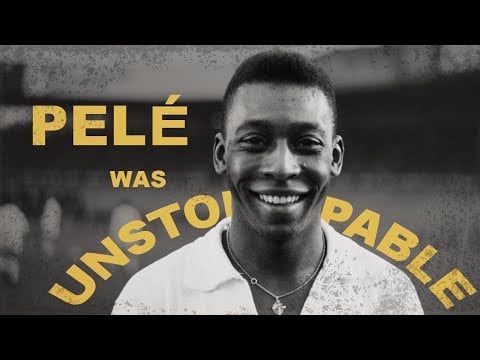
- - Pele and Santos in Paris, 1962. Surviving footage of Santos against Racing de Paris in March 1962, during the club tours that showed European crowds what Pele could do. Only part of the match survives, which makes the material rarer than the fame of the player suggests.
- - Pele and Eusebio in New York, 1966. Footage of Santos against Benfica at Randall's Island Stadium in August 1966, a tie billed as the New York Champions Cup. It shows two of the era's defining forwards meeting on American soil decades before the sport took root there.
- - Manchester United meet Estudiantes, 1968. Footage from the two-legged 1968 World Club Championship between European champions Manchester United and Copa Libertadores winners Estudiantes de La Plata. The ill-tempered tie became a reference point for how differently the European and South American games understood the sport.
- - Abedi Pele Against Nigeria at the 1992 Africa Cup of Nations. Match footage of the Ghana forward Abedi Pele against Nigeria at the 1992 Africa Cup of Nations in Senegal. Ghana won the semi-final and reached the final, where Abedi Pele was suspended; he was named the tournament's best player.
- - Nigerian football in the 1990s. An extract from the documentary series History of Football: The Beautiful Game covering football culture in Nigeria, with Nwankwo Kanu among those interviewed, set around the country's World Cup appearances in 1994 and 1998. It shows the Nigerian game arriving on the world stage on its own terms.
- - South American superpowers. A feature-length section of the documentary series History of Football: The Beautiful Game devoted to the South American game beyond Brazil, with archive footage and interviews. It treats Argentina, Uruguay and their neighbours as a football culture in their own right rather than as opponents for Europe.
- - Nigeria's Olympic gold in 1996. The Olympic channel revisits Nigeria's football tournament at Atlanta in 1996, when the side beat Brazil and Argentina on the way to the gold medal. It was the first Olympic football title won by an African nation and a marker of West African football's arrival.
- - LDU Quito Win the 2008 Copa Libertadores. The story of how Liga Deportiva Universitaria de Quito became the first Ecuadorian club to win South America's biggest club competition. Both they and Fluminense were in their first final; LDU won the first leg in Quito, lost the return at the Maracana and took the trophy on penalties.
- - Cameroon and Nigeria: An African Rivalry. An account of the rivalry between Cameroon and Nigeria, the two dominant West and Central African football nations of the 1990s and 2000s, including their meetings at the Africa Cup of Nations. It also touches on the political and border disputes that gave the fixture an edge beyond sport.
- - Brazil's Grip on the Copa Libertadores. An analysis of why Brazilian clubs have come to dominate South America's premier club competition and why the Argentine giants that once defined it have fallen back. It links the shift to broadcasting money, squad depth and the changing economics of the Brazilian league.
- - Why the Copa Libertadores Is Like Nothing in Europe. A short introduction to the culture around South America's club competition: the crowds, the hostility of away trips and the interruptions that would be unthinkable in a European stadium. It explains what makes the tournament's reputation.