Nightlife & Techno
The empty post-Wall buildings that became the techno capital of the world, Tresor, the Love Parade, Berghain and the legendary 72-hour weekend.
Part of Berlin
22 moments in this segment.
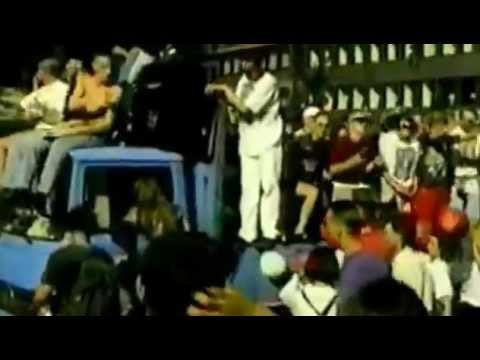
- - The first Love Parade. July 1989, 150 ravers dance down the Ku'damm; within a decade it draws over a million.
- - Tresor opens. In 1991 a techno club opens in the vault of a bombed-out department store, the cradle of Berlin techno.
- - E-Werk. A former power station turned 1990s techno cathedral, one of the defining clubs of post-Wall Berlin.
- - Marusha. The face of 1990s German rave, her "Somewhere Over the Rainbow" was a techno-pop smash.
- - WestBam. The godfather of German techno, Love Parade anthem-maker and a defining Berlin DJ.
- - A million on the streets. By the late 1990s the Love Parade fills the Tiergarten with techno and over a million dancers.
- - Paul van Dyk. The Berlin trance giant who soundtracked the reunified city's euphoria and went on to global stardom.
- - Watergate. The riverside club with the LED ceiling and floor-to-ceiling Spree views, a Berlin nightlife institution.
- - Berghain. The temple of techno in a former power plant, the legendary door, the Klubnacht that runs from Saturday to Monday.
- - Modeselektor. The bass-heavy Berlin duo, pillars of the city's electronic scene and the Monkeytown label.
- - Paul Kalkbrenner - Sky and Sand. The Berlin producer's anthem from the film "Berlin Calling", the sound of the city's clubland.
- - Ellen Allien. DJ, producer and BPitch Control label boss, a defining voice of the Berlin techno sound.
- - The open-air club culture. Sisyphos, about://blank and the sprawling weekend-long open-airs of post-industrial east Berlin.
- - Dr. Motte and the founding myth. The DJ who started the Love Parade as a "demonstration for peace, joy and pancakes".
- - The 72-hour weekend. No closing time, the Berlin clubbing marathon that runs from Friday night clear through to Monday.
- - United We Stream. When the clubs went dark in 2020, Berlin's nightlife moved online, empty dancefloors livestreamed to keep the scene alive and funded through lockdown.
- - FJAAK at Spandau20. The Berlin techno trio's hometown sound, raw, hard, hometown-loyal, captured in a 2020 DJ set.
- - HÖR Berlin. The tiled-room livestream booth that became the city's most-watched techno export, DJs playing to a webcam in a former public toilet.
- - Rave the Planet. Dr. Motte's spiritual successor to the Love Parade returns to the streets of Berlin, techno as a moving, open-air procession.
- - UFO - the first acid house club. The illegal basement club (1988) where Dr. Motte and friends first brought acid house to West Berlin.
- - Techno as cultural heritage. Berlin's techno culture is added to Germany's UNESCO-aligned intangible cultural heritage list, the dancefloor, officially, as heritage.
- - The KitKatClub. Berlin's legendary fetish-techno club, a temple of hedonism and the city's anything-goes nightlife.