Diaspora
More Albanians live outside the country than in it. The Arbëreshë have been in southern Italy since the fifteenth century, when Skanderbeg's defeat sent them across the Adriatic, and still speak a form of Albanian. Later waves left under the Ottomans, under Zog, and in the 1990s. The best-known Albanian of the twentieth century, Anjezë Gonxhe Bojaxhiu, born in Skopje, known as Mother Teresa, never lived in Albania at all.
Part of Albania
22 moments in this segment.
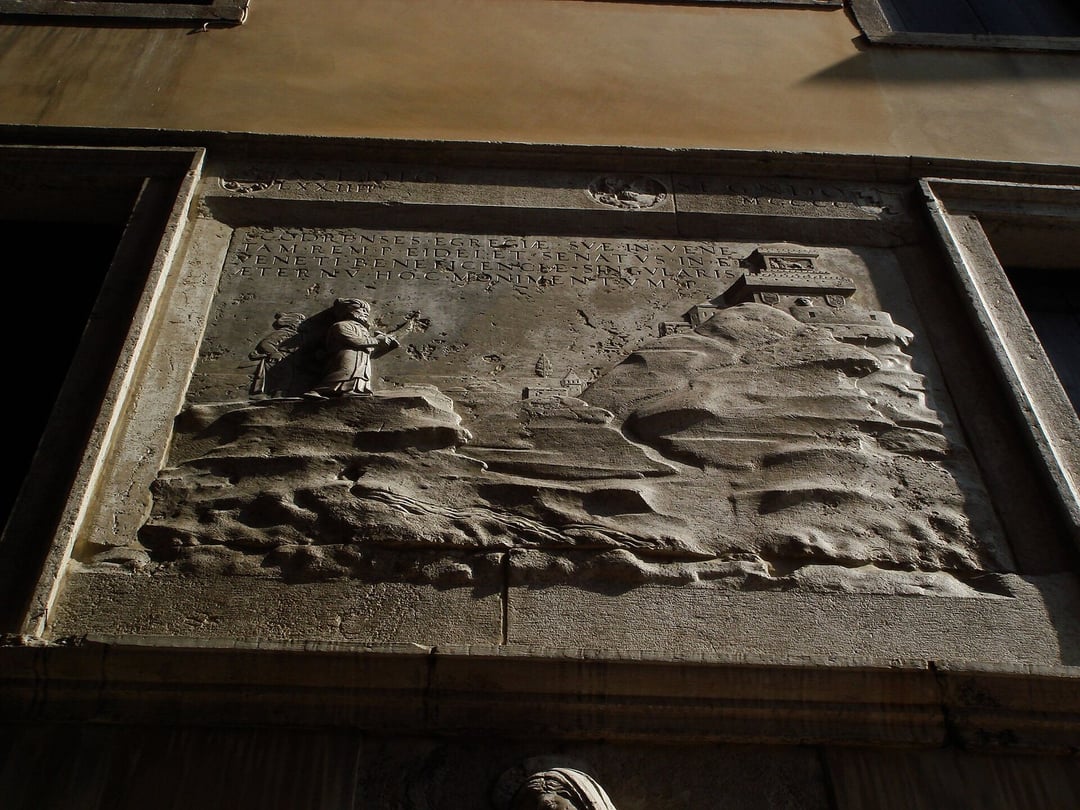
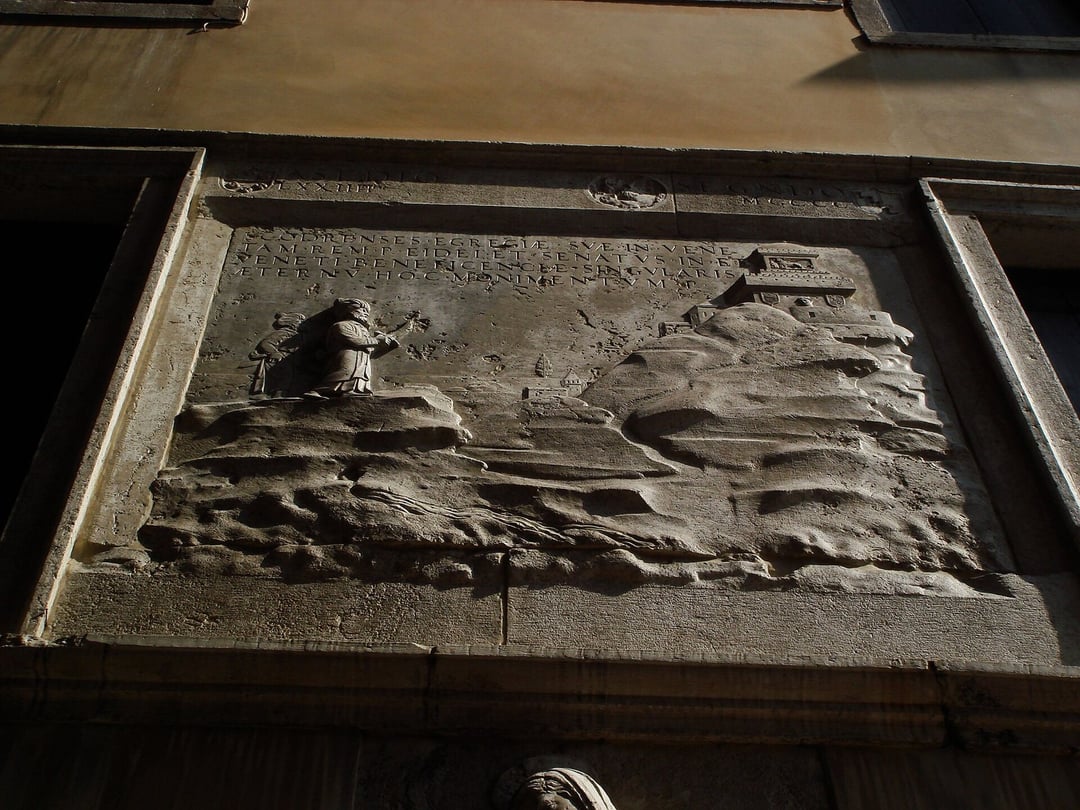
- - Mehmed the Second before the walls of Shkodra. A relief of 1532 on the Albanian confraternity house in Venice shows the Ottoman sultan besieging Shkodra in vain. Albanian refugees in Venice commissioned the panels as a memorial to their lost city.
- - Albanian woman at Ellis Island. Lewis Hine photographed this woman in Albanian dress at Ellis Island in 1905, during the years he documented arriving migrants. Tens of thousands of Albanians, many of them from Korçë and the south, crossed to the United States before the First World War.
- - The village of Zym below Mount Pashtrik. Franz Nopcsa photographed the Albanian village of Zym on the slopes of Pashtrik between Prizren and Gjakova in 1905. His expeditions produced the first systematic photographic record of Albanian-speaking country outside Albania proper.
- - The fortress of Prizren, 1905. Prizren's citadel above the town, photographed by Franz Nopcsa in 1905. Prizren was the seat of the 1878 League that first stated Albanian national demands, and remained a centre of Albanian life beyond the later border.
- - The Pro Albania demonstration at Piana degli Albanesi. Arbëresh villagers of Piana degli Albanesi in Sicily march for the Albanian cause on 10 September 1911, the poet Giuseppe Schirò at the centre. Communities settled in Italy since the fifteenth century campaigned hard in the years before independence.
- - View of Filiates in Chameria, 1913. Filiates, in the district Albanians call Chameria, photographed in 1913 as the Balkan Wars redrew the region's borders. The area was assigned to Greece, leaving a large Albanian-speaking population outside the new state.
- - Albanian school at Filiates. The Albanian school at Filiates in Chameria, in Greek Epirus, during the years 1942 to 1944. Albanian-language schooling in the region was brief and ended with the war.
- - Mother Teresa speaking at Walsh University. Mother Teresa addressing an audience during a 1982 visit to Walsh University in Ohio. Her fame made the Albanian name familiar in places that knew nothing else of the country.
- - Mother Teresa with the Reagans before the Medal of Freedom ceremony. Mother Teresa in the Oval Office on 20 June 1985, shortly before she received the Presidential Medal of Freedom. She had been awarded the Nobel Peace Prize six years earlier.
- - Mother Teresa at Dhaka airport. Mother Teresa greeted on arrival in Dhaka in April 1991. By then the order she founded in Calcutta in 1950 was working in more than a hundred countries.
- - Gjekë Marinaj at the Gjakovë poetry festival. The poet Gjekë Marinaj answers questions at a poetry festival in Gjakovë in 2011. His 1990 poem about horses helped trigger the student movement, and he left Albania the following year for the United States.
- - Skanderbeg bust at Piana degli Albanesi. A bust of Skanderbeg by the sculptor Odhise Paskali, given by Albania in 1968 to Piana degli Albanesi in Sicily. The Arbereshe towns of southern Italy were founded by Albanians who fled after the Ottoman conquest and still speak an archaic Albanian.
- - Arberesh mural of the siege of Kruje. A mural in San Costantino Albanese in Basilicata tells the story of the village's founders, including the siege of Kruje and Skanderbeg's death in 1468. Arberesh communities in southern Italy descend from Albanians who fled after that defeat.
- - Albanian soldiers dance for the centenary in Afghanistan. Albanian soldiers of the Eagle V contingent dance with civilians at a forward base in Afghanistan on 28 November 2012, marking one hundred years since the Declaration of Independence at Vlore. Albania's small deployments abroad became a fixture of its post-communist foreign policy.
- - The former Scola degli Albanesi in Venice. The facade of the confraternity house built by Albanian exiles in Venice after the Ottoman conquest. Its carved panels record the sieges of Shkodra, the last Venetian-Albanian stronghold to fall.
- - Masiela Lusha in Time of the Comet. Masiela Lusha in character on the set of the film Time of the Comet. Born in Tirana and raised abroad after her family left Albania, she is among the best known figures of the recent diaspora.
- - Memorial House of Mother Teresa, Skopje. The memorial house built on the site where Gonxhe Bojaxhiu was born in 1910 to an Albanian family in Skopje. She left home at eighteen and never returned to live in the Balkans.
- - The room where Mother Teresa lived. The bare room kept as she left it at the Missionaries of Charity house in Calcutta. A bed, a table and a chair are the whole of it.
- - A row over the Mother Teresa memorial. Skopje's mayor wants the memorial to Mother Teresa, born in the city in 1910 to an Albanian family, removed because it blocks a street. The proposal put the municipality at odds with the Vatican.
- - Albanian Muslim community centre, London. The UK Albanian Muslim Community and Cultural Centre on Carlton Vale in London, photographed in 2023. Britain took in large numbers of Albanians from Kosovo and Albania from the 1990s onward.
- - Cham memorial in Elbasan. A monument in Elbasan to the Cham Albanians, the Muslim Albanian population of Greek Epirus who left or were driven out at the end of the Second World War. Many of the families resettled in towns like this one.
- - Skanderbeg in Piana degli Albanesi. Gezim Muriqi's statue of Skanderbeg stands in Piana degli Albanesi in Sicily, an Arberesh town that has kept the Albanian language and the Byzantine rite since the fifteenth century.