Goodfellaz - Sugar Honey Ice Tea
JUL 01 1996 · 12:00
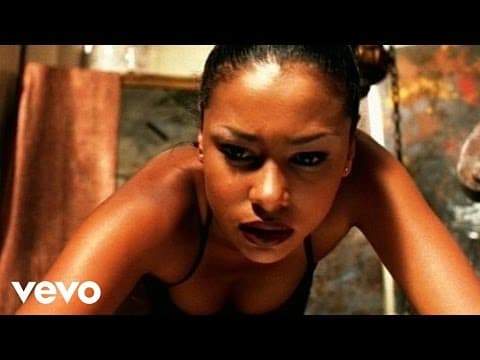
Goodfellaz - Sugar Honey Ice Tea (1996) Era: Mid-90s Urban R&B (1996) - Peak era of New Jack Swing's evolution into polished hip-hop-soul; harmonizing male R&B trios dominated pop and urban radio, riding a wave set by Boyz II Men, Jodeci, and Dru Hill. A well-preserved example of the mid-90s urban R&B trio video format at its commercial peak, with quantifiably high saturation (160.79), fast editing pace (94 cuts/284s), and warm color temperature anchoring it firmly in the 1996 Polydor aesthetic. As Goodfellaz's only major chart entry, this video is a singular document of the group's brief but nationally charted existence. Its production fingerprint, genre position, and crossover artist lineage (TKA/freestyle heritage) make it a valuable primary source for researchers studying 90s R&B video culture, Latin-urban crossover trajectories, and the final phase of New Jack Swing's visual vocabulary. Context: "Sugar Honey Ice Tea" was released in 1996 as the debut single by Goodfellaz on Polydor/Polygram Records, at the height of the harmonizing male R&B trio format popularized by Boyz II Men and Bell Biv DeVoe. The trio, comprising De Louie Avant Jr., Angel Vasquez, and Ray Vencier, was based in New York; Vasquez brought crossover credibility from his prior role in Latin freestyle trio TKA. The song's title is a euphemistic acronym, a playful linguistic conceit that helped it cut through on both urban and pop radio. It reached #25 on the R&B chart and #64 on the Billboard Hot 100, staying on the R&B chart for 20 weeks. The track was produced by The Family Stand (Peter Lord and V. Jeffrey Smith), veteran New York R&B producers who shaped the smooth, hip-hop-inflected sound of the record. The video and single represent the tail end of New Jack Swing's dominance, bridging toward the cleaner neo-soul era that would arrive by 1997–98. Director notes: No director credit for this music video has been located across Discogs, Songfacts, WhoSampled, AllMusic, RnBHaven, or any other indexed source. The video was produced in support of the debut single released on Polydor/Polygram Records in 1996. Production circumstances are otherwise undocumented in publicly accessible archives.
Source: radarchive.org
Part of RAD Archive · Watch in the documentary