The Music - Breakin'
2004
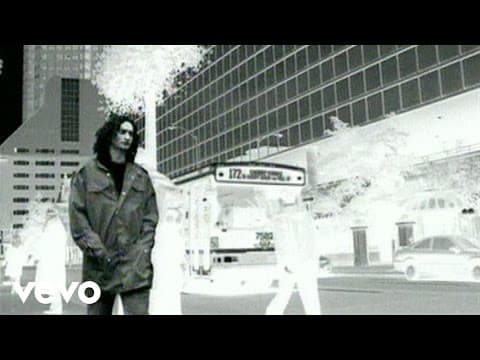
The Music - Breakin' (2004) Director: Phil Harder Era: Post-Grunge British Rock Revival (2004) - Mid-2000s UK rock movement marked by arena ambitions, heavy riffing, and psychedelic-inflected production; contemporaneous with the NME-driven guitar band resurgence. High curatorial value as a documented mid-2000s British rock artefact: confirms director via two independent sources, features a clearly structured theatrical performance aesthetic, and represents a charting single from a critically discussed Leeds band at a transitional point in their career. The video's quantitative profile, 191 scene changes, 1.25s avg shot, warm-high-contrast palette, offers strong comparative data for era and genre benchmarking within a post-grunge/space-rock video corpus. Context: Released in late 2004 as a companion to The Music's second album Welcome to the North, 'Breakin'' emerged during a pivotal moment in British guitar rock when NME-championed bands from Northern England were competing for mainstream rock credibility alongside the post-punk revival wave. The Music, hailing from Kippax in East Leeds, occupied a distinctive niche: psychedelic, space-rock-inflected arena ambitions drawing from Led Zeppelin, Jane's Addiction and the Stone Roses. The video's theatrical performance staging, band performing before a large projection screen of moving landscapes, visually externalises the album's themes of 'breaking free' and becoming universal, as articulated by vocalist Robert Harvey. The rapid-cut editing pace (1.25s avg shot length) mirrors the song's kinetic energy and reflects the mid-2000s MTV/video channel appetite for high-energy alternative rock content. Director notes: Confirmed via IMVDb (https://imvdb.com/video/the-music/breakin) and IMDB (https://www.imdb.com/title/tt21262486/). The video was released in 2004 to promote 'Breakin'', the second single from The Music's second album Welcome to the North on Virgin Records. Per IMDB, the video features the band performing on a set in front of a projection screen displaying trains, buildings, and trees, a theatrical staging choice that aligns with Harder's known preference for controlled, high-contrast performance environments. The video falls within the active period of Harder/Fuller Films (1985–2005), situating it among his most productive years in music video work.
Source: radarchive.org
Part of RAD Archive · Watch in the documentary