Missy Elliott & Da Brat - Sock It 2 Me
1997
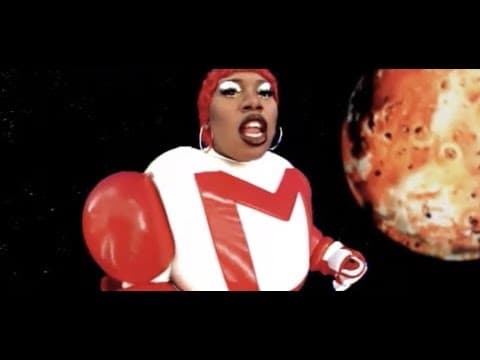
Missy Elliott & Da Brat - Sock It 2 Me (1997) Director: Hype Williams Era: Golden Era Hip-Hop / Late-90s Afrofuturism (1997) - Second single from Missy Elliott's landmark debut album Supa Dupa Fly; released September 21, 1997 on Elektra Records at the apex of Timbaland's production dominance and Hype Williams' visual reign over hip-hop video aesthetics. Tier 1 artifact of late-90s Afrofuturist hip-hop visual culture. The video's confirmed directorial provenance (Hype Williams), its chart-certified commercial impact (#12 Billboard Hot 100), its critical rehabilitation as one of the greatest music videos and debut-album tracks in genre history, and its pioneering deployment of alien sci-fi world-building for Black female rap artists makes it an essential primary source for any archive focused on the intersection of hip-hop, Afrofuturism, gender, and late-20th-century music video aesthetics. Context: Released in September 1997 as the second single from Missy Elliott's debut album Supa Dupa Fly, 'Sock It 2 Me' arrived at a pivotal moment when female rap artists, Elliott, Da Brat, Lil' Kim, were collectively redefining authorship, sexuality, and spectacle in hip-hop. The video's Afrofuturist sci-fi world-building was groundbreaking for the genre, positioning Black women as action heroes in an alien landscape rather than conventional hip-hop video archetypes. Produced by Timbaland at 170 BPM in A♭ major with a sample of The Delfonics' 1968 'Ready or Not Here I Come (Can't Hide from Love)', the track charted at #12 on the Billboard Hot 100 and reached the top ten on multiple R&B/Hip-Hop charts, establishing Elliott as a commercial and creative force in the late-1990s rap landscape. Director notes: Confirmed directed by Hype Williams per Wikipedia, IMVDb, IMDb, and Grokipedia. The video was released September 21, 1997 alongside the single. It takes place on a remote alien planet and features a multi-threaded narrative structure with chase sequences involving oversized robot monsters, intercutting with a dome performance set and planetary backdrop scenes. The video is frequently cited as inspired by the Mega Man video game series. The robots bear the letter 'T' on them. The video exemplifies Williams' signature Afrofuturist maximalism, fish-eye lens aesthetics, and bold primary-color costuming, elements consistent with his broader late-90s collaborative work. Costume design on Williams' Missy Elliott videos of this era has been associated with stylist June Ambrose per documented sources.
Source: radarchive.org
Part of RAD Archive · Watch in the documentary