Green Day - Longview
JUL 01 1994 · 12:00
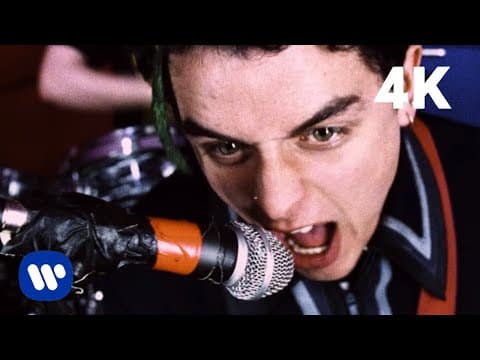
Green Day - Longview (1994) Director: Mark Kohr Era: Post-Grunge Alt-Punk MTV Breakthrough (1994) - East Bay punk crossing into major-label mainstream via heavy MTV rotation at the peak of alternative rock's commercial dominance Exceptionally high. This is Green Day's first-ever music video and one of the most culturally significant alternative rock videos of the 1990s. It represents a pivotal moment in punk's mainstream crossover, documents the authentic living environment of a pre-fame major-label band, and established a lo-fi realist visual grammar that influenced an entire generation of music video production. Triple MTV VMA-nominated. Tier 1 archival priority. Context: Released in early 1994 as Green Day's debut major-label single from Dookie (Reprise Records), 'Longview' arrived during the final years of grunge's commercial dominance. The video received heavy MTV rotation and is widely credited as the primary vehicle for breaking Green Day into mainstream popularity, catalysating the commercial punk revival of 1994-1996. Its themes of slacker boredom, sexual frustration, and suburban stagnation resonated powerfully with Generation X youth. The video was nominated for three MTV Video Music Awards in 1994 (Best Group Video, Best Alternative Video, Best New Artist), and Green Day received a Grammy nomination for Best Hard Rock Performance for the song in 1995. Rolling Stone ranked it the third-best single of 1994. Director notes: Kohr filmed the video in the dimly-lit basement apartment in Berkeley, California where the band lived, giving it a crucial lived-in authenticity. He deliberately avoided heavy-metal or grunge lighting conventions, seeking an East Bay punk look. Mirror tiles were placed behind Armstrong on the sofa to add visual depth to the confined flat space. The monkey prop was Armstrong's own concept as a lyrical visual pun; Kohr integrated it by having the animal interact with a key referenced in the lyrics. Kohr made the deliberate artistic risk of shooting no coverage footage, locking into a single visual grammar that proved highly influential. He has cited this choice as a defining moment in his career, noting that the visual technique subsequently appeared in television, commercials, and film. Cinematography by Adam Beckman. Edited by Bob Sarles. Produced by Robert Caruso and Andrew Linsk for Commotion Pictures for Warner Bros. Records.
Source: radarchive.org
Part of RAD Archive · Watch in the documentary