Dizzee Rascal - Dream
2004
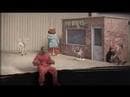
Dizzee Rascal - Dream (2004) Director: Dougal Wilson Era: Early Grime Crossover Era (2004) - The period in which grime emerged from underground pirate radio into UK mainstream pop consciousness, exemplified by Dizzee Rascal's Mercury Prize-winning profile and chart success on XL Recordings. Exceptionally high. A formally inventive, critically celebrated, and pedagogically embedded artefact that sits at the intersection of grime's cultural emergence, British television heritage, and early-2000s UK music video craft. Represents a definitive case study in concept-driven urban music video production and the creative contribution of advertising-trained directors to UK pop visual culture. Its presence in A-level Media Studies curricula (WJEC) confirms its canonical status. Context: Released November 2004 as the second single from Dizzee Rascal's second album Showtime (XL Recordings), 'Dream' arrived at the moment grime was transitioning from East London pirate radio (Deja Vu FM, Rinse FM) into mainstream UK chart pop. Dizzee had already won the Mercury Prize in 2003 for Boy in da Corner, establishing him as the genre's crossover figurehead. The video's subversive use of 1950s BBC children's television aesthetics, a format associated with white, middle-class postwar British domesticity, to frame lyrics about council-estate crime, teenage mothers, and street life constitutes a pointed act of cultural displacement. The sample of Captain Sensible's 'Happy Talk' (itself from the idealistic South Pacific) compounds this irony. The video's theatrical concept typified a strand of early-2000s UK music video creativity in which directors from advertising backgrounds (Wilson via Colonel Blimp/Blink) applied high-concept craft to urban music. Director notes: Directed for Colonel Blimp, London. Edited by Adrenalin @ Rushes, London. The video constructs a mock 1950s-style BBC children's marionette show, referencing the format of Muffin the Mule (BBC, 1946–1955) and presenter Annette Mills. The concept juxtaposes the innocent, wholesome register of vintage children's television with lyrical subject matter drawn from Dizzee's youth in East London, street crime, graffiti, teenage parenthood, pirate radio, and garage clubs, rendered via puppet vignettes. The song samples Captain Sensible's 'Happy Talk,' itself drawn from the 1949 Rodgers and Hammerstein musical South Pacific, adding a further layer of period incongruity. The video's 52 scene changes over 220.8 seconds (avg. shot length ~4.25s) reflect a measured, skit-paced rhythm suited to episodic puppet theatre rather than the rapid-cut norm of contemporary hip-hop videos. The warm colour temperature (2.29) and moderate brightness (82.2/255) reinforce the analogue broadcast aesthetic. Ad Age cited Wilson's concept as bringing the idea 'to brilliant life' and noted it 'puts virtually all U.S. rap clips to shame.'
Source: radarchive.org
Part of RAD Archive · Watch in the documentary