Hole - Doll Parts
JUL 01 1994 · 12:00
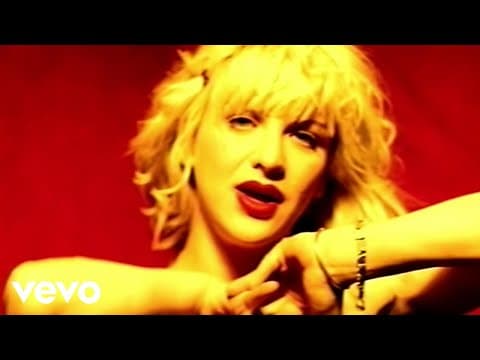
Hole - Doll Parts (1994) Director: Samuel Bayer Era: Post-Grunge Grief Era (1994) - Alternative rock at peak cultural saturation, shadowed by trauma, loss, and the aftermath of Seattle's collapse; riot grrrl feminism colliding with mainstream MTV exposure Exceptionally high. This video is a primary artifact at the intersection of three significant 1990s cultural forces: the death of grunge's figureheads, the riot grrrl movement's uneasy MTV mainstream moment, and Samuel Bayer's emergence as the defining visual auteur of alternative rock video. Its grief-coded aesthetics, symbolic doll imagery, and raw performance energy make it essential for any archive of 1990s music video culture. MTV VMA-nominated (1995). Context: Released in October 1994, 'Doll Parts' arrived in the most traumatic stretch of Hole's history: bassist Kristen Pfaff had died in June 1994, and Courtney Love's husband Kurt Cobain had died in April 1994 just one week after Live Through This was released. The video was made in the direct shadow of these losses and Bayer's explicit direction to evoke death shaped every visual choice. The song peaked at #4 on Billboard Modern Rock Tracks and #58 on the Hot 100. In September 2021, Rolling Stone ranked it #208 on their list of the 500 Greatest Songs of All Time. The video itself became a defining artifact of mid-1990s alternative rock feminism, encoding grief, doll imagery, and female rage within the conventions of MTV-era alternative video. Director notes: Hole commissioned Bayer for 'Doll Parts' following the death of bassist Kristen Pfaff in June 1994. The video was shot approximately six months after Kurt Cobain's death in April 1994. Bayer stated he wanted the video to 'evoke the feeling of death.' Courtney Love contributed visual concepts including doll imagery, a babydoll-dress performance on a bed, and a bleak backyard tea party. Bayer designed garden scenes to be 'decaying' and added plaster-wrapped dolls hanging from trees. A young blonde boy appears as a symbolic reference to Cobain. Most of the video was shot in black-and-white, interspersed with color sequences. Two edits were broadcast: an original edit and a 'producer's version.' The video was nominated for Best Alternative Video at the 1995 MTV Video Music Awards, losing to Weezer's 'Buddy Holly.' Jennifer Finch of L7 appears as bassist, standing in for the deceased Kristen Pfaff.
Source: radarchive.org
Part of RAD Archive · Watch in the documentary