The Auteurs - How Could I Be Wrong
JUL 01 1993 · 12:00
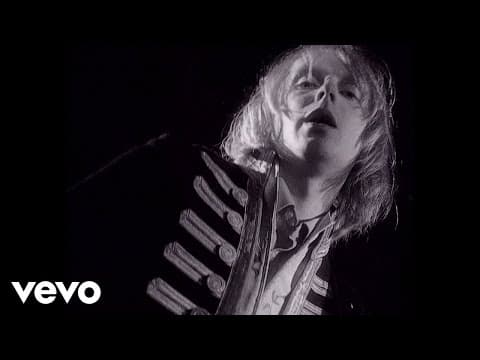
The Auteurs - How Could I Be Wrong (1993) Era: Proto-Britpop / Early UK Indie (1993) - Transitional moment between post-Madchester dissolution and the formal emergence of Britpop; low-budget UK indie video aesthetic concurrent with Hut Records / Virgin imprint era High archival value as a contemporaneous visual document of the proto-Britpop moment, predating the genre's commercial peak by approximately one year. The Auteurs' contested relationship with Britpop, foundational yet antagonistic, makes this video culturally instructive. The quantitative fingerprint (extreme low brightness, warm cast, fast editing) is highly legible as an early-90s UK indie production, and the video preserves aesthetic conventions that were largely superseded once major-label Britpop budgets scaled upward from 1994 onward. Context: Released in early 1993 on Hut Records, 'How Could I Be Wrong' arrived at a pivotal transitional juncture: Madchester was dissolving and Britpop had not yet reached mainstream saturation. The Auteurs, led by the acerbic, self-mythologising Luke Haines, were perceived by the British press as part of a nascent glam rock revival, and by American press as analogous to Suede. The parent album New Wave was shortlisted for the 1993 Mercury Prize and is now recognised as a foundational document of the Britpop moment, despite Haines' own vocal contempt for the movement. The video's dark, warm visual register and fast editing pace reflect the constrained promotional budgets of UK indie labels in this period, while the song's sardonic, self-aggrandising lyrical pose (groundbreaker, pallbearer, benefactor, actor) is entirely consistent with Haines' established persona. Director notes: No director credit for this video has been identified across Discogs, Wikipedia, Apple Music, AllMusic, RateYourMusic, or any indexed music press source. The single was released on Hut Records (a Virgin Records subsidiary) in 1993. Low-budget UK indie promo conventions of the period suggest a commissioned director working within tight label constraints, but no name is verifiable from available public records.
Source: radarchive.org
Part of RAD Archive · Watch in the documentary