björk - hyperballad
JUL 01 1996 · 12:00
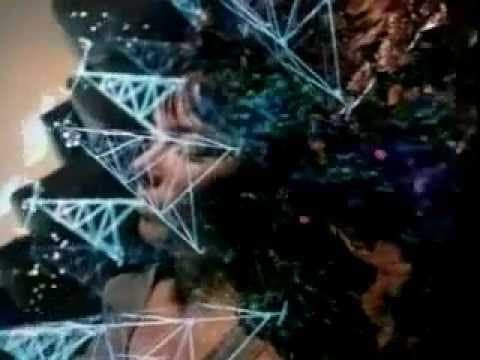
björk - hyperballad (1996) Director: Michel Gondry Era: Post-Internet Art-Pop Vanguard (1996) - Mid-90s convergence of electronic dance culture, early CGI experimentation, and auteur music video craft at peak MTV cultural influence Tier-1 archival priority. One of the most technically documented and critically validated music videos of the 1990s, with confirmed production methodology (single 400ft film roll, motion control, LED compositing), confirmed director, confirmed release date, and multi-decade critical consensus. Represents a convergence of art, technology, and pop culture at a singular historical inflection point. Essential for any curriculum on music video history, practical effects innovation, or 1990s electronic music culture. Context: Released in February–March 1996 as the fourth single from Björk's second solo album Post (1995), 'Hyperballad' arrived at the height of mid-90s electronic dance culture's crossover into mainstream pop. The video crystallized a pivotal cultural moment: the collision of early CGI and practical film technique, the mainstreaming of rave aesthetics into art-pop visual language, and Björk's positioning as the leading figure of music video as fine art. The song's lyrical themes, suppressing destructive impulses to preserve a relationship, were translated by Gondry into a techno-surrealist visual metaphor. Critics noted the video showcased Björk's embrace of the computer's shape-shifting powers and a shared 'techno sensibility.' It became a landmark in the history of in-camera compositing, predating the widespread adoption of digital post-production. Director notes: 'Hyperballad' (1996) was Gondry's fourth music video for Björk. Produced by Partizan and filmed at Telecine Cell, London. The entire video was shot on a single 400ft roll of film using multiple exposure and frame-accurate backwinding, no cuts, no post-production compositing. A motion control system synchronized all camera passes. The video features Björk as a 2D video-game character running through a pylon landscape before falling off a cliff, with that sequence and others (including live performance and blinking LED lights) projected onto a 3D shot of Björk lying in a mountainous landscape. Graphics were achieved as secondary exposures via a television monitor; flashing lights via an LED strip board, all baked into the same piece of film. Gondry described Björk explaining the song's meaning to him: she goes to the top of a mountain to let go of internal tensions by imagining jumping from a cliff, thus preserving the relationship. This was Gondry's first use of motion control technology.
Source: radarchive.org
Part of RAD Archive · Watch in the documentary