Godsmack - Greed
2001
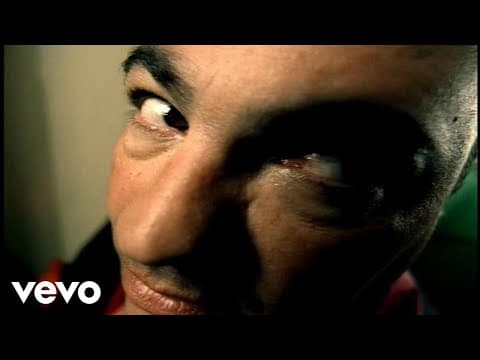
Godsmack - Greed (2001) Director: Troy Smith (co-director with Sully Erna) Era: Post-Grunge / Nu-Metal Peak Era (2000–2001) - Late Clinton/early Bush-era hard rock dominance; major-label alternative metal saturation on TRL and mainstream rock radio. High curatorial value as a genre-boundary artifact: one of the few Godsmack videos with an explicit comedic narrative structure, co-directed by the frontman, and publicly disavowed as a commercial compromise. Quantitative data (148 cuts, 1.55s ASL, low brightness, muted saturation) corroborates the visual grammar of the early-digital rock video era. Useful as a comparative anchor for tracking aesthetic drift in post-grunge visual culture between 1999 and 2003. Context: Released as the third and final single from Godsmack's second album Awake (Universal, 2000), 'Greed' arrived at the apex of post-grunge's mainstream commercial penetration. The song's subject, a former associate who financially exploited the band's early success, reflects broader anxieties about artistic commodification and class betrayal endemic to the era's rock discourse. The video's comedic, revenge-fantasy narrative represented a deliberate stylistic departure from the band's darker, occult-adjacent visual identity, positioning them for broader MTV/TRL crossover appeal during a period when rock acts competed directly with pop and hip-hop for mainstream video rotation. The track peaked at #3 on the Mainstream Rock chart, confirming radio traction even as the video's tonal compromise drew ambivalence from the band itself. Director notes: Per IMDB, Songfacts, and IMVDb, 'Greed' was co-directed by Troy Smith and Sully Erna (Godsmack's frontman). Songfacts notes Smith's prior credits include Rage Against The Machine and Blind Melon videos. IMVDb lists the video release year as 2000, with IMDB citing the US release date as May 22, 2001. The video is notably atypical for Godsmack: Erna publicly stated it was the band's attempt to appeal to a mainstream audience, and he expressed personal dissatisfaction with the result. The narrative structure, band living in squalor, confronting a wealthy landlord, directly literalizes the song's autobiographical theme about financial exploitation. Performance sequences were shot in a purpose-built silver stage set with the Godsmack logo imprinted on the floor, providing a high-contrast visual counterpoint to the lo-fi apartment narrative. The co-direction credit suggests Erna had significant creative input into the narrative framing while Smith handled the technical/cinematographic execution.
Source: radarchive.org
Part of RAD Archive · Watch in the documentary