John Mellencamp - Authority Song
JUL 01 1984 · 12:00
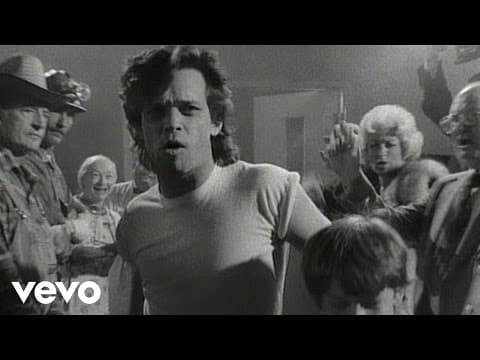
John Mellencamp - Authority Song (1984) Director: Jay Dubin Era: MTV Early Era (1984) - Peak first-wave MTV rock video period, black-and-white aesthetic signaling blue-collar authenticity amid glossy pop video dominance High curatorial value as a primary artifact of heartland rock's visual vocabulary and early MTV culture. The video's deliberate rejection of production excess, by both artist and director on record, makes it a documented case of counter-programming within the MTV ecosystem. Its quantitative profile (low brightness, minimal saturation, fast cutting) objectively encodes its ideological stance, making it an ideal anchor piece for research into 1980s rock authenticity politics and the class dynamics embedded in music video aesthetics. Context: Released as the third single from the 1983 album Uh-Huh, 'Authority Song' arrived during Mellencamp's commercial peak following 'Jack & Diane' and 'Hurts So Good.' The video's black-and-white, boxing-ring aesthetic embodied heartland rock's rejection of MTV gloss, positioning Mellencamp as a populist rebel at a moment when the network was reshaping rock stardom. The song charted at #15 on the Billboard Hot 100 in May 1984 and became a defining anthem of working-class anti-establishment sentiment in American rock, intentionally echoing 'I Fought the Law' by The Bobby Fuller Four. It later became a staple encore at Farm Aid benefit concerts. Director notes: Directed by Jay Dubin and produced by Jon Small, the 1984 video for 'Authority Song' was shot in black and white, depicting Mellencamp as a boxer entering the ring, without gloves and without actual fighting, literalizing the song's underdog-vs.-authority metaphor. Both Mellencamp and Dubin were noted to share a mutual disdain for the music video format. Dubin told Songfacts of his philosophy: 'It just has to look nice and exist for a few short minutes.' The stripped-back, unglamorous visual approach directly mirrors the song's defiant working-class stance and contrasted sharply with the high-concept, effects-laden videos dominating MTV at the time.
Source: radarchive.org
Part of RAD Archive · Watch in the documentary
More from RAD Archive
- Rondò Veneziano - Capriccio veneziano (3-2-1, 17.03.1984)
- Suicidal Tendencies - Institutionalized
- Van Halen - Hot For Teacher
- Anne Murray "That's Not The Way (It's S'posed to Be)" Music Video - Anne Murray
- Do they Know it's Christmas ~ Band Aid 1984 - Do they Know it's Christmas ~ Band
- Billy Idol - Flesh For Fantasy