Pulp - This Is Hardcore (Adult Version)
JUL 01 1998 · 12:00
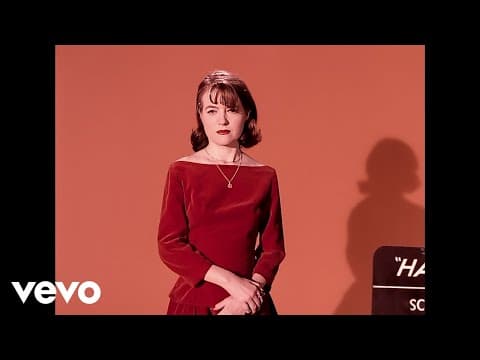
Pulp - This Is Hardcore (Adult Version) (1998) Director: Doug Nichol Era: Late Britpop / Post-Britpop Transition (1998) - Peak of Britpop's self-critical phase; Pulp's cinematic deconstruction of fame and desire marked the movement's artistic apex and its beginning dissolution. Tier-1 artefact of the 1998 British music video canon. One of the most critically acclaimed music videos of the 1990s, consistently cited among the greatest ever made. Represents the apex of conceptual ambition in Britpop-era video production: cinephilic, art-directed to an exceptional standard, thematically coherent with the source material, and culturally resonant as a document of Britpop's exhaustion and transformation. Essential preservation priority. Context: Released March–April 1998, 'This Is Hardcore' arrived at the precise moment Britpop was exhausting its own mythology. Written as a commentary on fame using pornography as an analogy, Cocker exploring what happens to people 'used up' by the entertainment machine, the video translates this into a visual language of hollow glamour: Hollywood's golden age rendered as beautiful artifice. The use of mid-century studio stills as source material implicates cinema itself in the same cycle of consumption and disposability the song critiques. NME later described the album as capturing a 'sense of surrender, regret and flashes of panic' that spoke to the end of the Britpop era. The video's impeccable fakeness, expensive and cold, made it a landmark art object of late-1990s British cultural life. Director notes: Directed for Partizan. Premiered April 1, 1998. Edited by Tony Kearns. Coloured by Jean-Clement Soret. The video's conceptual framework was drawn from the book Still Life (Calloway, NY, 1983), edited by Diane Keaton and Marvin Heiferman, a collection of Hollywood publicity stills from 1940–1969. Scenes were constructed as living recreations of specific stills from that book, with Pulp band members substituted for the original actors, including references to South Pacific (1958) and Ocean's 11 (1960). Nichol structured the video as a series of distinct set-piece vignettes: a film-noir private investigator's office, midcentury Hollywood melodrama recreations, a fistfight at a modernist cocktail party, and a Busby Berkeley-inflected fantasia sequence. A censored 'kids version' was also prepared for promotional tapes, replacing a profanity in the opening dialogue with a film-roll cutaway effect. The video has been listed by TIME Magazine in its '30 All-Time Best Music Videos' and is consistently cited as one of the greatest music videos ever made.
Source: radarchive.org
Part of RAD Archive · Watch in the documentary